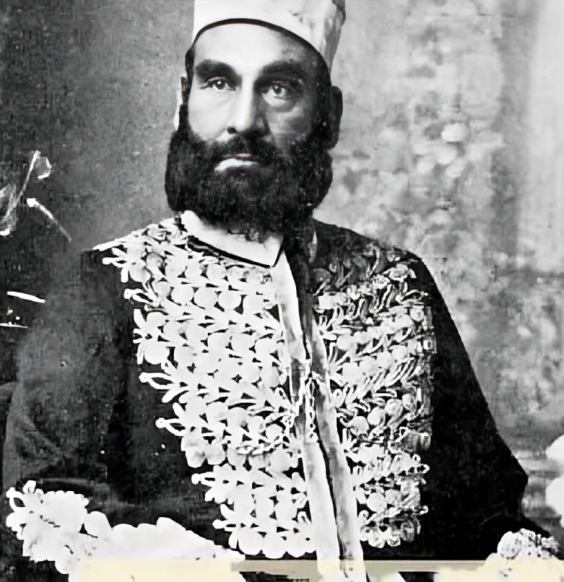
Nawab Mirza Khan, far more illustriously known to world literature by his pen name ‘Dagh Dehlvi’ (25 May 1831 – 17 March 1905), was one of the most radiant luminaries in the history of Urdu poetry (Shayari). Born into an aristocratic family in Delhi, the poet witnessed both the majestic grandeur of the Red Fort and the poignant decline of Mughal culture from the closest quarters.
Table of Contents
My Dagh Dehlvi (Nawab Mirza Khan)
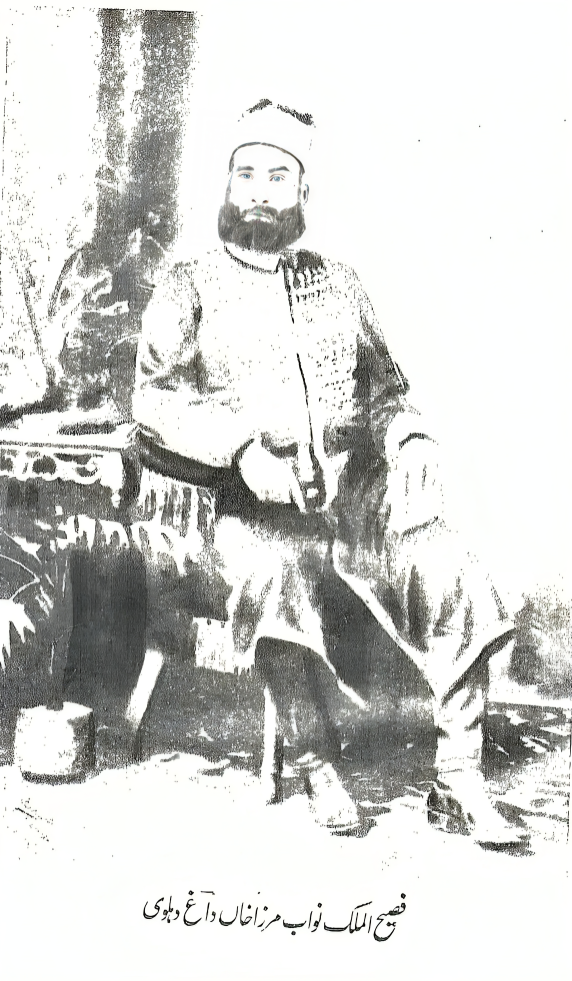
Dagh was merely six years old when his father passed away. Subsequently, his mother married Prince Mirza Fakhru, the son and heir of the last Mughal Emperor, Bahadur Shah Zafar. As a result of this royal alliance, Dagh spent his childhood and adolescence within the historic confines of Delhi’s Red Fort. Growing up in the intimate company of princes bestowed upon him a distinctly regal bearing, evident in his every mannerism and speech. It was within the Red Fort that he enjoyed the profound companionship of Mirza Ghalib and the then Poet Laureate, Zauq.
In keeping with the refined social customs of contemporary Delhi, the children of the nobility were sent into the salons of the city’s most celebrated Tawaifs (courtesans) and artists to master the nuances of language, courtly etiquette, and music. Dagh himself spent a considerable period immersed in the company of these virtuosos. It was from them that he acquired his flawless Urdu pronunciation and his mastery over the idiomatic elegance of the spoken tongue.
When the British forces seized Delhi during the Sepoy Mutiny of 1857, the pristine royal environment of the Red Fort was utterly devastated. Dagh was forced to abandon Delhi and seek refuge in Rampur. The acute sorrow of transforming from a pampered courtier to a wandering exile in a single stroke lent a profound, melancholic depth to his subsequent poetry.
From Rampur, Dagh eventually arrived at the court of Nizam Mahbub Ali Khan of Hyderabad. The Nizam, an ardent admirer of his poetic genius, appointed Dagh as his personal court preceptor (Ustad) in poetry. There, he was granted a monthly stipend of 1,500 rupees—a truly princely sum for that era.
On one occasion, when the Nizam expressed some dissatisfaction regarding a poetic correction, Dagh retorted with unflinching pride:
“Your Highness! You may well be the King of the Deccan, but I am the Sovereign of the Urdu language! You possess no authority to correct me!”
The Nizam, admiring his fierce sense of self-respect, took the remark in high regard.
The beautiful and melodious courtesan from Calcutta, ‘Hijab Bai’, exercised a profound influence over Dagh’s life. He composed countless ghazals dedicated to her. Later, when Hijab Bai departed from Hyderabad, the deep ache of separation left an indelible mark upon Dagh’s verses.
Dagh Dehlvi was, above all, a master of the ghazal. Eschewing convoluted metaphors and intricate embellishments, he remained unrivalled in expressing love, separation, and the subtle friction of lovers’ tiffs in the simple, accessible language of everyday life. Though his work bore the elegant touch of the Delhi and Lucknow schools, he carved out his own distinctive ‘Daghi’ style, wherein the spontaneous outpouring of genuine emotion always triumphed over artificiality.
Following the era of Mirza Ghalib, his contribution to preserving the linguistic purity and lyrical grace of the Urdu language remains undeniable. From the Nizam of Hyderabad down to countless aspiring poets, a vast legion of connoisseurs proudly claimed him as their preceptor. When he passed away in 1905, the Nizam of Hyderabad himself acted as a pallbearer, lending his shoulder to Dagh’s final journey.
A Glimpse into His Masterpieces:
1.
-
Urdu: اردو ہے جس کا নাম ہمیں جانتے ہیں داغؔ سارے جہاں میں دھوم ہماری زباں کی ہے
-
Roman: Urdu hai jis ka naam hamein jaante hain Daagh / Saare jahaan mein dhoom hamaari zabaan ki hai
-
English: We alone truly know her by the name of Urdu, O Dagh! For today, the echo of our tongue resonates in triumph across the entire world.
2.
-
Urdu: غضب کیا ترے وعدے پہ اعتبار کیا تمام رات قیامت کا انتظار کیا
-
Roman: Ghazab kiya tere waade pe aitbaar kiya / Tamaam raat qayaamat ka intezaar kiya
-
English: I erred calamitously by putting faith in your vows; I have spent the livelong night as though awaiting the Day of Resurrection itself.
3.
-
Urdu: ہوش جاتا رہا نظارہ یہ کیا ہوا داغؔ دنیا میں تو آئے لیکن کیا ہوا
-
Roman: Hosh jaata raha nazaara yeh kya hua / Daagh duniya mein to aaye lekin کیا ہوا
-
English: My senses took flight upon beholding such a sight! You did indeed arrive into this world, O Dagh, but to what ultimate end?
4.
-
Urdu: لطف وہ عشق میں پائے ہیں کہ جی جانتا ہے رنج بھی ایسے اٹھائے ہیں کہ جی جانتا ہے
-
Roman: Lutf woh ishq mein paaye hain ke jee jaanta hai / Ranj bhi aise uthaaye hain ke jee jaanta hai
-
English: Such ecstasies have I tasted in love as only my soul can fathom; yet such agonies of separation have I also endured as only this very heart can know!
5.
-
Urdu: سلیقہ عشق کا سیکھو اے داغؔ کچھ ہم سے کہ وہ ملے بھی نہیں اور ہم جدا بھی نہیں
-
Roman: Saleeqa ishq ka seekho ae Daagh kuch hum se / Ke woh mile bhi nahin اور ہم جدا بھی نہیں
-
English: Learn a little of the etiquette and artistry of love from us, O Dagh! For we are caught in a state where a union has never passed between us, yet we are never apart.
6.
-
Urdu: دل گیا تم نے لیا ہم کیا کریں جانے والی چیز کا غم کیا کریں
-
Roman: Dil gaya tum ne liya hum کیا کریں / Jaane waali cheez ka gham کیا کریں
-
English: The heart has already departed, and you have taken it for your own; what am I to do now? Why should one endlessly grieve for a thing that is destined to leave?
7.
-
Urdu: عجب اپنا حال ہوتا جو وصالِ یار ہوتا کبھی جان صدقے ہوتی کبھی دل نثار ہوتا
-
Roman: Ajab apna haal hota jo wisaal-e-yaar hota / Kabhi jaan sadqe hoti kabhi دل نثار ہوتا
-
English: Wondrous indeed would my state have been, had a union with the beloved been granted! At times I would have surrendered my very life, and at others, I would have sacrificed my heart.
8.
-
Urdu: زباں پہ لاؤں تو احوالِ دل بیاں نہ بنے چھپاؤں درد تو چہرے سے داستاں نہ بنے
-
Roman: Zabaan pe laaoon to ahwaal-e-dil bayaan na bane / Chhupaoon درد تو چہرے سے داستان نہ بنے
-
English: If I give it voice, the true state of the heart eludes narration; yet if I conceal the agony, the entire tale betrays itself upon my countenance!
See Also: