The most effective vehicle for advancing education, culture, religion, or moral teachings is the story. For generations, storytelling has also served as a massive source of human entertainment. In truth, it is through the making and sharing of stories that human civilisation has progressed this far.
However, the elaborate set designs used to aid storytelling in today’s plays or films did not exist two hundred years ago. Even in theatres back then, such extensive props, intricate stagecraft, or dazzling lighting arrangements were impossible. Yet, people across every civilisation on Earth still told stories in their own unique way. Armed with nothing but their spoken words and physical gestures, a single person could construct a grand palace, a bloody battlefield, or strange worlds in the minds of the audience—things that might happen in reality only once in several centuries, or whose existence is possible only within human imagination.
A classical form of this incredible storytelling tradition is ‘Dastangoi’—a unique practice that vanished merely a century or a century and a half ago. At one point, it was almost entirely erased from our subcontinent, prior, of course, to its magical resurgence in recent times.
Let me state clearly at the very outset: I am no researcher, nor do I possess any literary scholarship. I am merely a captivated listener who loves a good story. I am simply attempting to share my experience of scrambling up the straight-and-narrow path to reach the magical gatherings of the Dastangos (storytellers).
Before diving into this tale, however, one point needs to be made perfectly clear. In almost all my writings, I repeatedly state or say one thing: during that cursed Partition of 1947, land and physical assets were divided across either side of the barbed-wire fence. Everyone received their share, more or less. Whatever remained was somewhat settled later on. Yet, while our ancestors claimed their share of material possessions, they could not properly claim their share of art and culture—simply because art and culture cannot be divided in that manner. Art and culture belong solely to those who practise and embody them.
Due to the communal nature of the Pakistani state during Partition, we lost most of our masters and scholars of art and culture; they remained in India. Those who did stay on this side withered away during the Pakistani era in the name of ‘Pakistanisation’ and ‘Islamisation’, while some migrated to India. Whatever else remained was left behind in West Pakistan; consequently, they never came to this side after independence. In this way, we failed to claim our rightful share of the language, art, and culture earned through the devotion of many generations before us.
If we wish to progress in art and culture, and if we want to transform it into international art, we must reclaim that right. I have an equal and legitimate claim over every single brick of the vast artistic, literary, and cultural heritage created across this massive Indian subcontinent before that artificial line was drawn in ’47. By that token, Dastangoi is not the exclusive property of Lucknow, Delhi, or modern India; it is my art too, and our ultimate heritage. We must claim our share through learning and practice.
Let us move forward.

Table of Contents
What is Dastangoi?
Simply put, the Persian word ‘Dastan’ means a story or an epic, and ‘Goi’ means to tell. The fusion of these two terms creates a classical performing art of storytelling—Dastangoi.
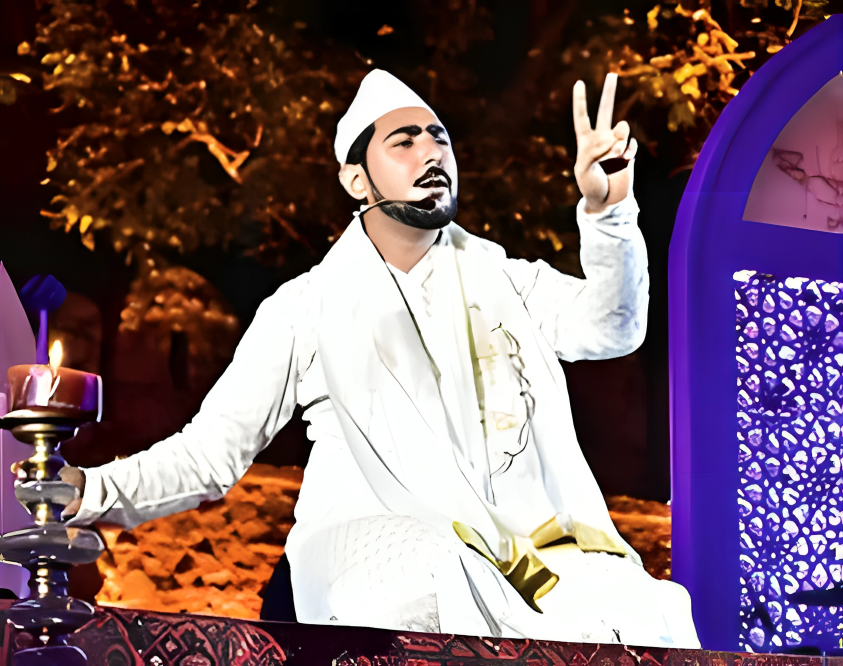
According to the traditional custom of Dastangoi performance, a single individual, dressed in a spotless white pirhan (long tunic) and a cap, sits in the centre of a stage inside a room bathed in the flickering glow of lanterns. No musical instruments sit before them, nor do they wear any glittering attire. They merely wave their hands through the air, roll their eyes, and begin to unfurl the layers of their tale.
In an instant, the audience members are no longer sitting in that ordinary room; they are transported to a magical fortress in a scorching desert, where winged jinns, the sorcerer Afrasiab, and the clashing sword of the warrior Hamza await them. This is an ancient and intricate psychological art of constructing theatre inside the human mind using nothing but words.
Dastangoi is not a linear method of merely reciting a story, nor is it akin to acting out a script; rather, it is a complex and composite performance that actively binds the audience to the narrative. Let us try to understand some of its technical dimensions:

Tamheed (Asar Bandhar Alap – The Conversational Prelude)
In Urdu and Persian terminology, the word ‘Tamheed’ signifies an introduction or a prologue. However, within the craft of Dastangoi, it can be viewed as a psychological ‘disclaimer’ or a conversational prelude to set the mood of the gathering. Much like the ‘Bandana Geeti’ (invocation song) sung before the start of a Jatrapala or Kabigan in our Bengali folk traditions, the Dastangos (storytellers) would employ a specific introduction to craft the atmosphere of the assembly before stepping into the core plot.
Before unlocking the chest of the main narrative, the Dastangos would effortlessly weave this Tamheed. During this phase, they would praise the Almighty, the Prophets, and the Sufi saints, whilst reciting beautiful invocations to honour the cultured and appreciative connoisseurs of Lucknow or Delhi present in the audience. This slow, deep, and mystically poetic aura generated by the Dastango’s voice would transform the entire atmosphere of the assembly in a heartbeat.
Forgetting the relentless clamour, fatigue, and worldly anxieties of the surrounding life, the minds of the listeners would settle into a strange state of serenity. Under the spell of this Tamheed, the audience’s breathing would slow, and their subconscious would detach from the real world, becoming fully primed to receive the surreal and magical tale about to unfold.
Dastan-dar-Dastan (Stories Within Stories)
Dastangos never let a story progress along a straight line. The masters of the craft refer to this distinctive vocal or narrative style as ‘Dastan-dar-Dastan’, which quite literally means the birth of a new story from within an existing one.
As the central plot moves along, it suddenly hits a fork in the road and branches off in two directions, much like the antlers of a deer. The Dastango then tactfully grasps one horn and charges ahead with that sub-plot. Leaving the intense curiosity and thrilling tension of what actually happened on the other horn to simmer in the subconscious minds of the listeners, he advances along his chosen branch, only to sprout yet another sub-branch a short while later!
This is essentially a psychological game designed to keep the audience spellbound. The narrative functions like a labyrinth where the listeners thoroughly enjoy losing their way, eagerly awaiting a fresh marvel at every turn.
Tawalat (The Art of Prolongation)
Another vital and magical tactic of this narrative art is preventing the core story from progressing too rapidly. In the grammar of Dastangoi, this is known as ‘Tawalat’, which translates directly as the art of lengthening or prolonging a story.
Just when a profound thirst builds up in the minds of the listeners to witness the climax or the moment of ultimate tension in a major event, the Dastangos resort to an extraordinary piece of trickery. Instead of drawing the curtain on the event, they abruptly introduce a completely new character or a supernatural occurrence, twisting the tale and steering it down a different path entirely.
Master Dastangos play this game with human psychology remarkably well. They keep the audience continuously inquisitive and parched, yet they do not quench that thirst easily; instead, they effortlessly plunge them into an even vaster ocean of wonder. It is this calculated procrastination that keeps the audience rooted to their spots, utterly entranced for hours on end.

Fehrest-Nigari (The Illusion of the Endless List)
This is a fascinating psychological game played by the Dastangos. Whilst spinning their yarn, they would suddenly begin reciting an immense list when describing a royal banquet, preparations for war, or a sorcerer’s lair. In the distinct grammar of Dastangoi, this art of list-making is known as ‘Fehrest-Nigari’ (which translates into English as the chronicling of details or the compilation of epic catalogues).
For instance, they might continuously recite the names of nearly a hundred dishes served at a royal feast, rhythmic and melodic like a song. The catalogue would span everything from pulaos, koftas, kebabs, and kormas to the long-forgotten royal delicacies of ancient Persia.
This relentless torrent of words would plunge the brains of the listeners into a sort of trance or hypnotic state. The audience members were no longer merely listening to a story; instead, they could effortlessly visualize the grand spectacle coming alive right before their eyes. Only the master Dastangos possessed the prowess to use this Fehrest-Nigari, this intricate weaving of words, to sever the audience completely from the real world.
Gulestani and Khariji (The Collage of Fairy Tale and Reality)
The core framework of a Dastan is divided into two primary dimensions. The first is ‘Gulestani’—the intimately familiar fantasy world of the Dastan, home to magical jinns, the sorcerer Afrasiab, and the thrill of celestial swords.
The other is ‘Khariji’—which represents the completely real world. In the middle of telling a tale, the Dastango would suddenly step out of the familiar fairy tale to throw in a contemporary real-life event from Lucknow or Delhi, a story about a local fair, market prices, or a witty political jest.
This Khariji element was used to bring the audience back to reality for a brief laugh, ensuring they did not grow weary of an uninterrupted fairy tale. By refreshing the listeners’ attention in this manner, the storyteller could instantly submerge them once more into the enchanted city. It was this flawless balance between fairy tale and reality that kept Dastangoi alive for generations.
Manzil-ba-Manzil (The Psychological Travelogue)
In Urdu and Persian, the literal meaning of ‘Manzil-ba-Manzil’ is to progress step-by-step from one destination or camp to the next. Within the grammar of Dastangoi, this is a magical device used to manipulate the listener’s psychology. Much like how Gabriel García Márquez used ‘magical realism’ in modern literature to craft a seamless, otherworldly atmosphere, the Dastangos were doing precisely the same thing centuries ago through their live storytelling.
Whenever the heroes of a Dastan embarked on a thrilling quest, they would race from one mysterious city to another. The Dastangos would provide such an immaculate description of this arduous journey that it would completely steal the listeners away from the present world and pull them directly into the narrative.
The moment a Dastango held the floor, the surrounding walls seemed to vanish in the blink of an eye. The audience would feel as though they were no longer seated on the rugs of a royal court or the floor of an inn, but were physically standing amidst a dust-laden caravan on an treacherous path. Through the shifts in the Dastango’s voice, the listeners could sense which way the wind was blowing—whether they were panting against the scorching Loo wind of the Sahara, or being refreshed by a chill breeze sweeping down a mountainside.
The Dastango would even conjure scents in the air through the magic of his words! Listeners would subconsciously draw a breath, trying to catch the familiar earthy smell rising from parched soil after a sudden downpour on a long, hot journey, the sharp fragrance of wild flowers by the wayside, or the heavy aroma of sandalwood wafting from an ancient, enchanted city.
A living cinema of everything seen along this long journey would play inside the listener’s mind: a solitary, ancient banyan tree standing in the distance, wild eyes lying in ambush behind the bushes, a traveller’s lodge (musafirkhana), or the spires of a mystical fortress rising on the horizon.
Even the changing colours of the sky overhead were painted with absolute precision—how the reddish glow of dawn turned into the scorching, metallic brass of midday, and how it gradually dissolved through the purple light of twilight into a pitch-black night studded with thousands of stars. It was depicted so flawlessly that the listeners would shudder half-unconsciously.
This is the essence of ‘Manzil-ba-Manzil’—an ancient, hypnotic technique of taking the listener by the hand and making them a flesh-and-blood companion to the caravan on those distant, unknown paths.

Baran-Nigari (The Interplay of Mood and Nature)
In Urdu and Persian terminology, the word ‘Baran’ signifies rain or the monsoon, while ‘Nigari’ means depiction. In the grammar of Dastangoi, ‘Baran-Nigari’ is the unique art of flawlessly conjuring the imagery of rain to mirror the psychological state of a character or the mysterious atmosphere of the tale. The Dastangos would not merely speak of rain; they would drench the audience through the sheer magic of their words.
For example, when the hero of the Dastan wept, heartbroken and yearning for his beloved, the Dastango would use his voice to weave the atmosphere of a torrential downpour into the assembly, making it feel as though nature itself was weeping in harmony with the hero’s devastating grief. Listeners seated on the carpets of the royal court or the floor of the inn would hear the distant rumble of thunder indoors.
The audience would shudder involuntarily at the Dastango’s unceasing torrent of words and the tremors in his voice. They could distinctly sense the sound of rain pattering on the roof. This is the core of ‘Baran-Nigari’—where the spoken words of the Dastango would conjure the living presence of the monsoon or the furious majesty of a summer nor’wester right before the audience’s eyes.
Sarapa-Nigari (From Head to Toe)
In Persian terminology, the word ‘Sarapa’ means from head to toe or top to bottom, while ‘Nigari’ means precise depiction. In the grammar of Dastangoi, ‘Sarapa-Nigari’ is the incredibly magical and indescribable description of the form and beauty of a gorgeous princess, an enchanting sorceress, or even the hero himself.
Whenever a Dastango began this Sarapa-Nigari, time inside the assembly would seem to stand still. From the moonlike brilliance of a princess’s toenails to the hypnotic flutter of her doe-like eyes, every single curl of her cloud-like hair, and the intricate threadwork on her silk veil—everything was brought to life in such meticulous detail that a storyteller could easily spend hours describing a single vision of beauty.
With every word uttered by the Dastango, the listeners would feel the intense warmth of that beauty deep within their own chests. The depiction was so flawless that it created a sweet yearning and a deeply romantic, hypnotic state in the audience’s subconscious; they could clearly visualize that flawlessly beautiful silhouette right before their eyes.
Aiyari Chaturi (The Game of Deception and Wit)
The Dastans did not merely feature bloody battles fought with swords; intense psychological warfare was also waged. The masterminds behind these conflicts were the ‘Aiyars’. In Urdu and Persian terminology, an ‘Aiyar’ refers to a fiercely intelligent scout, a disguised magical spy, or a cunning character (such as Amar Ayyar, the famous companion of Amir Hamza in the epics).
The moment the Dastango began describing these feats of Aiyari, the deep gravity of his voice and his gestures would completely transform in a flash. His brilliant, dramatic, and humorous depictions of how an Aiyar could change his appearance in the blink of an eye to adopt an unrecognizable disguise, how he would use subtle trickery to lace the enemy camp’s wine with opium to knock everyone unconscious, or how he would mimic animal and bird calls to outsmart opponents, injected a fresh wave of excitement and curiosity into the assembly.
Sawal-Jawab (The Volley of Words)
Much like the ‘Sawal-Jawab’ (question and answer) dynamics observed in classical music, this exact game was played through words in a Dastangoi assembly. Particularly when an intense war of words erupted between two supernatural sorcerers, or a mighty hero and a villain, the Dastango would single-handedly bring out the unique tone and temperament of both characters’ dialogue.
He would unleash a volley of words so rapidly, sharply, and in such perfect rhythmic cadence that the audience members would temporarily forget to breathe! The rise and fall of the Dastango’s voice and the incredibly fast tempo of the argument would quicken the pulse of the listeners, leaving their nerves taut with tension.
Amidst the heavy silence of the room, listeners could distinctly hear nothing but the magical velocity of the Dastango’s voice and the rapid thumping of their own hearts.
Takrar (The Rhythm of Familiar Words)
In Urdu and Persian, the literal meaning of the word ‘Takrar’ is repetition. Within the art of Dastangoi, this is a unique psychological technique of repeatedly bringing back a specific sentence, word, or phrase throughout the storytelling to weave a hypnotic rhythm or a mesmerizing cadence into the assembly.
For instance, whilst describing an accursed magical city, the Dastango might effortlessly recite between intervals, “Neither is there wind there, nor is there light there…” When the storyteller repeated this same phrase with perfect modulation of his beautiful voice—sometimes whispering, at other times echoing in a deep, resonant tone—it cultivated a profound atmosphere of mysterious dread within the minds of the listeners.
Khab-Nama (The Illusion of Dreams)
In Urdu and Persian literature, the word ‘Khab’ means a dream, and ‘Nama’ means a narrative or chronicle. The warriors and princes of the Dastan frequently received strange, mysterious, and supernatural signs or divine prophecies in their sleep. The Dastangos would depict these dreamscapes of a character’s subconscious through such surreal, otherworldly, and metaphorical imagery that the audience would instantly abandon all real-world logic and reason.
Under the slow and enchanting cadence of the Dastango’s voice, the listeners would subconsciously drift into a deep, trance-like state. Within that bizarre labyrinth of dreams—featuring an ancient palace floating in mid-air, a talking winged horse, or the key to a mysterious riddle delivered by an ethereal shadow—the listeners would discover an unfathomable world hidden within their own subconscious minds.

Razmiya and Bazmiya (The Interplay of Valour and Romance)
The original Persian word ‘Razm’ means war or battle, while ‘Bazm’ signifies a gathering, festival, or a romantic assembly. In the grammar of Dastangoi, ‘Razmiya’ and ‘Bazmiya’, stemming from these two Persian roots, represent the two primary moods or aesthetic flavours (rasas) upon which the entire framework of the Dastan rests.
When the story plunges into the fierce clashing of swords, the thunderous rhythm of galloping hooves, and thrilling, epic descriptions of warriors’ bravery, it is known as the ‘Razmiya’ element. Whenever a Dastango stepped into this Razmiya mode, his voice would become as resonant as thunder; hearing it, the hairs on the listeners’ arms would stand on end, and an ancient excitement would surge through their veins.
Conversely, the exact opposite mood is ‘Bazmiya’. When the narrative shifted towards gentle and sensitive emotions—such as the fragrance of a bridal bed, flowing cups of wine, enchanting music, intense love, and the ache of separation—it was called the ‘Bazmiya’ element. In this mode, the Dastango’s voice would instantly transform into a soft, velvety tone, soothing the listeners’ racing heartbeats and wrapping them in an otherworldly, romantic spell.
Ashob-e-Shahar (The Lament of Destruction)
In Persian terminology, the word ‘Ashob’ denotes chaos, calamity, or a distressed cry, while ‘Shahar’ means a city; thus, ‘Ashob-e-Shahar’ literally translates to a city’s catastrophe or the lament of its destruction. Within the art of Dastangoi, this is a deeply poignant psychological tool used to paint a living portrait of a prosperous city’s sudden downfall and ruin using nothing but words.
When a powerful sorcerer uses his mystical powers to level an entire city to the ground in an instant, or when a beautiful, vibrant metropolis is reduced to ashes in a bloody world war, the Dastangos would invoke this ‘Ashob-e-Shahar’ element. During this segment, the cadence of the Dastango’s voice would alter drastically, becoming heavy with a heartbreaking wail and lamentation. As he offered a meticulous account of the screams of people trapped in the burning city, the cries of children, and grand palaces turning to dust, the entire atmosphere of the room would grow heavy with an unsettling grief.
The storyteller’s grief-stricken delivery would strike a painful chord in the chests of the audience, and tears would effortlessly well up in their eyes. Forgetting the real world around them, the listeners would subconsciously submerge themselves into a profound sense of pathos for the people of that fictional city, their heartbeats pausing in an immense, collective sorrow.
Gurez (The Art of the Sudden Turn)
In Persian, the literal meaning of ‘Gurez’ is flight, escape, or slipping away tactfully. In the grammar of Dastangoi, this is an incredibly magical technique used to transport the listener’s psychology from one scene to another in a heartbeat, completely unannounced and without any prior warning.
Whilst spinning his tale, the Dastango might be describing the inner splendour of a magnificent palace, and the entranced audience would find themselves wandering through its corridors; just then, by catching onto a single metaphor or a subtle thread of a word, the storyteller would suddenly drop the listeners into a dark jungle or the depths of a churning sea! This seamless gliding of the narrative from one thread to another—completely devoid of any jarring shifts, yet entirely transforming the landscape—is precisely what is meant by ‘Gurez’.
Zaban-Dani (The Mastery of Language)
In Urdu and Persian terminology, ‘Zaban’ means language, and ‘Dani’ means knowing. Quite simply, ‘Zaban-Dani’ is the Dastango’s incredible command or scholarship over language. During an assembly, a single storyteller would effortlessly match the exact vocabulary and vocal tone of each character according to their respective social standing.
For instance, when a mighty Sultan spoke whilst seated upon his throne, his language would be heavy, formal, and deeply rooted in classical Persian. Yet, in the very next moment, when a cunning Aiyar or an ordinary thief entered the dialogue, the colloquial street slang of the alleyways of Lucknow would pour from the Dastango’s mouth.
This radical shift of language coming from the very same man would make the characters come alive as flesh-and-blood human beings right before the audience’s eyes.
Naql-e-Majlis (Impromptu Satire and Wit)
In Urdu and Persian terminology, ‘Naql’ signifies mimicry, farce, or wit, whilst ‘Majlis’ means a gathering or assembly. Simply put, ‘Naql-e-Majlis’ is the Dastango’s spontaneous wit, drawing upon the immediate atmosphere of the assembly.
Whilst spinning his yarn, the Dastango might suddenly spot a prominent listener seated in the front row. Alternatively, he might pick a living, breathing person whom everyone in the assembly knew by name, and seamlessly insert them into the narrative as a disguised character.
This immediate banter from the Dastango would shatter the heavy gravity of the assembly in a heartbeat. Clearing the tense air of the room, the listeners would burst into roaring laughter. Seeing a familiar face suddenly cast into a mythical world, audience members would start nudging their neighbours with their elbows. Everyone would sit up attentively. They could effortlessly bridge the gap between the fictional epic and their own real lives. This tactic was brilliant for relieving the audience’s mental fatigue, instantly making their minds sharp and alert once more.
Maqulat (Philosophical Maxims)
In Urdu and Persian, the literal meaning of ‘Maqulat’ is rational philosophy or profound maxims of wisdom. In simple terms, it represents the deep understanding of life hidden within the story. Dastangoi was never merely about entertainment; it served as an indirect learning process for the listeners.
Amidst stories of valour or romance, the Dastangos would suddenly introduce Sufi philosophy, moral lessons, or eternal truths. Delivered through the mouth of a character, these profound thoughts were presented in a remarkably poetic manner—very much like the ‘Bibek’ (the personified conscience character) in our traditional Bengali Jatra folk theatre.
Salat-e-Amir (The Anthem of the Hero)
In Urdu and Persian terminology, ‘Salat’ means praise or prayer, and ‘Amir’ refers to the central hero of the epics, Amir Hamza. Quite simply, ‘Salat-e-Amir’ is a loud, rhythmic slogan recited by the Dastango to celebrate the hero’s victory. Its primary purpose was to instantly revive the flagging energy of the assembly.
Whenever the hero Amir Hamza or one of his brave generals won an impossible battle and crushed an enemy fortress, the Dastango would abruptly halt the main narrative. He would suddenly puff out his chest and sit up straight. Then, shaking the entire assembly, he would chant a fierce, loud, and rhythmic panegyric.
This sudden roar and slogan from the Dastango’s throat would strike the ears and minds of the audience like an intense bolt of electricity. Listeners who had grown weary from the description of a long battle would instantly straighten their posture. Many would subconsciously join in with the Dastango, or clap their hands in agreement with the slogan. In their subconscious minds, the listeners would become active stakeholders in that epic victory.
Moshairi Style (The Poetic Weaving) and Ghazal-Khwani (The Melodic Ornamentation)
In Urdu and Persian, ‘Moshairi’ (Mushaira) refers to the poetic temperament of a symposium, whilst ‘Ghazal-Khwani’ means the singing of a ghazal. Dastangos combined these two distinct techniques to elevate both the dramatic tension and the literary calibre of the assembly.
During a particularly intense, emotionally charged moment in the story, the Dastango would suddenly introduce a beautiful couplet (shayeri) or poem composed either by himself or by a legendary contemporary poet (such as Mir or Ghalib). He would recite these lines in the distinct rhythmic cadence used by poets. This Moshairi style would instantly elevate the literary standard of the story from a common gathering to the level of a royal court. This poetic twist brought profound aesthetic satisfaction to the listeners, who would effortlessly call out in appreciation with shouts of ‘Wah! Wah!’ or ‘Subhanallah!’. This was the essence of the Moshairi style.
Furthermore, when an intense scene of separation or union between lovers occurred in the ‘Bazmiya’ (romantic) phase of the epic, the Dastango would stop speaking prose and switch directly to melody. He would sing those lines in an enchanting voice, reminiscent of the Lucknow gharana’s ghazal or thumri styles. Just as a classical maestro concludes a heavy Khayal recital with a sweet Thumri to soften the mood of the audience, the Dastango would introduce this fleeting touch of melody within his prose. The storyteller’s melodic voice would soothe the ears and minds of the listeners, bringing tears of bittersweet longing to their eyes. This was known as Ghazal-Khwani.
Salat-e-Saqi or Saqi-Nama (The Interval and Refreshment of the Assembly)
In Urdu and Persian terminology, ‘Saqi’ refers to the cupbearer or wine-server, whilst ‘Saqi-Nama’ is a specific type of lyrical verse addressed directly to the Saqi. In simple terms, this served as an excellent psychological interval and refreshment for both the listeners and the storyteller during long sessions of the Dastan.
When a Dastan assembly stretched on for hours on end, a certain weariness would naturally creep into the audience’s attention. The Dastango, too, would grow somewhat fatigued from speaking uninterruptedly. To break this drowsiness, the Dastango would introduce a brief pause in the main plot. However, he would not leave the stage; instead, remaining seated before the assembly, he would suddenly call upon the ‘Saqi’ or the beverage server in a melodic cadence.
Employing a poetic rhythm and a lyrical temperament, the storyteller would request the Saqi to serve fragrant sherbets, specially prepared betel leaves (khas paan), tea, or water to the gathering. This interlude was known as Salat-e-Saqi or Saqi-Nama.
Khelat-Nigari (The Chronicle of Royal Robes)
In Urdu and Persian, the literal meaning of ‘Khelat’ is a royal robe of honour, whilst ‘Nigari’ means precise depiction or chronicling. Quite simply, ‘Khelat-Nigari’ is such a detailed outline of a character’s magnificent royal attire that it would instantly dazzle the audience’s imagination.
This technique was deployed by the Dastangos whenever a king took his seat in the royal court or a great warrior marched onto the battlefield. From his gold-embroidered turban down to the brilliant flash of diamonds on his waistband, the intricate craft of his armour, and the expensive velvet of his sword’s scabbard—everything was described with such fine precision that it transcended the pages of fairy tales and took on a tangible reality.
Listening to these silky descriptions flow from the Dastango’s mouth, the eyes of the audience members would fix in a steady gaze. Even in the dim lighting of the assembly room, they would feel as though they were watching precious diamonds, jewels, and gold sparkle right before them. This royal opulence of attire cultivated an extraordinary grandeur in the minds of the listeners.
Dawat-e-Tilism (The Invitation of the Enchanted Realm)
In Urdu and Persian terminology, the word ‘Dawat’ means an invitation, and ‘Tilism’ means an enchanted realm or a world of sorcery. In simple terms, ‘Dawat-e-Tilism’ is the arrangement made to welcome a new guest into the world of magic.
Whenever a hero or a character in the story left the familiar world behind and crossed into the magical Tilism, the enchanted city itself would seem to beckon him with strange, otherworldly signs. Through the words of the Dastango, the landscape of nature would alter in a flash. Trees carved from dry wood would suddenly begin to speak, ordinary stones would split open to release streams of milk, or a purple cloud would abruptly gather in a blue sky to rain down showers of gold. Hearing these descriptions of nature’s bizarre transformations delivered with the Dastango’s magical vocal modulations, the audience would lapse into a deep, hypnotic state.
Tilism-Kushayi (The Epic of Unravelling the Enchantment)
In Urdu and Persian, the word ‘Tilism’ signifies an enchantment or magic, whilst ‘Kushayi’ means unravelling, revealing, or conquering. Quite simply, ‘Tilism-Kushayi’ is the breathtaking battle of dismantling that complex magical labyrinth, layer by layer. This is the most thrilling and climactic phase of the entire Dastan.
As the central hero steps into that world of sorcery, he begins to dismantle the oncoming magical traps and supernatural hurdles one by one, using his own wit and valour. The Dastangos would narrate every magical duel, every battle of incantations, and the shattering of illusions with taut, gripping suspense, placing immense psychological pressure upon the audience’s nerves.
The tempo of the Dastango’s voice would quicken instantly. As he described magical walls collapsing in rapid succession, the roars of enchanted dragons, or sorcerous spells failing, the audience’s breath would catch in their throats. Their fists would tighten with excitement, and beads of sweat would form upon their brows.
The more the hero unknotted these complex magical ties one by one, the more the accumulated fear and tension inside the listeners’ chests would dissipate. When the hero achieved ultimate victory, the audience would release a long, collective sigh of relief.
Awaz-Khwani (Vocal Modulation and Articulation)
In Urdu and Persian terminology, ‘Awaz’ means voice or sound, and ‘Khwani’ means reading or reciting. In simple terms, ‘Awaz-Khwani’ is an incredible exercise in vocal modulation performed by the Dastango. Devoid of any modern musical instruments, background scores, or sound effects, this technique was the primary pillar for single-handedly raising an entire theatre using nothing but his vocal cords.
Whilst narrating the tale, the Dastango would bring a vast array of sounds to life using purely vocal gymnastics. From his mouth would emerge the thunderous roar of a demon, followed in the very next heartbeat by the whistling of the wind, the sharp metallic clash of colliding swords, or the faint, weeping cry of a dying child. This switching of voices was so swift and flawless that the audience could scarcely believe these sounds were originating from the throat of a single man.
This magical modulation of the Dastango’s voice would plunge the listeners’ ears and brains into a bizarre trance. A demon’s roar would cause the hearts of those seated in the assembly to thud with terror, straightening their spines in fear. Meanwhile, the metallic ring of swords would make them see flashes of steel glinting in the dark right before their eyes.
Even with their eyes closed, the audience could distinctly hear and visualize the entire battlefield or the enchanted world. This was the true power of ‘Awaz-Khwani’.
Ism-e-Azam (The Supreme Incantation)
In Urdu and Persian, the word ‘Ism’ means a name, and ‘Azam’ means great or supreme. Quite simply, ‘Ism-e-Azam’ is the invocation of the most powerful ‘supreme incantation’ or divine force within the Dastan, used to destroy all evil powers. During moments of extreme crisis in the plot, when all human paths were blocked, this device would introduce a miraculous and dramatic twist to the story.
Whenever the hero was ensnared by the illusion of an invincible sorcerer, or a cunning Aiyar stood face-to-face with death and saw no way out, the Dastangos would unleash this ultimate weapon. The hero or a dervish would gather all his spiritual energy to utter that secret and sacred ‘Ism-e-Azam’. The Dastango would then build the atmosphere of that incantation using a slow, solemn, and supernatural delivery.
During the description of this absolute peak of tension, the heartbeats of the audience members would seem to pause for a momentary fraction. They would wait with bated breath to see what was about to unfold. The moment the incantation was uttered, the heavy silence of the assembly would break, and an otherworldly relief would wash over the room. The listeners could almost physically sense all black magic turning to dust in an instant, and the ultimate triumph of the forces of good.

An Anatomy of a Dastan:
To give you an idea of how it flows, here is an excerpt from the Urdu edition of the Dastan published by the Naval Kishore Press. This is a section featuring Amar Ayyar (Khwaja Amr Umayya) from the first volume of the legendary ‘Tilism-e-Hoshruba’. First, the original Urdu text is provided in Roman transliteration (maintaining the authentic Urdu pronunciation), followed by its English translation.
Part 1: The Commencement of the Assembly and the Vanity of Lakal the Sorcerer
Urdu Transliteration:
“Raaviyan-e-kalam aur naazilan-e-sukhan ye qissa yoon bayaan karte hain—
Jab Amir-e-naamdaar, Sahib-qiran Hazrat Amir Hamza apne lashkar-e-Islam ko lekar Tilism-e-Hoshruba ke hudood mein daakhil hue, toh saare jaadugaron ke dil kaamp uthe. Shahenshah-e-tilism, swaghoshit khuda Afrasiab ke hukum se, Amir ka raasta rokne ke liye ek zabardast aur khunkhaar jaadugar aage badha—jiska naam tha Lakal bin Harris.
Lakal ko apni quwwat-e-tilism par bada naaz tha. Woh aasman ki taraf haath uthata toh sholay-on ki baarish hoti, aur zamin par pair maarta toh zamin phat jaati. Usne Amir ke khaime ke qareeb ek aisa tilismi kohra (kuasha) khada kiya jismein lashkar ka jo sipahi bhi jaata, woh apna hosh kho baithta.”
English Translation:
“The chroniclers of history and the magicians of the spoken word narrate this tale thus—
When the illustrious and glorious Amir, the Sahib-qiran (Lord of the Auspicious Conjunction) Hazrat Amir Hamza, entered the borders of the enchanted realm of Hoshruba with his Islamic army, terror struck the hearts of every sorcerer. By the decree of Afrasiab—the Emperor of the Tilism who proclaimed himself God—a fiercely powerful and terrifying sorcerer stepped forward to block the Amir’s path; his name was Lakal bin Harris.
Lakal possessed immense vanity regarding his own sorcerous powers. Whenever he raised his hands towards the heavens, a torrent of fireballs would rain down, and whenever he stamped his foot upon the ground, the earth would shatter into pieces. Near the Amir’s encampment, he conjured a magical wall of dense fog, such that any soldier of the army who set foot inside it would instantly lose his senses.”
Part 2: The Entrance of Khwaja Amr Umayya
Urdu Transliteration:
“Ye dekhkar Hazrat Amir nihayat tashveesh mein mubtala hue. Usi waqt, Asaf-ud-dauran, Sultan-ul-Ayyareen, Khwaja Amr Umayya hazir-e-khidmat hue. Unhone Amir ko tasleemat arz ki aur kaha,
‘Ay Amir-e-mohtaram! Jahan talwar ka zor kaam nahin karta, wahan is naacheez Amr ka dimagh kaam karta hai. Aap itminan rakkhein, aaj is jaadugar ka tilism khaak mein mila doonga.’
Amr ne ek lahme mein apna ‘zambil’ sambhala. Woh zambil koi aam thaila na tha, usmein ek poori duniya samasakti thi. Amr ne Lakal ke ek khaas shagird, ‘Hijam’ ka roop ikhtiyar kiya. Usi ki tarah poshak pahni, usi ki tarah bolne ka andaaz apnaya, aur Lakal jaadugar ke dere par ja pahunche.”
English Translation:
“Witnessing this dire situation, Hazrat Amir became deeply anxious. At that very moment, the finest strategist of the age, the Sultan of the Aiyars, Khwaja Amr Umayya, presented himself in his service. Bowing low in salute to the Amir, he submitted,
‘O respected Amir! Where the might of the sword fails, the brain of this humble Amr succeeds. Rest assured, today I shall ground this sorcerer’s vanity into dust.’
In a flash, Amr reached for his ‘Zambil’ (magical pouch). That pouch was no ordinary bag; an entire universe could be concealed within its depths. In the blink of an eye, Amr assumed the guise of Hijam, a trusted disciple of Lakal. He dressed precisely like him, adopted his exact manner of speech, and arrived directly at the lair of Lakal the sorcerer.”
Part 3: The Disguised Amr in Lakal’s Court
Urdu Transliteration:
“Amr ne Lakal ke saamne jaakar zamin par sar rakha aur nihayat khaufzada aawaaz mein kaha,
‘Ay ustad-e-mohtaram! Ay shahenshah-e-aflaak! Gazab ho gaya! Amir Hamza ke lashkar ne ek aisa palta-mantar padha hai ki hamari hi tilismi diwaar ab hamare khilaaf ghoom gayi hai! Dekhiye, mera jism kaise neela pad raha hai!’
Lakal jaadugar apne takht-e-tilism par baitha tha. Usne gusse se aankhein badi keen aur garja,
‘Kya kaha Hijam? Kiski itni majaal jo Lakal ke tilism ko tode? Amir Hamza ka lashkar kya ab tak zindah hai?'”
English Translation:
“Amr went before Lakal, pressed his forehead against the ground, and spoke in an utterly terrified voice,
‘O respected Master! O Emperor of the Heavens! A monumental disaster has struck! The forces of Amir Hamza have chanted such a counter-spell that our very own magical wall has turned back to strike us! Look, Master, see how my body is turning blue!’
Lakal the sorcerer was seated upon his enchanted throne. His eyes widened with fury and he roared,
‘What did you say, Hijam? Who possesses the sheer audacity to break Lakal’s enchantment? Is the army of Amir Hamza still alive then?'”
Part 4: ‘Behosh-Daru’ or the Trap of the Potent Potion
Urdu Transliteration:
“Amr ne haath jodkar kaha,
‘Jee ustad! Unhone ek aisi hawa chhori hai jo saare tilism ko nigal rahi hai. Ay ustad, agar aapne abhi is surahi ke paani par apne khaas Ism-e-Azam ka dam na kiya, toh kuch na bachega.’
Amr ne ek tilismi surahi Lakal ki taraf badha dee. Us surahi mein koi jaadu ka paani na tha, balki Amr ka taiyar kiya hua tyezh ‘behosh-daru’ tha. Lakal ne gusse mein apne hosh kho diye the. Usne kaha,
‘La hamein woh surahi! Main abhi apne mantar se Hamza ke lashkar ko khaak karta hoon!’
Lakal ne surahi chheen lee aur ek hi saans mein saara paani pee gaya.”
English Translation:
“Amr folded his hands and pleaded,
‘Yes, Master! They have unleashed a wind that is swallowing our entire enchanted realm. O Master, if you do not immediately recite your supreme Ism-e-Azam over the water in this vessel and breathe upon it, nothing of ours will remain.’
Amr extended an enchanted vessel towards Lakal. That vessel held no magical water; rather, it contained a highly potent ‘Behosh-Daru’—a powerful sleeping potion prepared by Amr himself. Out of sheer rage, Lakal had entirely lost his wits. He snapped,
‘Hand that vessel over to me! I shall reduce Hamza’s entire army to ashes this very moment with my incantations!’
Lakal snatched the vessel away and gulped down every drop of the liquid in a single breath.”
Part 5: The Fall of Lakal and Amr’s True Form
Urdu Transliteration:
“Ek lahma… do lahme… teen lahme!
Paas pet mein jaate hi Lakal jaadugar ka sar chakkar khaane laga. Uskee aankhon ke saamne saare tilism ke cheragh bujhne lage. Uske haath se zamin par jaadui laathi chhoot gayi. Woh ladkhadate hue bola,
‘Hijam… ye tu ne kya diya… mera saara jism patthar ho raha hai…’
Aur dhadam se Lakal zamin par gir pada!
Amr ne ek jhatke mein apna bhens utar phenka. Woh khilkhila kar hasa aur bola,
‘Ay naadaand jaadugar! Tera jaadu aasman par chalta hoga, par Arab ke Amr ka dimagh zamin par chalta hai!'”
English Translation:
“One heartbeat… two heartbeats… three heartbeats!
The moment the potion hit his stomach, Lakal the sorcerer’s head began to spin. Before his very eyes, all the lamps of the enchanted city seemed to extinguish one by one. The magical staff slipped from his grasp and clattered to the floor. Reeling on his feet, he stammered,
‘Hijam… what have you given me… my entire body feels as though it is turning to stone…’
And with a loud thud, Lakal crashed heavily to the ground!
With a sharp tug, Amr threw off his disguise. Laughing uproariously, he declared,
‘O foolish sorcerer! Your magic might hold sway in the heavens, but the brain of Amr of Arabia operates right here upon the solid earth!'”
Part 6: The Plunder of Magical Artefacts and the Conclusion of the Tale
Urdu Transliteration:
“Amr ne waqt zaya na kiya. Usne Lakal ki kamar se jaadui konda (chabuk), uske gale se tilismi mani aur uske saare jawahirat kheench liye. In sabhi chizon ko Amr ne apne us ‘zambil’ mein daal diya jiska koi kinara na tha. Phir Lakal ki daari ko ek hi jhatke mein khanjar se kaat diya aur wahan se hawa ho gaye.
Lakal ka tilism toot gaya, aur lashkar-e-Islam mein fatah ka naara bola.
Qissa khatam, raavi chup!”
English Translation:
“Amr did not waste a single fraction of time. He stripped the magical whip from Lakal’s waist, tore the enchanted gemstone from his neck, and plundered all his jewels. Amr thrust all these treasures into his ‘Zambil’—that bottomless pouch of his that knew no bounds. Then, with a swift stroke of his dagger, he severed Lakal’s beard in a single tug and vanished into thin air.
Lakal’s magical enchantment was shattered into pieces, and the roar of victory echoed through the Islamic army.
The story is ended; the storyteller falls silent!”
The True Origins and Genesis of Dastangoi: From the Sands of Arabia to the Persian Courts
When recounting the history of Dastangoi, many in India bestow the entire credit for creating this art form upon the Arabs. Their assumption rests on the fact that since the greatest pillar of this craft is titled ‘Dastan-e-Amir Hamza’, its birth must naturally have taken place in the deserts of Arabia. However, I must respectfully disagree. Whilst the character of Amir Hamza undoubtedly crossed into Persia during the later Islamic conquests, the classical performing art of storytelling itself had its magical roots deeply embedded in the soil of pre-Islamic Persia (modern-day Iran) and the nomadic cultures of Central Asia. The arriving Arabs merely launched a new character of their own into an ancient, already flowing river.
Centuries before the dawn of Islam, during the reigns of the Parthian and Sasanian dynasties of ancient Persia, there existed a distinct class of minstrel-storytellers known as the ‘Gosan’. These individuals were, in essence, the world’s very first Dastangos. They performed without the aid of costumes or musical instruments. Instead, they travelled between royal courts and the casual gatherings of common folk, weaving tales of the valour of ancient Persian kings, deities, djinns, fairies, and the epic battles between humankind and terrifying demons. In the ancient Persian language, this entire framework of storytelling was called ‘Dastan’. Therefore, the word ‘Dastan’ itself, along with its inherent fantasy and complex psychological performance style, is far older than the advent of Islam in Arabia; it is an entirely Persian heritage.
In fact, when the poet Ferdowsi composed Persia’s national epic, the Shahnameh (The Book of Kings), in the 10th century, he was actually compiling and versifying countless ancient, forgotten Dastans that had survived through the oral traditions of these Gosans. The tales of valour surrounding Rustam—the central hero of the Shahnameh—his disguised battles, and his daring raids into the lairs of dragons and sorcerers, formed the world’s very first classic Dastan cycle.
The Great Fusion of Arabian Qissa and History
Where, then, does the role of Arabia lie? Pre-Islamic Arabian Bedouin culture possessed its own rich storytelling tradition, which they referred to as ‘Qissa-Khwani’. To brighten the long, monotonous, and exhausting nights of the desert, the Arabs would gather in circles around campfires beneath the open sky to listen to tales of their ancestors’ sword fights.
When Persia was conquered during the expansion of the Arab Islamic Caliphate in the 7th and 8th centuries, a groundbreaking union occurred. The fierce, straightforward, and battle-centric culture of Arabia merged seamlessly with Persia’s thousand-year-old, highly sophisticated, courtly, and philosophical Gosan tradition. It was, quite literally, a monumental fusion of history!
Riding on the wave of Arab conquests, the epic lore of their folk hero, Amir Hamza, reached Persia. While Persian scholars, litterateurs, and Dastangos readily adopted this new Arabian character, they cast him entirely into the pre-existing mould of their ancient ‘Dastan of Rustam’, reinventing him completely. Under the magical touch of Persian culture, the straightforward, sword-wielding Amir Hamza of Arabia was transformed into a figure who was subtly Sufistic, deeply philosophical, and intensely romantic.
It was through this enchanted Persian influence that two incredibly powerful yet contrasting conceptual pillars were permanently fused into the body of the Dastan:
-
‘Razm’: The thunderous, powerful depiction of battles, the clashing of steel, the intricate maneuvers of shields, and the rhythmic gallop of horses’ hooves. A blood-pumping chapter of pure valour.
-
‘Bazm’: The magical atmosphere of royal banquets, romance, wine, music, fragrant perfumes, and grand celebrations. A soft, aesthetic flavour of courtship and yearning, much like a thumri or a ghazal.
Alongside these, Persia’s fertile imagination injected the concepts of ‘Tilism’ (enchanted realms or magical illusions) and ‘Aiyari’ (the art of disguise and espionage) into the narrative fabric. Within this framework, Amr Umayya—the chief general and childhood companion of Amir Hamza—was transformed into the first true Aiyar or super-spy in literary history, capable of changing his form in the blink of an eye. According to Islamic history, the real figure was Amr ibn Umayya al-Damri, a daring tracker and scout; however, within the Persian Dastans, he evolved into the archetype of the ‘Aiyar’. Legend within the tales dictated that he could instantly adopt the guise of an old sorcerer, a beautiful maiden, or an enemy soldier. He carried a magical, bottomless pouch known as the ‘Zambil’, from the depths of which he could extract an entire tent, ropes, or his signature knockout potion, ‘Behosh-Daru’.
Consequently, the Dastangos began to command exceptional prestige and highly honoured seats within the perfume-scented royal courts of Persia. Therefore, the ultimate credit for Dastangoi cannot be attributed solely to Arabia. If Arabia provided the raw flesh and blood for the body of this art, Persia endowed it with its soul and intellect. Yet, while the Persians crafted this magnificent, majestic structure, its truest colours, rhythm, and ultimate splendour only bloomed when the art form finally set foot here, in our Indian subcontinent. It was upon this soil that the art of Dastangoi achieved its absolute pinnacle of perfection.

Dastangoi Crosses the Khyber Pass into Hindustan: The Mughal Era
Around the 11th and 12th centuries, riding on the coattails of Mahmud of Ghazni and the Delhi Sultanate, this tradition of oral storytelling crossed the Khyber Pass to set foot in our subcontinent for the very first time. It was upon stepping into Hindustan that this art form truly found its spiritual homeland. After all, this soil was hardly barren of stories and epics—from the Ramayana and the Mahabharata to the vast treasury of fables like the Panchatantra, a monumental goldmine of narratives already existed here. Consequently, this Persian style of storytelling effortlessly struck deep roots into the fertile soil of this land.
Akbar’s Court and the ‘Hamzanama’
The most significant turning point in the history of Dastangoi arrived during the reign of the Mughal Emperor Akbar. Though Akbar himself was illiterate, he possessed an intense, almost insatiable passion for listening to stories. Every single night, without fail, he would listen to the chronicles of Amir Hamza recited by master Dastangos.
The fantasy of these tales captivated Akbar to such an extent that he commissioned his royal atelier (kitabkhana) to bring the entire narrative to life through illustrations. It was from this grand ambition that the historically renowned illustrated manuscript, the ‘Hamzanama’, was born.
Under the expert supervision of two Persian masters—Mir Sayyid Ali and Abd al-Samad—more than fifty Indian artists laboured continuously for fifteen years. They painted nearly fourteen hundred large-format illustrations on canvas-like cotton sheets. On one side of the leaf lay a vibrant, colourful painting depicting a battle, an enchanted city, or ferocious demons; on the reverse side, the corresponding text was inscribed in elegant Persian script.
Within Akbar’s court, master Dastangos such as Mir Muhammad Reza and Mirza Qasim would display these grand illustrations to the gathered assembly whilst narrating the epic aloud. By transcending the realm of auditory storytelling and marrying the power of words with visual art, Dastangoi began to acquire an entirely new dimension in India.
A Permanent Seat in the Royal Courts: The Psychology of Kings and Maharajas
As the central Mughal Empire gradually began to splinter and weaken, regional independent kingdoms began to assert their dominance across India. The Nizams of Hyderabad, the Nawabs of Bengal, and the rulers of Awadh (Lucknow) all began to cultivate their own distinctive courts. Intriguingly, almost every single one of these courts reserved a permanent, highly salaried position for a court Dastango. But why did these kings and emperors spend such astronomical fortunes merely to maintain a storyteller in their employ? There were distinct psychological and political motivations behind this patronage.
Firstly, it was an absolute display of power, prestige, and refined taste. In that era, harboring a renowned Dastango in one’s court was viewed as ultimate proof of a ruler’s literary sophistication. Just as a stable of majestic elephants or a treasury of priceless diamonds broadcasted a king’s material might, possessing a brilliant Dastango in the assembly was a sure-fire way to elevate his stature amongst rival neighbours.
The second reason was deeply rooted in psychological stimulation. The ‘Razm’ or battlefield descriptions within a Dastan were so thunderous and powerful that they would instantly set a listener’s blood on fire. Rulers would frequently summon their Dastangos on the eve of a battle, or to rally the flagging spirits of their generals, commanding them to recite the tales of Amir Hamza’s peerless swordsmanship. It injected them with a form of subconscious valour.
The final motivation was pure escapism—a chance to simply breathe. To unwind from a grueling day of court politics, palace conspiracies, and the exhausting anxieties of statecraft, the kings would plunge headlong into the fairy-tale ‘Tilism’ of the Dastan at night. It served as their most vibrant, colourful window for temporarily escaping the crushing weights of the real world.

The Golden Age of Lucknow: From Amir Hamza to the Birth of New Dastans
During the 18th and 19th centuries, as the central Mughal authority in Delhi was collapsing piece by piece, the true heart and soul of Dastangoi migrated to Lucknow. Under the patronage of Nawab Asaf-ud-Daula and, later, Nawab Wajid Ali Shah, this oral tradition underwent a complete metamorphosis, assuming an entirely new and sophisticated form.
The Dastangos of Lucknow quickly grasped a fundamental truth: they could not retain the patronage of Lucknow’s highly decadent, fastidious, and discerning connoisseurs for long simply by reciting the same old Arabian tales of Amir Hamza. Consequently, whilst they preserved the foundational skeleton of the original epic, they began to unleash the full force of their own fertile imaginations. As a result, entirely new, colossal sub-branches—known as ‘Daftars’ (volumes/cycles)—began to sprout from within the core narrative of Amir Hamza.
Tilism-e-Hoshruba
It was during this period of intense creative blooming that the grandest and most celebrated epic in the entire history of Dastan literature was forged—‘Tilism-e-Hoshruba’. In simple terms, the name translates to ‘The Enchantment that Steals the Senses’. This monumental narrative cycle was masterfully co-created by two of Lucknow’s most celebrated Dastangos, Muhammad Husain Jah and Ahmed Husain Qamar.
Within the pages of Hoshruba, the narrative completely outgrew the singular presence of Amir Hamza. Instead, the central focus shifted to Amir Hamza’s grandson, Prince Asad, and his brilliantly cunning Aiyar companion, Amr Umayya. Their breathy, gripping struggle was pitted against Afrasiab—the formidable Emperor of the enchanted realm of Hoshruba who had blasphemously proclaimed himself God. The meticulous, incredibly vivid descriptions of sorcery, illusions, and magical warfare detailed in this Dastan easily rivalled, if not surpassed, any contemporary Western fantasy or fairy tale in sheer imaginative scope. Day and night, the labyrinthine alleyways, bustling Chowk markets, and vibrant coffee houses of Lucknow would be utterly packed with crowds gathered solely to lose themselves in the magical chronicles of Hoshruba.
From Oral Tradition to the Printed Page: The Impact of Print Culture
Until the mid-19th century, the Dastan remained a purely oral art form. Dastangos preserved millions of lines of these sprawling epics entirely within their memories, transmitting them meticulously down the generations through the Ustad-Shagird (master-disciple) lineage. However, the advent of the printing press permanently disrupted this age-old stream.
At this precise juncture in history, a visionary named Munshi Naval Kishore stepped onto the stage. In 1858, he founded the Naval Kishore Press in Lucknow, which would go on to become one of the most famous and prolific printing houses in all of Asia. He possessed the foresight to realize that if this gargantuan repository of oral literature was not permanently anchored to paper, this priceless heritage would inevitably die out with the passing of the old masters.
The Monumental 46-Volume Anthology
To immortalize the tradition, Naval Kishore commissioned three of Lucknow’s pre-eminent master Dastangos—Tasadduq Husain (famously working alongside Syed Muhammad Amir Ali), Muhammad Husain Jah, and Ahmed Husain Qamar. Their task was to dictate the vast web of Dastans orally, while the press’s scribes and copyists captured every spoken word in writing.
The definitive edition of ‘Dastan-e-Amir Hamza’ published by the Naval Kishore Press between 1881 and 1917 was nothing short of a gargantuan literary marvel. It was released in an astonishing 46 massive volumes, with each single volume spanning nearly a thousand pages! In the entire history of global literature, there exists no second instance of a single fantasy epic or mythic cycle compiled on such an unprecedented scale.
These printed volumes spread rapidly into the homes of ordinary citizens, which in turn subtly transformed the traditional dynamics of storytelling. Those who were illiterate would gather in their drawing rooms (baithakhans), appointing a literate individual to read the text aloud, while the rest sat circled around them, listening to the Qissa in the same spellbound, mesmerized trance as their ancestors before them.

The Fading Lamp and the Sudden Demise
At the dawn of the twentieth century, particularly from the 1920s onwards, ominous storm clouds began to gather over the horizon of Dastangoi. An art form that had ruled the minds and imaginations of millions for centuries somehow faded away into near-total silence within the span of a decade or two. This abrupt and heartbreaking decline was driven by several clear historical and cultural factors.
The first major blow was dealt by the arrival of the modern novel. With the spread of Western education, the newer generation gradually gravitated towards reading contemporary ‘novels’. Rather than losing themselves in the endless, fantastical, and unrealistic enchanted realms of the Dastan, people began to find the familiar social realities depicted within modern novels far more relatable. The printed page effectively usurped the throne of the oral tale.
However, the definitive death blow to the art form was delivered by the cinema. In 1931, the release of India’s first talking motion picture, ‘Alam Ara’, completely upturned the world of Dastangoi. The roaring battlefields and dazzling magical cities that audiences had previously been forced to conjure up in their minds whilst listening to a Dastango, were suddenly brought to life right before their eyes on the silver screen. Against this new, highly visual, and cheaply accessible form of entertainment, the traditional Dastan assemblies naturally lost their ground.
Compounding this cultural shift was a devastating lack of patronage. Following the partition of India in 1947, and the abolition of the zamindari (feudal landlord) system that surrounded it, the traditional royal courts of kings and Nawabs closed down one after another. Consequently, the primary source of livelihood for the Dastangos vanished overnight. Driven by basic survival, these once-revered royal artists were forced to abandon their craft and seek out ordinary professions.
The last great maestro of the Lucknow school of storytelling was Ustad Mir Baqar Ali. When he drew his final breath in 1928 near the steps of the Jama Masjid in Delhi, living in absolute penury, it felt to many as though this peerless oral tradition of the Indian subcontinent had been extinguished forever.

The Resurrection: The 21st-Century Revival
For nearly eighty years, the art of Dastangoi remained virtually imprisoned within the pages of the 46-volume anthology published by the Naval Kishore Press, gathering dust on remote library shelves. The public had all but forgotten its existence. It was only in 2005 that this near-extinct performing art finally breathed anew and reclaimed its soul.
Reborn Through the Hands of the Faruqi Duo
The chief theoretical architect of this grand resurrection was India’s renowned Urdu poet, critic, and researcher, Shamsur Rahman Faruqi. He spent years meticulously researching that monolithic 46-volume text, rescuing its classical literary gems to publish a monumental four-volume analytical study. The audacity to take this academic feat and breathe theatrical life into it on stage came from his nephew—the brilliant young director and playwright, Mahmood Faruqi.
In 2005, at the India Habitat Centre in Delhi, Mahmood Faruqi and his primary performing partner of the time, Danish Husain, staged India’s first professional live performance of Dastangoi in eighty years. Dressed in pristine white kurta-pyjamas, wearing fragrant ittar, and kneeling upright upon a cushioned bolster mat (gao-takia), the two young men began to weave the ancient Qissa. The modern theatre-going audience of Delhi was left utterly spellbound.
An Evolving Format and a New Wave of Artistes
Mahmood Faruqi did not merely grant this art a rebirth; he fundamentally adapted it to thrive on the contemporary stage. In antiquity, Dastangoi was strictly a solo performance. To make it more dynamic and dramatically engaging for modern sensibilities, Faruqi developed a brilliant ‘duet’ format, placing two Dastangos side by side facing the audience.
Furthermore, through his ‘Dastangoi Collective’, a whole host of exceptionally talented new artistes rushed onto the stage. Whilst historical Dastangoi was an exclusively male domain, this modern revival saw women step forward into equal leadership. Filmmaker Anusha Rizvi not only performed as a Dastango herself but also pioneered scriptwriting and direction for the craft. Alongside her, powerful female Dastangos like Poonam Girdhani began performing regularly across India and internationally, introducing modern Dastans tailored for children (such as Dastan Alice Ki) or narratives based on the life of the Buddha.
Another major powerhouse of this collective is Nadeem Shah, widely celebrated for his commanding vocal range and striking expressions. Similarly, the contemporary stage shines brightly with the name of Rana Pratap Sengar, known for his flawless Urdu and Hindi diction. Later on, when Danish Husain branched out to establish his own independent theatre group, ‘The Hoshruba Repertory’, he further helped spread this performance style across the length and breadth of India.
Contemporary Themes and Breaking Borders
Modern Dastangos did not confine themselves to the ancient magical realms of Amir Hamza or Hoshruba. Contemporary poets and writers, such as Rajesh Kumar, began utilising this very framework to pen entirely new, socially relevant Dastans. As a result, the stage welcomed narratives centered on the lives and stories of Mahatma Gandhi, Satyajit Ray, B.R. Ambedkar, and Saadat Hasan Manto. Today, even the subtle tragedies of modern corporate life or real historical events like the Kargil War are being re-told using the distinct cadences of the Dastan.
The waves of this cultural movement rapidly crossed Indian borders. In Pakistan, the mantle of this revival was picked up by Fawad Khan and Nazia Kanwal, reintroducing the rich heritage of Qissa-Khwani to the modern youth of Karachi and Lahore.
In Bangladesh, a revival on such a grand scale is admittedly yet to be seen. Although legendary figures like Mustafa Zaman Abbasi and several senior elocutionists have frequently held academic discussions regarding parallel local traditions like Puthi-Paath (manuscript chanting) and folk Kissa-Gatha, experimental work is just beginning. Currently, a handful of young elocutionists and theatre activists—including the likes of Tilottama Shikdar and artist Morshed Mishu—are experimenting with minimalist formats of storytelling, creating theatre purely out of the spoken word, even if these are not directly inspired by Dastangoi. There remains immense, untapped potential to adapt Bengal’s own folk epics, or Mir Mosharraf Hossain’s masterpiece ‘Bishad Shindhu’ (The Ocean of Sorrow), into this magnificent, majestic style of performance.

The Collector’s Edition: The Complete Journey of Dastangoi
Below is the structural overview of your completely translated series, fully polished and ready for publication or presentation:
| Section | Title & Focus | Theme & Essence |
| Chapter 1 | The True Origins and Genesis of Dastangoi | From the ancient Persian Gosans to the great fusion with Arabian Qissa traditions. |
| Chapter 2 | Dastangoi Crosses the Khyber Pass | Its entry into Hindustan, the creation of Akbar’s sainted Hamzanama, and court patronage. |
| Chapter 3 | The Golden Age of Lucknow | Creative explosion, the birth of Tilism-e-Hoshruba, and the printing marvel of Naval Kishore Press. |
| Chapter 4 | The Anatomy of a Dastan | Deep dive into classic techniques: Saqi-Nama, Khelat-Nigari, Tilism-Kushayi, and Awaz-Khwani. |
| Chapter 5 | An Anatomy of a Dastan: Script Excerpt | A parallel Urdu-to-English showcase of Tilism-e-Hoshruba featuring the clever Aiyar, Amar Umayya. |
| Chapter 6 | The Fading Lamp and Sudden Demise | The 20th-century decline brought on by Western novels, talking cinema (Alam Ara), and lost patronage. |
| Chapter 7 | The Resurrection: 21st-Century Revival | Modern revival by the Faruqi duo, evolving duet formats, female Dastangos, and contemporary global expressions. |

Words Know No Death
Ultimately, Dastangoi reminds us of a profound and vital truth: no matter how advanced human technology, cinema, or gadgets become, no alternative has ever been created that can truly replace the primal joy of listening to a story told face-to-face. This classical art form—capable of conjuring the illusion of an entirely different world using nothing but spoken words and the cadence of the human voice—has journeyed from the sands of Arabia to the courts of Persia, and from the heart of Lucknow it has now arrived in our modern auditoriums and drawing rooms.
With the passage of time, the Dastangos have changed, and the familiar grandeur of the royal courts may have faded into history. Yet, within the vast skies of human imagination, Amir Hamza and Amr Umayya live on, perfectly preserved with their magical pouches and flashing swords. For no matter how mechanical the world becomes, humanity’s thirst for stories will never be quenched.
May the stories of everyone’s lives grow ever more harmonious.

Bibliography
- Pritchett, Frances W. (1991). The Romance Tradition in Urdu: Adventures from the Dastan of Amir Hamzah. Columbia University Press.
- Farooqi, Musharraf Ali. (2009). Hoshruba: The Land and the Tilism (Book 1). Random House India.
- Russell, Ralph & Islam, Khurshidul. (1968). Three Mughal Poets: Mir, Sauda, Mir Hasan. Harvard University Press.
- Stark, Ulrike. (2007). An Empire of Books: The Naval Kishore Press and the Diffusion of the Printed Word in Colonial India. Oxford University Press.
- Farooqi, Shamsur Rahman. (2001). The Secret Mirror: Essays on Urdu Poetry. Oxford University Press.
- Farooqi, Shamsur Rahman & Farooqui, Mahmood. (2010). Dastangoi: The Art of Urdu Storytelling.
- Abrahams, Roger D. (1968). Introductory Remarks to a Rhetorical Theory of Folklore. The Journal of American Folklore.
- Haq, Dr Ashraful. (2012). Subcontinental Folk Theatre and Oral Traditions. Bangla Academy, Dhaka.
See Also: