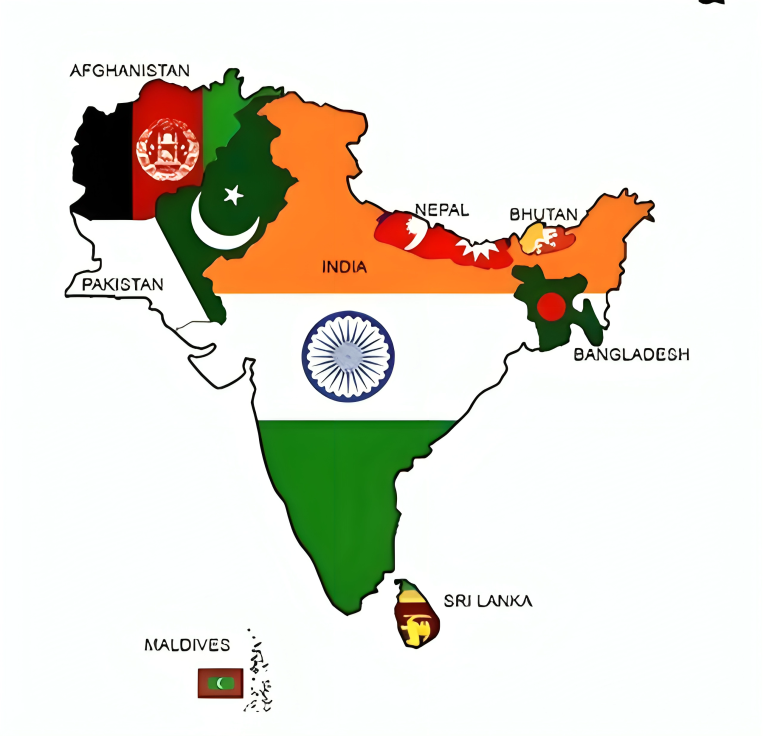
Comparing Bangladesh with India on the minority issue is utterly absurd. In South Asian geopolitics, our true benchmark of competition regarding the robbery of minority rights and persecution is not India, but rather Pakistan.
A Comparison of Ourselves in the Robbery of Minority Rights and Persecution | History & Politics Series
A Dissection of Political Representation:
While 40 Muslim MLAs powerfully represent their community in West Bengal’s 294-seat Legislative Assembly, a mere two Hindu representatives sit in a state of pathetic isolation within Bangladesh’s 300-seat Parliament. A Muslim can become the Mayor of Kolkata backed by the votes of the Hindu majority—such is the nature of their non-communal political culture. Does even a shred of this exist in any City Corporation of Bangladesh? Turning the pages of history reveals that no major political party in Bangladesh has ever taken the ‘risk’ of nominating a Hindu candidate for the mayoral office of a major city.
Rights Versus the Political Carrot:
In West Bengal, minorities are not just voters; they are stakeholders in power. They have a dedicated ministry, commissions, budget allocations, and reservation bills. On the other hand, the political culture of Bangladesh is shrouded in a bizarre masquerade. Here, politicians dangle a delicious ‘carrot’ every year, telling minorities, “Do not consider yourselves minorities.” It is as though this verbal reassurance is the greatest achievement of a minority’s civil rights! The reality is that even if all the political parties across the country were to unite, they lack the magnanimity to nominate 40 Hindus in the national elections.
The Scarcity of Top Posts:
In India, the world’s largest democracy, one can become the President, Prime Minister, Chief of Army Staff, Chief Justice, or the head of the nuclear programme without being a Hindu. Even under the rule of the so-called Hindutva-driven BJP, non-Hindus have graced the offices of President, Governor, and Mayor. But is such an example even possible in Bangladesh or Pakistan? Here, leaving top positions aside, if someone ascends to even a minor responsibility, it is viewed as an anomaly, not the norm.
The Scale of Prizes and the Game of Statistics:
For the deprivation of minority rights or persecution, our true comparison must be with Pakistan. Pakistan is undeniably the rightful claimant of the first prize in this regard. Before the Partition, the Hindu population in West Pakistan stood at 14.0%, which has today dwindled to a suffocating 1.6%. Admittedly, they could not drive everyone out, but they have successfully relegated the remainder to the lowest strata of society.
Bangladesh is not lagging too far behind; we are worthy contenders for the second prize. Before the Partition, the Hindu population in this part was 28.0%, which has today plummeted to 7.9%. While we have ‘successfully’ seen off a vast majority, whether the remaining 7.9% is a result of our political failure or our generosity remains a subject ripe for research.
Why India Is Not Our Competitor:
In this game of ‘minority elimination’ or the ‘robbery of rights’, India’s performance is thoroughly disappointing. At the time of Partition, the Muslim population in India was 13.0%, which, instead of decreasing, has actually risen to 14.5% at present. Conversely, Hindus constituted 83.0% of India’s population during Partition, but they have managed to reduce their own share to below 80% today.
A country that fails to maintain its majority share while allowing its minority share to grow cannot be compared to ‘efficient’ nations like ours. Therefore, on the minority issue, we are fellow travellers of Pakistan; we simply do not compare to India.
See more: