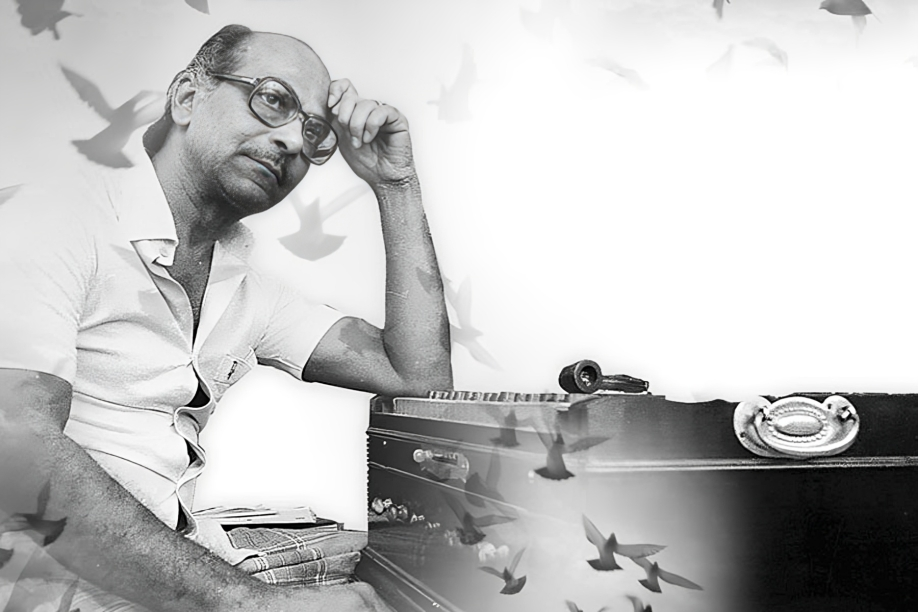
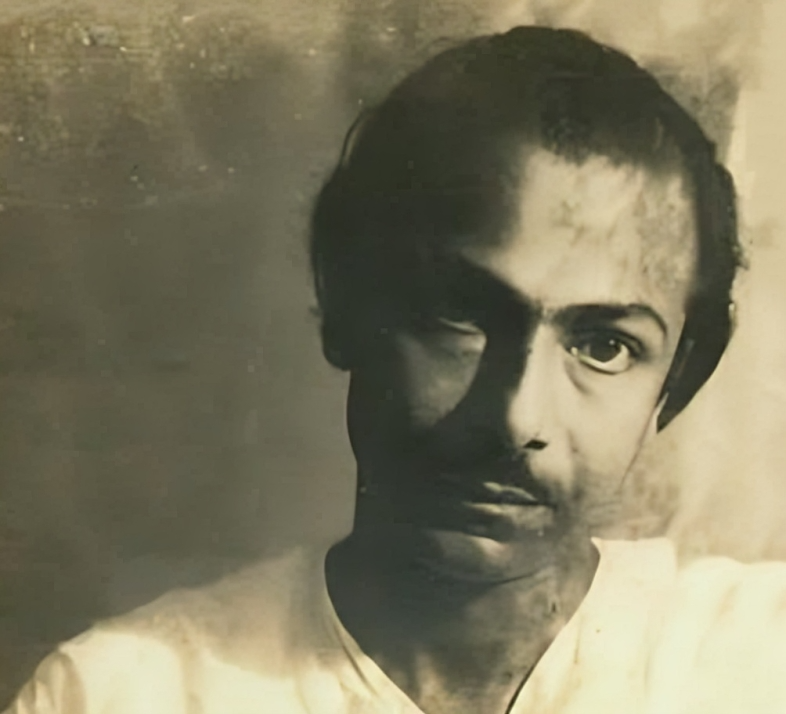
I have no hesitation in stating that Salil Chowdhury is my absolute favourite composer. Some are born to be artists; some meticulously fashion themselves into artists; whilst others employ art merely as a vehicle to articulate the profound, novel ideas they carry within. Salil Chowdhury belonged to that rare breed of creators who harnessed music, poetry, theatre, and painting to give voice to his groundbreaking philosophies. From early childhood, he absorbed the diverse melodies, rhythms, and textures of Indian music, whilst simultaneously embracing Western classical traditions with equal fervor. Using music as his primary medium, he began expressing his worldview by composing songs for mass peasant and proletarian movements. Subsequently, he completely revolutionised the fabric of modern Bengali songs and Indian cinema music, becoming the beloved “Salil-da” to everyone. He did not just compose melodies; he initiated an entirely new era in music arrangement.
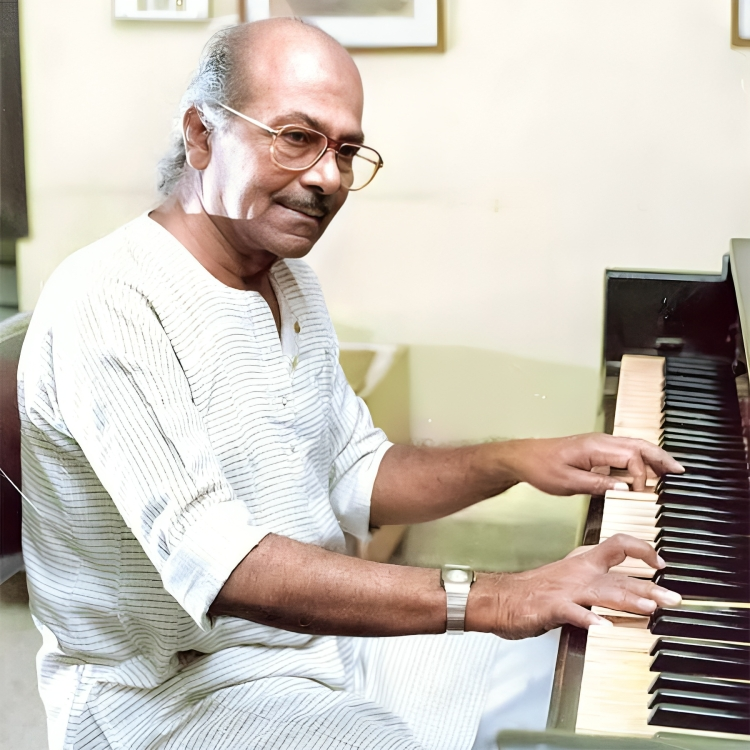
Table of Contents
My Salil Chowdhury
A poem by Jibanananda Das encapsulates him perfectly:
“None hath known what I know—a certain message—
I bring borne;
The melody you once heard—is spent,
Tis old now,—something new
Is required,
And so I have arrived,—like unto me
There is none other!”
From the Bengal Famine of 1943 and the Tebhaga Movement to the Liberation War of Bangladesh—he spoke his mind on every contemporary historical event through his music and poetry.
My Favourite Songs by Salil Chowdhury:
Jodi Kichu Amare Shudhao
Na Jeyo Na
Ami Jhorer Kache Rekhe Gelam
Ebar Ami Amar Theke
Ya Re Ya Re Ure Ya Re Pakhi
Na, Mon Lage Na
Kono Ek Gayer Bodhu
Runner
Hei Samalo
Aj Noy Gun Gun Gunjan Preme
O Alor Poth Jatri
Ogo Ar Kichu To Noy
O Bashi Hay
Keno Kichu Kotha Bolo Na
Gayer Bodhu
Ga Ga Re Pakhi Ga
Jhonon Jhonon Baje
Duronto Ghurnir Ei Legeche Pak
Na Jeo Na Rojoni Ekhon Baki
Pothe Ebar Namo Sathi
Baje Go Beena
Bicharpoti Tomar Bicar Korbe Jara
Bujhbe Na Keu Bujhbe Na
Yare Yare Ure Yare Pakhi
Sat Bhai Champa Jagore Jagore
My Favourite Poems by Salil Chowdhury:
Ei Roko | Ami | Ami Kobi Noi | Ulysses | Itihash | Ekgucco Chabi | Ekti Kobitar Jonno | Kobita | Nirupay | Nischindipur-er Kabyo | Prem | Phand | Boyosh | Bhabna | Mangshashir Jonno Biggapon — 1946 | Shopoth | Hoimontik
My Favourite Rhymes by Salil Chowdhury:
Autograph | Kankatar Chora | Kissu Hobenare Dada Kissu Hobe Na | Chander Chora | Pothiker Chora | Bomar Chora | Bhimroti Sen | Lokkho | Lag Jhumajhum Boom | Shilpir Chora | Shob Pawar Chora | Cinemaj Chora | Sen Bonam Shyen
The Complete Discography of Salil Chowdhury:
I begin this chronicle today; heaven knows when I shall be able to conclude it.
Salil Chowdhury’s Songs of Mass Awakening
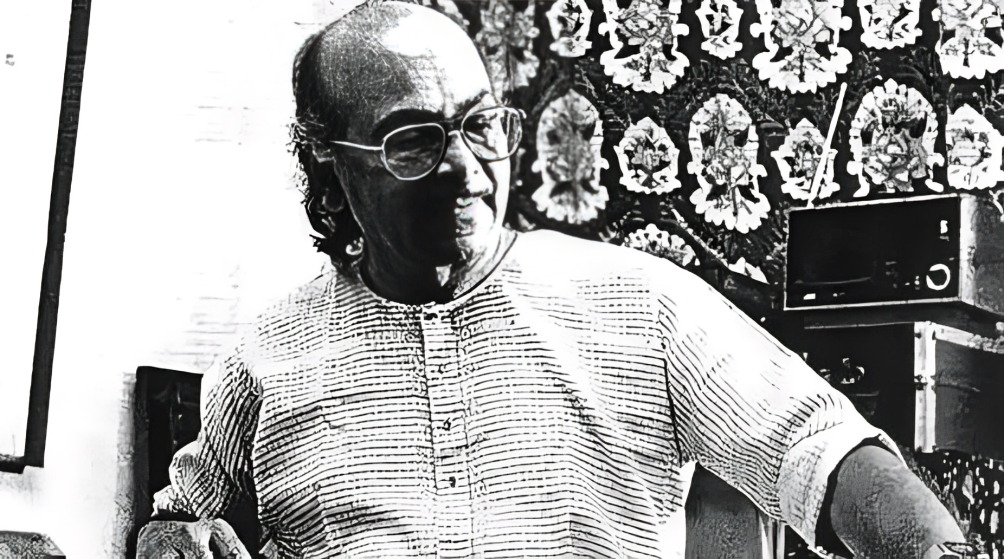
If one observes closely, the vast majority of Salil Chowdhury’s mass protest songs (Ganasangeet) were composed during the 1940s and 1950s. It can be asserted beyond doubt that this period was the most critical and inventive epoch of his life. He began writing songs immediately after finishing school. His childhood friends—who later joined him in the Indian People’s Theatre Association (IPTA)—recounted that Salil’s early compositions bore the distinct influences of Rabindranath Tagore, Pankaj Mullick, and Jyotirindra Moitra. In particular, Jyotirindra Moitra’s ‘Nabajiboner Gaan’ (Songs of New Life), a compilation of 23 songs, left a profound imprint on him.
However, within a remarkably short span, Salil Chowdhury carved out his own distinct path. Merging his evolving political consciousness with his extraordinary command over melody and lyrics, he began penning songs that hold a monumental place in the history of modern Bengali music to this day. These songs offered sharp, unflinching commentaries on the society and politics of his time—entirely exceptional in both word and tune.
The Incendiary Years (1944–1948)
This segment chronicles Salil Chowdhury’s early, fiery IPTA phase—compositions that encapsulated the revolutionary spirit of peasants, labourers, students, and the freedom struggle.
1. Uru Toka Toka Taghina Taghina (1944–45) One of Salil’s earliest IPTA tracks, celebrating the joy of sowing and harvesting amongst rural peasantry. (Later adapted into Hindi as “Hariyala Sawan Dhol Bajata Aaya” for the film Do Bigha Zamin).
2. Alor Desh Theke Ondhokar Par Hoye (1945–46) A clarion call to construct a utopian homeland through sacrifice and toil. This track marks one of his earliest experimental applications of vocal harmony.
3. Gourishringo Tuleche Shir (1946) A call for youth solidarity against the backdrop of the post-WWII global peace movement.
4. Dheu Utche, Kara Tutche (29 July 1946) An historic mass anthem composed in solidarity with the Royal Indian Navy mutiny. It remains an unparalleled milestone in the implementation of Western harmony within Bengali music.
5. Karar Duar Bhango, Bhango Oikkor Bojro Kothin Hate (1940s) An impassioned appeal demanding the release of political prisoners exiled to the Andaman Islands. The original master recording is lost; it survives through later renditions by IPTA artists.
6. Ayre O Ayre (1946) A defiant protest anthem asserting the peasants’ absolute right over their harvest against feudal, zamindari exploitation. Later recorded in Salil’s own voice for the album Ghum Bhangar Gaan.
7. Age Cholo, Age Cholo (1948) Composed in memory of the martyred students Rameshwar and Kadam Rasul during the Calcutta student uprisings at Dharmatala. The notation was lost for years before being rescued by IPTA veterans.
8. Bhango Bhango Bhango Bhango Kara (1940s) A call to shatter the shackles of false promises and illusions, written during the Andaman prisoners’ agitation.
9. Bicharpoti Tomar Bicar Korbe Yara (1947) A scathing indictment of the British judicial system. Composed using traditional Kirtan structures, it represents a flawless marriage of lyricism and music.
10. Nobarun Rage Range Re (1948) One of the earliest duets recorded by Salil Chowdhury alongside Geeta Mukherjee, celebrating the dawn of independence and struggle.
11. Nondito Nondito Desh Amar (1948) An ode praising the motherland and inviting the populace to celebrate its cultural heritage. The lyrical structure is highly innovative.
12. He Samalo Dhan Ho, Koste Dao Shan Ho (1948) The definitive historical anthem of the Tebhaga peasant movement. Certain verses were heavily censored by the authorities due to their incendiary nature.
13. Manbo Na Badhone (1948) A fierce rejection of poverty, black-marketing, and systemic social injustice. First recorded by Manna Dey.
14. Amar Protibader Bhasha (1948) A solemn vow and prayer to stand tall against oppression. First recorded by the legendary Debabrata Biswas.
15. Tomar Buker Khuner Cinho Khuji (1948) A heart-wrenching elegy composed upon the untimely demise of the revolutionary poet Sukanta Bhattacharya and the martyrs of the 1948–49 uprisings.
Post-Independence Realities & Distant Horizons (1948–1951)
This segment profoundly captures the post-partition disillusionment, food crises, political imprisonment, and desperate pleas for peace and solidarity.
16. Shono Shono Bhaire (1948–49) A song that confronts the bitter realities and satirical truths of the common man’s life immediately after Independence. It delivers the ruthless commentary that honest survival is impossible unless one is either a minister or a black-marketeer.
17. O Moders Deshbashi Re (1949) A stirring call to compatriots to unite against division and discrimination. This exceptional IPTA track was composed using the rhythmic structures of the Assamese Bihu folk tradition.
18. Hate Moder Ke Debe Ke Debe Se Bheri (1949) An anthem celebrating the boundless potential of collective proletarian power. First recorded by IPTA vocalists, it was later re-recorded by Hemanta Mukherjee.
19. O Alor Pothjatri, E Je Ratri—Ekhane Themo Na (Aahban Shono Aahban) (1949) A stern warning to the nation not to lapse into complacency following Independence. It remains one of Salil’s most celebrated mass anthems.
20. Shei Meye—Hoyto Take Dakeni Keu (1950) A poignant song addressing the human catastrophe following the Bengal famine. It traces the tragic continuity of the life of the very girl from Rabindranath’s Krishnakali.
21. Dustor Parabar, Ay Ke Hobi Re Par (1950s) A symbolic composition utilizing the metaphor of a boat to represent the tempestuous struggles of the masses.
22. Janmabhumi (Dhongo Ami Jonmechi Ma Tomar Dhulite) (1951) A song steeped in pride and reverence for the motherland. It achieves an extraordinary dimension through its brilliant adaptation of John Brown’s “Glory, Glory, Hallelujah”.
23. Amader Nanan Mote Nanan Dole Doladoli (Shantir Gaan) (1951) A plea for solidarity against political factions in the wake of the post-WWII global landscape. This stands as a monumental IPTA recording featuring the voices of Salil Chowdhury and Suchitra Mitra.
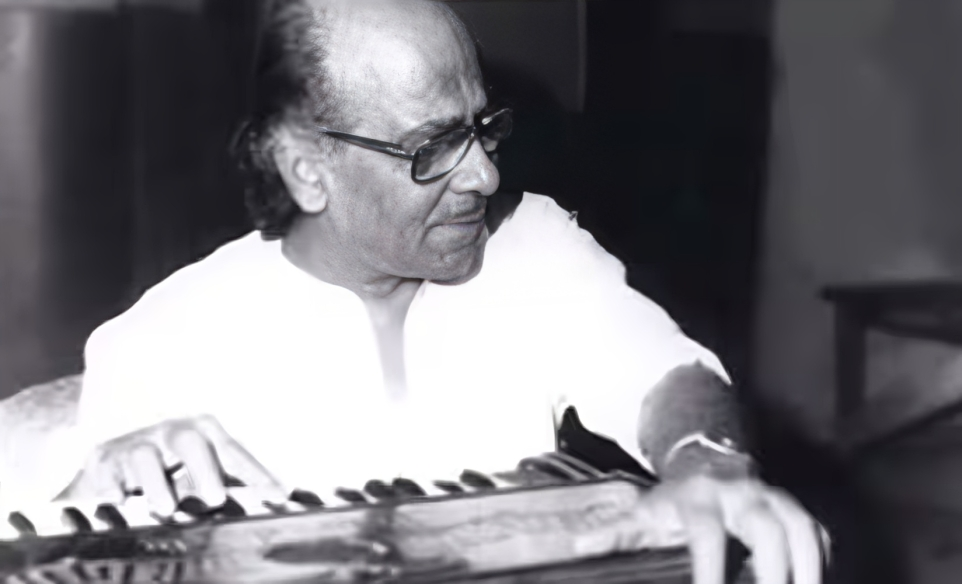
The Call of the Soil & Youth Uprisings (1953–1960)
This era vividly highlights agrarian life, the awakening of the youth, calls to shatter the darkness, and utopian visions for the future.
24. Ay Re He Poushali Batase (1953) A joyous song capturing the essence of the new harvest and rural agrarian life. Although regularly performed at IPTA gatherings, it was never officially released as a Bengali record; it was later adapted into the Hindi track “Naach Re Dharti Ke Pyaare”.
25. E Je Ondhokare Bose Bondho Dorete Shudhu Bertho Ghat Aana (1950s) A deeply philosophical and political piece urging the masses to abandon futile, isolated protests in the dark in favour of organized, conscious resistance.
26. Naujawan, Naujawan—Biswe Jegeche Naujawan (1950s) A powerful global rallying cry for youth solidarity, infused with a fierce internationalist spirit.
27. Naker Bodole Norun Pelam—Tak Dumadum Dum (1950s) A piece dripping with sharp political satire and irony. It launched biting critiques at both British rule and the ruling elite of post-Independence India. Consequently, it remains one of his most heavily censored tracks.
28. Cholo Cholo He Muktishenani—Bhedo Sorphoshir Doli (1950s) One of the most exhilarating and revolutionary marching anthems of the IPTA era, designed to instil courage in freedom fighters.
29. Pothe Ebar Namo Sathi, Pothei Hobe E Poth Chena (1954) Composed against the backdrop of the historic teachers’ protest, this anthem celebrates unity and defiance. First recorded by Hemanta Mukherjee.
30. Jhankaro Jhankao Rudrafeena (1959–60) A powerful choral composition celebrating peace, progress, and a brilliant tomorrow, specifically arranged for the Bombay Youth Choir.
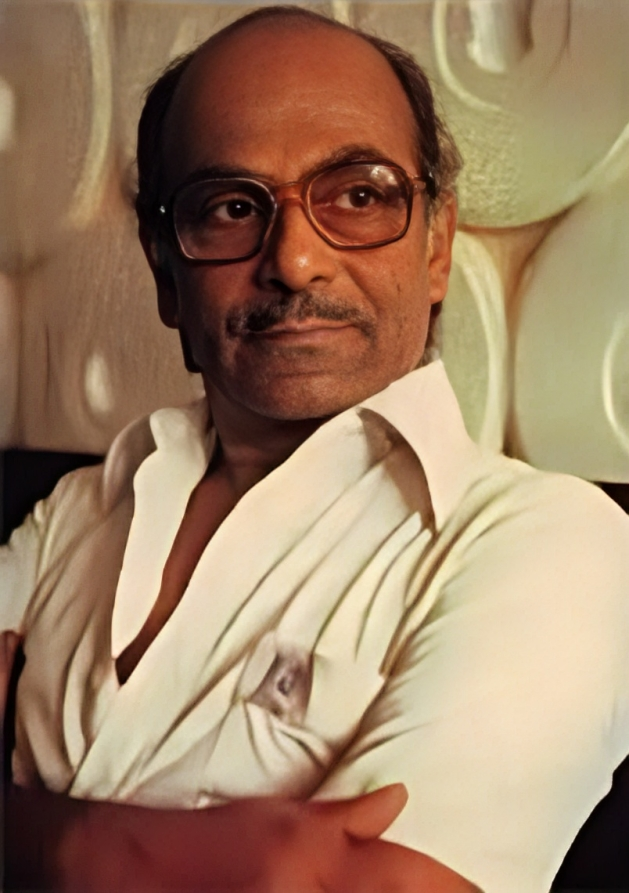
Post-Independence Epoch, National Unity & Evolving Consciousness (1972–1985)
During this phase, Salil Chowdhury’s compositions shifted towards the complex socio-political landscape of post-Independence India, democratic rights, anti-war philosophies, and matured dreams.
31. Ei Desh Ei Desh Amar Ei Desh (1972) A patriotic tribute celebrating the pluralistic unity of India, composed for All India Radio to commemorate 25 years of Indian Independence.
32. Jibon Jokhon Shudhu Du’din (1957 / Bengali Lyrics 1982) A philosophical song reminding humanity of the transience of life to invoke a sense of social responsibility. The Bengali rendition was penned in the United States for the album Uttaran.
33. Door Noy Door Noy Digonto Door Noy—Oi Shono Muktir Barabhoy (1960s) An optimistic and robust choral anthem declaring that a liberated society is well within reach.
34. Odhikar Ke Kake Dey (1982) Written in the political aftermath of the Indian Emergency, this track carries the defiant message that fundamental rights are never granted as charity—they must be wrested through struggle.
35. Ektu Chup Kore Shono (1982) A humanistic appeal against global poverty, hunger, and oppression. It represents the quiet, profound defiance characteristic of Salil’s mature philosophy.
36. Aro Doore Jete Hobe (1982) A call to march forward towards a world free from warfare, destitution, and inequality, urging the listener to discover the inner traveler destined for a new earth.
37. Sarata Desh Jure Amar Ghorbari (1982) A song that rises above regionalism and sectarianism to celebrate a broader Indian identity, serving as a spiritual successor to the 1951 track “Amader Nanan Mote”.
38. Purano Din Purano Mon (1982) An energetic call to dismantle stagnant, archaic values to build a progressive society through unity and shared struggle.
39. Juddho Keno Hoy (1982) A profound anti-war query that draws on the painful memories of Hiroshima and Nagasaki to protest the cold cruelty of global geopolitics.
40. Choleche Aaj Cholbe Kaal Shantir Ei Michil (1982) A direct marching song composed during the peace movement, serving as a timeless symbol of humanity marching shoulder to shoulder for peace.
41. Shedin Aar Kot doore (1985) An optimistic vision of a green, prosperous, and happy future India, framed within the complex, sophisticated cadences of choral music.
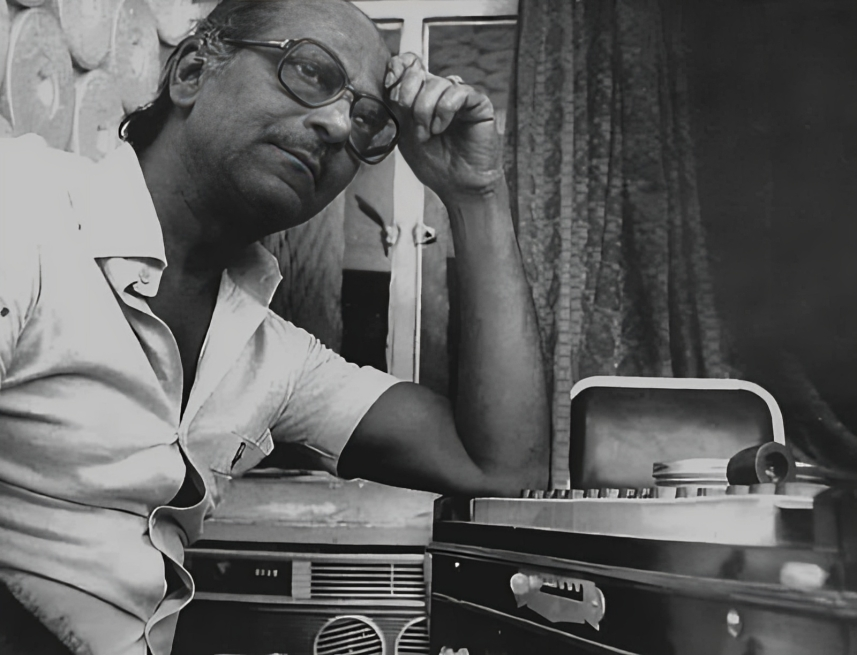
The Lata-Salil Chapter: A Celestial Symphony
The collaboration between Salil Chowdhury and Lata Mangeshkar represents a golden, flawless epoch in the history of Indian playback music. It was a union of two musical anomalies: a composer whose mind was a tempest of complex Western polyphony and deep Indian classical roots, and a vocalist whose immaculate pitch and fluid emotional range could effortlessly give shape to those intricate musical blueprints.
Salil Chowdhury once famously remarked:
“Lata is a musical instrument that can play any note, any microtone, in any tempo, with absolute perfection. When I compose for her, I never have to hold back my imagination out of fear that a singer won’t be able to deliver it.”
Lata Mangeshkar, conversely, always held Salil-da’s complex, unconventional compositions in the highest regard, often noting that his songs demanded the absolute peak of a singer’s technical and emotional focus. Together, they transcended regional and linguistic boundaries, delivering masterclasses in both Bengali modern songs (Adhunik Gaan) and Hindi cinema playback.
The Bengali Masterpieces (Adhunik Gaan & Playback)
In Bengal, the Salil-Lata combination redefined the soundscape of the 1950s and 60s, moving away from simple linear melodies to introduce rich orchestrations, counter-melodies, and complex chord progressions that had never been heard before in Bengali music.
42. Na Jeyo Na (1954)
Arguably one of the most romantic and melancholic Bengali modern songs ever recorded. Salil’s brilliant use of string arrangements perfectly complements Lata’s hauntingly soulful rendition of a lover’s plea.
43. Ogo Ar Kichu To Noy (1957)
A masterclass in restraint and classical phrasing. The song moves like a gentle, rhythmic stream, showcasing Lata’s flawless breath control over Salil’s subtle syncopations.
44. Na, Mon Lage Na (1959)
A vibrant, uptempo melody that masks a deep sense of restlessness and yearning. The track is highly celebrated for its innovative use of acoustic guitar and percussion that drives the melody forward.
45. Ja Re Ja Re Ure Ja Re Pakhi (1959)
A magnificent composition that utilizes the metaphor of a bird to express the flight of human desire and memory. (Later adapted into Hindi as the iconic “Ja Re Ja Re Ud Ja Re Panchhi” for the film Maya).
46. O Bashi Hay (1960)
A song steeped in classical raag-based structures but completely reimagined through Salil’s signature modern arrangement. The flute interludes create a brilliant dialogue with Lata’s vocals.
47. Keno Kichu Kotha Bolo Na (1960)
An emotionally heavy composition dealing with silence and unexpressed grief. The orchestral build-up in the stanzas showcases Salil’s genius as an arranger.
48. Na Jeo Na Rojoni Ekhon Baki (1963)
A cinematic masterpiece that blends intense theatrical drama with pure vocal melody. Every transition in this track demands absolute vocal precision, which Lata delivers flawlessly.
49. Ga Ga Re Pakhi Ga (1960s)
A joyous, almost pastoral melody that celebrates nature and freedom. The vocal modulations required for the high notes in this track remain a benchmark for aspiring vocalists.
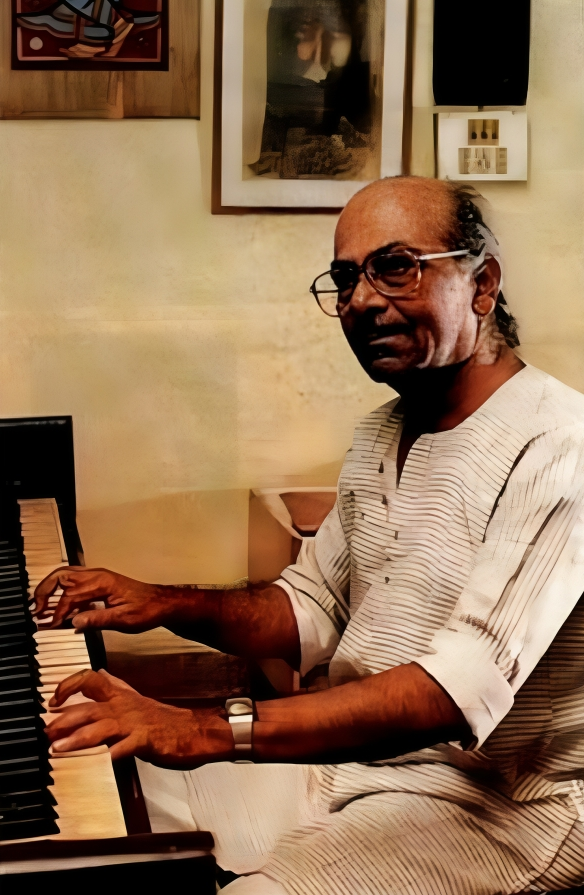
The Hindi Cinema Triumphs (The Bollywood Blueprint)
When Salil Chowdhury moved to Bombay (now Mumbai) to score films, his collaboration with Lata Mangeshkar yielded some of the greatest soundtracks in the history of Indian cinema, defining the musical identity of iconic films.
50. Aaja Re Pardesi (Madhumati, 1958)
The ultimate ghost-theme song that won Lata Mangeshkar her very first Filmfare Award. Salil used a haunting, repetitive acoustic guitar hook and an eerie string section to create an atmospheric masterpiece that perfectly captured the film’s theme of reincarnation.
51. Ghadi Ghadi Mera Dil Dhadke (Madhumati, 1958)
A delightful, upbeat track that captures the innocent nervousness of a village girl. The use of folk percussion combined with Western strings highlights Salil’s ability to bridge two completely different worlds.
52. Itna Na Mujhse Tu Pyaar Badha (Chhaya, 1961)
A breathtaking duet with Talat Mahmood, though Lata’s verses anchor the emotional weight of the track. Salil brilliantly adapted a motif from Mozart’s 40th Symphony into the orchestral arrangement, creating a seamless blend of Western classical and Indian playback.
53. Mila Hai Kisi Ka Jhumka (Parakh, 1960)
A playful, light-hearted composition where Salil uses minimalist instrumentation to let Lata’s expressions and vocal agility take center stage.
54. O Sajna Barkha Bahaar Aayi (Parakh, 1960)
Universally regarded as one of the greatest rain songs in Indian cinema. Based on Raag Khamaj, Salil used the sitar (played by the legendary Ustad Rais Khan) to mimic the sound of falling raindrops, while Lata’s vocals evoke the deep, agonizing yearning of monsoon romance.
55. Machalti Aarzoo (Anand, 1971)
Though Anand is celebrated mostly for Mukesh and Manna Dey’s tracks, this particular song rendered by Lata is a hidden gem of complex time signatures and sophisticated melodic shifts that only Salil could write and only Lata could sing.
56. Na Jiya Laage Na (Anand, 1971)
Based on Raag Marwa, this song captures a profound sense of loneliness and existential ache. The haunting simplicity of the melody is backed by a deeply intricate chord structure, making it one of the most intellectually satisfying compositions of their partnership.
The Titans of Expression: Hemanta and Manna
If Lata Mangeshkar was the pristine instrument for Salil Chowdhury’s complex melodic flights, Hemanta Mukherjee and Manna Dey were the architects who grounded his revolutionary ideas in raw, human emotion.
Salil’s relationship with Hemanta Mukherjee was deeply symbiotic. Hemanta possessed a majestic, baritone voice that felt like the steady soil of Bengal itself—calm, deep, and reassuring. Salil used this voice to give wings to his long, sprawling, descriptive poems (Kabyageeti) that defied traditional song structures.
Manna Dey, on the other hand, brought a formidable background in Indian classical music and an astonishing grasp of intricate rhythmic cycles. When Salil needed precision, dramatic vocal acting, or complex classical-modern fusion, he turned to Manna Dey. Together, these two singers helped Salil completely rewrite the rulebook of the modern Bengali song (Adhunik Gaan).
The Hemanta Mukherjee Chapter (The Voice of the Soil)
This segment chronicles how Salil Chowdhury and Hemanta Mukherjee broke away from traditional 3-minute song formats to create cinematic, long-form musical narratives that remain unparalleled milestones.
57. Gayer Bodhu (1949)
A monumental milestone in Bengali music history. Clocking in at over seven minutes, this long-form epic narrates the tragic tale of a young village bride caught in the devastation of the 1943 Bengal Famine. Salil discarded the standard strophe-antistrophe format, creating a fluid, theatrical composition that moved like a musical documentary, brought to life by Hemanta’s deeply evocative narration and singing.
58. Runner (1950)
Based on the iconic poem by Sukanta Bhattacharya, this song pays tribute to the forgotten, nocturnal struggles of the rural postal runner. Salil brilliantly used percussion to mimic the rhythmic, relentless sound of running footsteps, while Hemanta’s breathless, urgent vocal delivery captures the exhaustion, pride, and anxiety of the runner.
59. Palkir Gaan (1952)
Another long-form narrative masterpiece, based on Satyendranath Dutta’s poem describing the journey of palanquin bearers through a hot summer day. Salil used vocal harmonies and complex shifts in tempo to depict changing landscapes, from the blazing afternoon sun to a sudden evening thunderstorm, perfectly anchored by Hemanta’s vocal stamina.
60. Ogo Ar Kichu To Noy (1950s)
A romantic track that showcases the softer, deeply intimate side of the duo. The melody flows with a gentle, hypnotic grace, highlighting Hemanta’s rich tonal texture against Salil’s minimalist acoustic orchestration.
61. Ami Jhorer Kache Rekhe Gelam (1956)
A profoundly philosophical and defiant track. It serves as a personal testament of an artist leaving his legacy to the tempestuous forces of nature. Hemanta’s voice carries a massive, larger-than-life weight that gives the song its timeless, anthemic quality.
62. Thikana (1950s)
A haunting track dealing with loss, displacement, and the search for identity in post-partition Bengal. The minimal use of instruments emphasizes the stark, melancholic loneliness in Hemanta’s voice.
The Manna Dey Chapter (The Classical Powerhouse)
This era highlights Salil’s exploration of intricate rhythms, high-pitched vocal acrobatics, and sharp social commentary through the versatile voice of Manna Dey.
63. Duronto Ghurnir Ei Legeche Pak (1958)
An explosive uptempo track that captures the chaotic, dizzying velocity of life and time. Salil’s composition relies on incredibly fast-paced phrasing and rapid time transitions, which Manna Dey executes with flawless precision and energy.
64. Jhonon Jhonon Baje (1950s)
A song heavily rooted in classical structures but arranged with an unmistakably modern, dynamic edge. The song showcases Manna Dey’s flawless classical training, effortlessly navigating Salil’s challenging, microtonal shifts.
65. Ebar Ami Amar Theke (1960s)
A deeply introspective Bengali modern song where the protagonist seeks to detach from his own ego and identity. The subtle emotional transitions required for this track make it one of the most intellectually sophisticated pieces Manna Dey ever sang for Salil.
66. Dhannyobhoogo (1960s)
A brilliant piece of musical satire aimed at systemic hypocrisy. Manna Dey uses his voice almost like a theatre actor, infusing the lyrics with the exact blend of irony, wit, and underlying anger that Salil’s poetry demanded.
67. Zindagi Kaisi Hai Paheli (Anand, 1971)
Moving to Hindi playback, this is universally regarded as one of the finest philosophical songs in Indian cinema history. Originally intended as a background instrumental march, Salil added lyrics upon the insistence of filmmaker Hrishikesh Mukherjee. Manna Dey’s warm, contemplative rendition perfectly encapsulates the film’s poignant meditation on life, mortality, and joy.
See more: