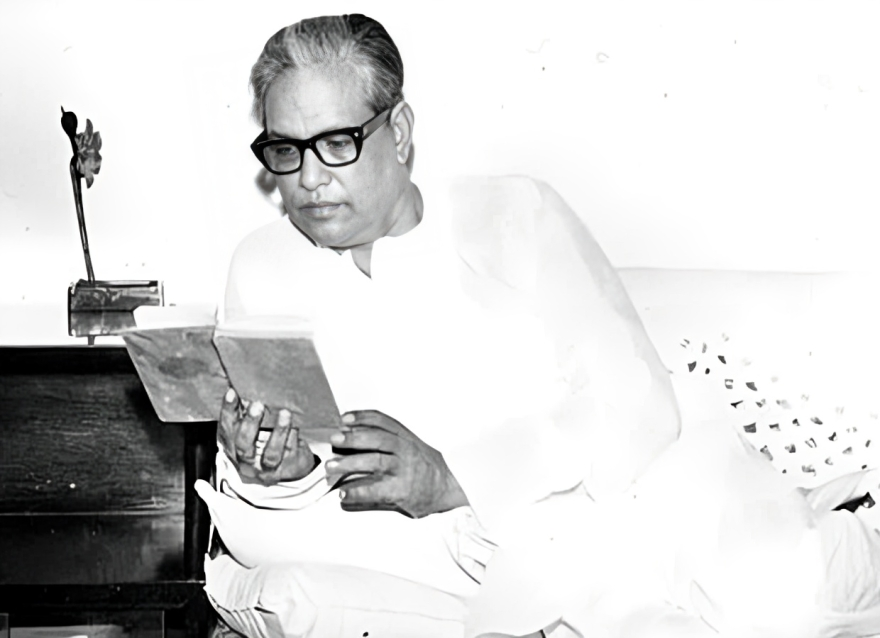
I am a spellbound admirer of Majrooh Sultanpuri. An Islamic scholar who completed the rigorous Dars-e-Nizami course, and a trained Hakeem (practitioner of Unani medicine), he chose poetry as his life’s calling. As a poet, he was deeply serious and highbrow. Yet, as a lyricist, he penned mainstream Bollywood chartbusters like “Chura Liya”, “Pehla Nasha”, or “Papa Kehte Hain”. Among those from the Communist Party’s Progressive Writers’ Movement who entered the film industry and sought to use cinema to disseminate their ideals, Majrooh stands out as a luminous figure. He even served time in prison for his writings.
Dead words remain confined to dictionaries. We forget most of them. Even if we drag them out occasionally, we fail to breathe life into them. It is artists who bring them into their artwork and make them vibrant. Great artists demonstrate a distinct art, knack, or flair for using a particular word. That very knack embellishes the word with gloss and color, making it “exquisite”.
One such great artist was “Majrooh Sultanpuri”. As a lyricist, he taught the Hindi film industry the art of utilizing many such new words. It was he who introduced words like “Sanam” (beloved) and “Janam” (darling) into the vocabulary of film songs.
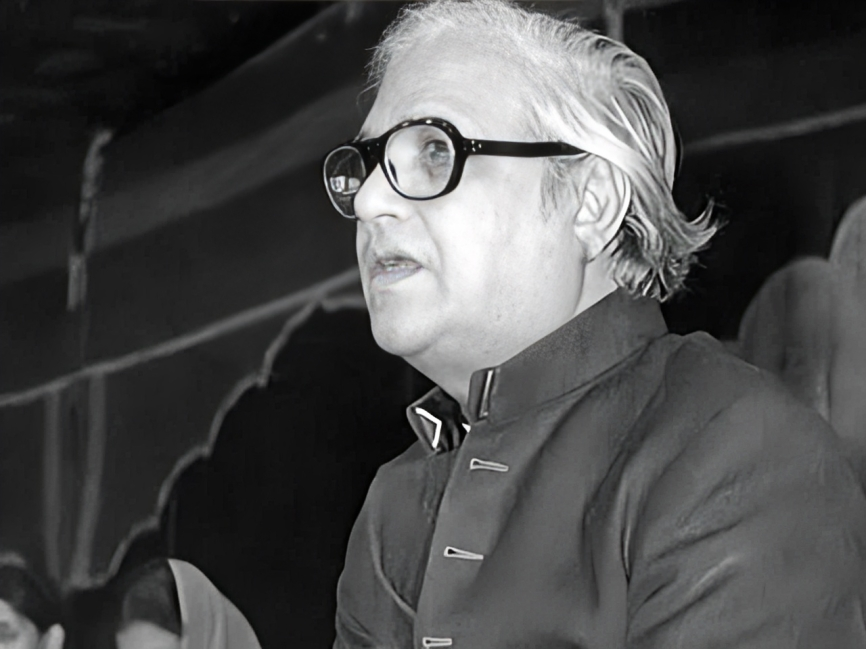
The standard rule in Hindi cinema was that after hearing the situation from the director, the music director would compose the tune first. A lyricist would then understand the situation and write the lyrics, strictly following the melody and rhythm. The lyricist had to write within the precise meter set by the composer; they enjoyed no freedom to write in a meter of their own choosing. Some mockingly compared this process to digging a grave first and then searching for a corpse that fit its dimensions. Every lyricist accepted this and worked accordingly, confining their literary expression within the boundaries of the composer’s melody and rhythm.
However, there was one man who stood apart. Like everyone else, he would embrace the melody, dissolve into its essence, and initially arrange the song with his finest vocabulary. But then, he would scan the melody to find tiny, unnoticed spaces. In those gaps, he would deftly tuck in words like flowers to adorn the song. Furthermore, those words were not the mundane ones used by everyone in daily life. Instead, he would unearth words that no one had ever dreamed of using in a film song and silently weave them in. It was only after the song was released that one realized what a lyrical atomic bomb he had manufactured. He was Majrooh Sultanpuri, or Asrar ul Hassan Khan. This piece is my take on Majrooh Sultanpuri—how I see him and how I feel his presence.
Table of Contents
My Majrooh Sultanpuri
Listen to these two songs by Majrooh Sultanpuri and ponder his legacy. I shall return very shortly…
Majrooh Sultanpuri was born on 1 October 1919 (historically corrected from 1999) in the Sultanpur district of Uttar Pradesh. Although his father worked in the police department, he was rather conservative. Instead of sending his son to study English, he sent him to a madrasa. After graduating from the madrasa as an Alim, Majrooh enrolled in Unani medicine. He had been experimenting with poetry since childhood. However, after starting his practice as a Hakeem, he happened to recite one of his gazals at a Mushaira (poetry symposium). It received immense acclaim. Following this, his attendance at Mushairas became regular. Gradually, his interest in medicine waned, and his heart drifted entirely towards Shayeri (poetry). Eventually, he made a conscious decision to leave everything else behind and become a poet. In those days, having a mentor (Ustad) was essential to flourish as a poet. Majrooh became a disciple of the legendary poet of that era, Jigar Moradabadi.
During this period, he fell in love with the daughter of the local Tehsildar (tax officer). It was only natural that a Tehsildar would refuse to accept a half-physician, half-poet as a son-in-law. Consequently, he had to leave Sultanpur. Destiny subsequently brought him to Bombay. One day at a Mushaira in Bombay, the prominent film producer of the time, A.R. Kardar, heard his poetry. Kardar was instantly impressed. He approached Jigar Moradabadi with a proposal for his disciple, Majrooh, to write songs for Kardar’s films. Majrooh was reluctant. In those days, working in cinema was not considered particularly respectable.
Moreover, in his eyes, film lyrics were nothing short of absolute rubbish. Jigar Moradabadi reasoned with him, explaining that writing poetry alone would not suffice; he needed a livelihood. He encouraged Majrooh to write for films and strive to elevate the quality of film songs while continuing his serious poetry. Majrooh agreed. That assent marked the beginning of a historic journey. Majrooh later described this journey in his own legendary couplet:
I set out alone towards my destination,
People kept joining in, and it turned into a caravan!
Main akela hee chala tha janibe manzil magar,
Log saath aate gaye aur carvan banta gaya!
In the beginning, Kardar took him to another legendary composer, Naushad. Within a short time, Naushad grew incredibly fond of Majrooh. They began working on the film Shahjehan (1946). The film became a massive hit. This film also marked the debut of lyricist Khumar Barabankvi.
There are many touching anecdotes linking him with fellow artists. Once, an attempt was made to assassinate Lata Mangeshkar by lacing her food with poison. The culprits remained unidentified. However, following this incident, Majrooh Sultanpuri visited Lata ji’s house every single evening. He would sit by the ailing singer, recite poetry to her, and keep her company. Crucially, he would personally taste the food cooked for Lata ji first to ensure its safety before allowing her to eat.
When the legendary Bengali composer Salil Chowdhury adapted his iconic song “Ja Re Ure Ja Re Pakhi” into Hindi, he had Majrooh Sultanpuri write the lyrics. That version was also sung by Lata Mangeshkar.
In that song (“Ja Re Ud Ja Re Panchhi”), the use of two specific phrases is etched deeply in my mind.
The first is “Ajab-gam-ki-andhi”, which translates to “a strange nor’wester of grief.” The second word is “Ansuan”, an archaic, poetic plural for tears.
While the literal translation might sound simple, those who savor the poetic essence in lyrics or read Shayeri will understand the profound weight of this artistic expression.
Let us look at a few of his timeless couplets (Shers)…
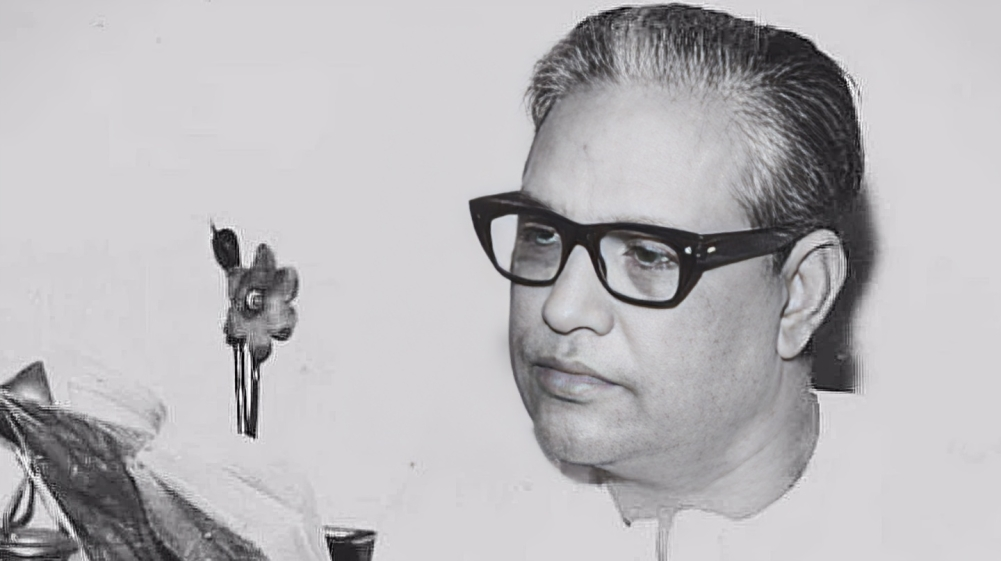
Couplets (Shers)
1.
Urdu: میں اکیلا ہی چلا تھا جانبِ منزل مگر لوگ ساتھ آتے گئے اور کارواں بنتا گیا
Roman: Main akela hi chala tha jaanib-e-manzil magar / Log saath aate gaye aur kaarwaan banta gaya
Translation: I had set out all by myself towards my destination! / But people kept joining me along the way, and in time, a whole caravan was formed.
2.
Urdu: جلا کے مشعلِ جاں ہم جنوں صفات چلے جو گھر کو آگ لگائے ہمارے ساتھ چلے
Roman: Jala ke mashal-e-jaan hum junoon sifat chale / Jo ghar ko aag lagaaye humare saath chale
Translation: Igniting the torch of my soul, I march ahead like a passionate madman! / Only he who is willing to set fire to his own home may join me as a fellow traveler today.
3.
Urdu: یہ بھی کیا کم ہے کہ ہم تجھ سے ملے ہیں دل کے جلنے کا سبب اور کوئی ہو گا
Roman: Yeh bhi kya kam hai ke hum tujh se mile hain / Dil ke جلنے ka sabab aur koi ho ga
Translation: Is it any small fortune that our paths have crossed? / The reason behind this aching heart of mine must surely lie elsewhere.
4.
Urdu: وفا کی راہ میں کانٹے ہی کانٹے تھے مَجروحؔ ہم نے تو ہر قدم پہ اپنے لہو کے دیئے جلائے
Roman: Wafa ki raah mein kaante hi kaante the Majrooh / Hum ne to har qadam pe apne lahu ke diye jalaaye
Translation: The path of fidelity was strewn entirely with thorns, O Majrooh! / Yet, with every step we took, we lit lamps fueled by our own blood.
See Also: