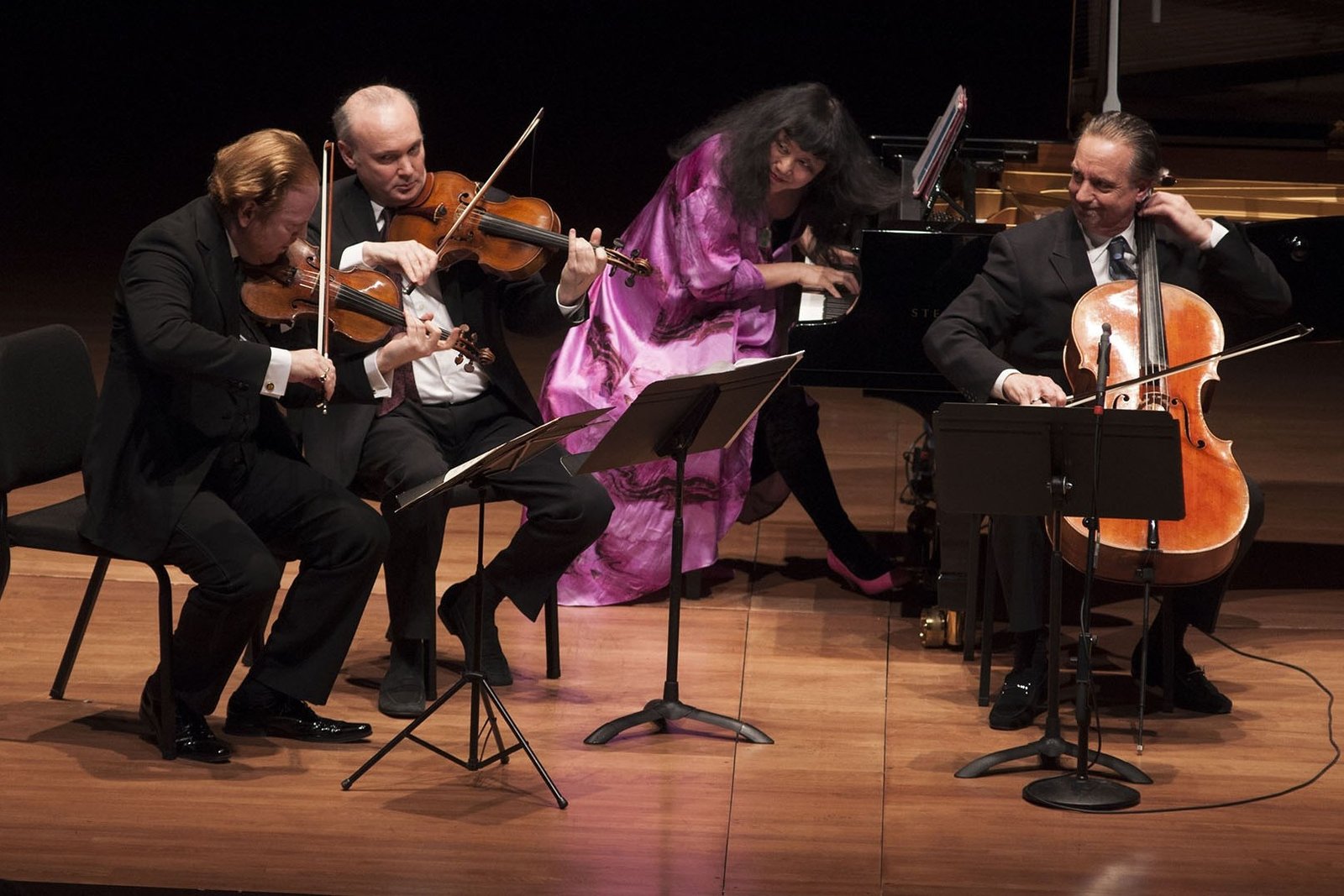
Within the vast canvas of Western Classical Music, Chamber Music stands as a unique and sublime art form. Where the megaphonic soundwaves of a grand orchestral hall and the collective roar of a hundred instrumentalists spellbind the audience, chamber music invites the listener into an intimate, profound, and deeply personal sonic realm. It is not merely a specific mode of musical performance, but a subtle, egalitarian, and eloquent dialogue amongst a few distinguished instrumentalists, entirely devoid of a conductor or ensemble leader.
Derived from the Italian term musica da camera, this genre has spanned history from the drawing rooms of royal palaces and the private gatherings of the aristocracy to the world’s most prestigious modern concert halls. Commenting on the string quartet, the great German poet and philosopher Johann Wolfgang von Goethe remarked: “You are listening to four intelligent people conversing with one another; you feel you are learning something from their discourse, and getting to know the instruments they play.” To comprehend the history, structural composition, and global evolution of chamber music, one must delve deeply into this refined artistic tradition.
Table of Contents
At a Glance: Overview of Chamber Music
| Key Topic | Detailed Information |
| Definition & Etymology | Italian musica da camera (music written for the room/chamber); an intimate classical form suited for small venues. |
| Core Features | One player per part; a conductorless ensemble characterised by polyphonic harmony. |
| Origins & Region | Renaissance and Baroque eras (1600–1750); primarily European royal courts, aristocratic drawing rooms, and the golden age of sacred music. |
| Golden Age | Late 18th century to 19th century (Classical and Romantic eras). |
| Pinnacle Ensemble Form | String Quartet (First Violin, Second Violin, Viola, and Cello). |
| Principal Masters | Joseph Haydn (‘Father of Chamber Music’), Mozart, Beethoven, Schubert, Brahms, Shostakovich. |
| Social Transformation | Evolution from royal drawing-room private entertainment to world-class public concert art. |
| Performance Aesthetics | Intense focus, reciprocal eye contact, shared breath, and mutual sensitivity. |
1. Definition, Philosophical Foundation, and Core Aesthetics
The true beauty of chamber music resides in its spatial intimacy and the profound spiritual rapport among its performers.
-
Intimate or salon setting (Chamber/Salon)
-
One player per part
-
Conductorless egalitarian ensemble (No Conductor)
-
Eloquent musical dialogue amongst instrumentalists
1.1. From ‘Musica da Camera’ to Modern Expression
Historically, the term musica da camera was employed to distinguish chamber music from sacred church music (musica da chiesa) and theatrical opera (musica theatralis). Its cardinal requirement was to craft a musical composition capable of creating a complete, immersive acoustic experience within an ordinary room through natural resonance, without relying on a grand concert hall or reverberant cathedral.
1.2. Conductorless Egalitarianism: The Democratic Form of Art
In a grand orchestra, a conductor governs the entire ensemble with the flick of a baton. Chamber music, however, is entirely conductorless. Here, each of the four or five musicians carries equal weight. None is a solo protagonist; rather, each serves as an echo and a respondent to the other’s voice. The performers rely on eye contact, subtle bodily gestures, and the shared rhythm of their collective breathing to dictate tempo and cadence. It represents the most democratic and egalitarian structure in the world of music.
1.3. Fundamental Contrasts with Orchestral and Solo Performances
- Solo Performance: A single musician directs the entire performance according to their own intent and technique.
- Symphony / Orchestra: Multiple violins or cellos play the same musical line in unison (doubling/sections) under the direction of a conductor.
- Chamber Music: Exactly one player is assigned to each specific part or melodic line. Consequently, even the slightest error by a performer is immediately discernible across the entire ensemble.
2. Historical Evolution: From the Renaissance to the 20th Century
The transformation of chamber music ran parallel to the social and artistic shifts within European society.
2.1. The Baroque Era (1600–1750): ‘Sonata da Camera’ and Basso Continuo
During the Baroque era, the sonata da camera was composed for domestic performances in royal and aristocratic households. The bedrock of this period was the basso continuo—where a harpsichord or organ paired with a cello provided a continuous harmonic foundation (bassline), over which solo or dual violins wove melodic lines. The celebrated trio sonatas of this era laid the cornerstone of modern chamber music.
2.2. The Classical Era (1750–1820): Haydn, Mozart, and the Golden Age
The mid-18th century witnessed a revolutionary shift in musical structure. Joseph Haydn dispensed with the opulent Baroque harpsichord, pioneering the string quartet composed of four bowed string instruments. Following Haydn, Wolfgang Amadeus Mozart further refined and enriched the form with exquisite lyricism. It was during this golden era that drawing-room music ascended to the prestige of an international concert art form.
2.3. The Romantic Era (1820–1900): Emotional Intensity and Expanded Structures
In the 19th century, personal emotion, tragedy, and Romantic philosophy became the central themes of composition. Ludwig van Beethoven’s late string quartets transcended traditional boundaries, reaching transcendent, spiritual heights. Franz Schubert, Johannes Brahms, Felix Mendelssohn, and Robert Schumann integrated the piano into chamber music, spawning rich structures such as the piano quintet and piano trio.
2.4. The 20th Century and the Modern Era: Avant-Garde and Political Discord
In the 20th century, the horrors of the First and Second World Wars cast a dark shadow across musical architecture. The Soviet composer Dmitri Shostakovich encapsulated the harrowing history of autocracy, war, and human suffering within his 15 string quartets. Béla Bartók fused regional folk idioms with avant-garde dissonance, imparting a new dimension to the art form.
3. Key Ensembles and Instrumental Formations
-
String Quartet: 2 Violins, 1 Viola, 1 Cello
-
Piano Trio: 1 Piano, 1 Violin, 1 Cello
-
Wind Quintet: Flute, Oboe, Clarinet, Bassoon, French Horn
-
Brass Quintet: 2 Trumpets, French Horn, Trombone, Tuba
3.1. The String Quartet: The Crown Jewel of Chamber Music
-
First Violin: Handles the primary melody or central thematic message.
-
Second Violin: Fortifies the harmony and internal texture.
-
Viola: Bridges the middle register (alto register) harmonies.
-
Cello: Furnishes the deep, grounding bass foundation.
3.2. Piano Trios, Quartets, and Quintets
Combining string instruments with the piano unlocked vast new dynamic possibilities. The piano trio comprises piano, violin, and cello. The piano quintets of Robert Schumann and Johannes Brahms delivered an astonishing synthesis of melodic complexity to the musical canon.
3.3. Wind Quintets and Brass Ensembles
Chamber music is not restricted solely to strings; it is equally written for woodwinds and brass instruments. The wind quintet offers a vibrant tapestry of timbres blending flute, oboe, clarinet, bassoon, and French horn.
4. Comparative Table of Ensemble Structures
| Ensemble Type | Instrumentation | Pioneer / Leading Figure | Landmark Works |
| String Quartet | 2 Violins, 1 Viola, 1 Cello | Joseph Haydn | Haydn: Opus 76; Beethoven: Late Quartets |
| Piano Trio | 1 Piano, 1 Violin, 1 Cello | Mozart, Beethoven | Beethoven: Archduke Trio; Schubert: Piano Trio No. 2 |
| Piano Quintet | 1 Piano, 2 Violins, 1 Viola, 1 Cello | Schumann, Brahms | Schubert: Trout Quintet; Brahms: Piano Quintet in F minor |
| String Quintet | 2 Violins, 2 Violas, 1 Cello (or 1 Viola, 2 Cellos) | Mozart, Schubert | Mozart: String Quintet in G minor; Schubert: String Quintet in C major |
| Wind Quintet | Flute, Oboe, Clarinet, Bassoon, French Horn | Anton Reicha | Reicha: Wind Quintet Op. 88; Carl Nielsen: Wind Quintet |
| Octet | 4 Violins, 2 Violas, 2 Cellos | Felix Mendelssohn | Mendelssohn: Octet in E-flat major, Op. 20 |
5. Masters of Chamber Music and Their Timeless Masterpieces
The history of chamber music would be incomplete without celebrating its quintessential composers.
5.1. Joseph Haydn: ‘The Father of Chamber Music’
By composing 68 string quartets, Joseph Haydn laid the foundational bedrock of the genre. Distributing equal musical weight across all four players, he introduced the modern architecture of chamber music. His Opus 33 and Opus 76 quartets remain monumental milestones in classical music history.
5.2. Wolfgang Amadeus Mozart: Melodic Elegance and the ‘Haydn Quartets’
In homage to his revered mentor Haydn, Mozart dedicated six sublime string quartets known as the Haydn Quartets. Furthermore, his charming serenade Eine kleine Nachtmusik (A Little Night Music) remains one of the most universally recognised classical pieces in the world.
5.3. Ludwig van Beethoven: Philosophical Heights and the ‘Late Quartets’
Beethoven elevated chamber music beyond aristocratic drawing rooms into the deepest realms of human spirituality. His 16 string quartets are categorised into three distinct periods: early, middle, and late. Written in complete deafness near the end of his life, his Late Quartets (including the Große Fuge, Op. 130, and Op. 131) stand among the profoundest philosophical creations in Western music history.
5.4. Franz Schubert: Deep Melancholy and ‘Death and the Maiden’
Passing away at the young age of 31, the Austrian composer Franz Schubert enriched chamber music with sublime lyricism. His String Quartet No. 14 (known as Death and the Maiden) and the Trout Quintet strike an exquisite balance between natural beauty and human tragedy.
5.5. Johannes Brahms and Dmitri Shostakovich
Brahms enriched 19th-century chamber music through his supreme technical maturity and craftsmanship. In the 20th century, Shostakovich channelled the terrifying realities of Soviet totalitarianism, hidden angst, and personal grief into the haunting, poignant textures of his string quartets.
6. Social, Economic, and Spatial Contexts: From Drawing Rooms to Concert Halls
Chamber music is not merely a chapter in music history; it is a living document of European social evolution.
-
Private court chambers and aristocratic gatherings (Private Courts)
-
European domestic life and bourgeois drawing rooms (Salon Culture)
-
Formation of professional chamber music societies
-
Modern public concert halls and the global recording industry
6.1. Salon Culture and Amateur Gatherings
The rise of the European middle class during the 18th and 19th centuries gave birth to domestic musical gatherings (Hausmusik). Instrument proficiency in affluent and middle-class households came to be regarded as a hallmark of cultural refinement. Friends would assemble in the evening to perform chamber music on violins and cellos.
6.2. From Domestic Intimacy to the Professional Stage
By the late 19th century, chamber music transitioned from amateur domestic salons to a highly professional performing art. World-renowned professional quartets emerged (such as the Yale Quartet, Budapest Quartet, and later the Juilliard and Emerson Quartets). Audiences began purchasing tickets to experience the intimate magic of chamber music in public concert halls.
References & Bibliography
-
Baron, John H. Intimate Music: A History of the Idea of Chamber Music. Pendragon Press, 1998. (An academic encyclopaedia on the global concept and historical development of chamber music).
-
Cobbett, Walter Willson. Cobbett’s Cyclopedic Survey of Chamber Music. Oxford University Press, 1929. (A comprehensive survey of chamber works and composers).
-
Radcliffe, Philip. Beethoven’s String Quartets. Cambridge University Press, 1978. (A structural and contextual analysis of Beethoven’s historic quartets).
-
Ulrich, Homer. Chamber Music. Columbia University Press, 1966. (A comprehensive history of chamber music’s evolution from the Renaissance to the 20th century).
-
Geiringer, Karl. Haydn: A Creative Life in Music. University of California Press, 1982. (A detailed account of Joseph Haydn’s life and his development of the string quartet).
-
Griffiths, Paul. The String Quartet: A History. Thames & Hudson, 1983. (A historical analysis of the string quartet from its origins to modern times).