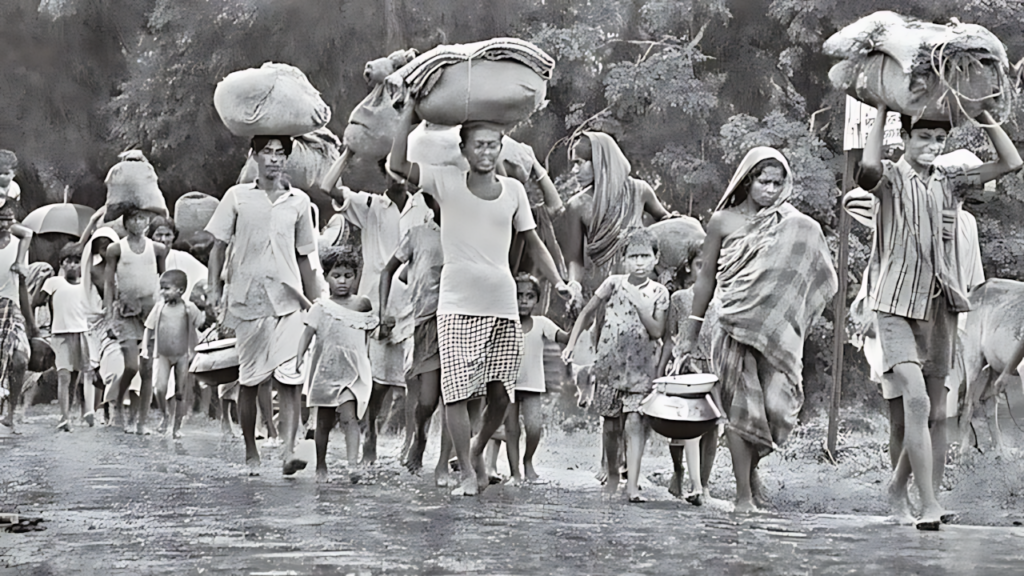
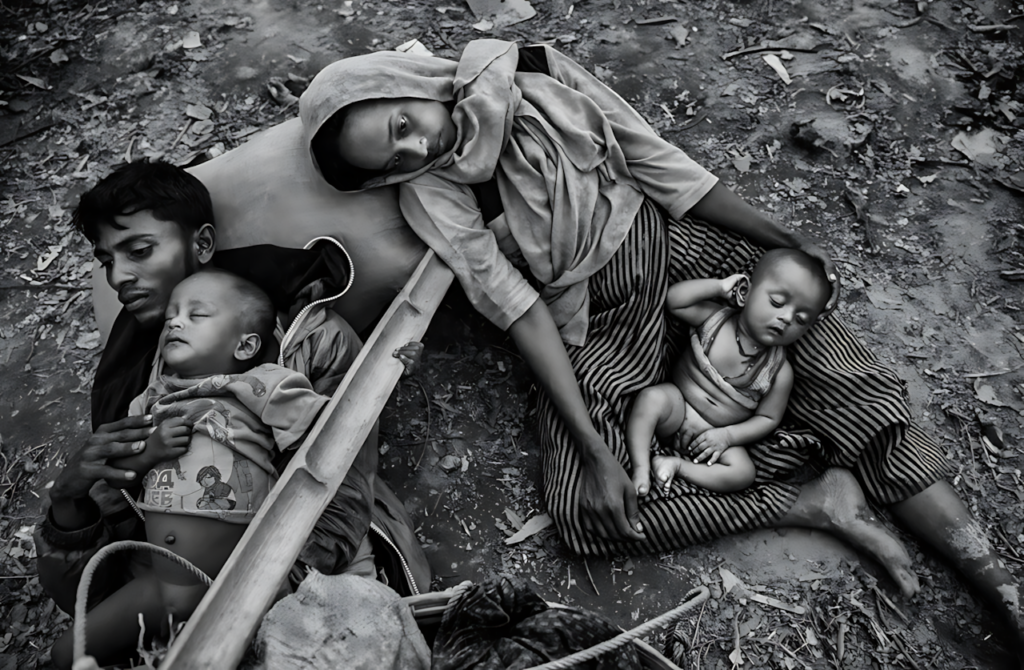
In 1971, as the great Liberation War raged across Bangladesh, neighboring India extended an unreserved helping hand. The history of support rendered by the government and citizens of India to the freedom-loving people of Bangladesh is profoundly significant and deep. At that time, fleeing the barbaric atrocities of the Pakistani occupation forces for sheer survival, nearly ten million people crossed the border to seek refuge in India. India did not merely grant asylum; rather, it became inextricably entwined with our blood-soaked struggle for independence.
The soil and people of West Bengal, Tripura, Assam, and Meghalaya were directly involved in Bangladesh’s glorious Liberation War. On one hand, the Government of India arranged food, clothing, and shelter for the refugees; on the other, strategic locations across its states were transformed into training camps for the Mukti Bahini (Liberation Army). Thus, in 1971, India began making an unprecedented direct and indirect contribution to Bangladesh’s Liberation War.
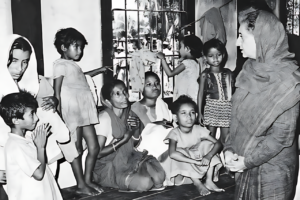
Table of Contents
1. World’s Fifth-Largest Border and the Refugee Challenge
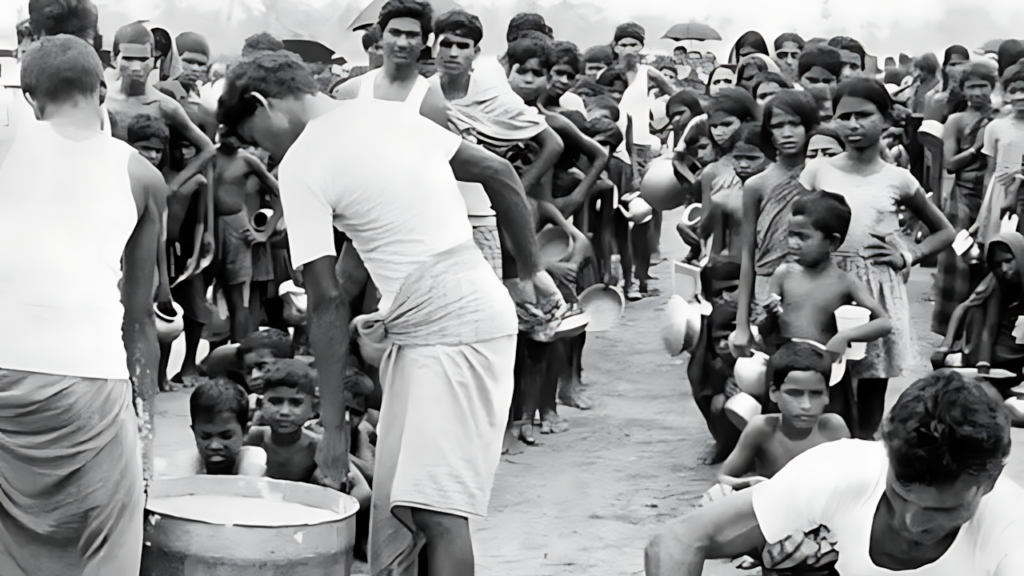
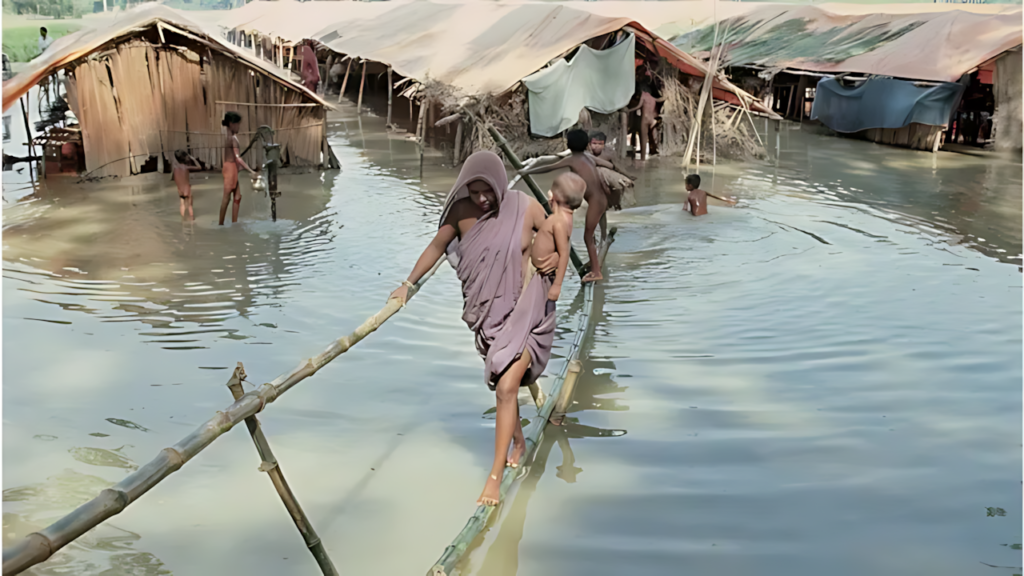
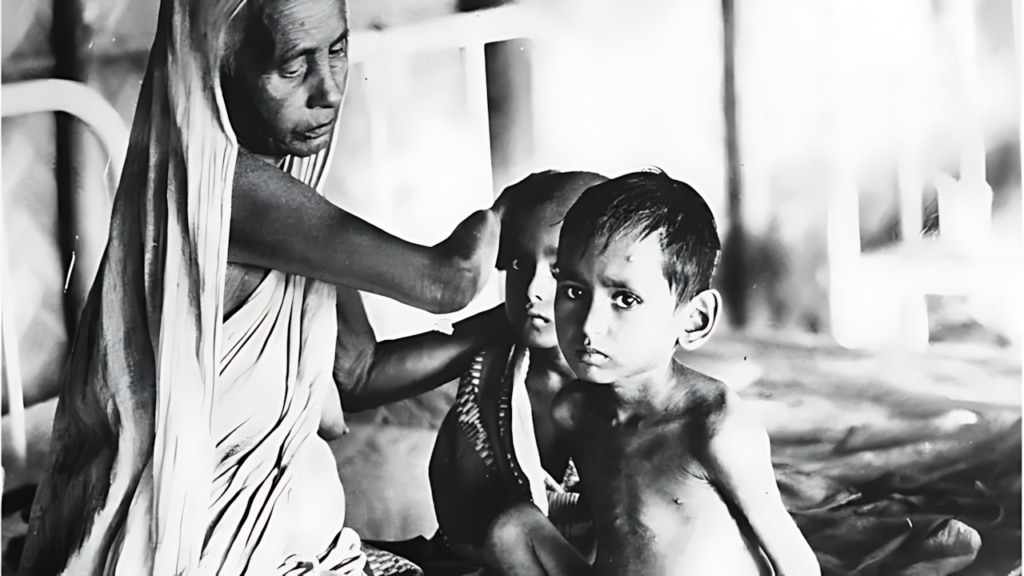
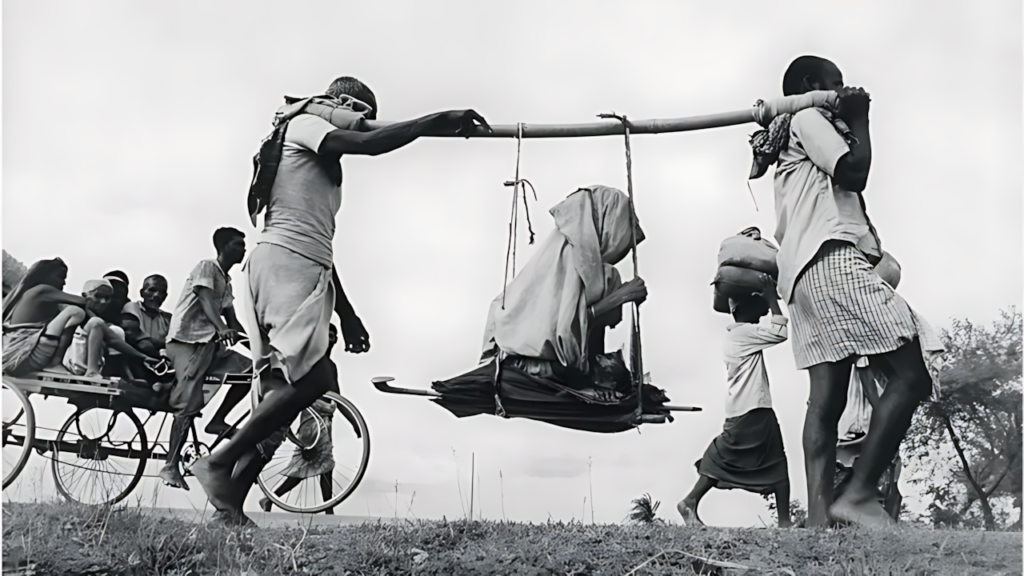
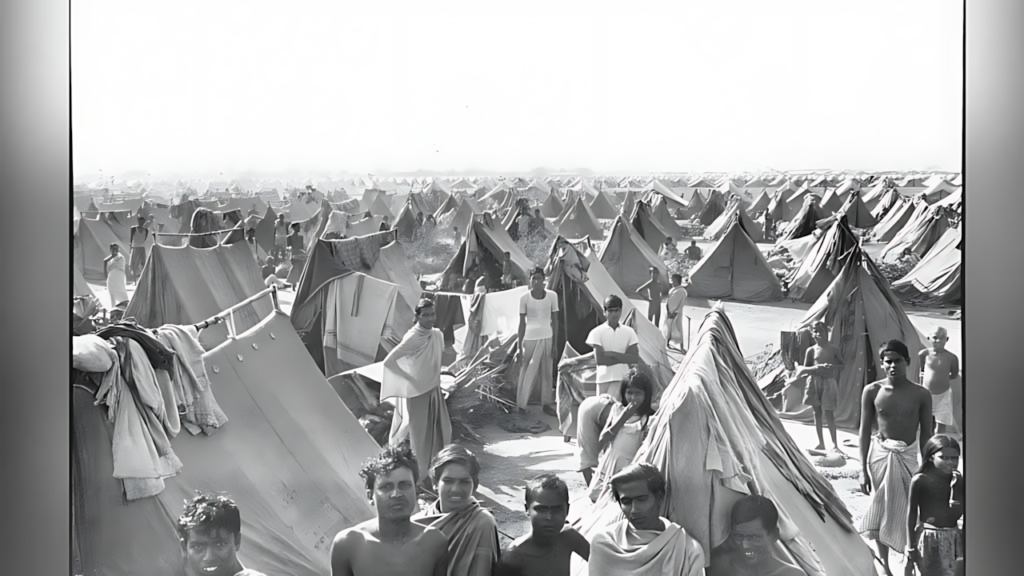
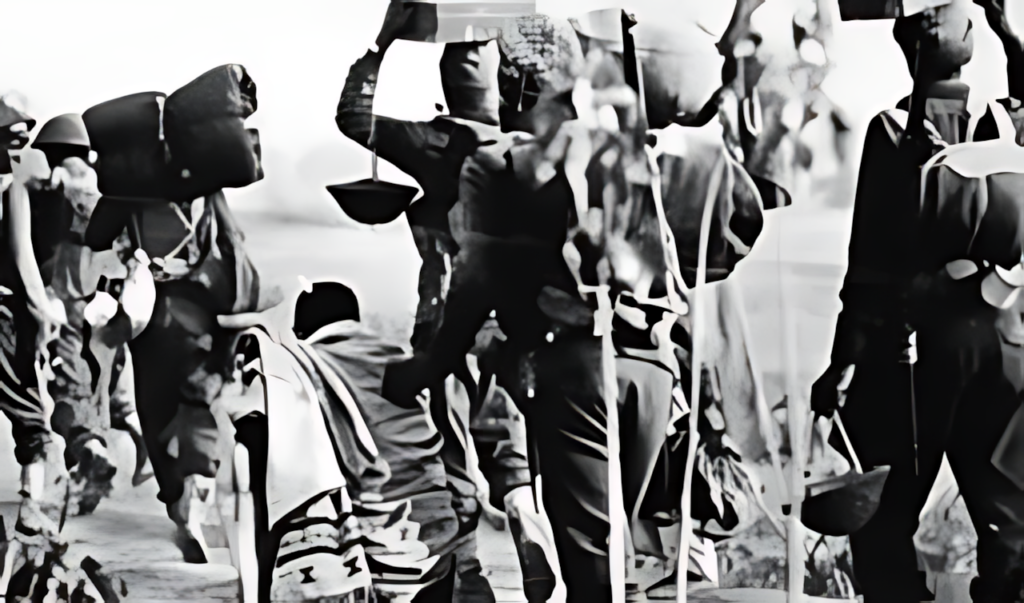
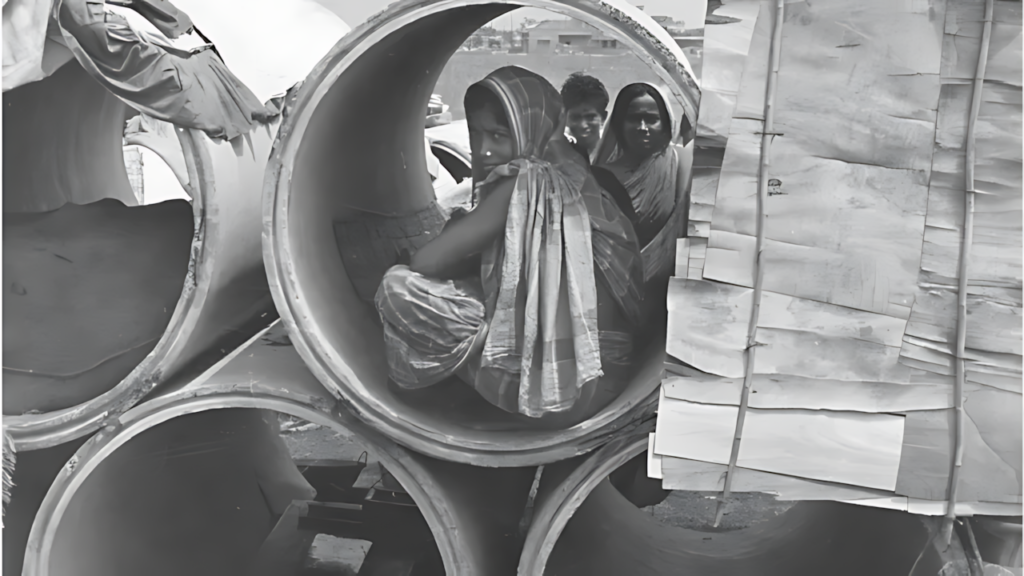
The border shared between Bangladesh and India constitutes the fifth-largest international land border in the world. Displaced by the barbaric military campaign of the Pakistanis in 1971, the overwhelming majority of those fleeing the country entered India. According to statistics, between March and 16th December 1971, a total of 9,899,305 refugees entered various states of India from Bangladesh. Assuming responsibility for this vast, uprooted, and destitute population represented a colossal challenge for the Government of India. Despite limitations faced by the Indian public and government, they extended a humanitarian hand of succour towards us.
2. A Bond Sealed in Blood: The Sacrifice of 14,000 Indian Soldiers
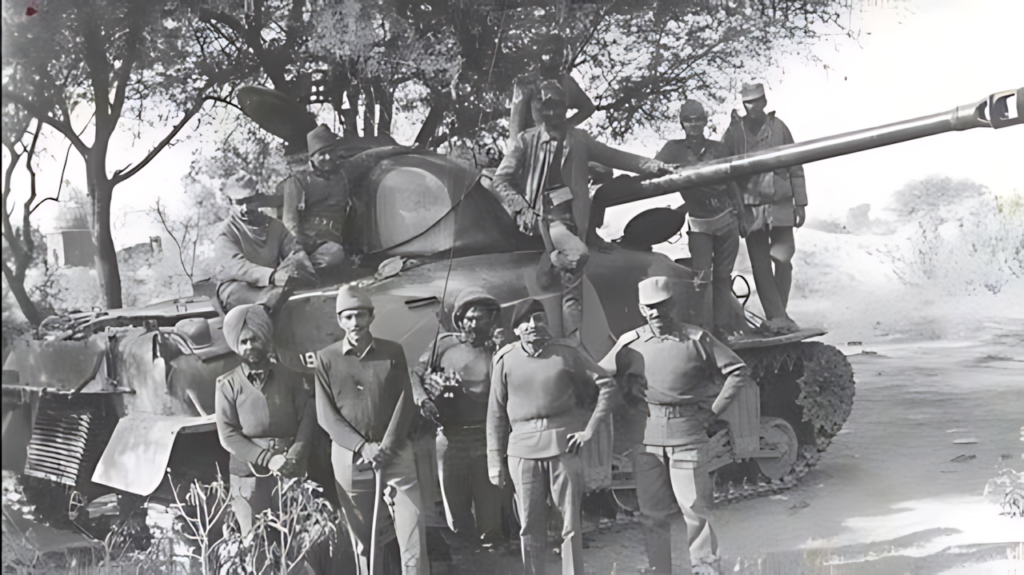
The contribution of the Indian Armed Forces to Bangladesh’s struggle for liberation remains indelible. Over 14,000 Indian soldiers sacrificed their lives in Bangladesh’s fight for freedom. Our valiant freedom fighters received training on Indian soil, and ultimately, through the joint participation of the Bangladesh-India Allied Forces (Mitra Bahini), final victory in the glorious Liberation War was achieved. It remains our moral obligation to duly acknowledge everyone’s historical role and recall it with heartfelt gratitude.
3. India’s Role in Thwarting Bangabandhu’s Court-Martial
During the 1971 war, the Pakistani junta arranged for a court-martial trial of Bangabandhu Sheikh Mujibur Rahman, who was imprisoned in a Pakistani jail. The vital role played by the then Indian government to thwart that move stands as a rare chapter in history. Regarding this dramatic court-martial by the Pakistan government, the Government of India dispatched an urgent message to the then Secretary-General of the United Nations, U Thant, on 10th August 1971. The text of that communication read as follows:
“The trial of Sheikh Mujibur Rahman is scheduled to commence tomorrow. We feel distressed and astonished by this announcement from Rawalpindi. According to various statements by President Yahya Khan—alleging that ‘Sheikh has declared war against Pakistan and engaged in treasonous acts’—this trial is being conducted under these pretexts.Sheikh Mujibur Rahman is the undisputed leader of the people, immensely beloved and revered by them. Such an unprecedented victory as achieved in the December 1970 elections has not occurred anywhere else in the world in recent times. Our people, media, Parliament, and Government believe that if anything fatal should happen to the life and person of Sheikh Mujibur Rahman, the gravity of the crisis created for us by the Pakistani military campaign in East Bengal will multiply tenfold. We appeal to your Excellency to take immediate steps to advise the Pakistan Government against pursuing such actions. Should anything happen to Mujib, the consequences will be terrifying and unbearable.”
4. Indira Gandhi’s Visionary Diplomacy and Bangabandhu’s Release
The extraordinary role played by the then Prime Minister of India, Shrimati Indira Gandhi, in securing Bangabandhu Sheikh Mujib’s release and achieving victory in the people’s war of Bangladesh warrants detailed examination. She worked tirelessly not merely as a neighboring head of state, but to awaken the global conscience. In an address to the Indian Parliament, Indira Gandhi remarked that civil society and public opinion in the Western world had generally come to realize that certain marginal initiatives proposed by Pakistan’s allies were bound to fail in resolving the crisis.
“Many leaders of those countries have been able to realize that a political initiative acceptable to the elected leaders of Bangladesh is the only path to resolving that crisis, and for this, the release of Sheikh Mujib is essential.“
“Pakistan’s efforts to sidetrack and cloud the basic issue by seeking to involve the United Nations and to transform the struggle of the people of Bangladesh into an Indo-Pakistan confrontation and conflict have been exposed.”
5. Reliance on Internal Strength for Victory
Indira Gandhi maintained that while international sympathy was vital, final victory must emanate from one’s own inherent strength. She remarked that while we might garner sympathy and support from the international community, we could not afford to remain dependent upon them to solve the problem; rather, Bangladesh had to achieve independence through its own strength, with India standing beside the people of Bangladesh with its full power. Her analysis proved flawless—for in 1971, the social unity of the Bengalis flowed with a momentum stronger than the combined currents of the Padma, Meghna, and Jamuna.
6. The Historic Newsweek Interview
On 15th November 1971, in an interview with Newsweek magazine, Indira Gandhi presented a concise yet compelling account demonstrating that the people’s war of Bangladesh was a just, democratic, and complete struggle:
“As you know, the majority of the guerrillas are the para-military force of East Bengal. … And they are the ones who are training new people… the Pakistani Army will have to kill all the 75 million people in East Bengal before they can have control over them. … And I have absolutely no hesitation in saying that if I were placed in a situation like the Bengalis, I certainly would fight.”
7. Clarifying India’s Stance in Bonn, West Germany
In an address delivered at the Beethoven Hall in Bonn, West Germany, Indira Gandhi explicitly clarified that India was neither imposing decisions upon Bangladesh nor offering them dictat. She posed the question—even if she were to advise Bangladesh to compromise with Yahya Khan, why would they accept such advice? At that pivotal turning point in history, Indira Gandhi secured the unprecedented support of all Indian political parties—left, center, and right.
8. Atal Bihari Vajpayee and the Support of the Lok Sabha
The unity among Indian leaders across political spectrums regarding Bangladesh’s liberation struggle was extraordinary. Bangladesh shall remain forever grateful for the remarks made by Atal Bihari Vajpayee, the then Jan Sangh (now BJP) Member of Parliament elected from Gwalior, during his speech in the Lok Sabha on 6th December. On 7th June 2015, the Government of Bangladesh conferred the ‘Friends of Liberation War Honour’ upon Atal Bihari Vajpayee. Addressing the Indian Lok Sabha that day, he declared:
“Mr. Speaker, belated though it may be, a correct step has been taken by extending recognition to Bangladesh. Destiny has brought this Parliament and this country to such a crucial historical juncture where we are fighting alongside those who have laid down their lives in the liberation struggle, while also striving to chart a new direction for the course of history… I believe our Prime Minister truly deserves our gratitude.”
9. Border Solidarity and the Morale of Freedom Fighters
In 1971, India signaled clearly to the world that the people across the border stood in complete solidarity with the imperiled populace on the other side. This resolute stance profoundly inspired the freedom fighters. The Indian public provided various supplies that not only encouraged the Mukti Bahini, but also infused fresh vigor into their arms to achieve victory. Essential supplies were dispatched continuously from India to Bangladesh. Concurrently, no time was wasted in arranging food, clothing, and blood donations for the injured in Indian refugee camps.
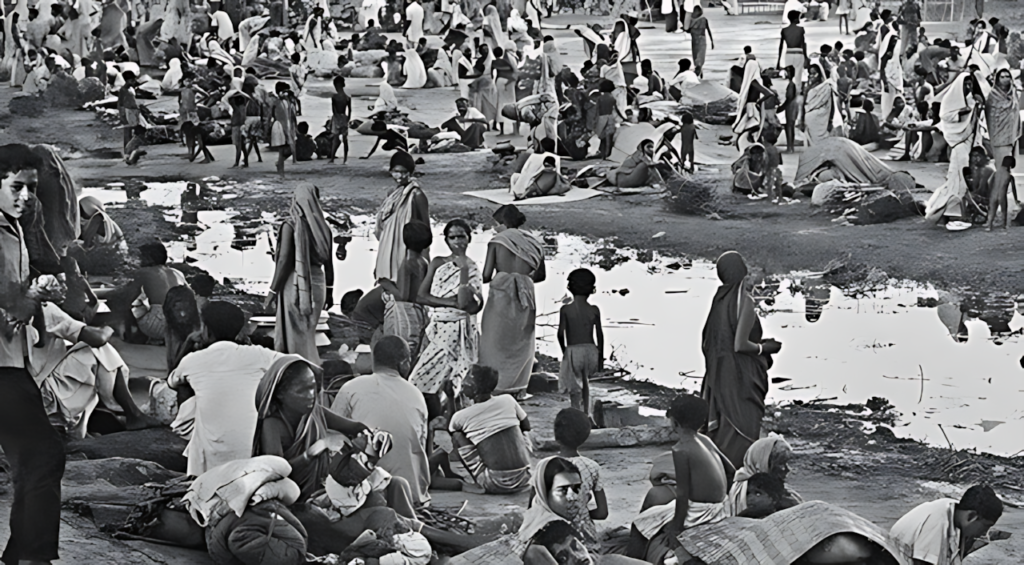
10. Life in Refugee Camps and Humanitarian Assistance
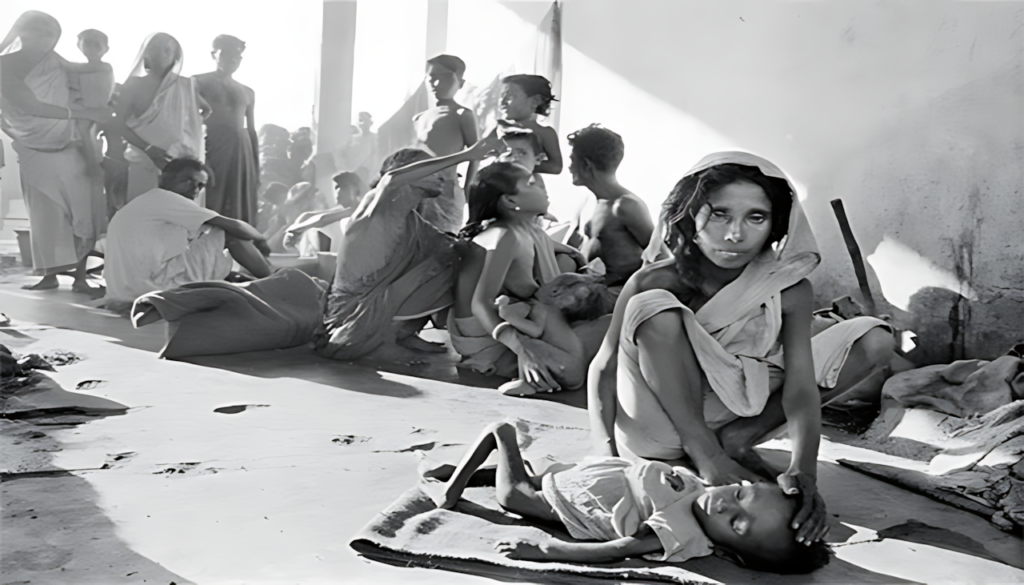
Though initial resource constraints posed challenges, conditions within the refugee camps steadily improved. The Government of India made every endeavor to provide every refugee with cholera vaccines, multivitamin tablets, milk, and most crucially—a bellyful of rice twice daily. Forgetting their own privations, ordinary Indian citizens shared their meals.
11. Indira Gandhi’s Warning in London
On 31st October 1971, in a speech delivered in London, Indira Gandhi highlighted the severity of the refugee crisis before the world:
“The refugee problem cannot be understated. The problem of Bangladesh is not merely a refugee issue, but something far deeper. For India, the refugee situation is not simply an economic, social, or political issue, but a grave threat to India’s security and integrity. The world remains unaware of the barbaric atrocities being perpetrated upon the refugees, yet every day refugees continue to stream into India.”
“People ask me how long we can bear this burden. I say that time has passed. We are sitting on a volcano, and we do not know when it will erupt. We are exercising restraint, but how long we can remain restrained depends on what happens at the border. We believe it is the responsibility of the international community to find a resolution. The best and most humane course would be a political solution—transferring power to the elected representatives of Bangladesh.”
12. Proactive Diplomacy and the Soviet Treaty
By early autumn, Indira Gandhi embarked on a proactive diplomatic tour across Western capitals on behalf of Bangladesh. Through arduous efforts, she succeeded in rallying the United Kingdom and France to India’s side. Significantly, both nations were permanent members of the UN Security Council and allies within the American sphere, yet they supported India on the Bangladesh issue.
During this period, Indira Gandhi’s crowning diplomatic triumph was the signing of the 20-year Treaty of Peace, Friendship and Co-operation with the Soviet Union on 9th August 1971. This dealt a heavy blow to the United States. As a result of this treaty, the possibility of direct Chinese intervention in an Indo-Pakistani conflict was reduced to virtually zero.
13. Historic Resolve Before Nixon
Though China extended moral backing and minor military aid to Pakistan, it did not dare mobilize troops along the Indian border. During that same tour, Indira Gandhi visited Washington. However, President Richard Nixon accorded her little importance and sought to dismiss her concerns. Yet Shrimati Gandhi remained undaunted. Sitting in the White House Rose Garden, she declared to President Nixon with unwavering resolve that Bangladesh would become independent even if America did not wish it. These events surrounding Bangladesh are recounted in vivid detail in Indira Gandhi’s autobiography, My Truth.
14. Formal Support from India and General Jacob’s Testimony
On 27th March 1971, Indian Prime Minister Indira Gandhi expressed full support for Bangladesh’s independence struggle. Immediately thereafter, India’s borders were officially opened to grant refuge to the fleeing population. Numerous refugee camps were established across the borders of West Bengal, Bihar, Assam, Meghalaya, and Tripura. India did not stop at granting asylum; exiled Bangladeshi military officers and volunteers operated from these very camps to recruit and train members of the Mukti Bahini.
Major General J.F.R. Jacob of India’s Eastern Command noted in an interview that informally, India had been deeply involved with Bangladesh’s liberation struggle since April, although formal entry occurred later. General Jacob remarked with deep humility and respect:
“India began training the Mukti Bahini from April. However, this was fundamentally the fight of the people of Bangladesh; the East Bengal Regiment and the freedom fighters fought with immense courage out of love for their motherland, and we merely stood beside them.”

15. Historic Joint Sessions of the Indian Parliament
On the question of Bangladesh’s independence in 1971, the Rajya Sabha and Lok Sabha of the Indian Parliament convened in joint sessions on multiple occasions—underscoring how consolidated and resolute Prime Minister Indira Gandhi was in extending support to Bangladesh. On 31st March 1971, Indira Gandhi moved a resolution titled “Recent Developments in East Bengal” in both houses, which was passed unanimously.
Similarly, another joint session was convened on 6th December 1971, titled “Statement by Prime Minister Re: Recognition of Bangladesh.” Prior to this, on 3rd December, a resolution declaring a state of emergency was passed in the Lok Sabha. Moving that resolution, Shrimati Indira Gandhi delivered her timeless words:
“We have stood for peace, but peace itself has to be defended.”

16. The Moment of 6th December: Recognition of Bangladesh
The most monumental and prestigious declaration among Indira Gandhi’s addresses in the Indian Parliament was the formal recognition granted to Bangladesh. On 6th December 1971, amidst thunderous applause in the Lok Sabha, she read the following historic statement:
“I am glad to inform the House that in light of the existing situation and in response to the repeated requests of the Government of Bangladesh the Government of India have after the most careful consideration, decided to grant recognition to the GANA PRAJATANTRI BANGLADESH.”
In her address that day, she expressed profound emotion, remarking that all thoughts and actions of India at that moment rested with Sheikh Mujibur Rahman, the “Father of the New State” of Bangladesh. Crucially, on 6th December, the Prime Minister of the world’s largest democracy designated Sheikh Mujibur Rahman as the ‘Father of the Nation’ of Bangladesh—a supreme title that even her own father, Jawaharlal Nehru, did not hold in India (where Mahatma Gandhi is revered as the Father of the Nation).

17. Bangabandhu’s Stature and Indira Gandhi’s Assessment
On 6th November 1971, in an address at Columbia University in the United States, Indira Gandhi magnanimously described Bangabandhu as a figure of even greater popularity than herself, observing:
“I am congratulated on my great majority. But it was nothing compared to the majority which Sheikh Mujibur Rahman gained in the election in Pakistan. It was a tremendous victory for him. And he is not an extremist. He was a moderate person.”
18. Bengali Nationalism and the Dynamics of the War
Our Liberation War was organized fundamentally upon the bedrock of Bengali nationalism. When power was denied despite the Awami League securing an absolute majority in the 1970 elections, the historic non-cooperation movement ensued. When the genocide commenced under ‘Operation Searchlight’ on 25th March, Bangabandhu declared independence in the early hours of 26th March. Subsequently, Awami League leader M.A. Hannan broadcast that declaration over the radio in Chittagong.
The long-standing hostility between India and Pakistan aided Indira Gandhi in deciding to stand by Bangladesh. She calculated that rather than bearing the endless burden of millions of refugees, defeating Pakistan in war and liberating Bangladesh constituted a far more logical, long-term solution.
19. Direct Warfare and Final Victory of the Allied Forces
On 3rd December 1971, Pakistan launched surprise air strikes on Indian airbases, shifting the course of the war. Without delay, India retaliated, initiating a full-scale war. Three Indian military corps initiated offensive operations in East Pakistan alongside nearly three brigades of valiant freedom fighters. Through supreme valor and tactical brilliance, the Indian Air Force established absolute air supremacy over East Pakistan within a single week. Concurrently, on the Western front, the Indian Navy destroyed nearly half of Pakistan’s naval fleet and fuel reserves. Though repeated ceasefire resolutions were brought before the UN, they were thwarted by vetoes cast by our steadfast friend, the Soviet Union. Left with no alternative, Pakistan was compelled to surrender in East Pakistan on 16th December 1971.
20. Surrender of 93,000 Troops and the Birth of a New State
Even while holding an overwhelmingly advantageous position on the Western front, Shrimati Indira Gandhi declared a unilateral ceasefire, demonstrating her steadfast commitment to peace. On 16th December, the historic moment arrived at the Ramna Racecourse in Dhaka. For the first time in history since World War II, 93,000 soldiers surrendered publicly with bowed heads. Lt. Gen. A.A.K. Niazi signed the Instrument of Surrender. ‘Bangladesh’ emerged on the world map as the seventh most populous and fourth largest Muslim-majority nation. Yet, in the bitterness of defeat, the Pakistanis, abetted by local collaborators, perpetrated the brutal massacre of Bengali intellectuals on 14th December, just prior to their surrender.
21. Bangabandhu’s Return and Pakistan’s Humiliation
Under overwhelming pressure from Indira Gandhi and world leaders, Pakistan was forced to release Bangabandhu Sheikh Mujib. On 10th January 1972, he returned home as a triumphant conqueror, launching the march forward of an independent Bangladesh under his leadership. Though China temporarily blocked Bangladesh’s UN membership by exercising its veto, the emergence of Bangladesh was unstoppable. The Government of Bangladesh declared that the occupying forces had slaughtered 30 lakh people and dishonored two lakh mothers and sisters. For Pakistan, this defeat was humiliating; it lost over half its population, and Jinnah’s ‘Two-Nation Theory’ was consigned to the dustbin of history.
22. The Simla Agreement and India’s Magnanimity
Following defeat, military rule in Pakistan under Yahya Khan collapsed, bringing Zulfikar Ali Bhutto to power. In 1972, the historic Simla Agreement was signed between India and Pakistan. India overseen POWs in accordance with the 1925 Geneva Convention, releasing 93,000 prisoners of war and pardoning 200 soldiers accused of war crimes. Concurrently, India returned 13,000 square kilometers of captured territory on the Western front to Pakistan—a rare gesture of magnanimity in international history.
23. Unreserved Assistance in Post-War Reconstruction
Following independence, the bond between India and Bangladesh pivoted toward economic development. During 1972–73, India extended extensive aid toward rebuilding war-devastated Bangladesh. Beyond food and consumer goods, India led efforts to restore transport infrastructure, railway networks, and raw material supply chains for industries. Though an oil importer itself, India dispatched crude oil on an emergency basis for Bangladesh’s fuel refinery. The most immediate challenge for the new nation was food scarcity. In early 1972, India provided 400,000 tons of food grains alongside direct transport assistance. During the first six months, 74 percent of the total food aid received by Bangladesh came directly from India.
24. Financial Grants and an Immortal Bond
Between December 1971 and June 1972, India provided USD 200 million as a direct grant and USD 42 million as highly concessional loans. Between 1971 and 1975, India extended a total of USD 308 million in aid—ranking as the second-highest global donor behind the United States.
The warmth and affection with which Indians from all walks of life—from politicians to manual laborers—welcomed ten million Bangladeshi refugees remains an unfading chapter in human history. Sealed in the joint blood of the Mukti Bahini and the Indian Armed Forces, the soil of Bangladesh bears an indelible foundation of friendship. The selfless love and sacrifices of the people of India will never be forgotten by the people of Bangladesh.