
Following the September War of 1965, Pakistan’s then-Foreign Minister Zulfikar Ali Bhutto made an extreme and emotionally charged remark: “If India builds the bomb, we will eat grass or leaves, even go hungry, but we will get one of our own.” Pakistan’s military-bureaucratic ruling class ultimately chose this suicidal obsession as its state philosophy. Pakistan did indeed become a nuclear nation, but looking at the realistic indicators from the World Bank and the IMF for 2023–2024, Pakistan has become precisely what Bhutto described. Today, citizens of that country are literally fighting in lines for flour, even as nuclear warheads adorn their military arsenal.
A nation’s true strength depends on the quality of life of its citizens, economic self-reliance, and technological excellence—not on weapons of mass destruction. Sacrificing its economy and the basic needs of its people (food, clothing, shelter), Pakistan adopted a policy of maintaining an artificial and perpetual state of war with neighboring India. As a result, its identity on the global stage today has become that of a nation holding “a gun in one hand and a begging bowl in the other.” Its passport sits at the very bottom of global rankings, and incidents of Pakistani citizens being detained at international airports for begging have become regular international news. This proves that when geopolitical obsession outstrips economic reality, even a nuclear bomb cannot save a state from destitution.

Table of Contents
A Gun in One Hand, a Beggar’s Bowl in the Other: The Mirage of the Pakistan Model
The 1971 Starting Point vs. Pakistan’s 2023–2024 Statistics
Historically, when Bangladesh emerged as an independent state in 1971 after a bloody war, many on the world stage expressed skepticism about the survival of this territory. Due to the plundering of the treasury and the transfer of all assets to West Pakistan, Bangladesh’s GDP immediately after independence stood at just 8.75 billion USD, compared to Pakistan’s GDP of 10.67 billion USD.
Pakistan’s economy was not only stronger than ours back then, but it also enjoyed a formidable military infrastructure and strong support from international lobbies. However, over the next five and a half decades, these two opposing philosophies—military obsession versus economic foresight—steered the two countries onto completely divergent trajectories. Official data from the World Bank, IMF, and UNDP for the 2023–2024 fiscal year translates this historical divergence into a stark reality:
-
Nominal GDP Per Capita: According to official IMF data for FY 2023–2024, Bangladesh’s per capita GDP reached approximately 2,520 USD. In contrast, Pakistan’s per capita GDP shrank to just 1,471 USD. Statistically, the average economic productivity and capacity of a Bangladeshi citizen is roughly 71.3% higher than that of a Pakistani.
-
Currency Sovereignty and the Impact of Inflation: Based on average market exchange rates in FY 2023–2024, while 1 US Dollar traded between 110 and 117 Bangladeshi Taka, it took over 278 to 285 Pakistani Rupees to buy 1 Dollar. Even worse than currency devaluation was Pakistan’s skyrocketing inflation. With average inflation hovering between 23% and 26% in 2023–2024 (surpassing 38% in certain months), the purchasing power and savings of ordinary citizens were completely shattered. In contrast, Bangladesh managed to keep inflation within single digits despite global crises.
-
Foreign Trade and Reserves: In FY 2023–2024, while Pakistan’s total export earnings hovered around a meager 30 billion USD, Bangladesh’s total exports reached nearly 55 billion USD, driven by the ready-made garment sector and remittances. During the same period, as Pakistan pleaded with friendly nations (such as Saudi Arabia, China, and the UAE) to roll over high-interest loans just to maintain a net reserve of 8 to 9 billion USD to avoid default, Bangladesh was still able to keep funding its mega-projects through internal capacity.
-
Social Indicators and Human Development (HDI): Pakistan’s fundamental failure as a state is most evident in its human resource development indicators. In the latest UNDP Human Development Index (HDI), Bangladesh ranks 129th globally with a score of 0.632, placing it in the ‘Medium Human Development’ category. Pakistan, on the other hand, ranks 164th with a score of 0.544, categorizing it under ‘Low Human Development.’ This difference is equally visible in quality of life; life expectancy in Bangladesh stands at 72.8 years, whereas in Pakistan it is just 66.1 years. Even in infant mortality rates and female labor force participation, Pakistan ranks at the bottom of South Asia today.
These statistics are not accidental; they are the result of a state’s flawed priorities. While Pakistan squandered the lion’s share of its budget on non-productive military expenditure to maintain nuclear weapons and a proxy war with India, Bangladesh quietly increased investments in primary education, grassroots healthcare, women’s empowerment, and rural infrastructure.
Today, as Pakistan squanders under the strict conditions of an IMF 3-billion-dollar bailout package to avoid bankruptcy—effectively turning into an internationally recognized “financial aid seeker”—our neighbor India leads in space and deep-tech with a 3.7 trillion-dollar GDP as the world’s fifth-largest economy. This historical contrast proves that no state can achieve sustainable transformation through military madness or nuclear saber-rattling unless its economic framework and foundation for modern technology are secure.
Domestic Pseudo-Intellectual Mania and the 4,156 km Real Border
Unfortunately, certain right-wing groups, so-called Tawhidi Janata, and allied pseudo-atheists and opportunists in our country still wish to swallow this opium of the Pakistan model. They suffer from a form of geopolitical inferiority complex, wild fantasies, and war hysteria. These delusional crowds often cheer and celebrate in the streets upon hearing stories of America’s supposed defeat or withdrawal in distant Afghanistan or Iran. Yet, they lack the basic common sense or intellectual depth to understand that Bangladesh shares zero geographical, geostrategic, or mineral resource similarities with Afghanistan or Iran.
Could Bangladesh survive years of warfare the way mountain-surrounded Afghanistan or oil-rich Iran did? These fanatics lack the capacity to process the extreme misery, hunger, poverty, and international isolation that ordinary people in those countries faced post-war. They madly crave an imaginary, jihadi conflict, unable to comprehend that a densely populated, geographically flat, and economically fragile country like ours could not withstand even a minor military clash. Everything we have painstakingly built over the past few decades—our remittances, garment industry, and emerging economy—would be reduced to dust in an instant.
This group essentially wants Bangladesh to completely abandon the historically visionary foreign policy outlined by the Father of the Nation, Bangabandhu Sheikh Mujibur Rahman: “Friendship to all, malice towards none.” They urge us to sacrifice our non-aligned, independent posture to blindly imitate Pakistan—inciting us to mortgage our sovereignty to become a pawn on a superpower’s geopolitical chessboard or submit to American military dominance. They feel no hesitation in inviting disaster by entering the ‘mercenary supply business’ or leaning toward a ‘mullah-military regime’ alliance like Pakistan.
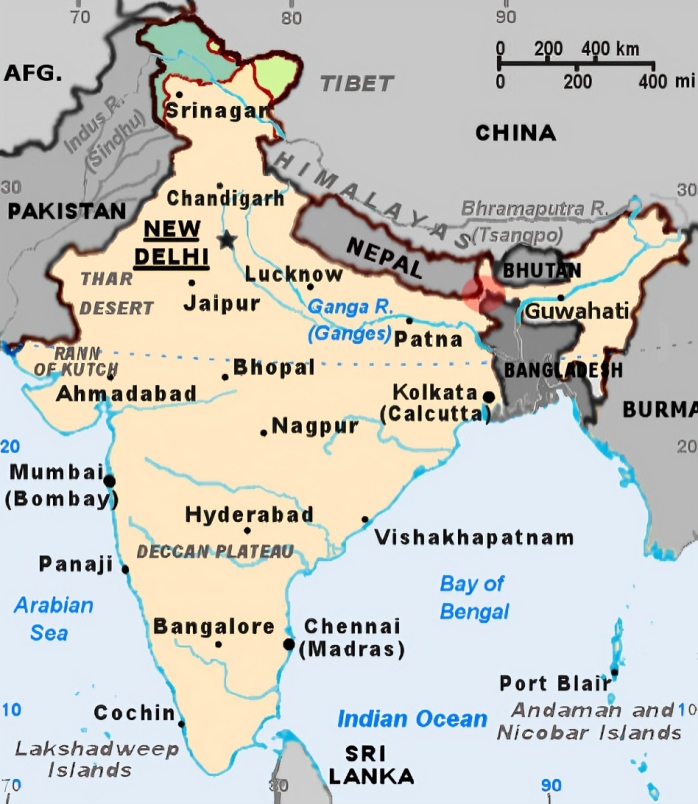
Who will explain to these fanatics that it is impossible for a state to survive in a permanent state of war or hostility with a country with which it shares a massive, complex 4,156-kilometer land border surrounding it on three sides? The border between Pakistan and India spans roughly 3,323 kilometers—mostly uninhabited deserts, mountains, and plains. Guarding even that border has crippled Pakistan’s economy. In Bangladesh’s case, beyond the three-sided border, there are extensive riverine and terrain complexities. If we were to mirror that level of high-alert military deployment and defensive posture across 4,156 kilometers, the vast majority of our national budget would be swallowed by non-productive defense spending. Cutting health, education, and social safety nets would eventually leave Bangladeshi citizens holding begging bowls, just like Pakistan.
Standing in a landlocked-by-India geography on three sides, the sole unyielding equation of realistic geopolitics (Realpolitik) is to maintain good relations with India based on mutual respect and equality. Not conflict, but utilizing our strategic geographical location as the primary leverage for global and regional trade is the key. Rather than turning this 4,156-kilometer border into a wound of perpetual war, it must be used as a regional economic corridor, transit route, and gateway to Southeast Asia. Securing duty-free access for our products in India’s vast domestic market through these corridors and free trade agreements, and enriching ourselves via economic transmission lines, is the smart path. Building mutual economic interdependence is a far greater diplomatic defense mechanism than guarding borders with gun barrels.
If we cling to this 20th-century primitive mindset of military supremacy, our destruction in this 21st century of AI and quantum computing is inevitable. In this era, national security no longer rests on the iron weight of nuclear bombs, fighter jets, or long-range tanks; those can only destroy a territory, not generate economic growth. The true guarantee of our national security is building a robust, knowledge-based, and technologically invincible economic foundation. If an adversary’s military ever looks toward our border, they should know that touching this country’s economic and quantum data architecture would permanently shatter their own commercial and digital supply chains. Establishing this level of computational and economic deterrence is true sovereignty—not becoming a gun-toting beggar like Pakistan.

Not Nuclear, We Need Qubit Capacity: The New Power Equation
We must understand that the timeless definition of power has changed. When I speak of Qubit Capacity over nuclear bombs, many may be surprised. But look closely: the concept of a nuclear bomb is entirely destructive and two-dimensional. A nuclear bomb can reduce a specific territory to ashes and claim millions of lives, but it cannot create new value, wealth, or resources for human survival. Its ultimate destination is a graveyard.
On the other hand, the power within a ‘Qubit’—the fundamental unit of quantum computing—is the exact opposite: creative and multidimensional. Where a conventional binary computer works linearly processing 0s or 1s, a quantum computer leverages complex physics principles like Superposition and Entanglement to analyze millions of mathematical and scientific possibilities simultaneously. Calculations that would take a traditional supercomputer thousands of years can be solved by a quantum computer in seconds.
In the 20th century, the global balance of power was determined by who had the largest nuclear arsenal, the most long-range missiles, or the vastest oil reserves beneath their soil. But in the global and regional reality of 2026, that chest-thumping equation of power is entirely obsolete. Today’s geopolitics is no longer bound by maps, barbed wire, or territorial borders; the game of power has moved from conference tables to the microscopic atomic levels of silicon chips and qubits. The primitive military model Pakistan blindly chased—ruining its economy and forcing citizens into flour lines—is now a laughingstock on the world stage. In the modern world, a nation’s sovereignty, dignity, and geopolitical bargaining power are no longer measured by the weight of artillery shells; they are determined by its Computational Supremacy and processing capability.
Consider this: policymakers in Washington, Beijing, or New Delhi today are far more concerned with semiconductor chip supply chains and quantum computing dominance than with counting nuclear warheads. On the international relations table, this is now called Chiplomacy. The core philosophy of this new Cold War is clear: whichever nation controls ultra-advanced semiconductor lithography technology and quantum processing will write the new grammar of global economics and security.
Tomorrow’s world economy will not run on crude oil, coal, or brute physical force; it will run on pure computational capability. The nation with the most powerful Qubit Capacity will design flawless nanomaterials, discover cures for deadly diseases, and accurately predict global financial market movements to protect its economy. Most importantly, they can disable an adversary’s cyber defenses or banking encryption systems in a second from home, winning a war without firing a single shot or shedding a drop of blood.
While the destruction of a nuclear bomb is confined to a specific geographical radius, quantum computation holds the power to reshape or paralyze global digital and financial infrastructure remotely. This economic and strategic power is infinitely more sustainable and formidable than a nuclear warhead. Therefore, rather than provoking war or using our youth as tools for cheap political rhetoric, equipping them for this ultimate weapon of the Fourth Industrial Revolution—quantum technology—will be our true deterrence. Becoming a self-respecting, qubit-rich nation is our only path forward.
Chiplomacy and Transformation of the Asian Axis: The New Hardware Monopoly
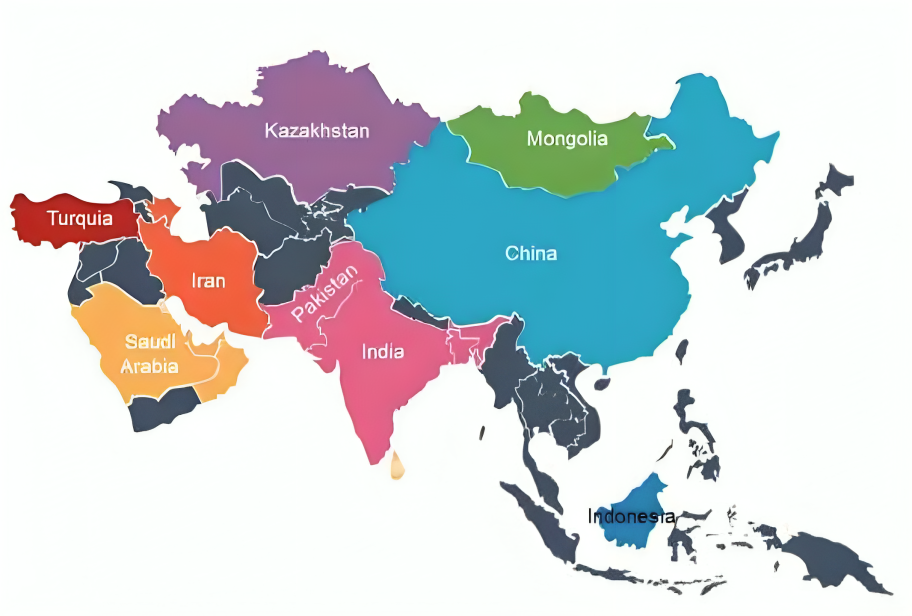
A misconception has been embedded in our minds that Silicon Valley in America is the final word in information technology. But the underlying truth is that no matter how eye-watering the software, generative AI, or trillion-parameter Large Language Models Silicon Valley produces, their physical existence, energy, and processing capacity depend entirely on the Asian axis. The Western world can write algorithms or code, but it lacks the physical hardware infrastructure to bring that code to life.
Looking at global Chiplomacy today, even if the blueprints for the world’s most complex, precise, and advanced processors (such as 3-nanometer or 2-nanometer) essential for artificial intelligence are designed in the West, their physical manufacturing does not occur in America; it takes place in Taiwan’s TSMC laboratories. Furthermore, if South Korea’s Samsung and SK Hynix were to halt the supply of specialized High-Bandwidth Memory (HBM) chips, the wheels of ChatGPT, artificial intelligence, and cloud computing across the Western world would grind to a halt overnight. All of Silicon Valley would be reduced to an expensive, useless toy.
The most instructive lesson here is that Asia’s unprecedented monopoly over hardware and physical infrastructure was not achieved through bloody wars, military aggression, or flexing power. It was earned over two to three decades through long-term strategic planning, educational modernization, and economic foresight by visionary Asian nations.
While neighboring Pakistan was squandering state funds on an unrealistic military budget fueled by border conflict excitement, these true Asian powerhouses ignored border mania to quietly build semiconductor, lithography, and computational infrastructure. They prioritized silicon over guns. Today, this Chiplomacy proves on the world stage that Mao Zedong’s 20th-century statement—”Political power grows out of the barrel of a gun”—is dead wrong. In the 21st century, the true source of power is found in the billions of microscopic transistors on a silicon wafer. Whichever nation controls this power holds the reins of the future world.
Rise of China and India’s Own Ecosystems and the Asian Model
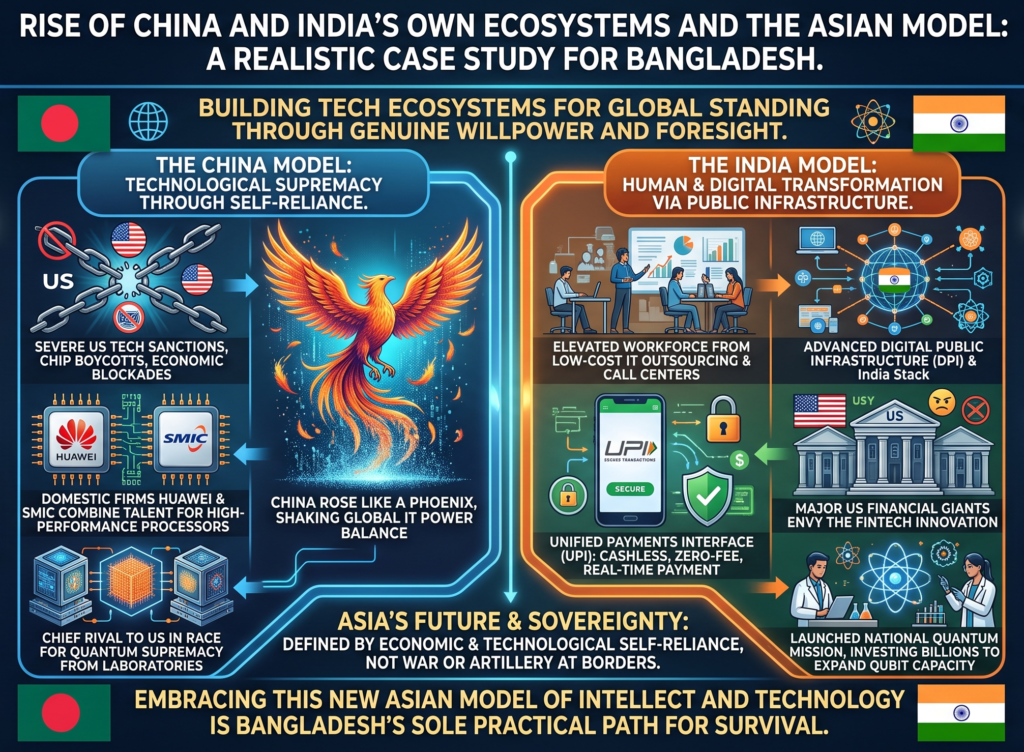
In this global computational race for mathematical supremacy, the stories of our two neighbors—China and India—building their own tech ecosystems serve as a realistic case study for Bangladesh. It teaches us how a nation can stand tall on the global stage through genuine willpower and foresight.
Despite facing severe US tech sanctions, chip boycotts, and economic blockades, China rose like a phoenix, shaking the power balance of the global IT sector. The West assumed that cutting off lithography machinery supplies would knock China out of the tech race. Instead, China combined the talent of domestic firms like Huawei and SMIC to manufacture high-performance processors using entirely indigenous technology. Furthermore, China has emerged as the chief rival to the US in the race to achieve Quantum Supremacy from the laboratory.
On our other border, India has presented a unique story of human and digital transformation. India demonstrated how a massive workforce can be elevated from low-cost IT outsourcing or call centers into an advanced Digital Public Infrastructure (DPI). India’s Unified Payments Interface (UPI) and its overarching ‘India Stack’ are global role models for digital governance and fintech innovation. Today, major US financial giants envy India’s cashless, zero-fee, real-time payment architecture. India is no longer a passive consumer of Western tech; it has launched its own National Quantum Mission, investing billions in state funds to expand its Qubit Capacity.
The rise of India and China makes one truth clear: Asia’s future and sovereignty are defined by economic and technological self-reliance, not by maintaining artificial states of war or firing artillery at borders. Embracing this new Asian model of intellect and technology is Bangladesh’s sole practical path for survival.
Southeast Asia’s Strategic Jump and Journey Toward a Quantum Economy
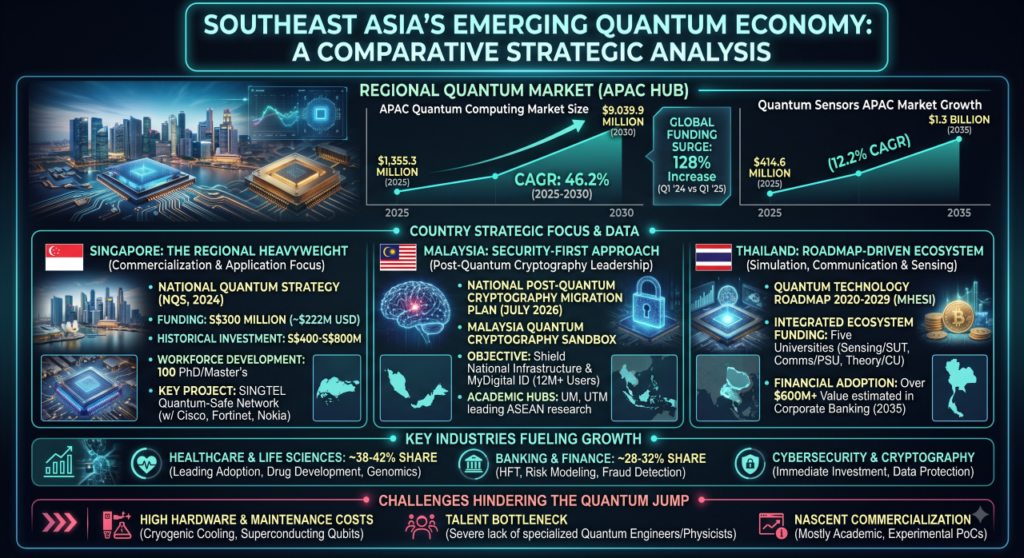
Simultaneously, looking at Southeast Asia reveals a quiet yet formidable economic transformation. Countries like Vietnam and Indonesia refrained from engaging in cheap geopolitical feuds, empty rhetoric, or ideological mudslinging. They calmly anchored their economies to global semiconductor and green-tech value chains.
When global corporate giants sought alternative markets under the “China+1” policy, Vietnam did not waste a second. It seized the opportunity, swept away bureaucratic red tape, and transformed overnight into one of the world’s largest electronics and chip assembly hubs.
Their boldest move was in education. They pulled their youth away from basic freelancing, data entry, or elementary coding, thrusting them directly into advanced hardware engineering and semiconductor architecture.
These emerging nations realized an undeniable truth: to thrive in tomorrow’s global economy, one must prepare for the Quantum Economy today. When quantum computers transition from laboratories into full commercial deployment, traditional logistics, banking encryption, cybersecurity, and global supply chain management will be upturned overnight. Nations reliant on rusted, outdated technology will be paralyzed in an instant.
Faced with this disruptive shift, if Bangladesh remains hooked on a decaying 20th-century military model or the bankrupt “Pakistan model” pushed by radical right-wing groups, we will be permanently erased from this new Asian economic axis.
To truly transform the fortunes of our densely populated country, our goal must be clear: avoid unrealistic conflicts or social media war hysteria with India, and instead maintain equality, dignity, and strong relations to become a formidable economic and technological partner in this quantum era. Establishing our youth’s intellect in the global silicon and qubit equation is far more visionary than seeking cheap applause by creating imaginary enemies across the border.

Bangladesh’s Present Weaknesses
Where does Bangladesh stand amidst this global transformation toward silicon and qubits? We must examine this truth dispassionately, without false self-satisfaction, hollow political slogans, or emotional lenses.
Over the past decade and a half, under the “Digital Bangladesh” vision of Sheikh Hasina’s government, a massive, visible, and positive shift occurred in the daily lives of our citizens. This cannot be denied. Extending fiber optic cables to the union level, bringing banking to rural citizens through Mobile Financial Services (MFS) like bKash and Nagad, and consolidating government services into apps were significant achievements.
The Sheikh Hasina government propelled this ecosystem forward substantially. However, because we were historically far behind, even this progress leaves us far short of advanced Asian peers. The historical gap between where they started and where we stand remains wide. Therefore, minor reforms or quick fixes will not suffice; we need another giant leap.
Why is a giant leap necessary? Because from a policy and strategic standpoint, our primary blind spot is that we created a consumer society for technology, but failed to build an innovation economy that produces it. Our entire IT model rests on fragile, low-cost labor. While other Asian nations play with high-value infrastructure like semiconductors, supercomputing, and quantum defense, we remain passive consumers of Western tech. This structural weakness threatens to run Bangladesh into a physical wall in the upcoming quantum economy era.
Limitations of the Traditional Freelancing Model and the Transformation Crisis
We often boast that Bangladesh is one of the world’s largest suppliers of digital labor. Yet the harsh reality behind this achievement is that the vast majority of our freelancers rely on low-to-medium skill tasks. Data entry, basic WordPress customization, elementary graphic design, and traditional Search Engine Optimization (SEO) keep our IT remittance wheels turning slowly.
Today, advanced AI coding agents and automated tools are causing international demand for these basic tasks to plummet. Code that once took an average programmer three days to write can now be generated flawlessly by modern AI models in seconds without human aid. While youth in Vietnam or India rapidly upskilled toward cloud architecture, data science, and semiconductor design, our youth remain stuck in outdated frameworks. Consequently, our hourly rates in international markets lag far behind. If we fail to elevate this workforce to meet the demands of the Fourth Industrial Revolution, the collapse of this low-cost labor market is only a matter of time.
Infrastructure Limitations: Hyperscale Datacenters and Latency Crisis
Our Hi-Tech Parks and Tier IV national datacenters provided a decent foundational start. However, a massive gap remains in the physical capacity needed to host high-level computation, AI model training, or quantum-ready data processing. A modern international IT hub requires megawatt-scale uninterrupted power grids and ultra-low latency international connectivity.
Although our submarine cable capacity has expanded, we have yet to match the hyperscale datacenter ecosystems of Chennai, Mumbai, or Vietnam. Due to fluctuations in power supply and connectivity, global tech giants bypass Bangladesh in favor of Singapore or India when establishing regional hubs or computational clusters. Consequently, we remain structurally lagging.
Academia-Industry Disconnect: A Decade-Old Curriculum
A nation’s technological backbone is its higher education system. Thousands of Computer Science (CSE) students graduate from our universities every year, yet academia remains disconnected from the IT industry.
While top global labs focus heavily on linear algebra, multivariable calculus, stochastic processes, and hardware architecture—foundational subjects for quantum computing and AI algorithms—most university syllabi in Bangladesh remain bogged down in decade-old programming languages and theoretical database concepts. Universities fail to supply the modern problem solvers or computational architects required by the industry. This traditional system may produce degree-holding unemployed individuals, but it cannot cultivate the talent needed for Qubit Capacity.
Slow Pace of Policy and Regulatory Framework
While technology advances at an exponential rate, our bureaucratic policies move at a snail’s pace. Though Bangladesh introduced some government funding for startups and tax holidays in Hi-Tech Parks, legal frameworks for cross-border payment gateways, bringing international venture capital into the country, and Intellectual Property (IP) protection remain suffocatingly complex and slow.
While a foreign investor can easily set up a business in Vietnam or Thailand, the process in Bangladesh is drawn out by bureaucratic red tape. This slow regulation and lack of policy consistency repeatedly prevent our IT sector from leveraging global investment. Rather than indulging in primitive military mania like the “Pakistan model” pushed by right-wing groups, breaking these internal structural barriers to fortify our economic and technological foundation is our most urgent national duty. Our policymakers must execute a giant leap to dismantle these walls.

Breaking the Traditional Outsourcing Cycle Toward an ‘Innovation Economy’
As the center of power in the global IT sector shifts from Silicon Valley to Asia, and the definition of power transforms from nuclear bombs to Qubit Capacity, Bangladesh can no longer afford to remain trapped in traditional IT services. To overcome our structural weaknesses, we must apply technology strategically to high-value areas across key domestic sectors. Our goal must be to transition from a low-cost outsourcing destination into a Quantum and Innovation Economy, providing strong leverage in Asia’s new balance of power. Below are the key strategic areas for technological transformation in Bangladesh:
1. Digital Public Infrastructure (DPI) and the Fintech Revolution
Just as the ‘India Stack’ transformed India’s GDP growth and financial inclusion, elevating Bangladesh’s Digital Public Infrastructure (DPI) to global standards is a top strategic priority.
-
Real-Time Payment Interoperability and Cross-Border Fintech: Mobile Financial Services (MFS) like bKash, Rocket, or Nagad, alongside the interoperable transaction platform ‘Binimoy’, created an excellent front-end for financial inclusion. This infrastructure must now be taken to the next level. We need a fintech ecosystem that directly connects with other Asian payment gateways (such as India’s UPI or Singapore’s PayNow). Doing so would reduce remittance costs close to zero, enabling small freelancers and cottage industries to sell products and services directly across Asian markets and receive real-time payments.
-
National Data Governance and Data Democratization: Our National ID (NID), birth registration, and smart citizen databases contain vast amounts of information. Instead of leaving this data isolated in silos, it should be converted into a secure, open API-based Central Data Exchange Architecture. Local startups and IT companies could then legally use anonymized data to build credit scoring models, optimize logistics, and design customized insurance products.
2. Agri-Tech and Food Security Optimization
Bangladesh is a densely populated, agrarian nation. We must harness emerging Asian tech trends to ensure agricultural productivity and food security.
-
Supply Chain Automation and Precision Agriculture: Farmers in Bangladesh often receive low prices for their crops while urban consumers pay inflated rates. Eliminating market syndicates and logistics waste requires IoT-enabled, data-driven supply chain networks. Tracking cold storage temperatures in real time and using predictive mathematical models to inform farmers about crop demand across regions could reduce post-harvest waste by 30%. Concurrently, analyzing soil nutrients and micro-climatic shifts can enable precise fertilizer application and irrigation management (Precision Agriculture).
3. Manufacturing and Semiconductor Marginal Ecosystem
While we may not immediately build trillion-dollar semiconductor fabrication plants (Fabs) like Taiwan or Vietnam, we can carve out a niche in the semiconductor value chain.
-
IC Design and Testing Hubs: Though chip manufacturing is capital-intensive, Integrated Circuit (IC) design primarily demands mathematical and engineering talent. Local companies and university labs in Bangladesh have already begun designing ICs for global markets. With government backing—providing licenses for chip design software (such as Synopsys or Cadence) and high-performance computing support—Bangladesh could become a major Asian outsourcing hub for IC Design and VLSI (Very Large Scale Integration) over the next five years.
4. Smart Governance and Judicial Management
Public hassle in accessing government services and the massive case backlog in the judiciary present major bottlenecks to economic progress.
-
Judicial Process Automation: Digitizing and categorizing millions of pending case files and verdicts across the country into a dynamic database is essential. Automating summons issuance, hearing scheduling, and document management through technology would relieve judges of administrative burdens. This would accelerate case resolutions and introduce transparency to the legal ecosystem. It demonstrates that internal technological modernization—not primitive weaponry or nuclear saber-rattling—gives a state true strength.

Policy Bottlenecks and the Risk of Digital Colonialism
As the center of gravity in the global IT sector shifts from Silicon Valley toward Asia, remaining a passive spectator will leave Bangladesh vulnerable to a new form of 21st-century subjugation: Digital Colonialism. In this new colonialism, foreign entities do not occupy land; instead, they seize control of a nation’s data, payment ecosystems, and digital infrastructure. Bangladesh currently faces this invisible threat, primarily due to policy delays and a failure to grasp emerging global cybersecurity challenges.
Policy Bottlenecks and Bureaucratic Complexity
Our greatest hurdle is that technology evolves exponentially while bureaucratic policies and paperwork move linearly. Today, when an international venture capitalist seeks to invest in Bangladesh’s startup or deep-tech sectors, they face cumbersome banking regulations regarding bringing capital into the country and repatriating profits.
Furthermore, our cross-border payment regulations were designed for traditional freelancing models, making them incompatible with high-value global tech operations. While countries like Vietnam or Singapore roll out green carpets to attract foreign talent and capital, our policy inconsistency and complex tax structures force local innovations to flip or relocate abroad (e.g., to Singapore or Dubai).
Post-Quantum Cryptographic Crisis (The Cryptographic Crisis)
As Asian nations, particularly China and India, rapidly advance in quantum computation, a major invisible cyber risk emerges for our national security and banking sectors. Currently, almost all financial transactions, passwords, and state secrets in Bangladesh rely on RSA or traditional encryption algorithms.
When Quantum Supremacy reaches a specific threshold (expected in the early 2030s), traditional encryption can be broken in minutes using Shor’s quantum algorithm. This means everything from central bank reserve data to NID encryption protocols could become exposed overnight. If Bangladesh does not immediately begin strategic preparations for Post-Quantum Cryptography (PQC) and quantum-secure network architectures, our financial ecosystem will face a major sovereignty crisis within the next decade.

What Could the Specific Predictions for the Next 10 Years Be?
Analyzing the shifting power balance in global and domestic technology, here are five specific mathematical and strategic predictions for the next decade:
1. Dominance of AI Agents and the End of Traditional Freelancing (2028)
Within the next three years (by 2028), tasks such as basic data entry, elementary QA testing, and standard UI/UX front-end development will be entirely taken over by AI agents. Consequently, nearly 60% of Bangladesh’s current freelancing income will be at serious risk. Those who fail to upskill quickly into cloud data architecture, AI model fine-tuning, and prompt engineering will be pushed out of the international market.
2. Asia’s Single Semiconductor and Computational Monopoly (2030)
By 2030, nearly 80% of global computational power and specialized AI silicon chips will be controlled by Asia (Taiwan, South Korea, China, Japan, and India). Silicon Valley will remain primarily a design and capital hub, while physical production and control will rest with the Asian axis.
3. Bangladesh’s First Domestic Large Foundational Model (2031)
Within the next 5 to 7 years, to protect its data sovereignty, Bangladesh will be forced to develop its own Large Foundational Model based entirely on the Bangla language and cultural context. This model will serve as the core driver for public services, legal systems, and education, reducing reliance on Western or third-party AI models.
4. The Rise of Quantum Cloud Infrastructure (2033)
By 2033, quantum computing will move from laboratories into commercial cloud services globally. Tech leaders like IBM, Google, Huawei, and Tata will open access to quantum processors via the cloud. Bangladeshi enterprises and fintech firms will begin using quantum cloud subscriptions for logistics optimization and fraud detection.
5. IP-Based New Bangladeshi Startup Ecosystem (2036)
Ten years from now, by 2036, the primary revenue and remittances of Bangladesh’s IT sector will no longer stem from hourly low-cost labor. It will derive from Intellectual Property (IP) and Software-as-a-Service (SaaS) models. By exporting agri-tech, micro-finance fintech, and climate-resilient technologies, Bangladesh will establish itself as a key partner in Asian markets.

Our Roadmap for the Next 10 Years
The shifting balance of power in the global IT sector from Silicon Valley to Asia presents both a warning and an opportunity for Bangladesh. Standing at this juncture in 2026, we must realize that if we remain mere consumers of third-party services or suppliers of cheap labor, we will fall behind in the global value chain. To stand alongside Asia’s tech powerhouses (China, India, Taiwan, South Korea) and safeguard our sovereignty, Bangladesh must execute an aggressive, realistic action plan.
Below are four strategic imperatives for Bangladesh over the next decade:
1. Transition from ‘Service Model’ to ‘IP-Driven Innovation’ Model
We must overhaul our national IT policy. Historically, we measured success quantitatively (e.g., the number of freelancers). Now, we must measure success qualitatively through Intellectual Property (IP) generation. To encourage local IT companies to move beyond writing basic code for Western clients toward creating custom software, unique fintech solutions, and IP, the government should offer tax incentives and establish an international patent filing fund.
2. Human Resource Development in Higher Mathematics, Data Science, and Chip Design
University Computer Science (CSE) curricula must be updated to replace obsolete syllabi with mandatory courses in linear algebra, stochastic processes, advanced data analytics, and VLSI (chip design). We must cultivate researchers and architects rather than basic coders. Modeled after India’s IITs, state budget allocations should establish specialized deep-tech and quantum-ready laboratories at three top tech universities.
3. Post-Quantum Cryptography and Safeguarding Data Sovereignty
To secure sensitive data infrastructure—including the central bank, defense sectors, and the National ID (NID) system—forming a National Quantum Security Task Force is essential. Over the next five years, critical encryption protocols must be upgraded to Post-Quantum Cryptography (PQC) standards. Simultaneously, a strict Data Sovereignty Act must be enacted and enforced to prevent citizen data from residing under foreign cloud control.
4. Modernization of Bureaucratic and Financial Regulations
To attract foreign venture capital, cross-border payment regulations and banking policies must be streamlined. Legal barriers must be removed so that foreign investors can bring capital into Bangladesh and repatriate profits as seamlessly as they do in Singapore or Vietnam. For freelancers and startups, bringing funds into the country through international payment gateways must be freed from bureaucratic delays.

What Shall We Do?
We stand at a critical juncture in our technological journey, where past achievements do not guarantee future survival. Bangladesh has built a solid front-end with its fiber optic networks and mobile financial service infrastructure. However, as global power shifts from software toward physical hardware, advanced computation, and Asian semiconductor monopolies, we cannot afford to rely on old formulas.
The decline of Silicon Valley’s monopoly and the rise of Asia open a window of opportunity that will not remain open indefinitely. The choice is ours: do we settle for the low-cost freelancing model and risk becoming a digital colony, or do we leverage visionary policies, mathematical talent, and domestic innovation to become a key player in Asia’s tech equation?
We must make the bold decision to transform before time runs out. That journey must begin today.