
One of the most discussed and controversial statements in the political arena of Bangladesh is—”Whatever I have given to India, India will remember it forever.” Around this single remark by then-Prime Minister Sheikh Hasina, various social commentary, political misinterpretations, and rumors have spread over the past few years. One side claimed that she had handed over the country’s sovereignty, borders, gas, or ports to India. This narrative was spread so provocatively on social media that a large section of the general public began to find it believable.
However, setting emotion aside and looking at international relations, regional security, and geopolitical data, it becomes clear that Sheikh Hasina’s statement was not about transferring any material assets or territory. Its core focus was a strategic security cooperation that was, quite literally, a matter of life and death for India.
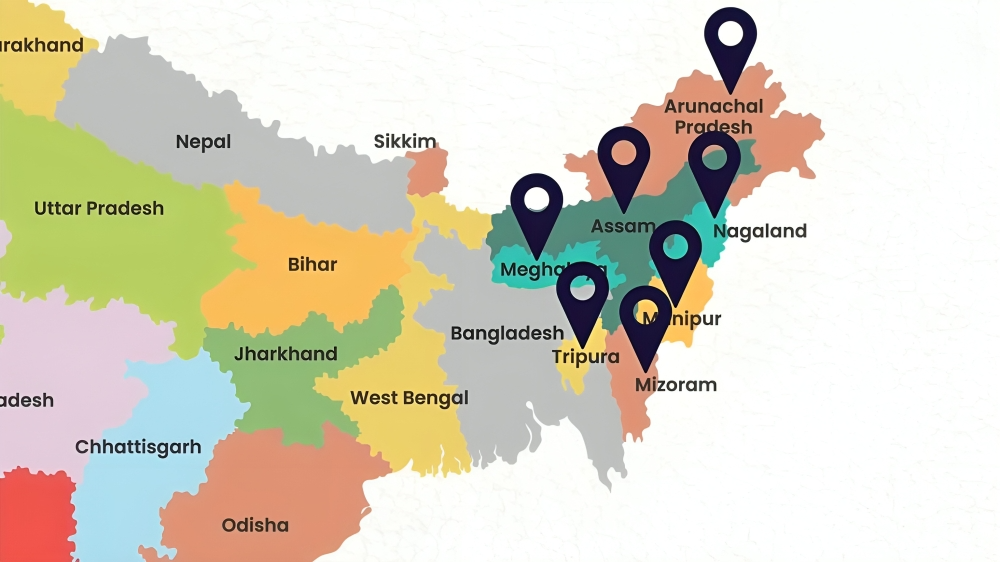
Table of Contents
Complex Geopolitical Reality and Security Crisis of Northeast India
Controlling the eight states of India’s northeastern region—historically identified as the ‘Seven Sisters’ (Assam, Meghalaya, Tripura, Mizoram, Manipur, Nagaland, and Arunachal Pradesh) along with Sikkim, which was added later—was one of the toughest military and administrative challenges for New Delhi’s central government for several decades. Geographical infrastructure, ethnic diversity, and the alignment of international borders not only isolated this region from the Indian mainland but also turned it into a prolonged geopolitical crisis zone.
Geographical Vulnerability of the Siliguri Corridor and ‘Chicken’s Neck’
Looking at the map of India, this entire northeastern region is connected to the country’s mainland by a very narrow strip of land, merely 20 to 22 kilometers wide. Located in Siliguri in the state of West Bengal, India, this narrow stretch is known in international geopolitics and military parlance as the ‘Siliguri Corridor’ or ‘Chicken’s Neck’.
This was the sole land route connecting an area inhabited by nearly 45 million people in Northeast India and a vast strategic border to New Delhi. If a stalemate occurred on this narrow path for any reason, the entire Northeast India faced the risk of being completely severed from the mainland.
To send goods or troops from Kolkata to any state in Northeast India, one had to travel a long distance through this Siliguri Corridor. For instance, the distance from Kolkata to Agartala, the capital of Tripura, stands at over 1,600 kilometers via Siliguri, whereas taking a direct route through Bangladesh reduced it to just around 500 kilometers. This vast geographical distance created a severe impediment for the Indian security forces in terms of rapid movement and logistical supply.
Long and Unprotected Border: Environmental Complexity
Added to this vulnerability of the Siliguri Corridor was the most complex element of Bangladesh-India relations—a long and treacherous border. Out of the 4,096.7-kilometer-long international border between the two countries, approximately 1,879 kilometers are directly connected to India’s four northeastern states:
-
Tripura: 856 kilometers (84 percent of the state’s total border surrounds Bangladesh)
-
Meghalaya: 443 kilometers
-
Mizoram: 318 kilometers
-
Assam: 262 kilometers
This border was not flat terrain. It stretched across the dense forests of the Garo, Khasi, and Jaintia Hills, the rugged mountainous terrain of the Chittagong Hill Tracts in Khagrachhari and Bandarban, and the basins of ever-shifting rivers like the Brahmaputra, Surma, and Kushiara.
Until the 1990s, a vast portion of this long border was unfenced and unguarded. Due to river tides, shifting river courses along the border, and dense jungles, maintaining flawless surveillance on the border was nearly impossible for the Border Security Force (BSF) of India.
Armed Insurgent Networks and the ‘Hit and Run’ Strategy
The ethno-nationalist armed insurgent groups of Northeast India fully exploited this geographical isolation and unprecedented weakness in border management. From the 1980s onwards, several formidable rebellions erupted in these regions against New Delhi’s control. Among the major organizations were:
-
United Liberation Front of Asom (ULFA) and National Democratic Front of Bodoland (NDFB) in Assam
-
All Tripura Tiger Force (ATTF) and National Liberation Front of Tripura (NLFT) in Tripura
-
People’s Liberation Army (PLA) and United National Liberation Front (UNLF) in Manipur
-
National Socialist Council of Nagaland (NSCN) in Nagaland
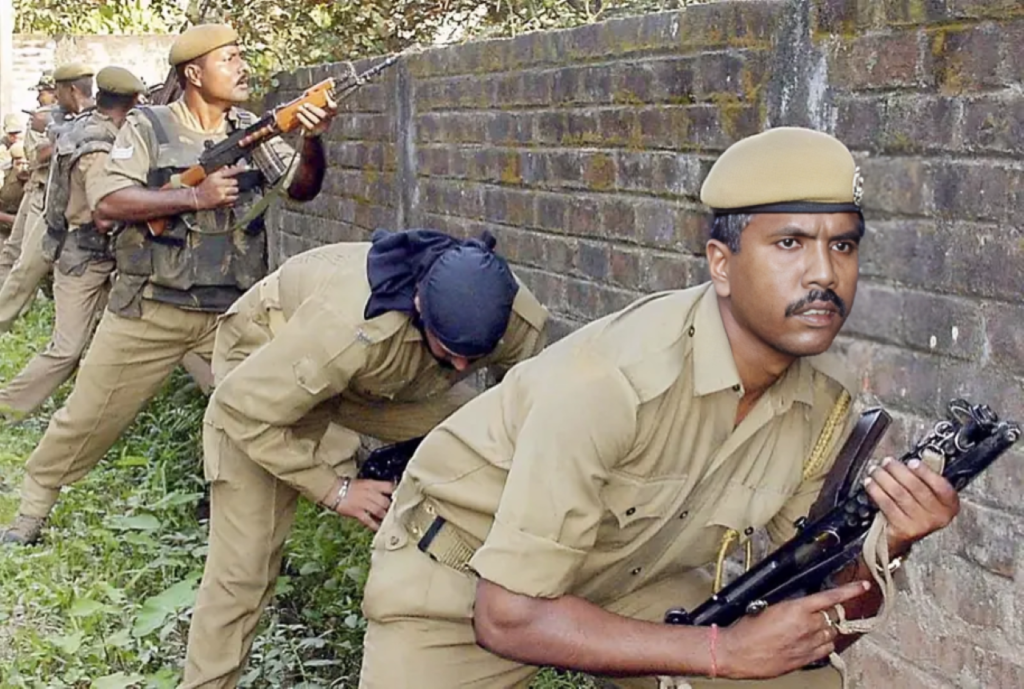
When the Indian Army launched major military operations such as ‘Operation Bajrang’ and ‘Operation Rhino’ in Assam during 1990 and 1991, insurgents including ULFA faced intense pressure. To ensure their survival, they altered their strategy and began crossing the international border to seek refuge inside Bangladesh.
During this period, the insurgents adopted a strategy known in military terms as ‘hit and run’. From bases adjacent to the Bangladeshi border, armed insurgents would enter Indian territory late at night, carry out bloody attacks on Indian army convoys, police outposts, or government infrastructure, and return to the safe haven of Bangladesh within hours.
Even if the Indian Army gave chase, they were forced to halt at the border due to the lack of legal authorization to cross international boundaries.
Expansion of Bases Inside Bangladesh and Strategic Advantages
Surrounded by hills and forests, the border districts of Bangladesh became natural fortresses for the insurgents.
-
Border areas of Sherpur, Mymensingh, and Netrokona: Adjacent to the Garo Hills of Meghalaya, these regions were used by ULFA and NDFB as safe routes.
-
Sylhet, Moulvibazar, and Sreemangal regions: Permanent safe havens were established in these areas bordering Cachar district of Assam and Tripura by ULFA and Tripuri insurgents.
-
Chittagong Hill Tracts (Khagrachhari, Rangamati, and Bandarban): This rugged mountainous area adjacent to the Mizoram and Myanmar borders was chosen by NLFT, ATTF, and Manipuri insurgents as their primary military training camps.
Because of these safe havens, Indian security forces could not suppress the rebellion despite spending billions of rupees and deploying thousands of additional troops in Assam, Tripura, or Manipur. Whenever military operations were intensified in one state, the insurgents would go into hiding across the border in Bangladesh and return rejuvenated with renewed strength.
Every year, hundreds of Indian soldiers and civilians lost their lives, while a massive portion of Delhi’s central budget had to be spent on guarding the border and crushing insurrections. This stalemate created by geography posed a permanent threat to Indian sovereignty in Northeast India.
‘Safe Haven’ for Insurgents in Bangladesh and the Backstory of the 10-Truck Arms Haul
From the 1990s to the mid-2000s, taking advantage of Bangladesh’s geopolitical position and specific laxity in border management, armed insurgent groups from Northeast India built a vast network in the country. This situation took an extreme and alarming shape, particularly during the tenure of the coalition government from 2001 to 2006. At that time, evading the eyes of Indian intelligence agencies, top leaders of various separatist organizations, including ULFA, moved around freely in disguise not just in hiding, but in affluent areas of Dhaka, Chittagong, and Sylhet.
Operating right out of Dhaka, illegal financial transactions worth millions of takas, arms purchase plans, and military strategies for attacks on India were executed. Beyond serving as a safe haven, ULFA leaders also extended their roots into the country’s economy. Using fake identities to procure customs and trade licenses, they invested in hotel businesses, garment factories, travel agencies, and even soft drink manufacturing plants in Chittagong and Dhaka. On the other hand, secret training camps and supply centers were set up in border-adjacent districts like Sherpur, Bokshiganj in Jamalpur, border areas of Sylhet and Moulvibazar, and the deep forests of the Chittagong Hill Tracts in Khagrachhari and Bandarban.
Unprecedented Canvas of International Arms Smuggling
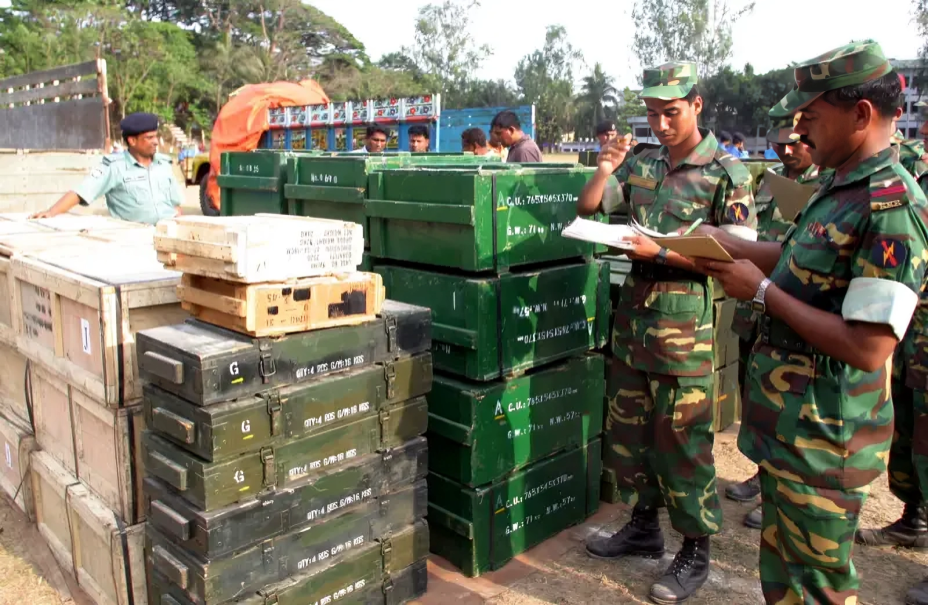
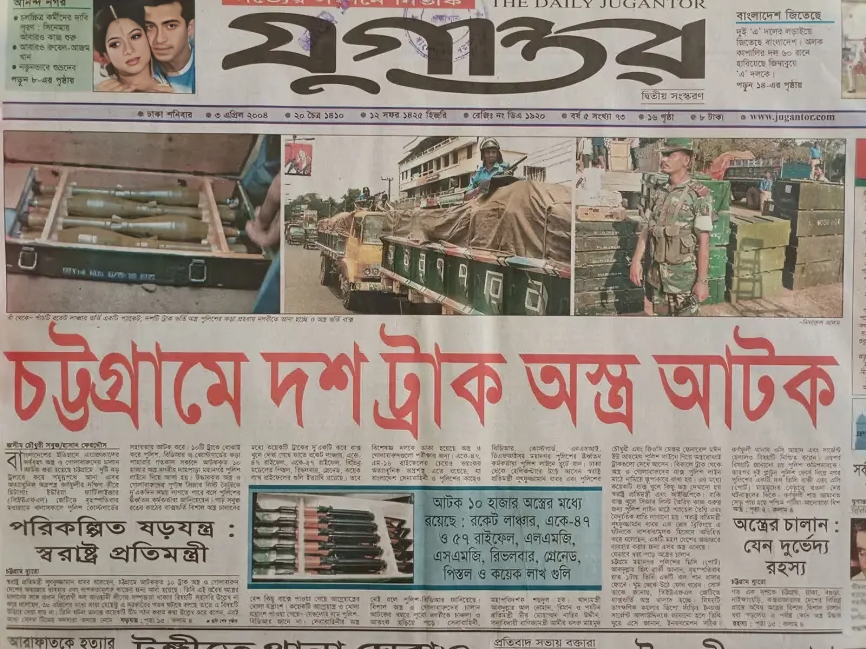
The most sensational, dangerous, and direct evidence of utilizing Bangladesh to strike at India’s security was exposed on the night of April 1, 2004. At the restricted jetty of a state-owned chemical fertilizer factory—Chittagong Urea Fertilizer Limited (CUFL)—located on the banks of the Karnaphuli River near Kaptai Road intersection in Chittagong, the largest arms smuggling incident in history unfolded.
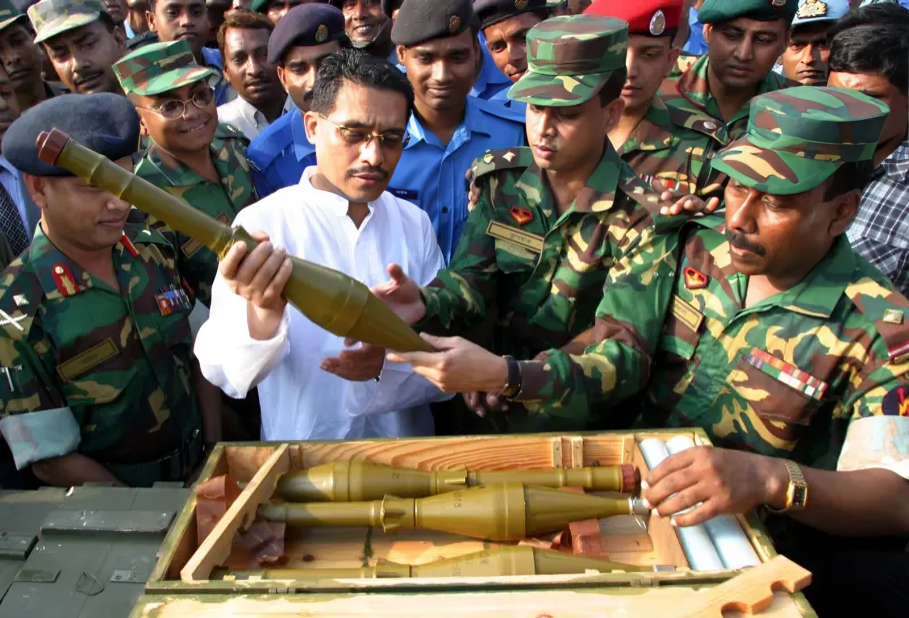
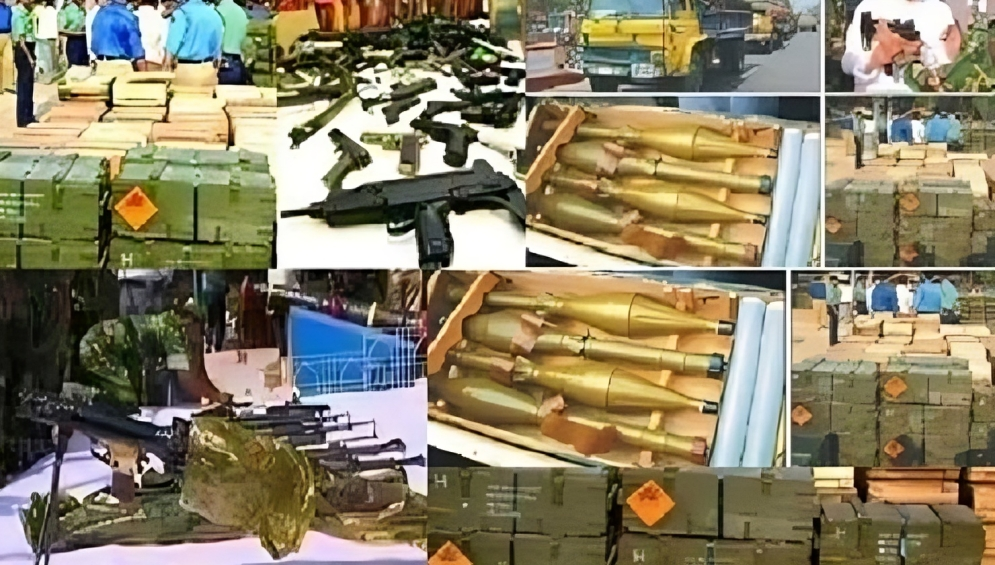
A massive consignment of weapons was brought in via a specialized vessel crossing international waters through the Bay of Bengal. Subsequently, they were brought to the CUFL jetty via small trawlers along the Karnaphuli River and loaded onto trucks. During a sudden raid by a police team and the Coast Guard, the cache of weapons was seized while being loaded into 10 trucks—an event that later came to be known as the ’10-Truck Arms Case’.
Quantity of the Arms Cache
Security analysts across the world were stunned by the quantity and sophistication of the recovered weapons. This was no ordinary border smuggling; rather, it was modern, professional military hardware capable of challenging an entire national army. Among the seized weaponry were:
-
Automatic Firearms: Approximately 4,930 state-of-the-art firearms manufactured by China’s NORINCO company, including a vast number of AK-47 and AK-56 rifles, sub-machine guns, Type-81 assault rifles, Italian Uzi sub-machine guns, and highly precise Tommy guns.
-
Explosives and Heavy Weaponry: Nearly 27,020 powerful hand grenades, 840 rocket launchers, 300 Rocket-Propelled Grenades (RPG), and 2,000 grenade launching tubes.
-
Ammunition and Magazines: 1,140,520 rounds of live ammunition and 6,392 magazines for various types of weaponry.
Investigations revealed that the key figure behind financing and purchasing this massive international arms shipment was ULFA’s military chief Paresh Baruah (who was residing in Dhaka at the time under the alias Kamruzzaman). Although the weapons were Chinese-made, they arrived at Bangladeshi ports via small and large trawlers after passing through the territorial waters of Hong Kong, Singapore, and Malaysia.
A Dire Warning for New Delhi
The recovery of the 10-truck arms cache was a massive jolt for Indian policymakers and intelligence agencies at the time. Analyzing the depth of the incident, Indian strategists realized that the greatest threat to the sovereignty and integrity of the Seven Sisters lay not within India’s own borders, but inside Bangladeshi territory.
Had these 10 trucks of modern lethal weaponry reached the hands of ULFA fighters positioned in the dense jungles and hills of Assam, a bloody civil war and instability would have erupted across the entire Northeast India, inflicting irreparable losses on the Indian defense forces. This single incident sent a clear message to New Delhi: allowing Bangladeshi territory to be used as a corridor or ‘logistical hub’ for anti-India armed separatism under any political patronage would pose an existential crisis to India’s own security.
Strategic Shift of 2009 and ‘Zero Tolerance’ Policy
Immediately upon the Awami League government led by Sheikh Hasina returning to power in January 2009, a historic shift occurred in Bangladesh’s regional security and foreign policy. The government demonstrated the highest political will to resolve the friction regarding border security and separatism that used to arise in Home Secretary-level meetings or BDR-BSF summit talks in previous years.
Sheikh Hasina declared in clear and firm terms—no form of extremist, terrorist, or armed separatist movement would be allowed to operate against the integrity of any neighboring state using the sovereign territory of Bangladesh. This revolutionary vision of the government later gained recognition in international geopolitics as the ‘Zero Tolerance Policy’.
Restructuring Intelligence Framework and Border Security Operations
This political decision was not confined to paper or official statements. To implement the zero-tolerance policy, Bangladesh’s top intelligence and security agencies were granted full freedom and specific mandates. An unprecedented coordinated intelligence network was built among the National Security Intelligence (NSI), Directorate General of Forces Intelligence (DGFI), Rapid Action Battalion (RAB), and the Special Branch (SB) of Bangladesh Police.
The border guard force, then BDR (later BGB), was instructed to completely sever illegal infiltration, arms smuggling, and communication networks of groups like ULFA in border areas. Intelligence surveillance deployed in districts bordering Northeast India was multiplied manifold.
Eradication of Hideouts from Rugged Mountainous and Border Areas
Based on intelligence inputs, a series of precise and rigorous military chain-operations were launched in areas adjacent to the border. Cordon-and-search operations were executed in Haluaghat and Dhobaura in Mymensingh, Jhenaigati and Sreebardi in Sherpur, Jaintiapur and Gowainghat in Sylhet, and rugged hilly areas of Khagrachhari and Bandarban where groups like ULFA, NLFT, and ATTF had been running secret training camps and satellite hideouts for years.
Within a few months, sophisticated wireless communication equipment, stockpiles of arms, and explosives used by Indian insurgents were recovered from the hills and jungles of these areas. Their permanent training camps were completely destroyed, and permanent patrol posts of Bangladeshi law enforcement agencies were established in those locations to prevent any insurgent group from re-establishing bases there in the future.
Bilateral Security Cooperation and CBMP Agreement
Alongside internal sweeps, institutional security cooperation with India was elevated to an unprecedented level. Regular real-time intelligence sharing commenced between the two countries, something that had never happened before.
In continuation of this joint security mechanism, the historic ‘Coordinated Border Management Plan’ (CBMP) was signed between Bangladesh and India in 2011. Through this agreement and structural changes, it became possible to suppress border crimes and reduce the movement of Indian insurgents to zero. It was due to these courageous and far-sighted actions of the Sheikh Hasina government that the largest fortresses and supply lines of armed insurgent groups in Assam and Northeast India were permanently dismantled.
Fall of Top Insurgent Leaders, Flawless Arrests, and Handover to India
Following the destruction of training camps in border areas by Bangladeshi intelligence agencies’ crackdowns, the decision-makers of ULFA and other armed organizations came under unprecedented pressure. To escape the Indian military and Assam Police on the mainland and maintain their international network, almost the entire top leadership of ULFA was residing in Bangladesh under disguise. In 2009, through precise and covert operations conducted with direct political support from the government, these top leaders were netted one after another.
November-December 2009: End of ULFA Leadership
In the last three months of 2009, Bangladeshi intelligence agencies dealt the heaviest blow to ULFA’s decision-making political and military structure.
-
November 2009: ULFA’s Foreign Secretary Sashadhar Choudhury and Finance Secretary Chitraban Hazarika were arrested from secret hideouts in Uttara and Dhanmondi in Dhaka. Subsequently, under utmost secrecy, they were handed over to Indian intelligence agencies and the BSF through the Akhaura border in Brahmanbaria.
-
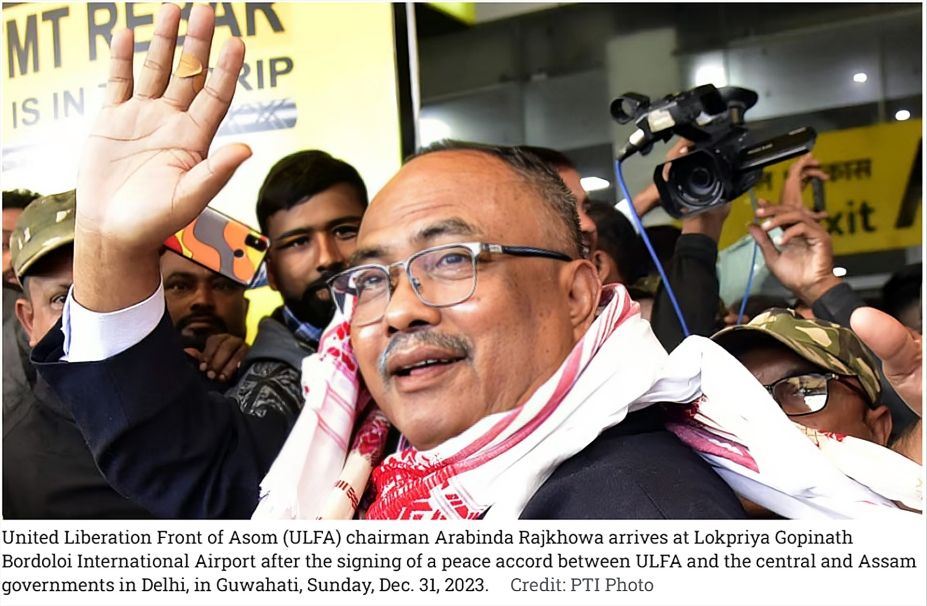
December 2009: The operation on December 4 was a landmark event in the political history of Assam. From different locations in Cox’s Bazar and Dhaka, one of ULFA’s co-founders and Chairman Arabinda Rajkhowa, Deputy Commander-in-Chief Raju Baruah, Press and Publicity In-charge Robin Handique, and female leaders of ULFA’s central committee along with Rajkhowa’s family were arrested. They were formally handed over to Indian authorities through the Dawki border in Meghalaya, India.
This arrest and handover process is viewed in international and regional military history as a rare example of neutralizing the core leadership of an entire insurgent organization ‘without firing a single shot’.
Neutralizing NDFB Chief Ranjan Daimary and Tripura Insurgent Leaders
Not just ULFA, top leaders of other deadly armed organizations in Northeast India were also not spared from the intelligence net of the Bangladesh government.
In May 2010, Ranjan Daimary (also known as D R Nabla), the mastermind behind the deaths of hundreds of innocent people in Assam and the key architect of the horrific 2008 serial blasts in Assam, as well as the top chief of the National Democratic Front of Bodoland (NDFB), was arrested from Bangladeshi territory and handed over to India.
Alongside this, several key commanders of Tripura’s All Tripura Tiger Force (ATTF) and National Liberation Front of Tripura (NLFT) were arrested from Chittagong and Dhaka and handed over to Indian authorities via the Agartala border.
Anup Chetia’s Long Legal Journey and the Historic 2015 Handover
The senior-most and most influential figure of Assam’s secessionist movement, ULFA’s founding General Secretary Anup Chetia (Golap Baruah), was arrested on December 21, 1997, from the Mohammadpur area of Dhaka with forged passports, foreign currency, and a satellite phone.
For the next 18 years, he served sentences in various prisons across Bangladesh, including Kashimpur Central Jail, and fought legal battles applying for political asylum.
In November 2015, under the direction of the Sheikh Hasina government and following a lengthy legal and diplomatic process, Anup Chetia was formally handed over to India. This was regarded as a symbol of the highest level of security and diplomatic trust-building between New Delhi and Dhaka.
Fracture of ULFA and Permanent End of the ‘Safe Route’
As a result of these all-out and well-planned operations, the four-decade history of armed struggle against India suffered its greatest collapse. Only ULFA’s military chief Paresh Baruah managed to flee Bangladesh to the Sagaing region of Myanmar and areas adjacent to the Chinese border. However, having lost its main political and military driving force, ULFA split into two factions.
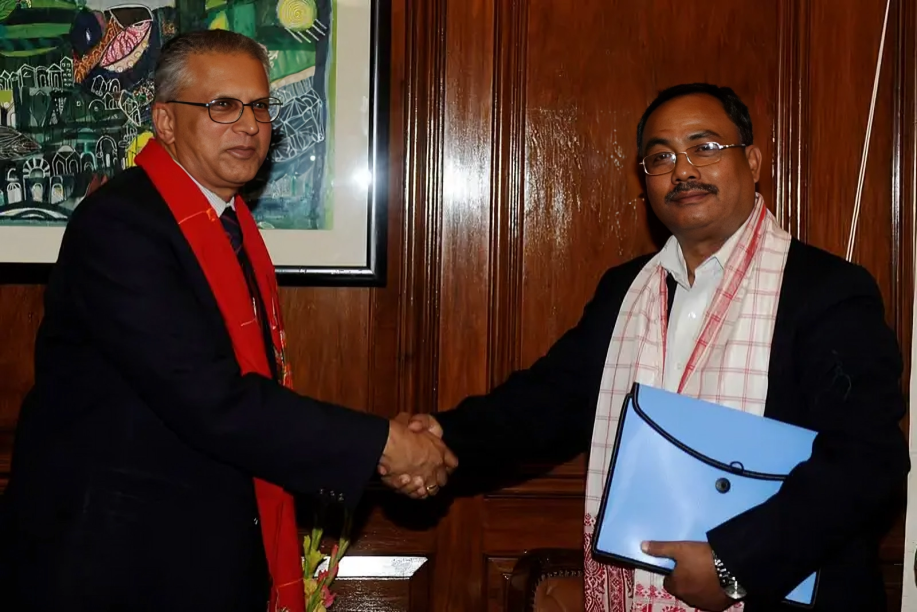
The pro-talks faction of ULFA led by Arabinda Rajkhowa and Anup Chetia abandoned the path of arms and initiated lengthy peace negotiations with New Delhi starting in 2011, which culminated in a historic arms surrender agreement in 2023.
The complete removal of these top leaders from Bangladeshi soil permanently crippled armed politics in Northeast India. The Indian defense forces no longer had to carry back the bodies of hundreds of soldiers while suppressing rebels inside their country. And for this reason, Sheikh Hasina considered this chapter of gifting an intact and secure security shield to the Indian state—without surrendering any territory—as her historic contribution to India.
Insurgent Leaders’ Own Statements and the Historic 2023 Peace Accord
The greatest proof of the impact of Sheikh Hasina’s security policy is found in the confessions of ULFA leaders themselves. In December 2023, when the pro-talks faction of ULFA signed a historic peace accord with the Government of India and the Government of Assam, officially ending 44 years of armed struggle, their top leaders spoke openly about the reasons behind it.
ULFA’s Foreign Secretary Sashadhar Choudhury openly admitted in an interview that after Sheikh Hasina won the 2008 elections and came to power, the situation in Bangladesh changed completely for them. Remembering India’s contribution to the 1971 Liberation War, the Sheikh Hasina government decided to cooperate fully in India’s security. Red Corner notices were issued against them in Bangladesh, their photos were put up at airports, and all their camps were destroyed.
Anup Chetia similarly noted that once Bangladesh shut down their safe haven, their backs were against the wall. They had been driven out of Bhutan in a military operation in 2003, and after 2009, the path through Bangladesh was also closed. Disoriented and with top leaders being arrested one after another, they were left with no second option but to join the peace political process in Assam.
It was due to these decisive measures that preliminary discussions began in 2011, culminating in the end of four decades of bloodshed in Assam by late 2023.
Geopolitical Balance and New Delhi’s Far-Reaching Gains
In the equations of international politics, ‘security cooperation’ is no ordinary transaction. The massive positive shift in India’s internal security resulting from the suppression of separatist groups in Northeast India saved New Delhi thousands of crores of rupees and preserved the lives of countless military personnel.
The Northeast region, which for decades had been draining a huge portion of India’s central budget and defense resources while generating continuous internal instability, saw the return of a peaceful environment. This allowed India the opportunity to focus on its mainland economy and global geopolitics.
Beyond suppressing separatism, alongside border security, access to Chittagong and Mongla ports, transit and transshipment facilities, and power imports greatly simplified connectivity between India’s northeastern states and its mainland. Consequently, a new horizon opened up in the economic transformation of states like Assam, Tripura, and Meghalaya, from which the Indian government gained direct benefits.
True Context and Core Message of Sheikh Hasina’s Statement
When former Prime Minister Sheikh Hasina uttered during a press conference at Ganabhaban on May 30, 2018—”We do not want any return. Whatever we have given to India, they will remember for the rest of their lives,” the core focus of that statement was this historic establishment of peace.
In the press conference, she explicitly explained that Northeast India had been restored to peace from daily bombings, bloodshed, and separatist violence. The decision not to allow Bangladeshi soil to be used for any anti-India terrorist or separatist activities was the greatest gift to New Delhi.
The peace and security she spoke of was no ordinary abstract promise. It was the bonding of deep military and strategic trust between two neighboring states, which gave New Delhi complete peace of mind regarding its eastern frontier.

Propaganda, Rumors vs. The Actual Truth
The narrative propagated by a section of political circles in the social and political arenas—capitalizing on public anger—that Sheikh Hasina sold off land to India, handed over gas or energy resources, or sacrificed the country’s sovereignty bears no resemblance to factual reality.
In truth, Sheikh Hasina gave India an invisible yet robust security umbrella that cannot be measured by cash or geographical assets. Helping eradicate an internal armed rebellion of another country from the soil of an independent nation is a rare strategic gift in international geopolitics.
In the history of international relations, ‘ensuring security’ is valued far more than land or material assets. New Delhi understands very well how Sheikh Hasina’s zero-tolerance policy and firm stance against separatists doused four decades of violent unrest in Northeast India.
Therefore, Sheikh Hasina’s statement was not an act of political arrogance or an agreement to sell out the country; rather, it was a historic document of international security and strategic relations. It was not any material resource, but rather regional stability and border security that constituted Sheikh Hasina’s contribution to India—one that India is bound to remember for a long time in geopolitical reality.