With the vision of bringing quality primary healthcare directly to the doorsteps of marginalised communities, tech entrepreneur and social worker Sufi Faruq Ibne Abubakar has undertaken this humanitarian project. Behind this initiative lies the lifelong dream cherished by his mother, Mehirunnesa (affectionately known as Bulbuli). Witnessing the hardships faced by ordinary villagers regarding illnesses, consulting doctors, or accessing minor surgeries, she deeply felt the necessity for regular healthcare services. In honour of his mother’s wish and demand, this welfare initiative began its journey from their family residence, ‘Annapurna’.
As Sufi Faruq Ibne Abubakar shares:
“My mother, Mehirunnesa, would often speak to me about the various health issues faced by the villagers. It was her long-standing demand to arrange regular health camps for ordinary village folk. Inspired by that very wish, this work was launched from our ancestral village home, ‘Annapurna’.”
Table of Contents
Programme – Health Camp
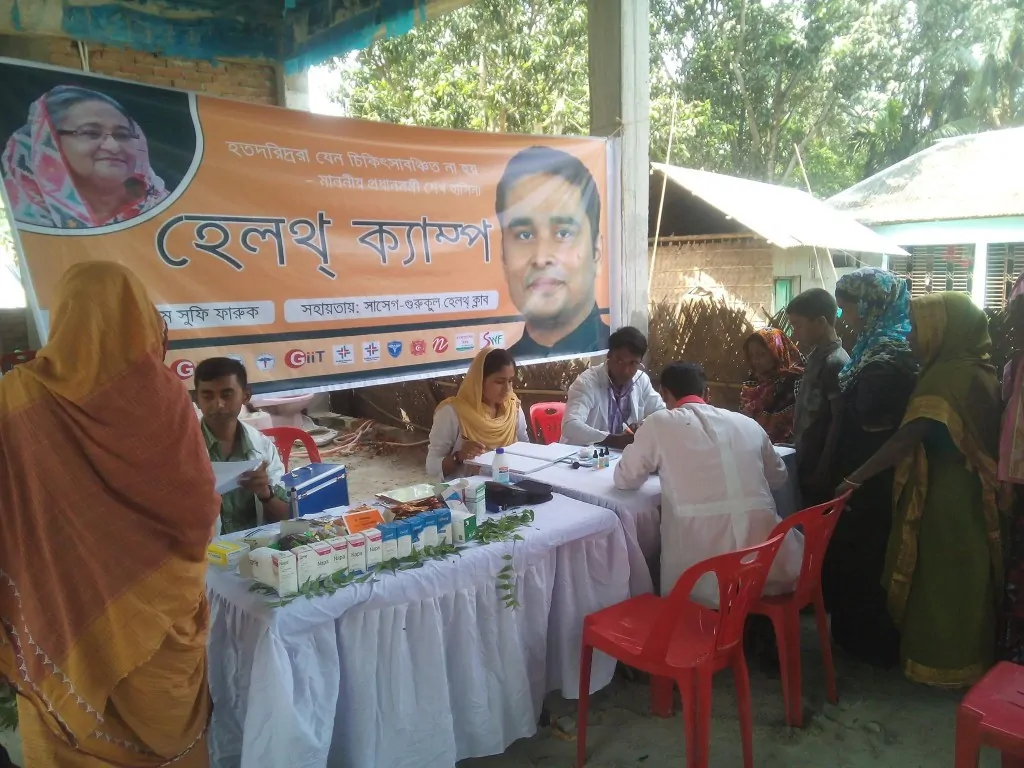
[Project – Health Camp]
Aims and Objectives of the Programme
The primary objective of this project is to raise health awareness among ordinary people at the grassroots level and to cultivate a disease-free, active rural community. Frequently, due to distance or financial constraints, poor patients find it impossible to visit the Upazila Health Complex or see a specialist in the town. To overcome this limitation, specialist consultations and primary medical care are delivered directly to the people’s doorsteps.
The ultimate goal of this programme is not merely immediate treatment, but rather to increase the average life expectancy and improve the quality of life of the rural population through regular health check-ups and the provision of necessary medicines. It is, fundamentally, a long-term endeavour to build a healthy and productive society by securing the health protection of marginalised people.
Scope of Services and Activities
Under this project, health camps are organised regularly every month across various areas. These camps play a vital role, particularly in securing medical care for poor and helpless individuals.
- Free Health Check-ups: Monitoring the physical condition of patients and providing prescriptions through experienced doctors.
- Diagnostic Services: Free blood grouping, blood pressure (BP) measurement, and blood glucose testing.
- Basic Tests and Medicine: Access to various primary diagnostic tests and the supply of necessary medicines, completely free of charge.
- Beneficiaries: Each camp provides medical care to an average of over 250 healthcare-deprived individuals.
Humanitarian Impact and Public Opinion
The social impact of the project is profound. According to a beneficiary from Banshgram who had been suffering from long-term asthma and breathing difficulties:
“As the Upazila Health Complex is very far away, it was impossible for me to seek treatment. I am deeply grateful to receive free care and medicine at this free camp so close to my home.”
Similarly, the volunteers participating in the health camps feel proud to be part of this initiative. In their view, executing such a large-scale arrangement individually is difficult, but Sufi Faruq Ibne Abubakar’s platform has granted them the opportunity to serve the community.
Management and Funding
This massive undertaking is managed systematically, with the cooperation of local dignitaries and the administration.
| Description | Details |
| Financial Support | Sufi Welfare Foundation |
| Organisational Cooperation | SASEG Gurukul Health Club and local residents |
| Voluntary Service | Dedicated members of #TeamSufiFaruq |
| Frequency | At least once every month |
Sufi Faruq Ibne Abubakar’s multifaceted initiatives represent an integrated blueprint for building an ideal and self-reliant society. Equipping the youth for modern and technological employment through the ‘Career Counselling Assembly’, ensuring the economic empowerment of marginalised women through the ‘Community Sewing Centre’, and delivering healthcare to the doorsteps of underprivileged people through the ‘Free Health Camp’—each of these initiatives stands as a robust pillar of Sustainable Development.
Funded through personal finance and driven by local community engagement, these projects prove that revolutionary change can be brought about at the grassroots level with proper planning and a dedicated sense of social responsibility. This relentless effort to build a skilled workforce and secure basic human rights has established itself as an exemplary and successful model, not just for the Kumarkhali-Khoksa region, but for the entire country.
See Also: