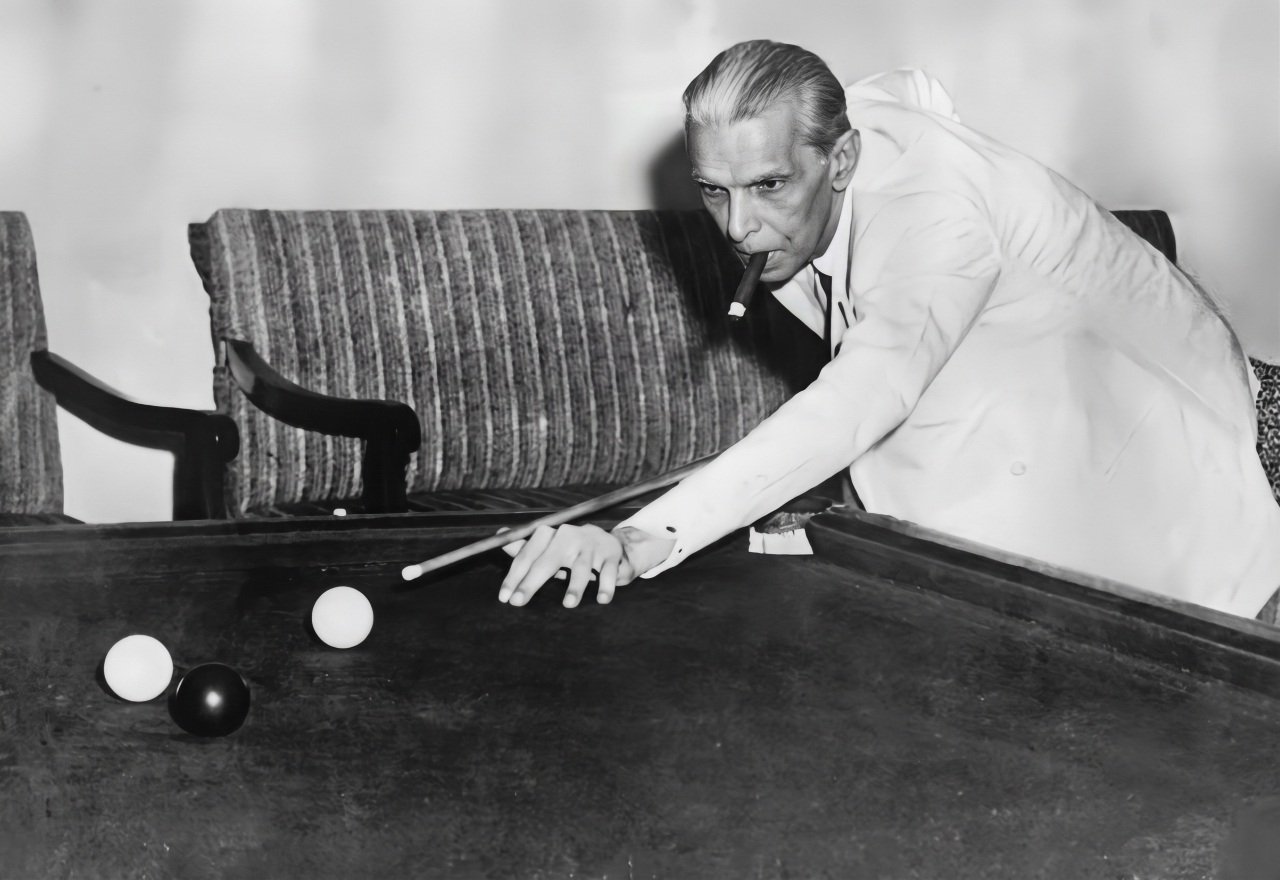
Authored by Ishtiaq Ahmed—Professor Emeritus of Political Science at Stockholm University, Sweden, and an internationally acclaimed Lahore-born scholar—this volume represents the most exhaustive, document-backed, and critical investigation of modern times into the political life of Mohammad Ali Jinnah, the metamorphosis of his thought, and the bloody annals of the Partition of India. In the political crucible of twentieth-century South Asia, there exists no figure more controversial or formidable than Jinnah. To one school of historians, he remains the ‘hallowed creator’ of the nation of Pakistan and an immaculate Quaid-i-Azam; to another, he is the primary villain of India’s partition and the architect of a communal brand of politics responsible for the loss of hundreds of thousands of lives. Professor Ishtiaq Ahmed dismantles both these oversimplified political paradigms, dissecting every delicate nuance, strategic manoeuvre, and far-reaching historical consequence of Jinnah’s political trajectory through the objective lens of a political scientist.
The treatise draws upon an immense reservoir of primary sources—including Jinnah’s speeches, private correspondence, secret British archival records, memoirs of contemporary political figures, and press dispatches. The author delineates Jinnah’s four-decade political odyssey into four distinct epochs: the liberal Indian nationalist, the reactive Muslim communitarian, the separatist Muslim nationalist, and ultimately, the omnipotent Governor-General of the emergent state of Pakistan. This work is not merely a personal biography of Jinnah; rather, it stands as a profound theoretical and historical dissection of how individual agency can alter the arc of history, culminating in the tectonic transformation of regional geopolitics.
-
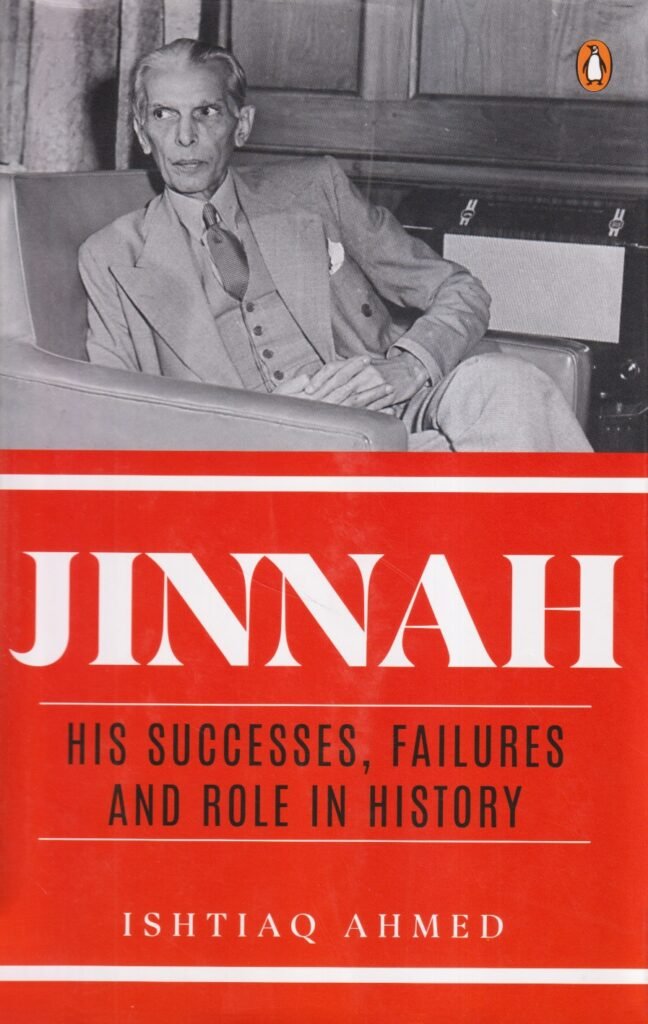
Title: Jinnah: His Successes, Failures and Role in History
-
Author: Professor Ishtiaq Ahmed
-
Publication Date: 2020 (Penguin Random House India)
-
Page Count: Approximately 800–840 pages
Table of Contents
Chapter 1: Jinnah’s Role in History: A Scheme of Analysis
In the opening chapter, Ishtiaq Ahmed lays the theoretical and methodological foundations of the volume. To elucidate the degree to which an individual’s political decisions are governed by personal agency versus the prevailing historical and social imperatives of the era, the author invokes the famous work The Role of the Individual in History by the nineteenth-century Russian Marxist theorist Georgi Plekhanov. According to Plekhanov, the locus for great individuals in history emerges when social, economic, and institutional conditions create fertile ground for a specific type of leadership to arise. Nevertheless, within those structural conditions, the strategic choices of the individual leader ultimately determine the final pivot of history.
Standing upon this theoretical scaffolding, the author poses a series of profound counterfactual historical questions. Firstly, had the Indian National Congress resolutely and unyieldingly rejected the demand for partition, refusing under any circumstances to countenance territorial dismemberment, could Jinnah single-handedly have forged Pakistan? Secondly, had the colonial British power—disregarding its own geopolitical interests—stood firmly in support of an undivided India and fiercely opposed partition, could Jinnah have attained his objective? Thirdly, had the British and the Congress jointly held an unshakeable stance in favour of a single federal India, what landscape might South Asia have presented?
Through his answers to these queries, Ishtiaq Ahmed demonstrates that Jinnah was neither a mere solitary, indomitable titan who created a state by sheer force of personal will, nor was he a helpless victim of structural circumstances. Rather, he was an exceptionally astute and visionary political chess player who, with extraordinary dexterity, exploited the strategic vulnerabilities of British India, the policy blunders of the Congress, and the emerging identity crisis among Muslims to achieve his political objectives.
Chapters 2 & 3: Jinnah as an Indian Nationalist & Joining the Indian National Congress
These two chapters meticulously chronicle Jinnah’s early family life, his emergence as a legal practitioner in Bombay, and his integration into the mainstream of Indian nationalist politics. Born into a Gujarati Kathiawari Khoja (Aga Khani Ismaili) Shia Muslim family, Jinnah was raised in a secular and modern milieu. Following his legal training at the historic Lincoln’s Inn in England, he enrolled at the Bombay bar, swiftly establishing a reputation as an exceptionally successful and wealthy barrister.
Jinnah initiated his political career in 1906 by joining the Indian National Congress as private secretary to Dadabhai Naoroji at the Calcutta session. During this epoch, he stood as a fierce adversary of fanatical, community-based politics. In the wake of the tensions ignited between Hindus and Muslims by Lord Curzon’s 1905 Partition of Bengal, Jinnah sought political resolution beneath the banner of Indian nationalism. He was initially opposed even to the system of ‘Separate Electorates’ introduced for Muslims by the colonial British authorities via the Morley-Minto Reforms of 1909, viewing religion-based franchise as a formidable impediment to Indian political unity.
In 1913, he joined the All-India Muslim League, albeit with an explicit caveat: his membership in the League must in no way compromise his Indian nationalist identity or his loyalty to the Congress. Jinnah regarded Gopal Krishna Gokhale as his political mentor. The crowning historical landmark of this phase was the ‘Lucknow Pact’ of 1916. Through Jinnah’s relentless mediation, the Congress and the Muslim League agreed for the first time upon a joint constitutional demand. The Congress accepted the principle of separate electorates, while the League joined hands with the Congress in demanding self-governance for India. For this singular triumph, the distinguished poet and politician Sarojini Naidu famously bestowed upon Jinnah the title of the ‘Ambassador of Hindu-Muslim Unity’.
Chapters 4 & 5: Jinnah as a Muslim Communitarian & Communitarian Forays
From the 1920s onwards, a profound fracture and metamorphosis became manifest in Jinnah’s politics. In 1919, in the aftermath of the First World War, Mohandas Karamchand Gandhi introduced a dramatic new tide into Indian political life. Gandhi tethered the Khilafat Movement to the Non-Cooperation Movement of the Congress, mobilising vast populaces and religious fervour across India. Jinnah, a firm believer in precise legalistic, constitutional, and elite-centric politics, regarded this infusion of religious emotion and mass hysteria into politics as perilously hazardous. At the 1920 Nagpur session of the Congress, he publicly opposed Gandhi’s resolution and, feeling deeply humiliated, parted ways with the Congress.
Following his exit from the Congress, Jinnah found himself politically isolated, yet he shifted his ideological course. Departing from all-India nationalist politics, he began to reconfigure himself as the foremost constitutional custodian of the rights and security of the Muslim community. This marked his ‘Muslim Communitarian’ phase. During this period, he demanded a spectrum of constitutional guarantees to assuage Muslim fears of minority subjugation.
The ‘Nehru Report’ of 1928, drafted under the leadership of Pandit Motilal Nehru, accelerated this transition. The Nehru Report advocated the abolition of separate electorates for Muslims in favour of a strong unitary central government, lacking adequate provisions for special provincial autonomy or safeguards for Muslims. Jinnah sought amendments to the report, which the Congress rejected. In response, Jinnah presented his famous ‘Fourteen Points’ in 1929, emphasising a weak central authority and robust provincial autonomy. Jinnah himself described this episode as the ‘Parting of the Ways’ from mainstream Indian politics. Disillusioned by the extremism of both communities at the Round Table Conferences in London (1930–32), Jinnah temporarily withdrew from active politics to concentrate on his legal practice in London.
Chapters 6, 7 & 8: The Two-Nation Theory, Congress Ministries & Politics of Polarisation
Following the passage of the Government of India Act 1935, provincial elections were conducted for the first time across India in 1937. The Congress achieved a sweeping victory, forming governments in major provinces, whereas the Muslim League delivered a dismal performance. However, in the post-election negotiations—particularly in the United Provinces—the Congress refused to form a coalition government with the Muslim League, stipulating that League leaders must individually join the Congress to take office.
Ishtiaq Ahmed demonstrates that this political hubris and winner-takes-all policy of the Congress in 1937 pushed Jinnah irrevocably towards radical Muslim nationalism. Jinnah and the Muslim League began to assert that the Congress was purely a Hindu organisation that could in no way represent Muslim interests. Elevating grievances such as the Pirpur Report and the Wardha Scheme of Education, the League propagated that Muslim culture, religion, and language were under grave peril under Congress rule.
Against this backdrop, Jinnah meticulously constructed his ‘Two-Nation Theory’. He proclaimed that Hindus and Muslims were not merely two distinct religious groups, but constituted two separate civilisations, cultural entities, and distinct nations. Consequently, the national definition of India required reconfiguration to accord them separate sovereign territories.
Here, Ishtiaq Ahmed vigorously refutes the famous ‘Bargaining Chip’ thesis advanced by the Cambridge-trained Pakistani historian Ayesha Jalal. In her seminal work The Sole Spokesman, Jalal posited that Jinnah never genuinely sought the partition of India or a sovereign Pakistan; rather, he merely used the concept of ‘Pakistan’ as a bargaining lever to secure maximum autonomy for Muslim-majority provinces and a powerful standing at the centre of a united India. Citing numerous private letters, speeches, press statements, and personal exchanges of Jinnah between 1937 and 1940, Professor Ishtiaq Ahmed proves that Jalal’s thesis runs contrary to historical evidence. Ahmed demonstrates that from the late 1930s onwards, Jinnah was purposefully and strategically striving towards the creation of an entirely separate, sovereign Muslim state.
Chapters 9, 10 & 11: Building Momentum, Quit India Movement & Relentless Campaign
On 23rd March 1940, at its Lahore session, the All-India Muslim League formally adopted the so-called ‘Lahore Resolution’ (later popularized as the Pakistan Resolution). The resolution stipulated that the Muslim-majority regions in the North-Western and Eastern zones of India should be grouped to constitute ‘Independent States’. Though the phrasing contained a degree of ambiguity, Jinnah presented it as the definitive manifesto for achieving a single sovereign state of ‘Pakistan’.
The outbreak of the Second World War (1939–1945) rapidly transformed the political calculus of India. The Congress opposed the British war effort and launched the ‘Quit India Movement’ in 1942. In response, the colonial administration incarcerated virtually the entire senior leadership of the Congress, including Mahatma Gandhi and Jawaharlal Nehru. Jinnah exploited this golden opportunity with extraordinary skill. By offering cooperation to the British, he expanded the organizational machinery of the Muslim League across Punjab, Sindh, Bengal, and the North-West Frontier Province during the absence of Congress leaders in an unprecedented manner.
The central and provincial legislative elections of 1945–46 represented the paramount political gamble of Jinnah’s life. He framed these elections as a referendum upon the Two-Nation Theory and the demand for ‘Pakistan’. Muslim League candidates whipped up religious fervour across mosques and shrines, campaigning under the slogan that “to oppose Pakistan is to oppose Islam”. The electoral outcome was staggering—the Muslim League captured 100 per cent of the Muslim reserved seats in the Central Legislative Assembly and secured over 90 per cent of the Muslim seats across provincial assemblies. Through this monumental triumph, Jinnah conclusively established his standing before both the British and the Congress as the sole, undisputed spokesman of South Asian Muslims.
Chapters 12, 13 & 14: The Cabinet Mission Plan & The Decision to Partition India
In early 1946, the British government dispatched the ‘Cabinet Mission’ in a final endeavour to forge a unified settlement for India. The Cabinet Mission Plan proposed grouping India into three distinct clusters of provinces (Group A: Hindu-majority regions, Group B: North-Western Muslim regions, and Group C: North-Eastern Muslim regions). This comprised a complex three-tiered federal structure featuring a weak central government and granting provinces the right to secede from their respective groups after a decade.
Jinnah strategically accepted the plan, recognizing that it secured a de facto, unproclaimed ‘Pakistan’. However, Jawaharlal Nehru remarked at a press conference that the Congress was bound by no conditions of the Cabinet Mission and remained free to alter the arrangements upon entering the Constituent Assembly. Incensed by this declaration, Jinnah revoked his assent to the Cabinet Mission Plan and proclaimed 16th August 1946 as ‘Direct Action Day’.
In these chapters, Ishtiaq Ahmed demonstrates in vivid detail how the declaration of ‘Direct Action Day’—exacerbated by the direct and indirect laxity of Suhrawardy’s League government in Bengal—ignited the ‘Great Calcutta Killing’, which subsequently cascaded into horrific communal slaughters in Noakhali and Bihar. The riots and the loss of thousands of lives injected such a virulent communal poison into Indian politics that any remaining possibility of peaceful coexistence between Hindus and Muslims evaporated. The British Viceroy, Lord Mountbatten, alongside Congress leaders (Patel and Nehru), came to realize that partition was the sole alternative to an impending civil war. Finally, on 3rd June 1947, Mountbatten unveiled the official plan for the partition of India and the division of Punjab and Bengal.
Chapters 15 to 19: Jinnah as State Head, 11th August Speech & Politics of Crisis
Following the birth of Pakistan on 14th August 1947, Jinnah assumed office as the newly created nation’s first Governor-General. Simultaneously, he held the offices of Head of State, Speaker of the Constituent Assembly, and Supreme President of the Muslim League. By centralising all levers of governance within his own hands, he instituted a virtually autocratic structure.
In Chapters 15 through 19, the author delineates Jinnah’s brief tenure in governance and his conceptual paradoxes. The most fiercely debated among these events was Jinnah’s famous address to the Constituent Assembly of Pakistan on 11th August 1947. There, Jinnah declared:
Ishtiaq Ahmed analyses this address through a rigorous political-science lens. He poses the fundamental question: how could a leader who spent a decade indoctrinating millions that Hindus and Muslims were two fundamentally separate nations incapable of coexisting as equal citizens in a single state stand before the Constituent Assembly three days prior to independence and claim that they would transcend all divisions to become secular citizens? The author illustrates that Jinnah’s sudden secular declaration stood in stark, irreconcilable contradiction to his prior Two-Nation Theory. The religious genie he had unbottled could no longer be coaxed back into the vessel by a single progressive speech once statehood was attained.
As Head of State, Jinnah established several perilous constitutional precedents:
- Suppression of Provincial Autonomy: In August 1947, he arbitrarily dismissed the democratically elected Congress government of Dr Khan Sahib in the North-West Frontier Province.
- Excessive Exercise of Central Power: In resolving political feuds within Sindh and Punjab, he imposed central rule and fostered a bureaucratic-heavy state structure, which paved the way for prolonged military rule in Pakistan’s future.
- The Language Policy of Urdu and the Alienation of East Bengal: During his visit to Dhaka in March 1948, Jinnah declared in stern, uncompromising tones at Curzon Hall: “Urdu, and only Urdu, shall be the state language of Pakistan.” In repudiating the language of 56 per cent of the country’s populace, Ishtiaq Ahmed writes, Jinnah unwittingly sowed the seeds of Pakistan’s eventual disintegration in East Bengal (present-day Bangladesh) as early as 1948—a trajectory that culminated in the emergence of an independent Bangladesh in 1971.
The author concludes this section by chronicling Jinnah’s declining health, his demise on 11th September 1948, and the subsequent institutionalisation of Pakistan as a theocratic state through the ‘Objectives Resolution’ of 1949 under Liaquat Ali Khan’s premiership.
Executive Summary & Final Critical Assessment
Professor Ishtiaq Ahmed’s Jinnah: His Successes, Failures and Role in History opens a new horizon in the historiography of modern South Asia. The greatest virtue of the work lies in its immunity to cheap political emotionalism, nationalist propaganda, or hagiographic hero-worship.
With scrupulous impartiality, the author delineates Jinnah’s historical achievements and failures:
Jinnah’s Historical Success:
He was one of the greatest political calculators of the twentieth century. Possessing no army, leading no armed insurrection, but relying solely upon constitutional law, incisive intellect, unyielding tenacity, and oratorical mastery, he successfully carved out an entirely new state named ‘Pakistan’ upon the world map. This represents a monumental achievement of personal leadership.
Jinnah’s Historical Failures:
- A Moth-Eaten Pakistan and Mass Displacement: Jinnah had envisioned a grand, ‘undivided’ Pakistan, yet ultimately inherited a ‘moth-eaten and truncated’ nation. The price of this partition was paid in the blood of 1 to 1.5 million lives lost in communal slaughters, alongside the displacement of over 15 million refugees.
- The Vulnerability of Minorities: He left the millions of Muslims remaining in India permanently rendered a vulnerable, politically marginalized minority community.
- Pakistan’s Institutional Collapse: By strangling democratic institutions in their infancy and inaugurating a legacy of bureaucratic dominance, military hegemony, and linguistic centralism, he set Pakistan upon a path of perpetual political instability, culminating in its geographical dismemberment in 1971.
Ishtiaq Ahmed’s lucid and authoritative prose, backed by exhaustive archival citations and dispassionate analysis, renders this volume a masterpiece and an essential text for understanding Jinnah, the Partition of India, the Two-Nation Theory, and the geopolitical trajectory of modern South Asia.