Divergence of opinion, ideological combat, and even intense hostility are inherent to politics; yet can resorting to insults that disparage an opponent’s occupation, poverty, religion, or gender ever align with the ideals of Bangabandhu? Can such conduct befit a truly self-respecting political activist?
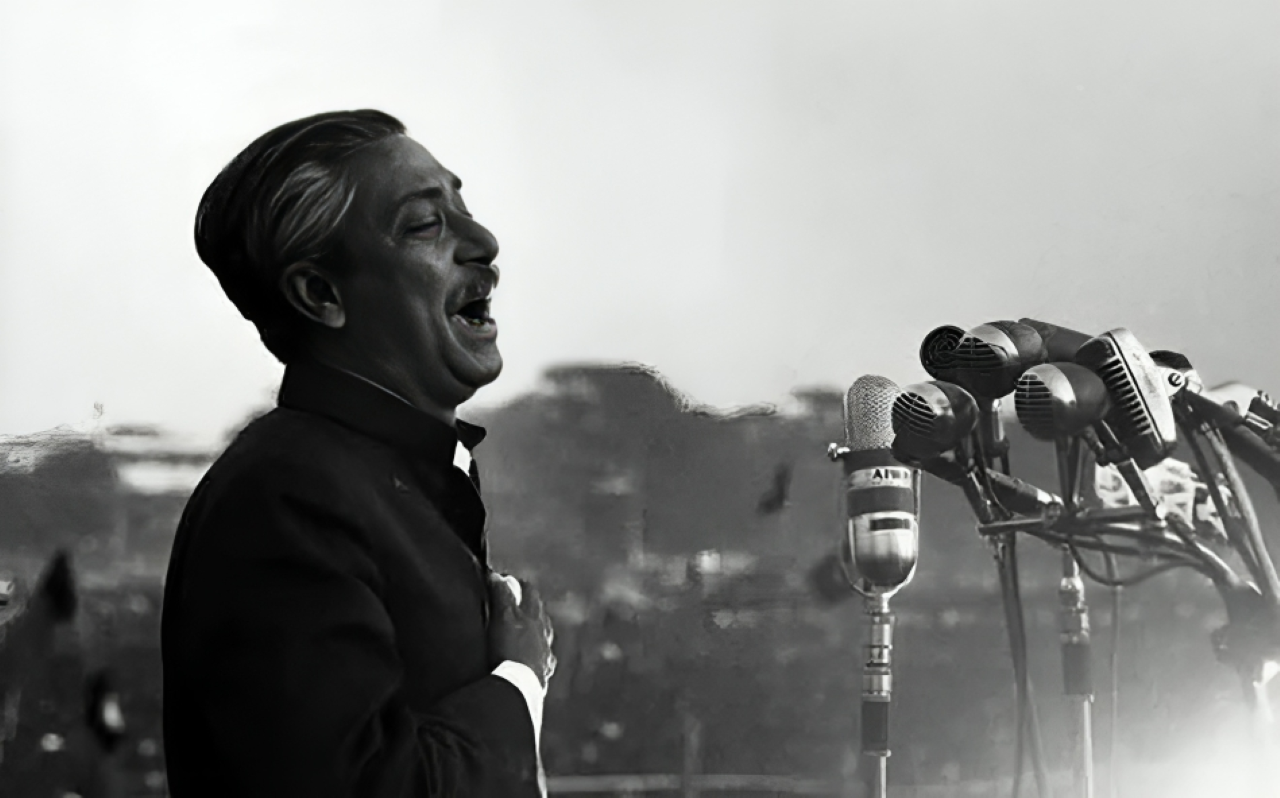
The Father of the Nation, Bangabandhu Sheikh Mujibur Rahman, dedicated his entire life to securing the rights of the hardworking, ordinary masses of Bengal. Bringing a smile to the faces of the disenfranchised constituted the foundational philosophy of his politics. Throughout his long political career, he never belittled or derided anyone by disparaging their profession, faith, or gender.
Vulgar epithets such as “son of a driver”, “lineage of a helper”, or “spawn of a beggar” were alien to Bangabandhu’s lexicon. Instead, he embraced everyone—from rickshaw pullers to the most neglected working-class individuals in society—with profound affection, addressing them as ‘brother’. Does such feudal and hateful rhetoric befit the lips of those who today claim to be Bangabandhu’s soldiers or disciples?
We must remember that coarse and arrogant language suits only those who perceive themselves as ‘elites’ or rulers—those whose politics treated the ordinary populace as mere subjects. A look at history reveals that this haughty rhetoric belonged to figures like Foka Chowdhury (the father of Salahuddin Quader Chowdhury) or the ideological heirs of such autocratic and feudal mindsets; it can never be the principled language of the Awami League.
No matter how heated the political climate or how formidable the adversary, wielding an individual’s profession, caste, religion, or gender as a weapon for abuse is the hallmark of extreme political bankruptcy.
We must not forget that the Bangladesh Awami League was birthed from the struggle to secure the rights of farmers, labourers, workers, and marginalized working people. It is not the so-called drawing-room ‘gentlemen’ or opportunistic civil society, but these sun-baked, rain-drenched working masses who constitute the bedrock and primary driving force of the party. Though this truth may at times be obscured by the superficial glamour of modernity, insulting people of these working classes is equivalent to insulting the very soul of the party itself.
Therefore, before uttering Bangabandhu’s name, let us internalize his conduct and decorum in our hearts. Political differences will persist, but decency must never be sacrificed. Rather than sowing hatred or malice, let human dignity remain the primary language of our politics.
See more: