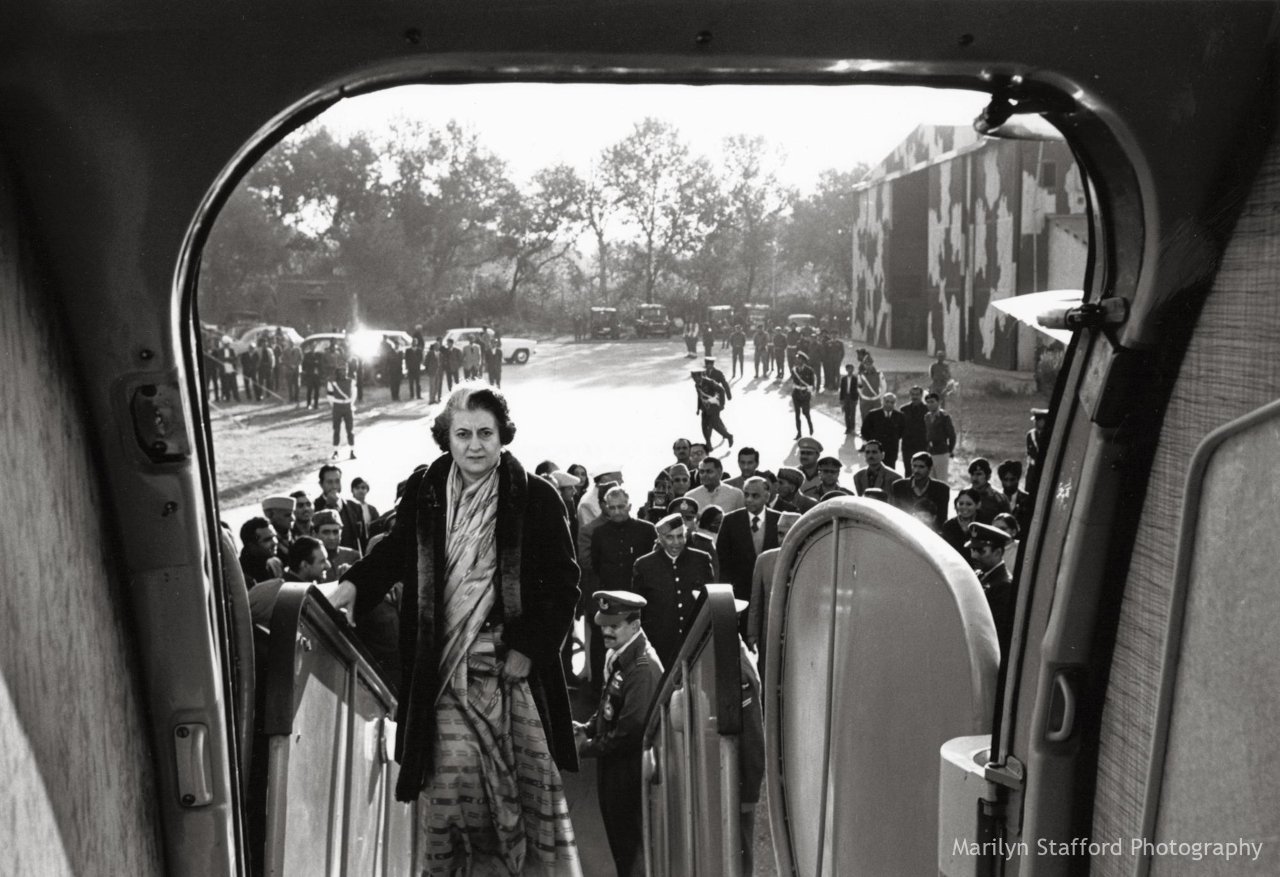
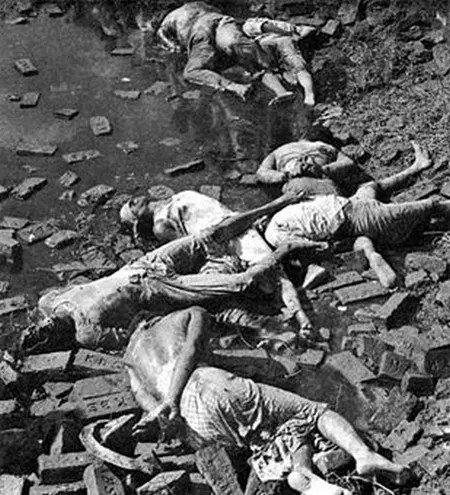
The 1971 genocide and the Great Liberation War of Bangladesh were far from a mere regional conflict confined within the borders of East Pakistan; they evolved into one of the most significant geopolitical and humanitarian crises of the twentieth century. At the time, modern social media, satellite television, and instantaneous digital news broadcasting did not exist. Taking full advantage of these informational constraints, the Pakistani military junta and its international allies mounted an extensive global disinformation campaign.
They sought to portray Bangladesh’s liberation struggle as an “internal feud” or a “civil war” engineered by Indian instigation. To shatter this web of global propaganda and rally international support for Bangladesh’s claim to independence, Indian Prime Minister Indira Gandhi’s historic world tour proved to be a decisive geopolitical masterstroke.
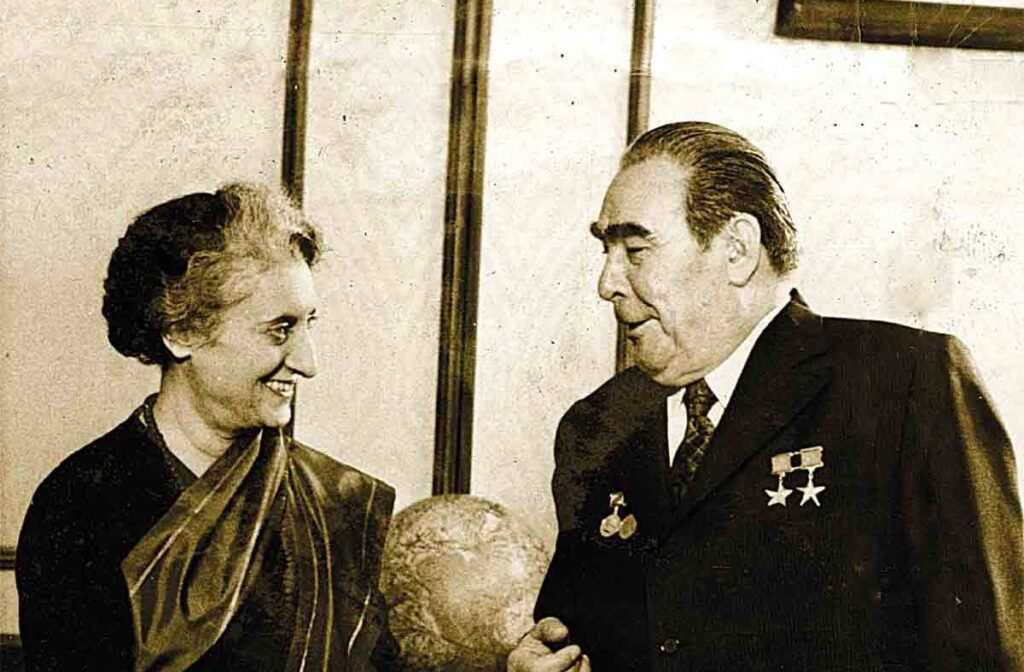
Table of Contents
1. Background to the World Tour and the Geopolitical Landscape
By mid-1971, the situation on the battlefields of Bangladesh had grown exceedingly dire. Following the genocide unleashed on 25 March under ‘Operation Searchlight’, millions of refugees were forced to cross the border to seek sanctuary in India.
- The Scale of the Refugee Crisis: By September–October 1971, the number of Bengali refugees taking shelter across India reached nearly 10 million. Providing them with daily food, clothing, and medical care placed an immense strain on the Indian economy. Contemporary estimates indicated that India was spending approximately 2.5 million US dollars per day on refugee relief.
- The US–China–Pakistan Axis: In July 1971, US National Security Advisor Henry Kissinger made a covert journey to Beijing via Islamabad. This paved the way for a tripartite political axis involving Washington, Islamabad, and Beijing, which stood in direct opposition to Bangladesh’s independence.
- The Indo-Soviet Treaty of Peace, Friendship and Co-operation (9 August 1971): In response to this hostile international climate, Indian External Affairs Minister Swaran Singh and Soviet Foreign Minister Andrei Gromyko signed a 24-year treaty in Delhi. This pact guaranteed that should China or the United States intervene directly in the conflict, the Soviet Union would step in to deter them.
Having secured military and diplomatic safeguards, Indira Gandhi resolved to take her case directly to the doorsteps of the Western powers to shape global public opinion.
2. Itinerary and Key Diplomatic Missions
On 24 October 1971, Indira Gandhi embarked on a 19-day diplomatic mission across the West. The central objectives of her tour were clear: to present the grim facts of the genocide in Bangladesh to Western governments and their citizenry, to demand the safety and unconditional release of Sheikh Mujibur Rahman, and to press for conditions that would enable the dignified repatriation of 10 million refugees.
| Dates | Country | Head of State / Government | Strategic Objectives & Achievements |
| 24–25 October | Belgium (Brussels) | Prime Minister Gaston Eyskens | Appealed for humanitarian assistance from the European Economic Community (EEC). |
| 26–28 October | Austria (Vienna) | Chancellor Bruno Kreisky | Presented documentation of Pakistani atrocities in a neutral European nation. |
| 29–31 October | United Kingdom (London) | Prime Minister Edward Heath | Galvanised international public opinion through the BBC and British press. |
| 1–3 November | United States (Washington) | President Richard Nixon | Maintained a steadfast stance despite fierce opposition from the Nixon–Kissinger axis. |
| 4–6 November | United States (New York) | International Civil Society & Media | Delivered landmark addresses at Columbia University and the National Press Club. |
| 7–8 November | France (Paris) | President Georges Pompidou | Secured support from French cultural and intellectual circles. |
| 9–11 November | West Germany (Bonn) | Chancellor Willy Brandt | Earned moral backing from the Nobel Peace Prize laureate. |
3. The US Visit: A Historic Confrontation with Nixon
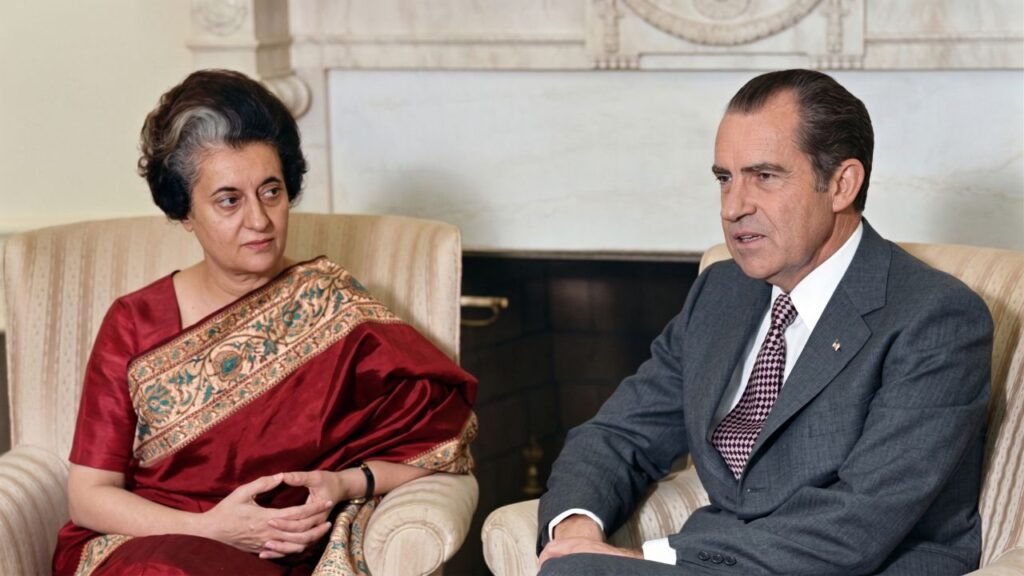
The most arduous and delicate phase of Indira Gandhi’s tour took place on 4 and 5 November during closed-door meetings at the White House with US President Richard Nixon and National Security Advisor Henry Kissinger.
War of Nerves in the Oval Office
Declassified records and White House tape recordings from the era reveal that Nixon and Kissinger attempted to pressure Indira Gandhi into halting military preparations and compromising with General Yahya Khan’s political manoeuvres.
When Nixon sought to frame the crisis as “regional instability” created by India, Indira Gandhi firmly repudiated the assertion. She made it unequivocally clear that unless the elected representative, Sheikh Mujibur Rahman, was released and the military genocide halted, the return of refugees remained impossible. The talks concluded without any consensus. Later-declassified Oval Office tapes revealed that Nixon and Kissinger, infuriated by her unyielding and uncompromising stance, made crude personal remarks about her—a testament to her diplomatic firmness.
Addresses at Columbia University and the National Press Club
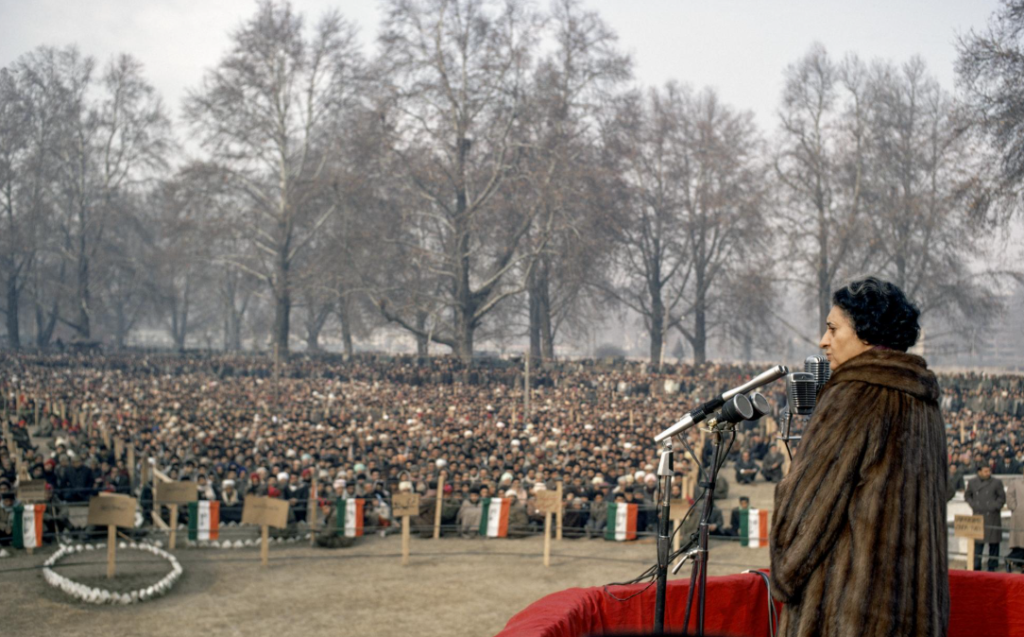
On 6 November, Indira Gandhi addressed a packed auditorium at Columbia University in New York. Stirring the conscience of the world, she declared:
“What began on the night of 25th March was not a civil war; it was a brutal attempt to stifle the democratic mandate of a people at gunpoint. Millions of destitute human beings have crossed our borders to seek refuge. Their leader, Sheikh Mujibur Rahman, lies imprisoned, facing a trial for his life. The situation has now reached a point where no alternative remains for the people of East Bengal except independence.”
4. Shifts in European Perspectives and Intellectual Resonance
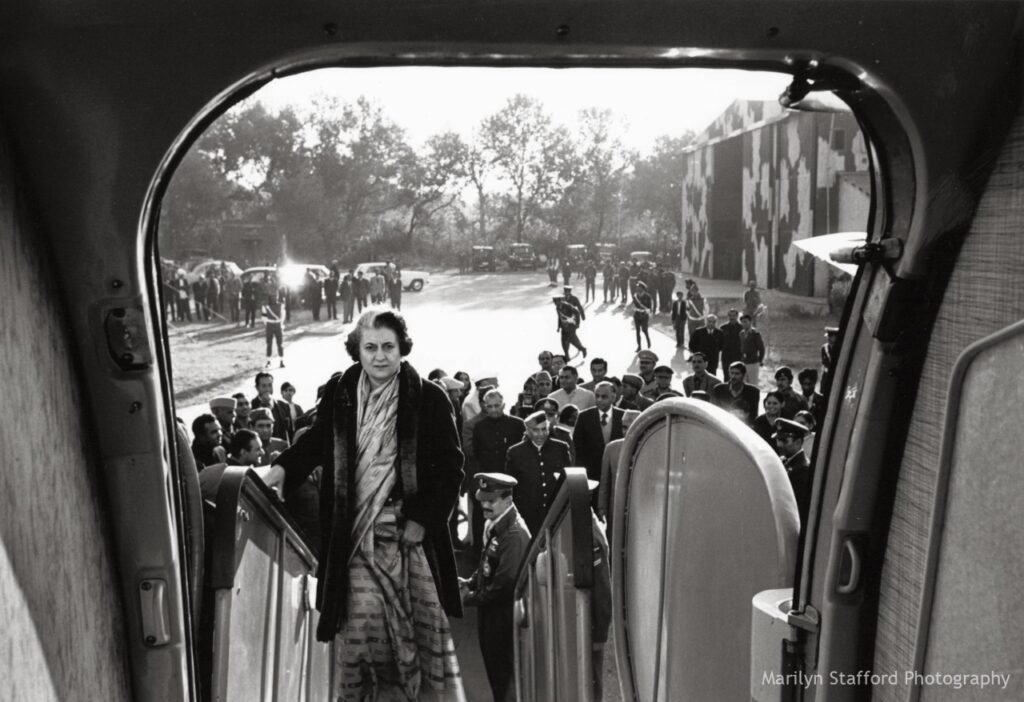
Alongside state-level discussions, Indira Gandhi engaged deeply with civil society, intellectuals, and the media throughout her European itinerary.
- United Kingdom (London): Although Prime Minister Edward Heath exercised caution owing to diplomatic constraints, Indira Gandhi’s interview with the BBC and discussions across the British Parliament generated strong momentum in the international media in support of Bangladesh.
- France (Paris): During her meeting on 7 November with French President Georges Pompidou, she successfully persuaded the French government to suspend arms sales to Pakistan. Amid the atmosphere generated by her visit, the renowned French author and former Culture Minister André Malraux publicly declared his readiness to join the battlefield alongside the Bangladeshi freedom fighters if necessary.
- West Germany (Bonn): Following discussions with Chancellor Willy Brandt, West Germany promptly agreed to provide substantial humanitarian relief to Indian refugee camps and pledged to exert diplomatic pressure on Pakistan for a political resolution.
5. Rejecting Yahya’s Trap & The Collapse of the Pakistani Junta
On 7 November, whilst the tour was underway, a diplomatically isolated Pakistani President, General Yahya Khan, floated a proposal for bilateral talks with India, either directly or under United Nations mediation. Yahya’s primary goal was to frame the conflict before the international community as an Indo-Pakistani dispute rather than a genocide in East Pakistan.
Indira Gandhi astutely foiled this ploy. She explicitly stated that:
- The crisis was not a bilateral issue between India and Pakistan; it was a struggle between the elected leadership of East Pakistan and the Pakistani military junta.
- The sole path to resolving the crisis lay in the immediate release of Sheikh Mujibur Rahman and direct negotiations with representatives of the Bangladesh Government.
6. Strategic Impact and Outcomes of the World Tour
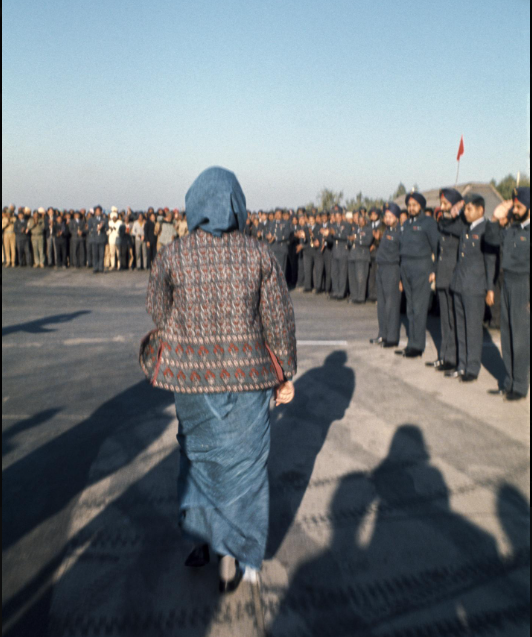
Indira Gandhi’s 19-day mission concluded upon her return to India on 12 November. This single tour transformed the trajectory and ultimate outcome of the war:
[Indira Gandhi’s World Tour (24 October – 12 November)]
                       │
       ┌───────────────┴───────────────┐
       ▼                               ▼
[Shift in Global Media & Public Opinion] [Diplomatic Isolation of Pakistan]
       │                               │
       └───────────────┬───────────────┘
                       ▼
[Soviet Veto Power Secured & Pakistan’s Defeat at the UN (December 1971)]
                       ▼
    [16 December: Final Victory & Sovereign Bangladesh]
- Transformation of Global Media Coverage: Leading international publications such as The New York Times, The Guardian, and Le Monde began featuring front-page coverage on Pakistan’s atrocities and the plight of the 10 million refugees.
- Securing the UN Security Council Veto: The moral high ground established during the tour, combined with the Indo-Soviet Treaty, enabled the Soviet Union to repeatedly veto ceasefire resolutions introduced by the US and China in the UN Security Council when Pakistan launched air strikes on India on 3 December (Operation Chengiz Khan).
- Global Legitimacy for the Liberation War: World leaders increasingly recognized that an independent Bangladesh was inevitable and that the atrocities perpetrated by the Pakistan Army in East Bengal were entirely indefensible.
Indira Gandhi’s historic world tour demonstrated that a successful war effort requires a robust and far-sighted diplomatic framework. Her mission drove the final nail into the coffin of Pakistan’s deceptive global propaganda, expediting the path to final victory on 16 December.
See more: