
Just as the construction of a multi-storey edifice demands a meticulous blueprint, the establishment of a new nation necessitates a lucid ideological, social, economic, and constitutional framework. Yet, the state named ‘Pakistan’, which emerged upon the global map on 14th August 1947, had its very foundations laid upon profound ideological confusion and philosophical self-contradiction.
Concealing the covert agenda of Western imperialist powers—who sought to utilise the region as a geopolitical ‘buffer state’ to stem the advance of the Soviet Union in South Asia—the emotional, communal tide of the ‘Two-Nation Theory’ was paraded before the Muslim masses. The tragedy, however, lay in the fact that the principal architect and vendor of this Two-Nation Theory—Mohammad Ali Jinnah himself—was entirely ignorant of the nation’s future character, its constitution, or its underlying ideological outline!
Pakistan continues to pay the price for this congenital blindness, directionlessness, and its maiden voyage without a written constitution. It was precisely within the vast ideological vacuum left behind by Jinnah that the notorious nexus of Pakistan’s ‘Mullah-Military-Bureaucracy and Landlord’ clique found room to spread its roots. Driven by lust for power and economic gain, extremist religious parties including Jamaat-e-Islami, mercenary military generals, the British-reared civil bureaucracy, and the exploitative landed gentry of Sindh and Punjab all manipulated this ideological ambiguity to serve their own ends. None among them could impart a distinct modern direction to the country; instead, each feathered their own nest, leaving the nation suspended to this day as a half-baked Islamic state.
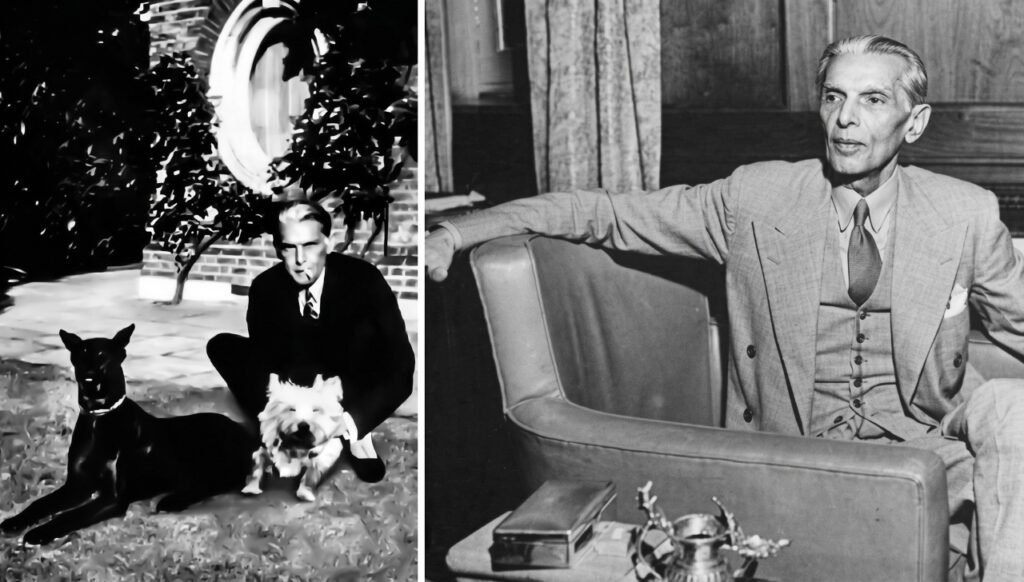
Table of Contents
1: Jinnah’s Philosophical Bankruptcy and Pakistan’s ‘Identity Crisis’
1. Jinnah: A Shrewd Barrister, But No Visionary State Philosopher
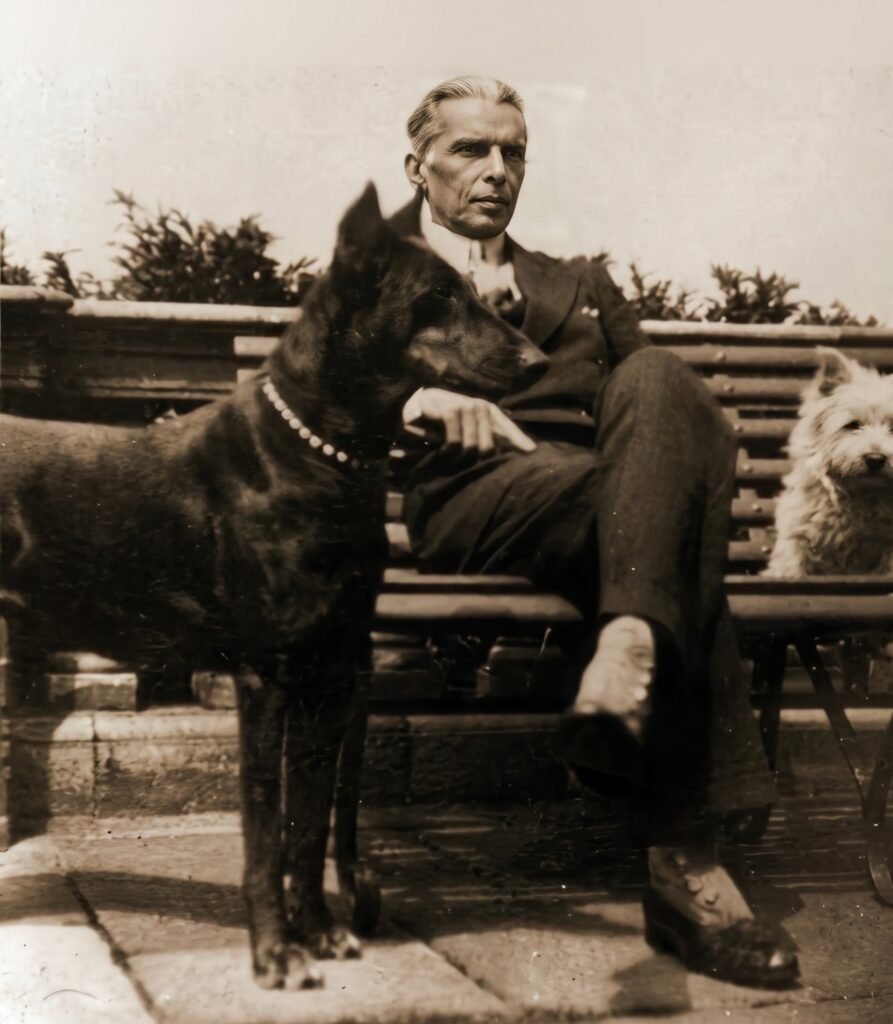
In his personal life, Mohammad Ali Jinnah was immaculate, tailored in Western attire, English-speaking, and a highly astute, expensive barrister from Lincoln’s Inn in London. In cross-examining witnesses, navigating legal loopholes to secure verdicts for his clients, and ensnaring opponents within webs of flawless logic, he had few equals. Yet, the unsparing truth of political science is that being an accomplished lawyer is vastly different from conceiving a nation or becoming a visionary ‘state philosopher’.
An analysis of Jinnah’s entire political career and speeches reveals that the depth of his thought was essentially ‘reactive’ rather than ‘proactive’ or visionary. In reaction to the Hindu-nationalist leanings of the Congress or the socialist vision of Jawaharlal Nehru, Jinnah began by raising demands for separate safeguards for South Asian Muslims, eventually settling upon the demand for an independent sovereign territory. Yet, once that territory was secured, Jinnah possessed no sociological understanding of how its internal social structure would be forged, how wealth would be distributed, or how diverse ethnicities and linguistic groups would be harmoniously integrated.
A state requires a ‘philosophical height’—an intellectual pinnacle that defines the overarching ideal under which its citizens shall live for a century to come. Just as the Founding Fathers of America (such as Thomas Jefferson or James Madison) possessed profound political philosophies, or Kemal Atatürk of Turkey harboured a definitive modernising and secular vision, Jinnah possessed nothing of the sort. Precisely because his political vision was ill-formed, he presumed that human populations separated by thousands of miles—such as East Bengal and the radically distinct cultures and languages of Sindh, Punjab, and Balochistan—could be bound together within an oppressive matrix by the solitary thread of religion.
2. The Absence of Written History: Jinnah’s Intellectual Vacuum
The tragic flaw of Jinnah’s political life was that he never authored a single book articulating his political, social, or state philosophy during his lifetime. Nor did he write any comprehensive theoretical correspondence to contemporary intellectuals, sociologists, or international editors from which his philosophical depth might be gauged.
Where his contemporary Jawaharlal Nehru spent years in prison penning world-class philosophical and historical treatises such as The Discovery of India or Glimpses of World History (reflecting profound sociological and geopolitical erudition), Jinnah’s repertoire contained merely a collection of political statements, inflammatory campaign speeches, and draft letters of legal bargaining with British Viceroys. Owing to this intellectual vacuum, Jinnah conceived of a state as nothing more than a geographical map and the administrative sum of its bureaucratic functionaries.
2: The Ledger of Contradictions in Jinnah’s Speeches and Proof of Ideological Confusion
Because Jinnah possessed no definite or coherent political philosophy, he began delivering utterly perplexing and contradictory statements on the eve of Pakistan’s independence and in its immediate aftermath. He would alter his political narrative like a chameleon to captivate the psychology of whichever audience he faced. Below is the documented ledger of his contradictory utterances:
1. Comparison with Jewish Israel (1946)
Around 1946, when the demand for Pakistan faced scrutiny on the international stage, Jinnah deployed religion as a grand political metaphor to capture the attention of the Western world and Middle Eastern Muslim nations. During communications with Egypt’s Ikhwan al-Muslimin (Muslim Brotherhood) and Middle Eastern royalty, the Muslim League propagated that Pakistan would be the first resurrected ideological state for Muslims in the modern world. Jinnah attempted to justify a religious or buffer state for Muslims by drawing parallels with the Jewish demand for the establishment of ‘Israel’—playing a card that was entirely theocratic in character.
2. Karachi Bar Association (January 1948): Legal Recognition of Sharia Law
On 25th January 1948, in an official address to lawyers at the Karachi Bar Association, Jinnah sought to appease the hardline Muslim populace and retain their support by stating in unmistakable terms:
“Who says the constitution of Pakistan will not be Islamic? I cannot understand the motives of those who spread such propaganda. Fourteen hundred years ago, the Prophet of Islam gave us a perfect constitution and legal framework. The law and constitution of Pakistan shall be framed entirely on the basis of the Quran and Sunnah.”
Through this address, Jinnah offered an explicit indication that Pakistan’s future governance would be placed within the matrix of religious and Sharia law, igniting deep disquiet among progressive and modern-educated Muslims.
3. Speech of 11th August (1947): A Dramatic U-Turn on Secularism
Yet, merely a few months prior to his Karachi Bar speech, on 11th August 1947, while standing before the inaugural session of the Constituent Assembly of Pakistan, Jinnah executed the most fiercely debated and dramatic U-turn of his life. Delivering his address on the threshold of drafting Pakistan’s constitution, he declared:
“You are free; you are free to go to your temples, you are free to go to your mosques or to any other place of worship in this State of Pakistan. You may belong to any religion… that has nothing to do with the business of the State… In course of time, Hindus would cease to be Hindus and Muslims would cease to be Muslims, not in the religious sense, because that is the personal faith of each individual, but in the political sense as citizens of the State.”
Upon reading this speech, any political scientist is bound to be plunged into utter bewilderment. The very man who for an entire decade championed the Two-Nation Theory—insisting that ‘Hindus and Muslims are two distinct nations that have lived for a thousand years, they cannot coexist, their cultures, religions, and laws are entirely incompatible’—stood in the Constituent Assembly just three days prior to partition to declare that religion was a personal matter and that the state would make no distinction between Hindu and Muslim!
This was not the coherent philosophy of a visionary statesman; it was the desperate attempt of a shrewd barrister engaging in last-minute ‘damage control’. He had realised by then that the religious genie he had unbottled was driving the entire subcontinent toward bloody communal riots. But by then, it was far too late. It was precisely due to this profound confusion and the ‘ideological vacuum’ Jinnah left behind that Pakistan failed to frame a constitution after its creation, causing the state to lose its directional compass forever.
3: Post-Jinnah Pakistan — Constitutional Void and the Rise of the Four Pillars of Power
When Mohammad Ali Jinnah passed away in September 1948 without leaving behind a written constitution or a framework for state governance, Pakistan was cast adrift upon a perilous sea. That which ought to have been the primary fountain of strength for a newborn nation—namely its ‘ideological’ foundation—became its single greatest vulnerability. Exploiting the vast ideological vacuum and confusion left by Jinnah, state power swiftly slipped into the pockets of four exploitative classes. Pakistan’s politics came to revolve entirely around the interests of these four pillars:
1. The Mental Legacy of the British: Civil Bureaucracy
Following the birth of Pakistan, the Muslim League remained an exceedingly weak and disorganised political party. After Jinnah’s death, the party lacked any skilled leader capable of administering a vast territory. Seizing this opportunity, the reins of state slipped into the hands of British-trained civil bureaucrats, led by astute administrators such as Ghulam Muhammad and Chaudhry Muhammad Ali.
This bureaucracy possessed neither philosophical nor political ideals. Their sole objective was to preserve control over the state apparatus in the manner of their British colonial masters. They understood only too well that if a modern, progressive, and democratic constitution were enacted, power would transfer from the bureaucracy to the elected representatives of the people. Consequently, from the very outset, they resorted to legal stratagems and deliberate delays to stall constitutional development.
2. Permanent Settlement of Exploitation: The Feudal Landlords of Sindh and Punjab
The primary driving force of politics in West Pakistan (particularly in Punjab and Sindh) was the exploitative feudal class, or jagirdars, who owned thousands of acres of land. Whereas Nehru’s government in India abolished the feudal zamindari system through land reforms immediately following partition, Jinnah and the Muslim League failed entirely to do so in Pakistan—largely because the prominent leaders of the Muslim League were themselves landed magnates.
These feudal lords recognised that if Pakistan transformed into a modern, democratic state based on equal rights, their feudal fiefdoms would not survive. They viewed the middle-class, progressive political consciousness of East Pakistan (the Bengalis) as the gravest threat to their hegemony. Thus, this feudal class actively backed the persistence of the state’s ‘ideological confusion’ to safeguard their economic spoils and social dominance.
3. When Guardians Become Predators: The Rise of Military Generals
The military kept a watchful eye on this political vacuum and the feuds among civil bureaucrats. General Ayub Khan, Pakistan’s first native Commander-in-Chief, alongside his fellow generals, perceived that the nation possessed no definitive ideological direction.
When American and Western powers sought a ‘buffer state’ and an obedient military force in South Asia to stem the tide of socialism during the Cold War, Pakistani generals enthusiastically volunteered to become the submissive tools of those Western masters. Securing their own military budgets, commercial interests, and political dominance eclipsed the duty of guarding national frontiers as the core agenda of the military establishment. To execute this agenda, they required an ‘unstable and ideologically adrift’ Pakistan, where power could be seized repeatedly under the spectre of war or existential threat.
4. Licensees of Power: Opportunistic Mullahocracy
The fourth and most critical catalyst in this triangular alliance (Bureaucracy-Landlords-Military) was the rise of mullahocracy and extremist religious parties (among which Jamaat-e-Islami was paramount). The very mullahs who had denounced Pakistan as an ‘infidel state’ during Jinnah’s lifetime swiftly shifted their stance following his death.
Observing that the Pakistani populace harboured intense religious sentiment devoid of any modern blueprint for governance, they seized the opportunity to make themselves indispensable in the political arena under the slogans of ‘Islam in Danger’ and the ‘Islamic State’. Whenever bureaucrats and military generals perceived that the Bengalis of East Pakistan or progressive citizens were demanding their economic and political rights, they unleashed these mullahs. The mullahs would promptly issue decrees (fatwas) declaring that demands for democracy, socialism, or East Pakistani autonomy were essentially ‘Indian conspiracies to destroy Islam and the Pakistani state’.
4: The 1949 ‘Objectives Resolution’ — The Institutionalisation of Ambiguity
“Sovereignty over the entire universe belongs to Almighty Allah alone…”
“…the State shall exercise its powers and authority through the chosen representatives of the people.”
This resolution was a bizarre chimera. In the parlance of political science, sovereignty must reside either in a divine, transcendent power (Theocracy) or in the populace (Democracy). By splicing together these two mutually exclusive concepts, Liaquat Ali Khan sought simultaneously to mollify the clerical class and to project to the modern world that they were forging a democratic state.
- An Assault upon East Pakistan: By deploying this ‘Islamic’ card, the rulers and landed magnates of West Pakistan acquired a pretext to gag the political voice of the Bengali majority in East Pakistan. They began to propagate that since sovereignty belonged to Allah and Pakistan was an Islamic state, the sole state language must be ‘Urdu’ (which they deemed the language of Islam). The assault upon the language and culture of the Bengalis that culminated in 1952 had its foundational roots laid in this congenital ideological confusion.
- The Alienation of Minorities: The secular Pakistan Jinnah spoke of in his address of 11th August received its final nail in the coffin through this Objectives Resolution. Millions of non-Muslim citizens of Pakistan (Hindus, Christians, Buddhists) found themselves reduced overnight to second-class status in their own homeland.
This ideological fog surrounding Pakistan’s genesis demonstrates that the state embarked on its journey devoid of a coherent philosophy. Consequently, the four pillars of power—the Bureaucracy, Landlords, Military, and Mullahs—each sought to perpetuate this chaotic status quo to serve their own ends. Ultimately, Pakistan failed ever to become a modern, democratic state; instead, it degenerated repeatedly through layers of confusion into a dysfunctional, half-baked theocracy.

5: The 1956 Constitution and a Nine-Year Constitutional Farce
Where a newly independent nation ought to draft a comprehensive constitution within a year or two at most, the power-hungry ruling elite of Pakistan squandered nine years before passing a rudimentary draft. Throughout these nine years, Pakistan was governed under the colonial remnants of the ‘Government of India Act 1935’. This prolonged constitutional vacuum was no mere accident; it was the deliberate creation of a joint conspiracy hatched by the civil bureaucracy, the exploitative landlords of Sindh and Punjab, and the military establishment.
1. The First ‘Half-Baked’ Constitution of 1956
After years of political mud-slinging, the collapse of multiple prime ministers, and the authoritarian decrees of Governors-General, Pakistan’s first constitution finally came into force on 29th March 1956. Yet this document was neither modern, democratic, nor visionary; it was an unholy compromise—a chaotic amalgam of Jinnah’s ‘ideological confusion’ and the self-interested demands of the four pillars of power.
- Hypocrisy in Nomenclature: To pacify the clerics and mullahs, the state was proclaimed the “Islamic Republic of Pakistan”. Yet ironically, the constitution contained no clear articulation or framework for Sharia law. It served merely as an ostentatious religious label behind which all the dark laws of the British colonial era were concealed.
- A Dagger in the Back of Bengalis (The Parity Formula): Within this constitution, a clever trap was laid to cripple the political power of the Bengali majority in East Pakistan permanently. Demographically, East Pakistan constituted 56 per cent of the total population. By democratic norms, the Bengalis ought to have held a majority of seats in the central parliament. However, under the bogus guise of ‘Islamic brotherhood’ and ‘equality’, the Western landlords and bureaucrats imposed the “Parity Formula”. Through this mechanism, representation between East and West Pakistan was equalised to 150 seats each. Thus, under the cloak of Islam, the democratic rights and numerical strength of the Bengalis were stripped away overnight.
2. Why Did This Constitution Fail to Last Even Two Years?
Hardly two years after its enactment, this half-baked constitution of 1956 was torn to pieces and tossed into the dustbin in 1958. The primary reason was that the constitution offered no philosophical resolution to the fundamental power struggles of the state. It satisfied neither the hardline mullahs nor the progressive, secular populace of East Bengal. Most crucially, through this constitution, civil bureaucrats and military generals realised that even under a flawed constitutional framework, general elections would inevitably transfer the levers of power to the conscious middle class and political leadership of East Bengal—a prospect that represented a nightmare for the Western feudal and military elites.
6: The 1958 Military Coup — The Final Nail in Democracy’s Coffin
As the date for Pakistan’s first general elections under the 1956 constitution drew near (scheduled for early 1959), the true masters of Pakistan unmasked themselves. On 7th October 1958, President Iskander Mirza proclaimed Martial Law across the country and abrogated the 1956 constitution. Merely twenty days later, on 27th October, Commander-in-Chief General Ayub Khan ousted Iskander Mirza in a bloodless coup, establishing himself as the supreme military dictator of Pakistan.
1. When Guardians Become Predators: Institutionalising ‘Militarised Bureaucracy’
With General Ayub Khan’s seizure of power, the ‘ideological confusion’ left by Jinnah entered a new phase. In his personal life, Ayub Khan was a British-trained man of secular, modern outlook who held a deep disdain for clerical extremism and the notion of a Sharia state. Yet the tragedy of political science is that a military dictator possesses no ‘democratic legitimacy’. Consequently, to sustain his illegal usurpation, Ayub Khan too was forced ultimately to seek refuge in the ‘religious card’ and ideological obfuscation.
- The Mockery of ‘Basic Democracy’: Stripping the Pakistani people of universal suffrage, Ayub Khan introduced a bizarre constitutional contrivance dubbed ‘Basic Democracy’, wherein the President was elected by a mere 80,000 councillors. The overwhelming majority of these councillors were feudal landlords of West Pakistan and their subservient lackeys.
- Constitutional Charades (1962): In 1962, Ayub Khan concocted a new constitution tailored to his own desires. He initially removed the word “Islamic” from the state’s title, naming it simply the “Republic of Pakistan”. Yet almost immediately, under pressure from hardline mullahs, Jamaat-e-Islami, and to preserve his own political vehicle (the Convention Muslim League), he was compelled to reinstate the nomenclature “Islamic Republic”.
2. The Deep Psychology of the Mullah-Military Nexus
It was during the Ayub era that the infamous secret collusion known as the ‘Mullah-Military Nexus’—the alliance between the military junta and radical religious forces—became firmly entrenched in Pakistani politics. The core psychology of this unholy alliance was remarkably cunning:
- Military generals recognised that their power lacked legal authority. To quell public resentment and sanctify their rule, they found it expedient to deploy clerical fatwas and Islamic rhetoric behind the scenes.
- Conversely, opportunistic mullahs and parties like Jamaat-e-Islami knew full well that the populace would never vote them into power through the ballot box. Thus, by riding the coat-tails of the military junta and serving as the handmaidens of intelligence agencies (such as the ISI), they preferred to share in power behind the curtain and reap immense economic spoils.
Thus, the Pakistan born of Jinnah’s profound philosophical ambiguity forfeited within a single decade any capacity to become a progressive, democratic state. It was transformed into a shared grazing ground for power-hungry generals, exploitative feudal lords, and religion-peddling mullahs.
7: The Great Crisis of 1971 — The Ultimate Explosion of Ideological Confusion
The ‘Two-Nation Theory’ and the absurd geographical construct upon which Jinnah erected Pakistan in 1947 endured for a mere twenty-four years. No established doctrine of political science could sustain a modern state composed of two populations separated by a thousand miles, possessing entirely distinct languages, cultures, and ethnological characteristics, welded together solely by the solder of religion. When the ideological vacuum left by Jinnah became the primary engine of exploitation for West Pakistani civil bureaucrats, feudal lords, and military juntas, the cataclysm of 1971 became an inescapable historic necessity.
1. The 1970 Elections: Burying the Two-Nation Theory at the Ballot Box
In December 1970, Pakistan held its first and last free, unbiased general election. In this election, the populace of East Pakistan hammered the final nail into the coffin of Jinnah’s heavily touted ‘Muslim Nationalism’.
Under the visionary leadership of Bangabandhu Sheikh Mujibur Rahman, the Awami League secured 167 out of 169 seats in East Bengal, winning an absolute majority across all of Pakistan and securing the legal mandate to govern the state. In West Pakistan, Zulfikar Ali Bhutto’s People’s Party and radical religious parties like Jamaat-e-Islami suffered a humiliating defeat. The election results proved beyond doubt that the Bengali people had discarded the state’s congenital ‘Islamic hodgepodge’ narrative, voting decisively for a modern, secular, progressive, and linguistically rooted nationalism.
2. The Genocide of 25th March and the Final Gasp of the Unholy Axis
From this intellectual bankruptcy emerged the decision to trample the electoral mandate beneath military boots. On the night of 25th March 1971, the Pakistani army unleashed ‘Operation Searchlight’, one of the most barbarous genocides in human history. To confer religious and ideological legitimacy upon this butchery, Pakistan’s opportunistic mullahs and extremist parties like Jamaat took to the field. Acting as henchmen for the Pakistani military, they formed the Al-Badr and Razakar militias to slaughter Bengali citizens and intellectuals.
Distorting religious scripture, they preached that preserving Pakistan was synonymous with preserving Islam, and that the Bengali struggle for liberation was an ‘infidel conspiracy’. Yet history did not forgive their monstrous hypocrisy. On 16th December 1971, with the ignominious surrender of 93,000 Pakistani soldiers at the Racecourse Ground in Dhaka, Jinnah’s directionless, confused, and artificial Pakistan perished forever, giving birth to an independent, sovereign Bangladesh.
8: Present-Day Pakistan — A Living Testament to a Dysfunctional, Failed State
Even following the secession of East Pakistan in 1971, the remnant of Pakistan (formerly West Pakistan) has failed to break free by even an inch from its congenital identity crisis and ideological fog. The seeds of confusion sown by Jinnah and his associates have grown into a colossal banyan tree that threatens to consume the Pakistani state itself. That Pakistan remains suspended before the world as a half-baked Islamic state is the result of this unbroken historical continuum:
1. Zulfikar Ali Bhutto’s Opportunistic Islamisation (1973)
Following the defeat of 1971, the power-hungry feudal lord Zulfikar Ali Bhutto assumed control of Pakistan. Though he professed to be a Western-educated, socialist, and progressive leader, Bhutto played the very same ‘religious card’ as Jinnah to cling to power. In the 1973 Constitution, to appease hardliners, he declared the Ahmadiyya community officially ‘non-Muslim’ and passed cosmetic Islamic laws banning alcohol and gambling. Rather than reforming the fundamental economic or governance structures of the state, he merely resurrected Jinnah’s old confusions.
2. General Zia’s Fanatical ‘Islamisation’ and the Birth of Jihadi Culture (1977–1988)
When General Zia-ul-Haq seized power through a military coup in 1977, the ‘Mullah-Military Nexus’ manifested in its most virulent and grotesque form. To prolong his illegal military dictatorship and wage America’s proxy war against the Soviet Union in Afghanistan with U.S. dollars, Zia converted the entire Pakistani state into a ‘jihadi factory’.
He promulgated the Hudood Ordinances in the constitution, tightened blasphemy laws, and established thousands of extremist madrasas. Consequently, Pakistan’s judiciary, educational framework, and social fabric were plunged into medieval darkness.
3. Pakistan Today: A Bankrupt Economy and a Nuclear-Armed Tribal Fiefdom
Standing in the context of 2026, if one observes Pakistan, one beholds an economy in intensive care, surviving on the life support of IMF loans. Yet this very state possesses nuclear weapons and one of the world’s largest standing armies.
- The Military’s Commercial Empire: The Pakistani military no longer merely patrols borders; it operates corporate enterprises, real estate ventures, banks, and cement factories—a phenomenon termed ‘Milbus’ (Military Business) by international scholars.
- The Frankenstein of Mullahocracy: The extremist religious groups cultivated by the military for its own ends have metamorphosed into Frankensteins like Tehrik-i-Taliban Pakistan (TTP), waging suicidal assaults upon the Pakistani state itself.
- Civil Society and Feudal Oppression: The country’s civil society remains utterly spineless, while the feudal lords of Sindh and Punjab continue to monopolise the lion’s share of national wealth, trapping the masses in abject poverty.
An Inexorable Lesson of History
The birth of Pakistan at the hands of Mohammad Ali Jinnah—an erudite lawyer yet one devoid of philosophical and sociological stature—serves as the grandest lesson in the history of political science. Today’s Pakistan stands as living proof that a state cannot be sustained merely through a geographical map, a cadre of bureaucrats, exploitative landlords, and military boots.
Had Jinnah been able to bequeath a modern, democratic, non-communal, and explicitly written constitutional framework to this nation, its fate might not have been so tragic. Yet because of the profound ‘ideological confusion’ he left in his wake, Pakistan has failed from its inception to find a true directional path.
It is precisely this ideological vacuum that enabled an unholy nexus of civil bureaucrats, exploitative feudal lords, mercenary generals, and opportunistic mullahs to hold the state apparatus hostage. Each of them exploited the sacred name of Islam and this congenital confusion as a lucrative brand to advance their own political and economic fortunes. In consequence, the Bengalis liberated themselves in 1971, while the remnant of Pakistan hangs today as a tragic sigh upon the world stage—an aimless, bankrupt, half-baked, and failed theocratic state.
-
The Sole Spokesman: Jinnah, the Muslim League and the Demand for Pakistan — Ayesha Jalal (Cambridge University Press).
-
Pakistan: Between Mosque and Military — Husain Haqqani (Former Pakistani diplomat and scholar).
-
The Vanguard of the Islamic Revolution — Seyyed Vali Reza Nasr.
-
Military Inc.: Inside Pakistan’s Military Economy — Ayesha Siddiqa (An irrefutable documentary record of Pakistan’s military economy).
-
Constitutional Development in Pakistan — G. W. Choudhury.
-
Proceedings of the Constituent Assembly of Pakistan (1947–1956) — Official Archival Records.