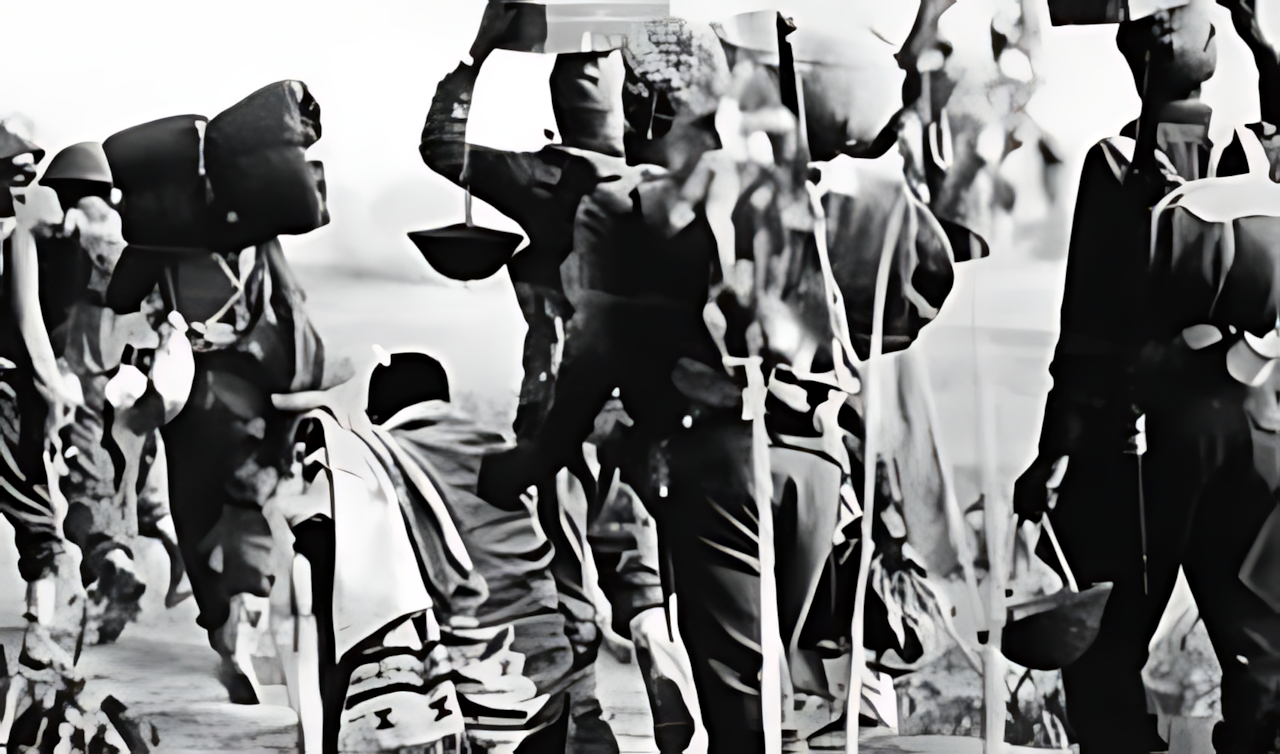
The 1971 Bangladesh Liberation War stands as one of the most tragic yet historically momentous military conflicts in human history. In the Bengali nation’s struggle to attain self-determination, the Indian Armed Forces and the Border Security Force (BSF) rendered extraordinary contributions as the ‘Allied Forces’ (Mitro Bahini). Operating under a unified ‘Joint Command’, this combined offensive resulted in an estimated 1,660 to 1,984 Indian military and paramilitary personnel making the ultimate sacrifice, with over 3,928 members left severely wounded or missing in action.
Such an immense sacrifice by the armed forces of a foreign nation in the birth of a sovereign state remains a rare chapter in modern military history. This historic contribution of the Allied Forces not only reshaped the geopolitical landscape of South Asia, but also forged an enduring historical foundation for bilateral relations between Bangladesh and India.
Brief Overview: On 21 November 1971, the Allied Forces and the Mukti Bahini formally established a ‘Joint Command’ to launch a coordinated military campaign. In a swift, full-scale war lasting merely 13 days (3 to 16 December), the combined efforts of the Indian Army, Air Force, Navy, and Border Security Force compelled the Pakistani occupation forces to surrender unconditionally.
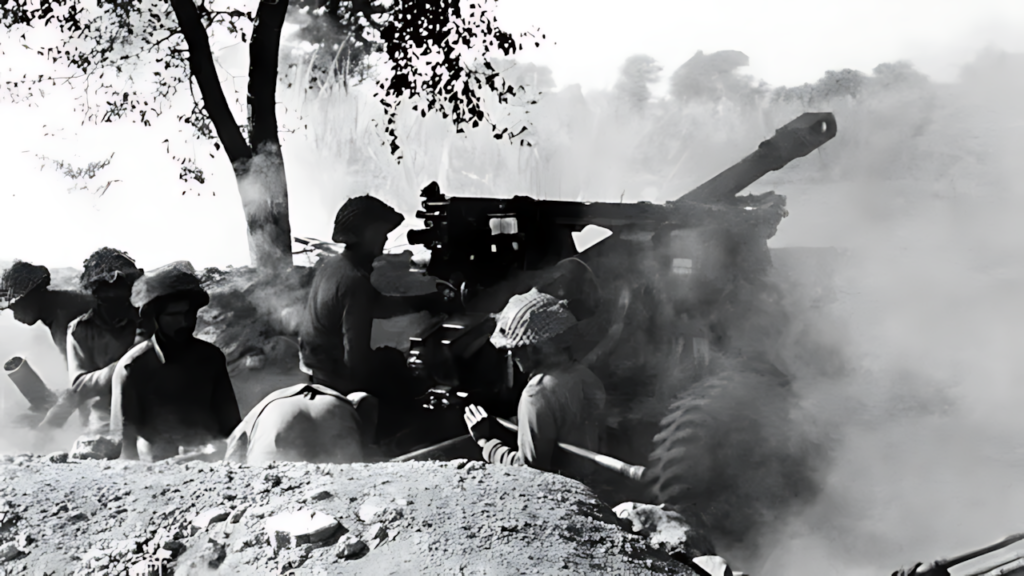
Table of Contents
Historical Context: Formation of the Joint Command and Military Engagement of the Allied Forces
Following the Pakistani military junta’s launching of ‘Operation Searchlight’ in March 1971—a campaign of systematic genocide—the civilian population and Bengali military and paramilitary personnel mounted a fierce resistance. From the onset of the conflict, the Indian government provided shelter to nearly ten million refugees fleeing Bangladesh, whilst offering training, weaponry, and strategic support to the Mukti Bahini (Freedom Fighters).
Background to the Formation of the Joint Command
From May 1971, the Indian Army’s Eastern Command commenced military preparations along the East Pakistan border. However, formal strategic alignment between the forces of both nations was codified on 21 November 1971.
The ‘Joint Command’ was established through a historic accord signed by Lieutenant General Jagjit Singh Aurora, General Officer Commanding-in-Chief of the Indian Army’s Eastern Command, and General M. A. G. Osmani, Commander-in-Chief of the Mukti Bahini. Under this agreement, it was resolved that:
-
The Indian Armed Forces and the Mukti Bahini would operate as a unified fighting force across the theatre of war.
-
Overall military command would rest with Lieutenant General Aurora, while local political and strategic guidance would be provided by the Provisional Government of Bangladesh.
The ‘Lightning Campaign’ and Strategic Objectives
The Indian Military High Command adopted bypass tactics in the East Pakistan theatre—rapidly bypassing major fortified towns to advance directly towards the capital, Dhaka. In military history, this strategy is referred to as the ‘Lightning Campaign’. The primary objective was to liberate Dhaka before international superpowers (such as the United Nations or the United States) could enforce a ceasefire. Executing this high-speed manoeuvre required Indian forces to engage in direct, high-stakes battles against heavily fortified enemy strongholds, resulting in substantial casualties.
Comprehensive Force-wise Casualty Statistics and Analytical Breakdown
Discrepancies exist between Indian military archives and Bangladesh Defence records regarding the exact casualty figures of the Allied Forces in the 1971 war. However, a comprehensive analysis reveals that the majority of casualties occurred during the final war from 3 to 16 December, as well as during pre-war border skirmishes and tactical engagements (such as the early battles of Garibpur and Hilli).
Detailed Force-wise Casualty Table
| Military Branch / Unit | Fallen Personnel (Estimated) | Wounded Personnel | Missing / POW | Overall Casualties |
| Indian Army | 1,425 | 3,560 | 18 | 5,003 |
| Border Security Force (BSF) | 124 | 348 | 5 | 477 |
| Indian Air Force (IAF) | 5 (Pilots & Crew) | 2 | 1 | 8 |
| Indian Navy | 6 | 12 | – | 18 |
| Total | 1,660 – 1,984 | 3,922+ | 24 | 5,506+ |
Primary Factors Behind Statistical Variations
The variance in citation figures for the fallen Allied soldiers—ranging between 1,660 and 1,984—stems from two primary analytical factors:
- Timeline Delimitation: Indian military records frequently cite casualties sustained specifically during the official Indo-Pakistani War period (3 to 16 December 1971), which places the death toll between 1,425 and 1,660.
- Inclusion of Border Engagements: Incorporating casualties from pre-war engagements between 21 November and 2 December (such as the battles of Garibpur, Boyra, bayonet charges, and defensive border operations), along with BSF casualties incurred from March through November, brings the aggregate total up to 1,984.
Acts of Gallantry: Top Posthumous Awardees of Highest Military Honours
In recognition of supreme valour and sacrifice in the East Pakistan theatre, the Government of India conferred its highest military decorations—the Param Vir Chakra (PVC) and Maha Vir Chakra (MVC)—upon several fallen members of the Allied Forces.
Lance Naik Albert Ekka (Param Vir Chakra – Posthumous)
-
Regiment: 14 Guards
-
Rank: Lance Naik
-
Battlefield: Gangasagar and Akhaura (Brahmanbaria)
-
Date: 3 December 1971
Contribution on the Battlefield
On the night of 3 December, 14 Guards was tasked with capturing the strategic Gangasagar railway station near Akhaura. The Pakistani garrison had fortified the position with heavy concrete bunkers, unleashing intense fire from light and medium machine guns. Displaying disregard for personal safety, Lance Naik Albert Ekka charged forward to neutralise a key enemy Light Machine Gun (LMG) bunker with a grenade.
Despite suffering multiple gunshot wounds, he pressed onward when an enemy Medium Machine Gun (MMG) located in a two-storey bunker pinned down the Indian advance. Ekka scaled the fortification, engaged the enemy gunner in hand-to-hand combat with his bayonet, and silenced the weapon. He succumbed to his injuries on the battlefield. His heroic sacrifice cleared the path for the capture of Akhaura.
Captain Devendra Singh Ahlawat (Maha Vir Chakra – Posthumous)
-
Regiment: 3 Guards
-
Rank: Captain
-
Battlefield: Battle of Hilli (Dinajpur-Bogra Sector)
-
Date: 24 November – 4 December 1971
Contribution on the Battlefield
The Battle of Hilli was among the grimmest and most protracted engagements of the war. Tasked with overrunning the heavily fortified complex held by Pakistan’s 4 Fortified Brigade, Captain Ahlawat spearheaded his company’s assault through dense minefields and heavy artillery fire. Despite sustaining fatal injuries, he personally led the assault on multiple enemy bunkers until the objective was secured, laying down his life in the process.
Major Anup Singh Gehlot (Maha Vir Chakra – Posthumous)
-
Regiment: 3 Independent Armoured Brigade / 63 Cavalry
-
Rank: Major
-
Battlefield: Battle of Garibpur (Jessore)
-
Date: 21 November 1971
Contribution on the Battlefield
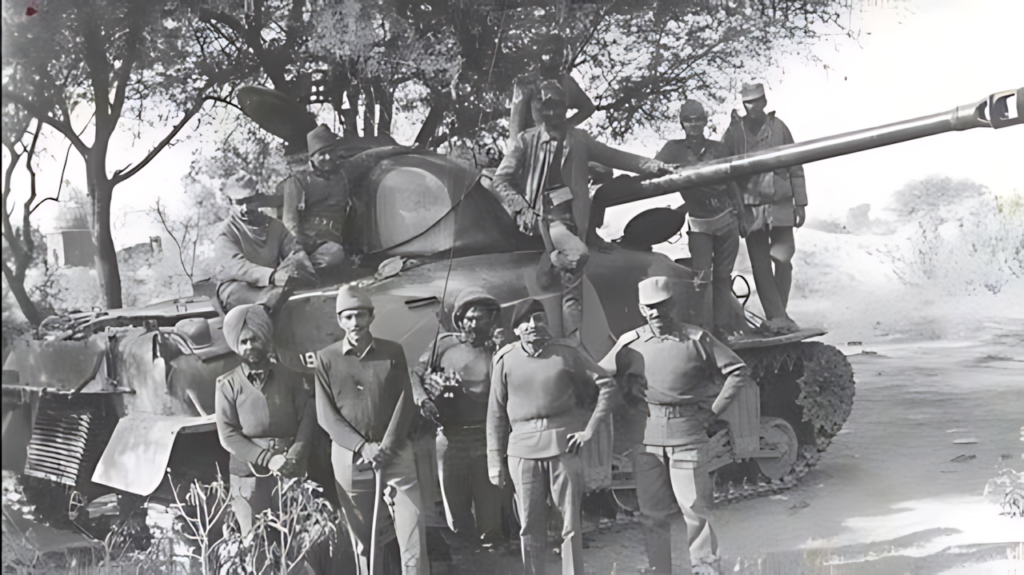
On 21 November 1971, a major armour battle erupted at Garibpur near the Jessore border. When Pakistani forces launched an armoured counter-attack led by Chaffee tanks, Major Gehlot deployed his T-55 and PT-76 tank squadrons into defensive positions. Outmanoeuvring the enemy, he personally directed precision fire that destroyed 14 Pakistani Chaffee tanks. Though mortally wounded in the engagement, his actions broke the enemy resistance and accelerated the fall of Jessore.
Subedar Malkiat Singh (Maha Vir Chakra – Posthumous)
-
Regiment: 14 Punjab
-
Rank: Subedar
-
Battlefield: Battle of Garibpur and Boyra (Jessore)
-
Date: 22 November 1971
Contribution on the Battlefield
During the Battle of Garibpur, as Pakistani infantry and armour launched a fierce counter-attack, Subedar Malkiat Singh demonstrated extraordinary courage when his platoon ran critically low on ammunition. He crawled forward under heavy fire to recover discarded enemy weapons and ammunition, distributing them to his men. Whilst in the process of assaulting an enemy bunker, he was killed by an incoming tank shell.
Second Lieutenant Shamsher Singh Samra (Maha Vir Chakra – Posthumous)
-
Regiment: 8 Guards
-
Rank: Second Lieutenant
-
Battlefield: Battle of Hilli
-
Date: 8 December 1971
Contribution on the Battlefield
During the second phase of the assault on Hilli, the 22-year-old Second Lieutenant Samra exhibited exemplary leadership. Leading his men to within 20 yards of the enemy position, he ordered a direct bayonet charge. Despite suffering multiple gunshot wounds, he successfully captured an enemy machine gun post before making the ultimate sacrifice.
Other Notable Decorated Martyrs
-
Major Vijay Rattan Choudhary (Maha Vir Chakra – Posthumous): 9 Engineer Regiment; fell on 11 December whilst clearing enemy minefields to facilitate the advance toward Chalna and Khulna.
-
Captain Jaswinder Singh Limba (Vir Chakra – Posthumous): 6 Dogra Regiment; killed in action during the Suwalok campaign in the Chittagong Hill Tracts.
-
Sepoy Ananya Kumar Dey (Vir Chakra – Posthumous): Awarded for conspicuous gallantry during the fierce fighting in the Belonia Bulge sector.
Key Bloodiest Battlefields: Where the Allied Forces Paid the Highest Price
During the conflict, the Pakistan Army constructed fortified defensive positions across several sectors. In these strongholds, the Allied Forces faced intense resistance and sustained heavy casualties during direct frontal assaults.
Key Battlefields and Strategic Importance:
1. Battle of Hilli       --> Gateway to Dinajpur/Joypurhat (Highest Casualties: 200+ Fallen)
2. Battle of Garibpur    --> Capture of Jessore Cantonment & Destruction of Chaffee Armour
3. Dhalai Tea Garden    --> Opening the Sylhet-Moulvibazar Axis
4. Kamalpur Fortress    --> Jamalpur-Dhaka Route (Joint BSF & Army Assault)
5. Shiromoni Sector      --> Prolonged Armour Battle in Khulna
1. The Battle of Hilli (Dinajpur-Joypurhat Sector)
The Battle of Hilli is regarded as the most protracted and fierce engagement of the 1971 conflict, spanning from 24 November to 11 December.
- Units Engaged: Indian 20 Mountain Division (comprising 3 Guards, 8 Guards, 5 Gorkha Rifles) and Indian Armoured Units.
- Casualties: Over 200 Allied soldiers were killed in and around Hilli. Pakistan’s 4 Fortified Brigade had constructed concrete bunkers and defensive networks, yielding stubborn resistance.
2. The Historic Battle of Garibpur and Boyra (Jessore Sector)
Engaged between 21 and 22 November 1971 inside the Bangladeshi border village of Garibpur, this battle was one of the pivotal armour and air engagements of the Liberation War.
- Strategic Significance: India’s 14 Punjab Regiment and C Squadron of 4 Horse (Armoured Corps) advanced into tactical positions. The enemy counter-attacked with 3 Punjab Infantry and an armoured squadron.
- Outcome: Despite losing over 40 Allied personnel, the combined forces destroyed 13 Pakistani Chaffee tanks and shot down 3 Sabre jets, compelling Pakistani forces to abandon Jessore Cantonment and retreat towards Khulna.
3. Dhalai Tea Garden and Kulaura Campaign (Moulvibazar Sector)
The Pakistani garrison maintained a fortified position at the Dhalai Border Outpost between Sreemangal and Moulvibazar.
- Allied Unit: 4/5 Gorkha Rifles.
- Course of Action: In October and November, Gorkha troops executed assaults through dense tea estates, engaging in hand-to-hand bayonet combat. Several Indian officers and nearly 50 soldiers fell in this sector.
4. The Battle of Kamalpur Fortress (Mymensingh-Jamalpur Border)
The Border Outpost (BOP) at Kamalpur served as the primary northern obstacle along the approach to Dhaka via Jamalpur.
- Assaulting Units: 83 Battalion BSF and Indian Army’s 95 Mountain Brigade.
- Analysis: The fortress was subjected to four separate assaults. BSF Captain Ashraf and numerous troops were killed outside the perimeter before the besieged Pakistani commander, Captain Ahsan Malik, surrendered on 4 December.
5. Battle of Gangasagar and Akhaura (Brahmanbaria Sector)
The Akhaura axis served as the primary eastern approach toward Dhaka.
- Units Engaged: 57 Mountain Division (specifically 14 Guards).
- Significance: In fighting between 1 and 4 December, nearly 100 Allied troops—including Lance Naik Albert Ekka—were killed or wounded. The capture of Akhaura cleared the main rail and road corridor to the capital.
6. The Final Battle of Shiromoni and Khulna
Although the main Pakistani force surrendered in Dhaka on 16 December, heavy fighting persisted at Shiromoni near Khulna from 14 to 17 December.
- Units Engaged: Indian Army and Armoured Formations under 9 Infantry Division.
- Analysis: Pakistani troops under Brigadier Hayat Khan initially refused to lay down arms, utilizing tanks and artillery in a last-ditch defense. Multiple Allied soldiers were killed on the threshold of ultimate victory.
Military and Diplomatic Significance of the Allied Forces’ Sacrifice
The operational entry and sacrifice of the Indian Armed Forces had profound military and diplomatic ramifications.
Strategic Synergy Between Guerrilla and Regular Forces
The campaign showcased an effective integration of Allied heavy artillery, armour, and air support with the Mukti Bahini’s local geographical knowledge and guerrilla tactics. While the freedom fighters severed supply lines and harassed enemy positions, the Allied regular forces delivered decisive frontal blows.
A World Record in Rapid Military Victory
Compelling a major military force to surrender unconditionally (93,000 prisoners of war) and facilitating the birth of a sovereign nation within just 13 days remains an unprecedented feat in modern warfare. This rapid outcome was made possible by the swift advances and calculated risk-taking of the Allied Forces.
Historical Reality: The members of the Allied Forces made the supreme sacrifice not merely in defense of their own borders, but to uphold the right of a neighbouring nation to self-determination and to avert an appalling humanitarian disaster.
Common Misconceptions and Historical Realities
Several misconceptions persist regarding the role and losses of the Allied Forces in the 1971 war:
- Misconception 1: The Allied Forces executed the entire military campaign independently.
- Historical Reality: The war was conducted under a unified ‘Joint Command’. The territorial resistance and contributions of over 100,000 Mukti Bahini fighters, along with regular Bengali brigades (K-Force, Z-Force, S-Force), were fundamental to achieving rapid victory.
- Misconception 2: Indian casualties occurred exclusively after 3 December.
- Historical Reality: From early November onward (notably in the Boyra, Garibpur, Kamalpur, and Belonia Bulge sectors), Indian troops and BSF personnel operated inside Bangladeshi territory, sustaining casualties weeks before the official declaration of full-scale war.
- Misconception 3: BSF casualties are excluded from official military records.
- Historical Reality: The Border Security Force played a vital role from March through November in securing border zones and protecting Mukti Bahini staging areas. The 124 BSF personnel killed in action are formally accounted for in the overall Allied Forces roll of honour.
Commemoration of Fallen Soldiers and Official Sources for the Full Roll of Honour
The Governments of Bangladesh and India have undertaken formal state initiatives to immortalise the memory of the Allied martyrs and honour their surviving families.
Official Archives and Memorials:
1. Ministry of Liberation War Affairs (Dhaka) --> Official Commemorative Gazette & Archives
2. Ashuganj Allied Forces Memorial           --> Engraved Wall of 1,661 Fallen Soldiers
3. National War Memorial (New Delhi)         --> Memorial Complex for Param Vir & Maha Vir Awardees
4. Fort William Eastern Command Memorial (Kolkata) --> Institutional Military Records & Register
Joint Initiatives by Bangladesh and India
During the official visit of the Prime Minister of Bangladesh to India in 2017, both governments initiated a program to formally present honorific certificates and state honors to the families of Indian soldiers martyred in 1971, marking a significant milestone in bilateral relations.
Memorial Monuments and Institutional Archives
For researchers and citizens seeking the complete roll of honour—including full names, ranks, service numbers, and regiments—the following official repositories serve as primary sources:
- Ashuganj Allied Forces Memorial (Brahmanbaria): Situated on the banks of the Meghna River at Ashuganj, this memorial features marble plaques inscribed with the names of 1,661 Indian military personnel martyred during the 1971 war.
- Ministry of Liberation War Affairs (Government of the People’s Republic of Bangladesh): The ministry maintains the official gazette entitled “Commemorative Roll of Indian Military Personnel Martyred in the War of Liberation”.
- National War Memorial (New Delhi, India): Located adjacent to India Gate, the ‘1971 Indo-Pak War’ (Bangladesh Liberation Struggle) section of the National War Memorial lists the names, service numbers, and regiments of all fallen soldiers.
- Eastern Command War Memorial (Fort William, Kolkata): The Vijay Smarak at the headquarters of the Indian Army’s Eastern Command houses the comprehensive military register of all personnel killed in action in the East Pakistan theatre.
References and Bibliography
- Indian Army Official History: Operations in Eastern Theatre: 1971 War, Ministry of Defence, Government of India.
- Jacob, Lieutenant General J. F. R., Surrender at Dacca: Birth of a Nation, Manohar Publishers, 1997.
- Ministry of Liberation War Affairs: Commemorative Volume on the Allied Forces’ Contribution and Martyrs, Government of the People’s Republic of Bangladesh, Dhaka.
- Hasan, Moyeedul, Muldhara ’71, The University Press Limited (UPL), Dhaka.
- Jaswal, Major General Jagjit Singh, The Lightning Campaign: The Indo-Pakistan War 1971, Lancer Publishers.
- Prabal, K. C., India’s Wars Since Independence, Lancer Publishers, 2014.
- Border Security Force (BSF) Archives: Role of BSF in 1971 Bangladesh Liberation War, BSF Directorate, New Delhi.
- Azad, Shariful Islam, Mitro Bahini in the Liberation War: History from the Frontlines, Bangla Academy, Dhaka.