The history of the Bangladesh Liberation War contains numerous lesser-known battles and skirmishes that, despite their localized scale, carried immense strategic weight. The Battle of Ichamati is one such chapter. Fought on 13 December 1971 along the banks of the Ichamati River on the Darwani–Khansama road in Nilphamari, this engagement holds a distinguished place in the regional military history of the war.
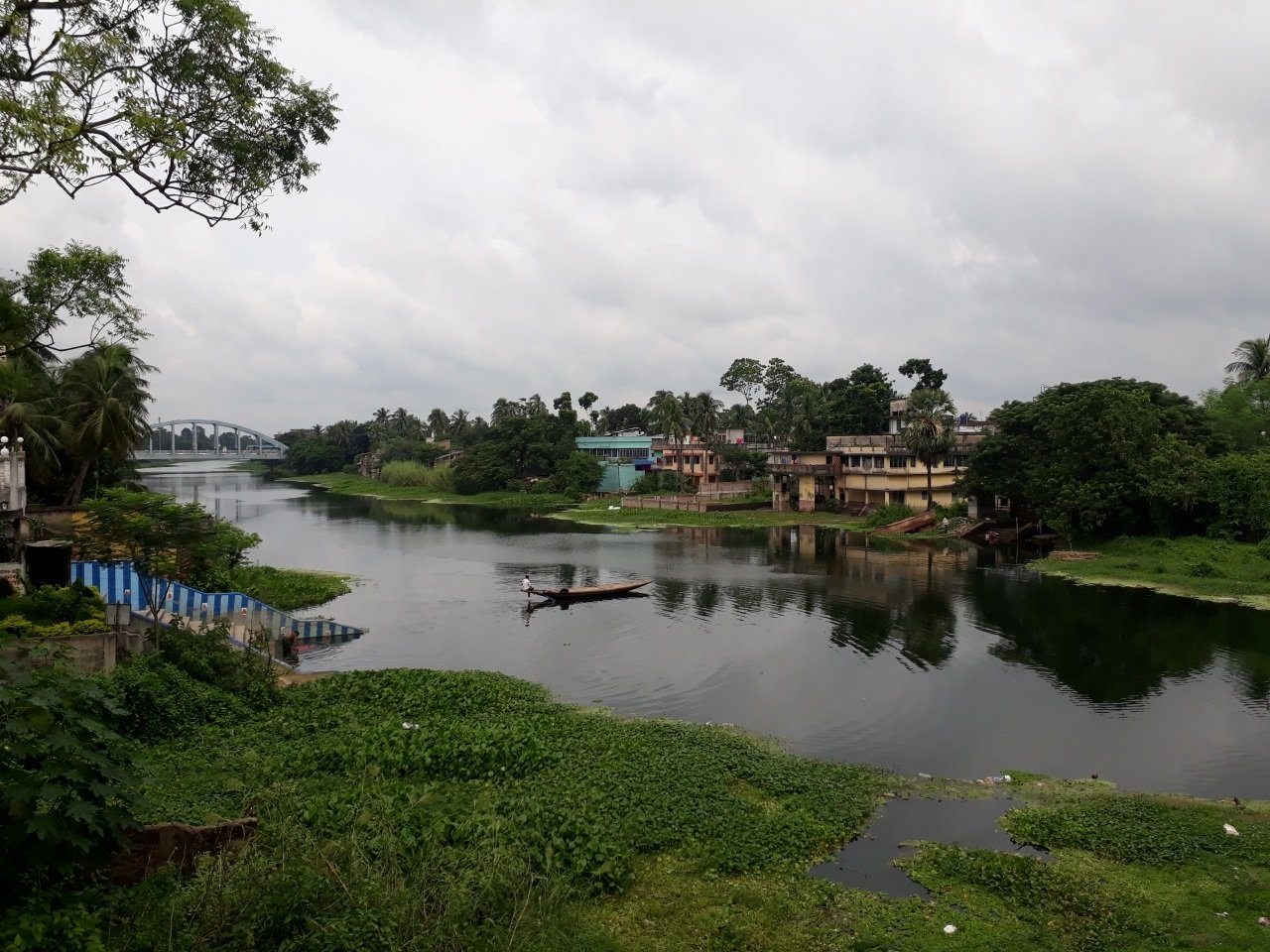
![Battle of Ichamati River ] - Ichamati river at Basirhat city](https://sufifaruq.com/wp-content/uploads/2021/12/Ichamati-river-at-Basirhat-city-300x225.jpg)
Table of Contents
Research and Sources
The historical detail presented in this article is drawn largely from personal interviews and discussions with the late Brigadier P. N. Kathpalia of the Allied Forces’ 71 Mountain Brigade and Lt. Col. S. G. Dalvi of the 21 Rajput Battalion. Utilizing their eyewitness accounts and first-hand testimonies, this account provides a concise yet authoritative overview of the Battle of Ichamati.

Background to the Conflict
From 3 December 1971, Indian troops alongside Mukti Bahini freedom fighters advanced to liberate various sectors across North Bengal. Forces under the command of Brigadier P. N. Kathpalia, having captured Panchagarh and Thakurgaon after advancing from Siliguri, maintained unrelenting overnight artillery bombardments. Under severe pressure, Pakistani occupation forces abandoned Thakurgaon and retreated.
A section of the retreating forces fell back towards Saidpur Cantonment, while another group established defensive positions at Khansama in Dinajpur. Given Khansama’s close proximity to Nilphamari, the Allied Forces advanced rapidly, reaching the banks of the Ichamati River along the Nilphamari border. In the crisp December cold at the foothills of the Himalayas, the objective of the 71 Mountain Brigade was unequivocal: the capture of Saidpur Cantonment.

Planned Operation
Fought beside the bridge over the Ichamati River along the road connecting Khansama (in Dinajpur district) to Darwani (in the Nilphamari subdivision), the battle involved the 71 Mountain Brigade under Lt. Gen. M. L. Thapan, General Officer Commanding (GOC) of India’s XXXIII Corps.
Brigadier P. N. Kathpalia had set out from Siliguri Headquarters with a precise strategic objective: to secure Panchagarh and Thakurgaon, advance through Nilphamari, and encircle Saidpur Cantonment.
Following the capture of Khansama on 13 December, the 21 Rajput Battalion was ordered to press forward along the Khansama–Darwani road, serving as the vanguard for the 71 Mountain Brigade. The strategic objective was to encircle Saidpur town simultaneously from the north-east along the Khansama–Darwani axis and from the north along the Rangpur–Saidpur axis.
![lieutenant general m l thapan, Battle of Ichamati River ]](https://sufifaruq.com/wp-content/uploads/2021/12/lieutenant-general-m-l-thapan-257x300.jpg)
Defensive Positions
Saidpur was a crucial stronghold for Pakistani forces. Moving towards Saidpur from Khansama, the Ichamati River presented a major obstacle where the enemy had constructed a fortified defensive network.
Responsibility for defending this sector lay with Pakistan’s 48 Punjab Battalion. To organize a robust local defence, they deployed two companies at key river junctions: one company fortified positions along the Ichamati River, whilst another was posted approximately 1,000 yards to the east along the banks of the Kharkharia River. The defensive complex at Kharkharia would subsequently play a pivotal role in later engagements.

Allied Battle Order and Preparations
For the Ichamati operation, the battalion was organized into specialized tactical elements:
-
Under-Command Troops: D Squadron (Ad-hoc) less two troops, alongside elements of the 69 Armoured Regiment.
-
Direct Support Troops: 98 Mountain Regiment less one battery, 54 Mountain Regiment less two batteries, and the former 46 Medium Regiment equipped with 5.5-inch medium guns.
-
Air Support Troops: Three sorties of on-demand close air support and a helicopter-borne Air Observation Post (AOP).
Commencement of Battle
The assault commenced at 16:00 hours on 13 December 1971 near the bridgehead on the Khansama–Darwani road. A company from the 21 Rajput Battalion acted as the vanguard.
Until 14:00 hours on 14 December, Pakistani forces offered no immediate reaction. However, the moment the Allied vanguard and armoured columns emerged from the tree line near the Ichamati Bridge, Pakistani positions opened fire with heavy artillery and automatic weapons.
Tactical Situation and Pakistani Deployment
Pakistani forces had built formidable defensive fortifications around the Ichamati Bridge area. Observing the volume of fire and enemy troop movements, Brigadier P. N. Kathpalia estimated an enemy strength of approximately one company (80–150 soldiers) launching attacks from reinforced underground bunkers.
Kathpalia realized that a direct frontal assault would yield minimal gain while incurring heavy casualties. Though a swift flanking manoeuvre from the north was considered, he refrained from ordering it due to two tactical constraints:
-
The Allied mountain guns lacked sufficient range, and military engineers were still engaged in constructing a floating bridge over the Buri Tista River at Khansama, rendering a river crossing impossible at that time.
-
Aerial reconnaissance reports indicated movement of a Pakistani military convoy near Pakerhat in Dinajpur, roughly 10 kilometres south of the Ichamati River.
To counter this potential threat, Kathpalia dispatched five Grenadiers towards the Pakerhat–Sutipara–Darwani railway station axis to secure the southern flank of the Rajput Rifles.
Allied Assault Plan
The 21 Rajput Battalion was tasked with executing a phased assault to capture Ichamati:
-
Phase One: ‘D’ Company was assigned to secure the Ichamati Bridge area.
-
Phase Two: ‘C’ Company was tasked with securing the 13-R area.
-
Reserve: ‘B’ Company was held in reserve.
-
Fire Support: One platoon was deployed to provide covering fire from a nearby elevation.
Simultaneously, a platoon from ‘A’ Company and three troops from D Squadron were ordered to attack Pakistan’s 48 Punjab Battalion from the rear, trapping them around both flanks of the bridge and the local mosque area.
Dense vegetation and rural settlements made visual identification of enemy strongholds difficult, forcing the Allied command to rely heavily on aerial observation.
The Assault
Despite a minor delay in ‘B’ Company reaching its Forming Up Place (FUP), all units were deployed in position within an hour. Shortly after 16:00 hours, the coordinated assault began according to plan.
-
‘D’ Company launched a direct charge against the positions held by Pakistan’s 48 Punjab Battalion.
-
Pakistani troops put up fierce resistance, firing automatic weapons and anti-tank ordnance from inside their bunkers.
-
Following 30 minutes of intense close-quarters combat, Allied forces successfully secured the Ichamati Bridge intact.
Outcome of the Battle
Overwhelmed by the intensity of the Allied assault, Pakistani troops fell into disarray and retreated towards the Kharkharia River, rendering the second phase of the planned assault unnecessary.
In the winter dusk across the verdant plains of Nilphamari, Pakistan’s 48 Punjab Battalion suffered heavy casualties, leaving numerous dead scattered along the banks of the Ichamati River.
Historical Significance
Though lasting only a few hours, the Battle of Ichamati carried profound strategic weight. It shattered the final defensive line deployed by Pakistani forces to safeguard Saidpur Cantonment. In the face of disciplined planning, rapid manoeuvre, and overwhelming momentum, enemy defences crumbled.
The Battle of Ichamati stands as a compelling chapter in the history of the Liberation War, proving that disciplined strategy, high morale, and decisive leadership can dismantle a well-entrenched defensive position in a remarkably short time.