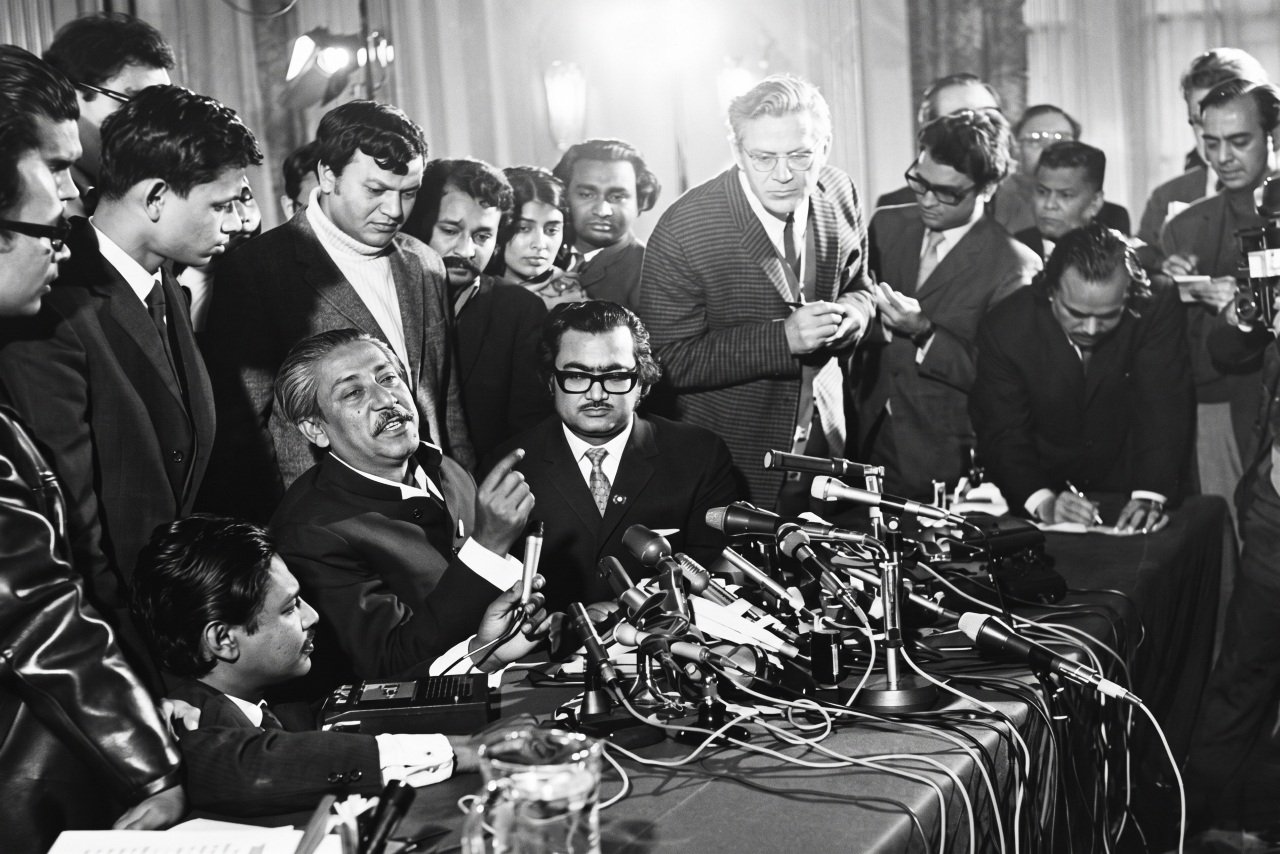
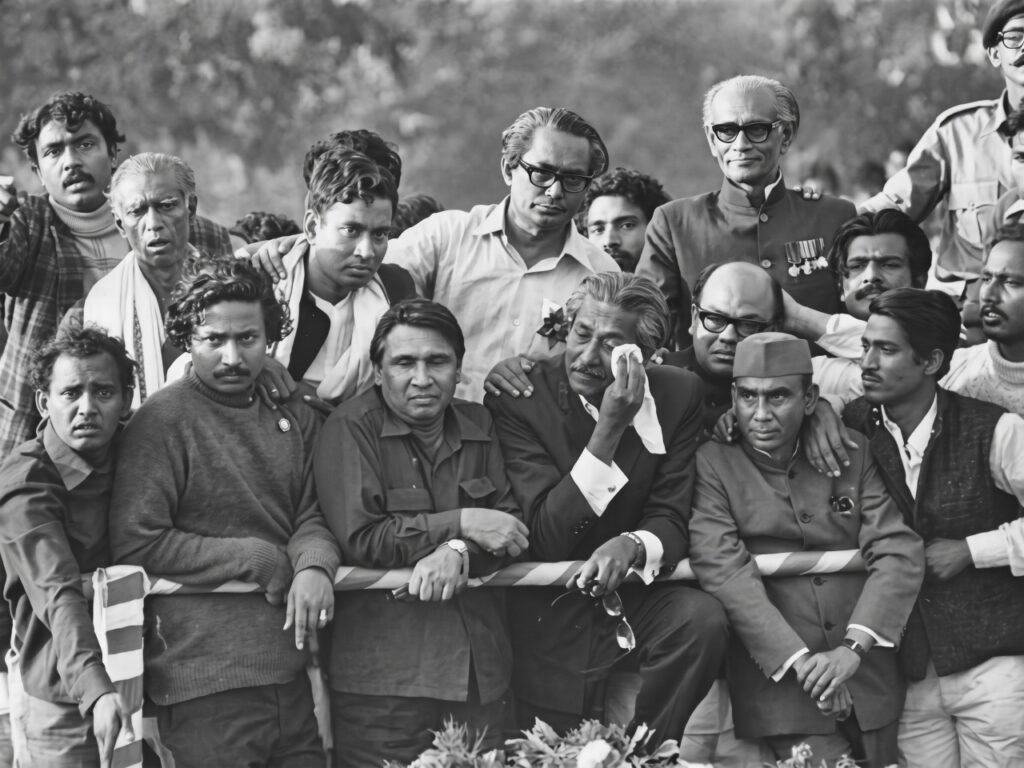
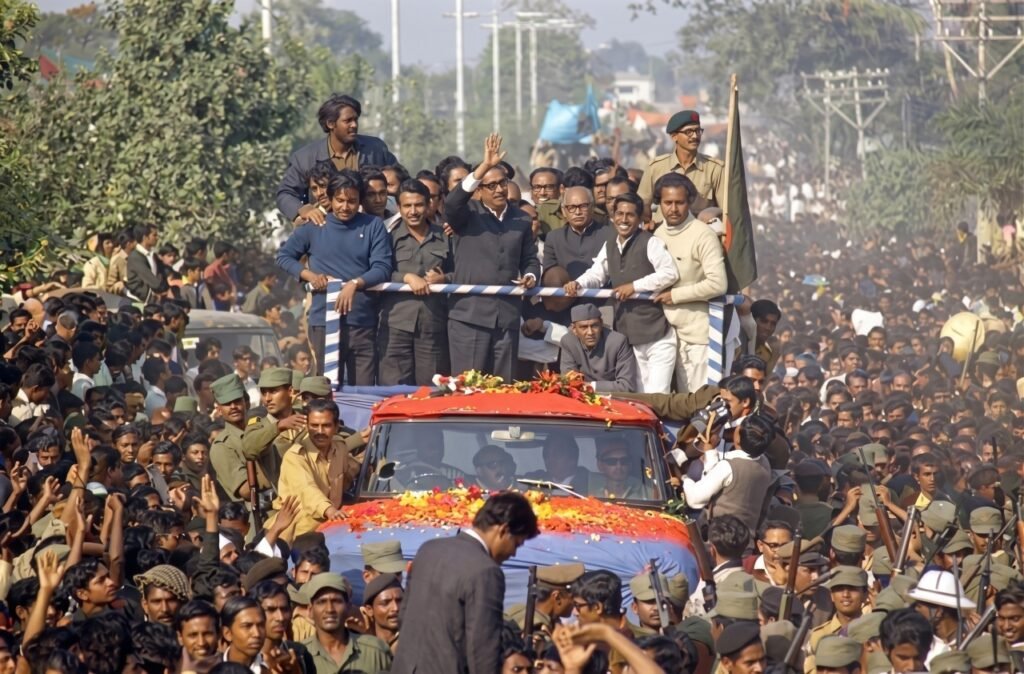
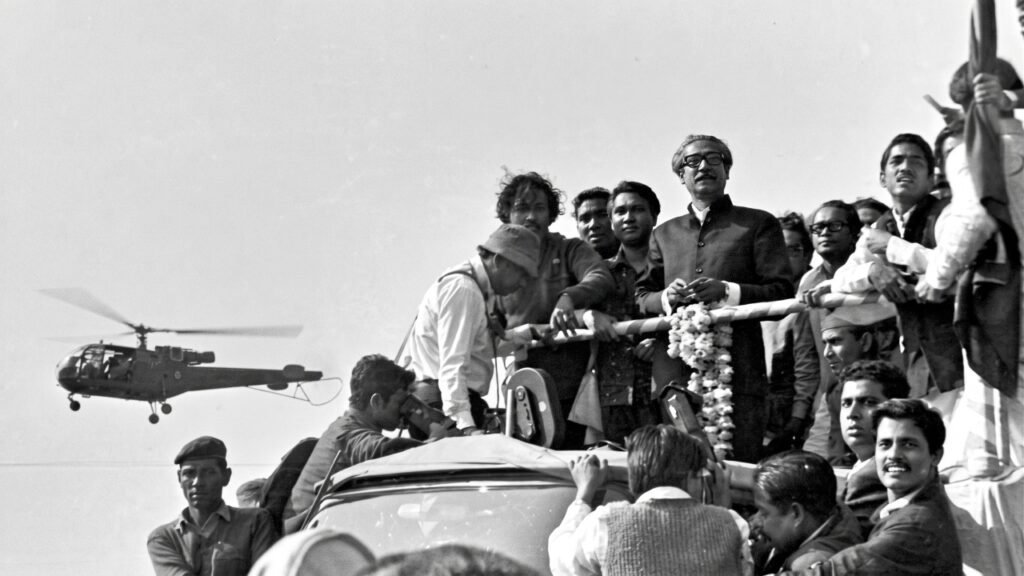
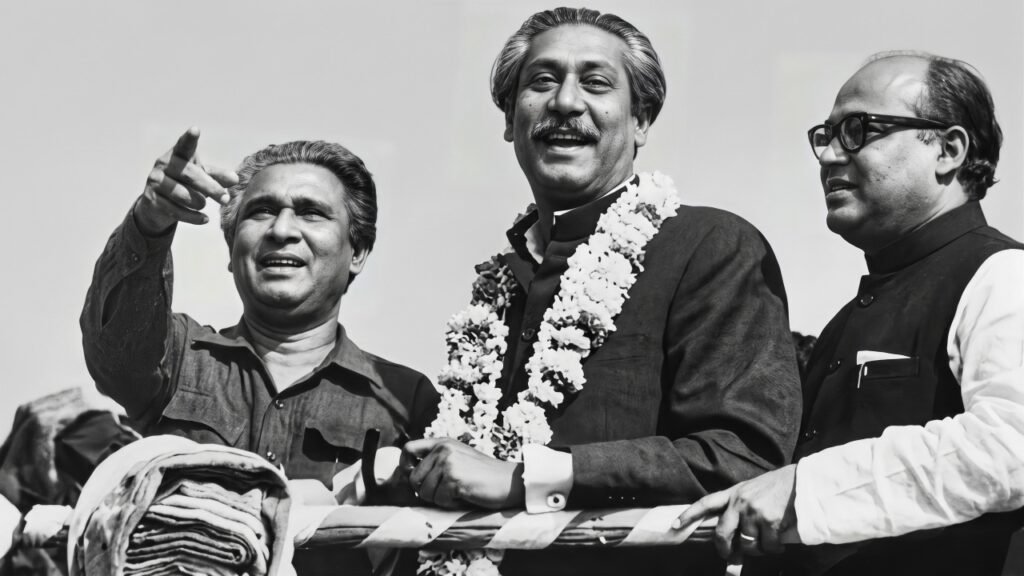
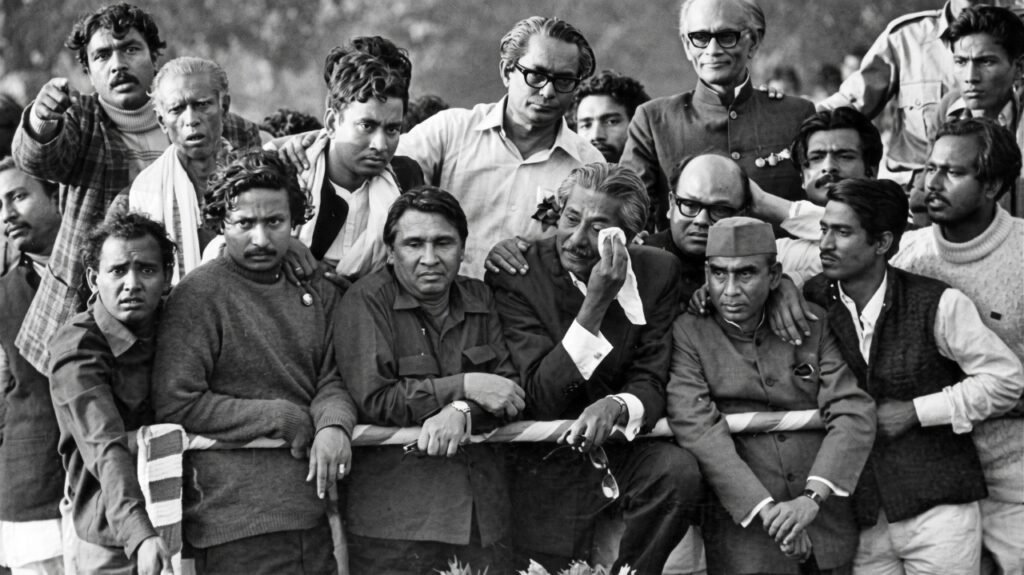
At 4:25 PM on 10th January 1972, when Bangabandhu Sheikh Mujibur Rahman mounted the podium constructed in the shape of the Awami League’s electoral symbol—the boat—at the Racecourse Maidan (present-day Suhrawardy Udyan), he broke down in tears like a child; tears flowed incessantly down his cheeks.
Tears were the sole voice of that day. He wept, and hundreds of thousands wept alongside him. Down the ages, the Bengalis had wept copiously, their tears shedding like the blood of their hearts. Yet the context of that day was fundamentally distinct. For the return of the titan who harboured infinite affection in his breast for seven and a half crore Bengalis, a weeping nation wept uncontrollably on 10th January 1972. And he wept for having returned to his beloved motherland, amidst the populace he cherished more than life itself.
This was the selfsame historic Ramna Racecourse from whence Bangabandhu had issued the clarion call for the liberation struggle on 7th March 1971—a call in response to which the freedom-crazed people of Bengal plunged into the war of independence. And it was here, on 10th January 1972, that Bangabandhu once again stood upon the podium before his people.
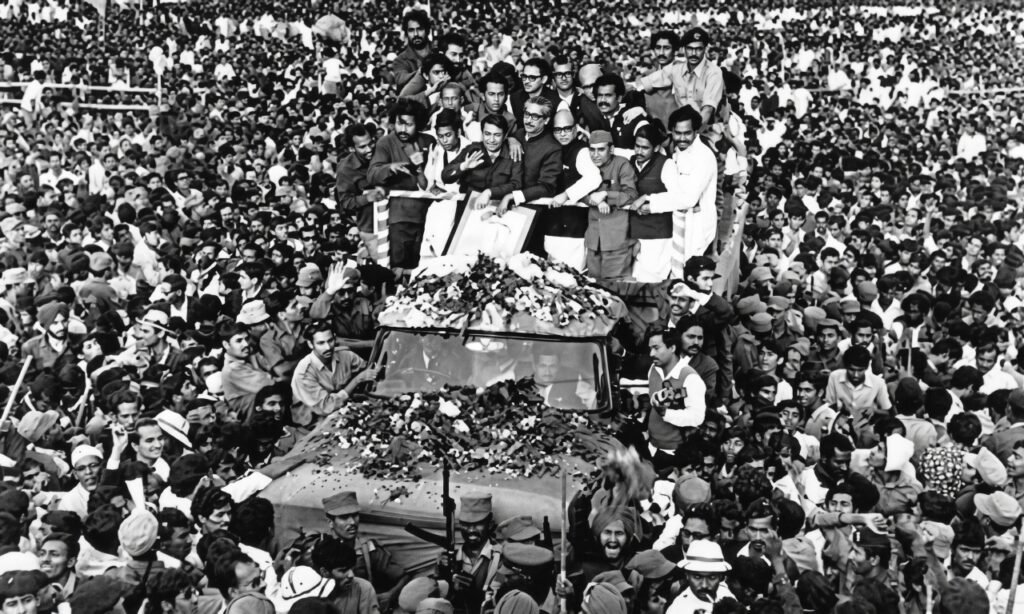
Table of Contents
Boundless Emotion Surges in Jubilation
“We have achieved independence. So long as a single Bengali lives, he shall not permit this independence to be imperilled. There exists no force capable of keeping Bengal suppressed.”
“Today, the ambition of my life is fulfilled. Bangladesh today is free and independent. To the farmers, workers, students, freedom fighters, and people of Bengal, I offer my salutations. Accept my salutations.”
“In West Pakistan, I was facing the gallows. Yet I knew that Bangladesh would be free. That the people of Bengal shall breathe free air, live in happiness with food and sustenance—this has been my lifelong pursuit.”
“We have redeemed Kobiguru’s lament. The Bengali nation has proven that it knows how to lay down its life. They have performed a feat today that stands unparalleled in history.”
“On the seventh of March in this very Racecourse, I urged you to build fortresses in every home. Today I ask you once more: maintain your unity. I had said, ‘Inshallah, I shall liberate Bangladesh.’ Today, Bangladesh is liberated and sovereign. Should anyone seek to snatch away Bangladesh’s freedom, Mujib shall be the first to sacrifice his life to defend that independence.”
“Bangladesh shall be an ideal state. Its foundation shall not rest upon any particular religious basis. The bedrock of this state shall be democracy, socialism, and secularism.”
“I speak to you not as a President, nor as a leader, but as your brother—if the people of this country do not receive food, if they lack clothing, if the youth find no employment or work, then this independence will be rendered futile and incomplete. You, my brothers, became guerrillas for the liberation of the motherland. You gave your blood. Your blood shall not go in vain.”
“Begin building roads yourselves; let everyone resume their work. Let not a single person take a bribe. Remember, I shall not tolerate it.”
“Let all know that Bangladesh is today the second-largest Muslim state in the world, while Pakistan stands fourth; Indonesia ranks first and India third.”
Thirty Lakh Martyrs
“Sentence of death was passed upon me. A grave was dug for me. I was prepared to yield my life. I declared: I am a human being, I am a Bengali, I am a Muslim. A man dies but once, not twice. I shall die smiling, but I shall never beg forgiveness from them. Before dying, I shall proclaim: I am a Bengali, Bangla is my language, I shall chant ‘Joy Bangla’, and the soil of Bengal is my mother. I shall not bow my head.”
Assurances for the Safety of Non-Bengali Speakers
“We wish to demonstrate to the world that Bengalis can not only lay down their lives for freedom, but can also live together in peace.”
Justice in Due Course
He noted, however, that necessary measures would be instituted in due course against those collaborators who actively abetted the Yahya regime. They would face trial, and he urged the populace to entrust that responsibility to the government. Furthermore, he advocated the establishment of an international investigative body to ascertain the full scale of the genocide perpetrated by the Pakistani occupation forces.
Recalling the night of 25th March, Bangabandhu recounted how Tajuddin, Syed Nazrul, and other leaders broke down in tears when parting from him. He had commanded them to prosecute the struggle according to instructions; he would die here, but would not bow. He expressed his gratitude to his colleagues for fulfilling their vow.
Message to Bhutto
Bangabandhu affirmed that he harboured no malice toward the populace of West Pakistan. Addressing the West Pakistani leadership, he remarked that although they had slaughtered countless Bengalis and dishonoured countless Bengali mothers and sisters, he nevertheless wished them well.
Addressing Bhutto, he asserted that Bangladesh’s status as an independent, sovereign state was an immutable reality. He expressed the wish that West Pakistan too might preserve its independence and prosper. Provided they respected Bangladesh’s independence, Bangladesh would reciprocate in kind. Regarding Bhutto’s plea to retain some nominal tie with Pakistan, Bangabandhu declared:
“May you remain in happiness and peace. We too are determined to live in peace with our independence and sovereignty… the bond is severed.”
Appeal for Global Recognition & Humanitarian Aid
“I request all free nations of the world: grant recognition to Bengal.”
“Over the past ten months, the Pakistani military has laid waste to Bengal. Today, lakhs of Bengalis lack food, and countless are homeless. For the sake of humanity, we seek aid for them.”
Gratitude to India and Indian Troop Withdrawal
Referencing his discussions in New Delhi with Indian Prime Minister Shrimati Indira Gandhi, he mentioned that they had deliberated upon matters of mutual interest.
He remarked that he knew Mrs. Gandhi intimately—she was the daughter of Pandit Nehru and the granddaughter of Pandit Motilal Nehru, with politics running through every drop of her blood. He held her in deep esteem. Mrs. Gandhi had personally addressed letters to heads of state across the world pleading for his release. Bangabandhu declared:
“We are grateful to Mrs. Gandhi, the Government of India, and the Indian people.”
He added that nearly one crore Bengalis had sought refuge in India out of fear for their lives, and India had succoured them with food and shelter. For this, too, he conveyed his deep gratitude. Regarding the presence of Indian troops, Bangabandhu affirmed:
“The moment I say the word, all Indian forces shall depart from Bangladesh. Indeed, many are already being withdrawn gradually.”
Furthermore, he expressed gratitude to the peoples of Great Britain, Germany, France, the Soviet Union, and the United States for their support during Bangladesh’s liberation struggle.
Vignettes of Ordinary Lives at the Racecourse
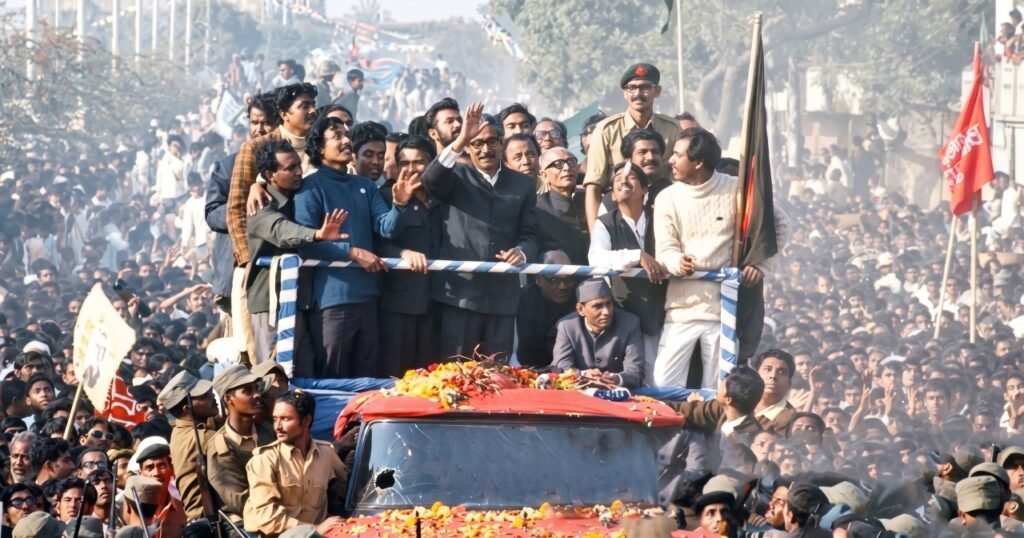
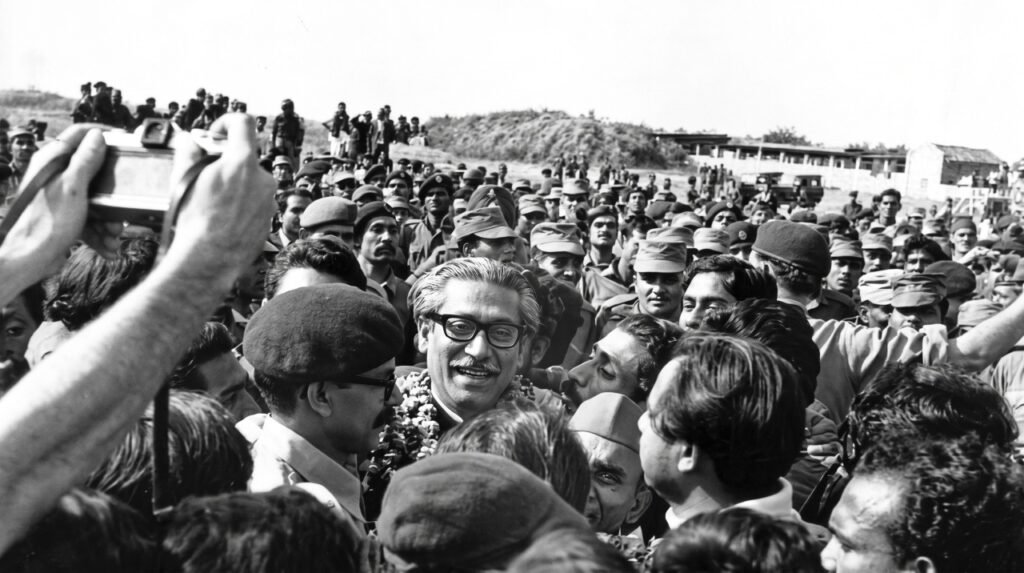
On 10th January, the expanse of the Ramna Racecourse was a sea of humanity, gathered to catch a single glimpse of Bangabandhu and hear his voice. Before the fog could dissipate, streams of people flowed towards the Racecourse from far and wide. The sheer magnitude of emotion in the hearts of the Bengali masses for Sheikh Mujib that day defies linguistic description.
Among those who came to the Ramna Racecourse was a 70-year-old woman named Korimonnesa. As she attempted to enter through the northern women’s gate, Awami League female volunteers barred her way. At that moment, producing a carefully preserved piece of blood-stained cloth from her possession, the old mother exclaimed in a tear-drenched yet resolute voice:
“I have brought blood! I have brought blood to give to Sheikh Sahib. Look, see how much blood I have brought!”
Korimonnesa had two sons—Arafat Ali and Kalachan—both employed at the Adamjee Jute Mills in Narayanganj. Both sons were martyred at the hands of the Pakistani occupation forces. As bullets tore through her two sons’ chests, spilling streams of blood upon the soil of Bengal, the elderly Korimonnesa recalled Bangabandhu’s historic 7th March address: “Since we have given blood, we shall give more blood!” Setting aside her grief, Korimonnesa had collected the blood of her sons upon a piece of cloth, patiently awaiting the day Sheikh Mujib would return home. Journeying from distant Shimulpara, holding her grandson’s hand, she came to the Racecourse just to catch a glimpse of Bangabandhu, tearfully remarking:
“So many sons like my two boys have died! So many mothers have had their laps emptied! I have come to see the man for whom I sent my sons to fight… Seeing him will wash away all my sorrow.”
On that day, many brought offerings born of heart-wrenching love. Among them was an elderly man named Hatem Ali, who arrived alongside his sister, Joyguna Khatun. The siblings belonged to a destitute family impoverished by the erosion of the Padma River. Having lost everything, Hatem Ali had taken shelter in Dayaganj, while his sister Joyguna found refuge in Demra. Driven by a desperate longing, the siblings brought two floral garlands as an offering. Hatem Ali remarked:
“We voted for Sheikh Sahib; we have brought along our two voting stubs. For the past nine months, we wandered here and there fleeing the brutal Khan army, but wherever we went, we preserved these two voting stubs with care. He has returned. Peace will return to this land… All we ask is to be able to eat two square meals a day with our children.”
When asked if they had eaten anything since morning, Joyguna Khatun replied:
“Does one need food when coming to see Sheikh Sahib? Hearing his speech gives strength to the body. That he has returned alive is our ultimate consolation.”
Also present was 65-year-old Piaruddin from Bhanga, Narayanganj, who expressed that seeing Sheikh Sahib was his greatest joy after nine months of terror. Surendra Malay, a fisherman from Louhajang suffering from illness for over a year, also made the journey to Dhaka with his ailing body the moment he heard the news of Bangabandhu’s arrival (Source: Dainik Bangla and Poorvodesh, 11th January 1972).