The Glorious Qur’an stands as the ultimate, eternal divine revelation conveyed for the guidance of humanity. However, this monumental scripture was not descended all at once in a single sitting or as a compiled volume. Rather, it was revealed progressively—passage by passage—across the eventful twenty-three-year prophetic mission of the Prophet Muhammad (peace and blessings of Allah be upon him), precisely responding to global dynamics, historical contexts, and the evolving needs of human society. Throughout this extensive period of revelation, the social standing, political stature, religious experience, and psychological capacity of the Muslim community underwent profound transformations. This entire trajectory—from a persecuted, fragile group of believers in Mecca to the establishment of a robust, sovereign state in Medina—exerted a decisive influence upon the thematic focus, discourse methodology, and linguistic style of the Qur’anic passages.
Within Islamic jurisprudence and the specialized discipline of Qur’anic sciences (‘Ulūm al-Qur’ān), the 114 Surahs of the Qur’an are classified into two fundamental categories based on the time, location, mode of address, and subject matter of revelation: Makki Surahs and Madani Surahs. This categorization is far more than a mere geographical or chronological index; it represents the historical blueprint of the universal Islamic call (Da‘wah), social revolution, and the construction of a just, crime-free civilization. Acquiring a profound understanding of this distinction is indispensable for grasping the true meanings of the Qur’an, comprehending its legal applications, and appreciating its sublime rhetorical beauty.
Table of Contents
Historical Background and the Twenty-Three-Year Arc of Revelation
The divine illumination that commenced in the Cave of Hira at the dawn of prophethood unfolded its initial thirteen-year chapter within the holy city of Mecca. During this Makki epoch, the Prophet (pbuh) and his companions endured extraordinarily severe adversity. The early Muslims navigated daily threats to their lives, physical persecution, economic boycotts, and social ostracisation enforced by the Quraysh. The contemporary Meccan society was steeped in polytheism (Shirk), idolatry, tribal elitism, female infanticide, and moral decay. Under such precarious conditions, the Qur’anic revelation sought first to transform human hearts before imposing external legal codes or state directives.
Subsequently, when the Prophet (pbuh) migrated to Medina under divine instruction, the second phase—the Madani epoch—commenced, spanning a decade. The socio-political climate of Medina differed radically from that of Mecca. Here, the Muslims were no longer an oppressed minority; rather, through the Charter of Medina (Mīthāq al-Madīnah), they established an independent, sovereign polity. In Medina, the Muslim community confronted unprecedented challenges, including diplomatic governance, ideological dialogue with Jewish and Christian communities, counteracting internal subversion by hypocrites (Munāfiqūn), and safeguarding state sovereignty through defensive warfare. Consequently, the pace and tone of the Madani revelations adapted dynamically to address these newly emerging societal realities.
The Significance of the Makki and Madani Paradigms for the Ummah
Understanding the transition between these two Qur’anic paradigms is not merely an academic exercise in historical analysis, but a vital key to comprehending the holistic philosophy of Islam. Eminent exegetes (Mufassirūn) and legal theorists (Uṣūliyyūn) unanimously agree that knowledge of the Makki and Madani divisions is essential for the Ummah. It provides a timeless model for incrementally nurturing a faithless society toward belief, morality, and legal order. The Makki phase served as the foundational bedrock, purging hearts of polytheism and superstition to plant the seeds of pure monotheism (Tawḥīd). In contrast, the Madani phase represented the grand edifice erected upon that foundation, structuring individual and collective actions within a precise framework of divine law.
Islamic thinkers emphasize that disregarding this strategic progression risks misinterpreting the application of numerous Qur’anic verses. For instance, while Muslims were numerical and political minorities in Mecca, they were instructed to exercise forbearance, patience, and forgiveness. Conversely, upon establishing political authority in Medina, directives were revealed authorizing defensive combat against systemic oppression. These distinct rulings belonged to different historical epochs and contexts. Therefore, discerning this historical development forms a cornerstone of Qur’anic studies.
Fundamental Criteria and Scholarly Debates in Classifying Makki and Madani Surahs
Islamic scholars, exegetes, and jurists (Fuqahā’) have formulated three primary criteria or frameworks for classifying Surahs and verses as either Makki or Madani. These frameworks offer distinct analytical perspectives for textual categorization.
The Temporal Criterion: Adopting the Hijrah as the Primary Epochal Boundary
According to the vast majority of scholars and the most authoritative paradigm in ‘Ulūm al-Qur’ān, ‘time’ or ‘chronology’ serves as the definitive yardstick. Under this criterion, any Surah or verse revealed prior to the Prophet’s migration (Hijrah) to Medina is categorized as ‘Makki’—even if the physical location of revelation was outside Mecca, such as in Ta’if or during a journey.
Conversely, any passage revealed after the Hijrah is classified as ‘Madani’—even if it was revealed outside Medina, such as within Mecca during its Conquest, at the Plain of Arafat during the Farewell Pilgrimage, or on a military expedition. This temporal definition is considered the most scientific, logical, and universally accepted, as it avoids geographical ambiguities and seamlessly contextualizes the revelation within a coherent historical framework.
The Spatial Criterion: Geographical Boundaries and Their Limitations
The second criterion is constructed around physical geography. Proponents of this view hold that passages revealed within Mecca and its immediate environs (such as Mina, Arafat, Muzdalifah, or Hudaybiyah) are Makki, whereas those revealed in Medina and its surrounding territories (such as Uhud, Badr, or Tabuk) are Madani.
However, this spatial formulation exhibits significant historical and conceptual limitations. Throughout his twenty-three-year ministry, the Prophet (pbuh) traveled extensively. Passages revealed in locations far removed from both Mecca and Medina—such as during the journey to Jerusalem (Bayt al-Maqdis) or in distant regions during expeditions—are difficult to accommodate within a strictly spatial binary. Consequently, the majority of researchers reject this definition as a primary benchmark.
The Addressee-Based Criterion: Yā Ayyuhan-Nās versus Yā Ayyuhalladhīna Āmanū
The third criterion focuses on the target audience or addressee (Khitāb) of the divine voice. According to this theory, passages employing the universal address “O mankind!” (Yā Ayyuhan-Nās) are deemed Makki, as the audience in Mecca consisted predominantly of polytheists and the general public.
Conversely, passages commencing with “O you who believe!” (Yā Ayyuhalladhīna Āmanū) are classified as Madani, reflecting the established, organized community of believers in Medina. Scholars note, however, that while this represents a general thematic tendency, it cannot be applied as an absolute rule. For example, Surah al-Baqarah and Surah al-Nisā’—both unequivocally Madani—contain the address “O mankind!”, whereas Surah al-Hajj, which is predominantly Makki, includes the phrase “O you who believe!”
The Primacy and Universality of the Temporal Paradigm
Analyzing these three frameworks reveals that the temporal criterion based on the Hijrah remains the most rigorous and incontrovertible model. It transcends geographic and linguistic exceptions to organize the history of revelation into two clear epochs. It is precisely through this temporal lens that the famous verse revealed on the day of the Conquest of Mecca—”This day I have perfected for you your religion” (Surah al-Mā’idah: 3)—is accurately classified as Madani, despite being revealed geographically within Mecca.
Research Methodologies: Samā‘ī Historical Transmission and Qiyāsī Analytical Deduction
To determine whether a specific Surah or passage is Makki or Madani, classical scholars employed two primary investigative methodologies, both crucial for preserving the integrity of revelation history.
Reliance on Samā‘ī (Authentic Historical Transmission)
The Samā‘ī method relies upon direct eyewitness reports and authentic chains of transmission (Isnād) traced back to the Companions (Ṣaḥābah) and Successors (Tābi‘ūn). The Companions accompanied the Prophet (pbuh) continuously, observing firsthand the precise circumstances, locations, and chronological sequence of each revelation. The eminent Companion Abdullah ibn Mas‘ud (ra) famously remarked: “By Allah, there is no verse in the Book of Allah except that I know where it was revealed and concerning whom it was revealed.”
Thus, wherever an authentic historical report from the Companions exists regarding a passage, it is accepted as conclusive evidence. In the science of exegesis, these transmitted reports take absolute precedence because they stem from direct observers of the revelation.
The Qiyāsī Approach: Deduction Based on Content and Stylistic Features
The second approach is Qiyāsī, which involves comparative internal textual analysis. Where explicit Samā‘ī reports are absent or ambiguous, exegetes analyze the literary structure, diction, verse length, cadence, and thematic content of a Surah.
If a Surah focuses on Tawḥīd, the Hereafter, refutations of idolatry, historical narratives of past prophets (Qaṣaṣ), and features short, rhythmic verses, scholars inductively classify it as Makki. Conversely, if it delineates detailed legal ordinances, state policy, regulations of warfare, treaties, and references to hypocrites, it is classified as Madani.
Reasons for Scholarly Divergence in the Chronological Ordering of Surahs and Verses
For instance, dual historical accounts exist regarding Surah al-Bayyinah and Surah al-‘Ādiyāt, with some early authorities labeling them Makki and others Madani. In such instances, later scholars rigorously evaluated the depth of subject matter, stylistic nuances, and contextual markers to determine the most authoritative position (Rājih). This scholarly rigor demonstrates that classical specialists in ‘Ulūm al-Qur’ān subjected every historical report and textual nuance to meticulous critical scrutiny.
Intermixing of Makki and Madani Verses Within a Single Surah: A Theoretical Analysis
A subtle aspect of Qur’anic scholarship is that designating a Surah as overall ‘Makki’ or ‘Madani’ does not imply that every constituent verse was revealed within that exact same epoch. Several Makki Surahs contain individual Madani verses, while certain Madani Surahs incorporate Makki passages.
For example, while the majority of Surah al-An‘ām was revealed simultaneously in Mecca during a single night, authentic traditions confirm that specific verses within it were revealed later in Medina. Under divine instruction conveyed via Jibrīl (as), the Prophet (pbuh) specified the exact placement of each newly revealed verse within its respective Surah. Consequently, verses were arranged according to thematic coherence and structural harmony rather than strict temporal succession.
Socio-Political Realities and Ideological Characteristics of the Makki Era
The Makki epoch was primarily an era of psychological and spiritual transformation. In a society devoid of a unified divine moral compass, the overarching objective of the Makki revelation was to spark a profound paradigm shift in faith.
The Crux of the Makki Message: A Revolutionary Paradigm Shift in Faith, Monotheism, and Worldview
The primary mission of the Makki Qur’an was to dismantle the distorted Jahili worldview and establish an entirely new cognitive framework. It directly addressed existential questions fundamental to human consciousness: Who is man? What is his origin? Who is his Creator? What is his ultimate destiny after death?
Establishing Pure Monotheism (Tawḥīd) and Refuting Polytheism
The foremost objective of Makki Surahs was to eradicate polytheism, idolatry, and nature worship from human consciousness. By directing attention to natural phenomena—such as the heavens, the earth, the sun, the moon, rainfall, and the miraculous creation of man—the Qur’an commanded belief in the Absolute Oneness of Allah. It systematically dismantled the irrationality of pagan polytheism using compelling logical arguments.
Prophethood and Revelation (Risālah)
Makki revelations repeatedly affirmed that the Qur’an was not a human literary composition, nor was Muhammad (pbuh) a poet or fortune-teller. The miraculous nature of divine revelation was vindicated, emphasizing that the primary duty of messengers was to deliver the divine message and warn humanity with wisdom.
The Hereafter, Eschatological Imagery, and the Psychology of Accountability
A defining characteristic of the Makki Qur’an is its vivid depiction of resurrection after death, the Day of Judgement, the sublime bliss of Paradise, and the terrors of Hell. Imprinting the certainty of ultimate accountability before the Almighty upon the human conscience was crucial, as true moral integrity cannot flourish without an acute awareness of the Afterlife (Ākhirah).
The Rhetorical and Pedagogical Use of Historical Narratives: Lessons from Past Nations
Makki Surahs extensively recount the histories of ancient prophets—such as Nūḥ (Noah), Ibrāhīm (Abraham), Mūsā (Moses), Ṣāliḥ, and Hūd (peace be upon them)—and the tragic fates of their defiant nations. These historical narratives (Qaṣaṣ) served a dual purpose: first, to offer spiritual solace to the persecuted Muslims of Mecca by reassuring them that trial and tribulation are integral to the path of truth, which ultimately triumphs; second, to issue a stern warning to the arrogant Quraysh regarding the ruin that befell ancient civilizations that rejected divine guidance.
Laying the Social and Ethical Foundations During the Makki Period
Despite the absence of formal state apparatuses or legal codes, the Makki Qur’an instilled a profound sense of social justice and personal ethics. It issued scathing condemnations of female infanticide, demanded the protection of orphans’ property, denounced fraudulent commercial practices, and prohibited arrogance. By championing truthfulness, filial piety, and compassion toward the marginalized and enslaved, the Makki revelation cultivated an unprecedented ethical standard that transformed an uncivilized tribal society into exemplary moral leaders.
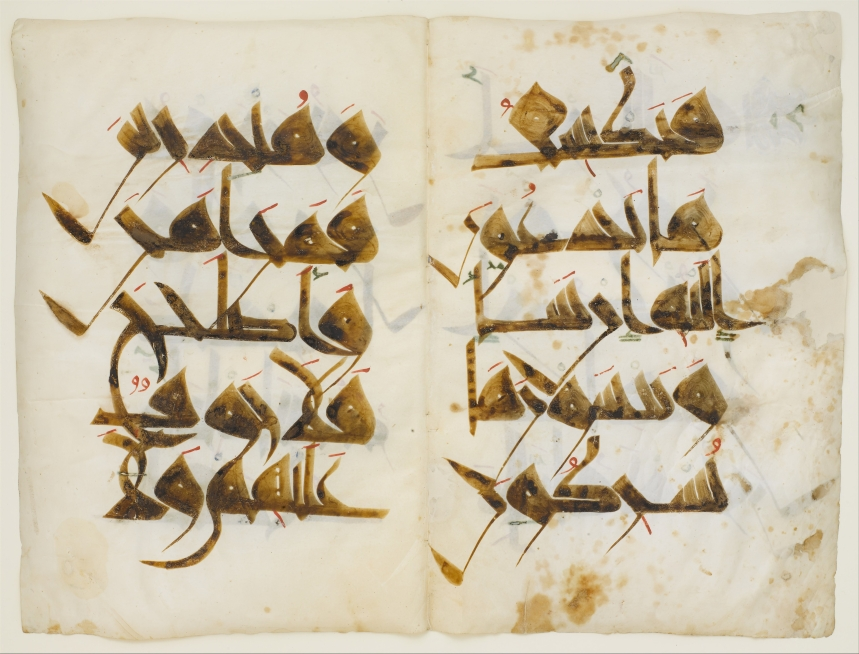
Socio-Political Dynamics and Legislative Transformations of the Madani Era
The Madani revelation represents the historical institutionalization of the personal faith nurtured in Mecca. When belief achieves firm root in the human heart, its implementation requires a comprehensive framework of law, governance, and social justice.
From Belief to Institution: The Formation of State, Society, and Sharia
The overarching objective of the Madani Qur’an was to shape a community of believers into an equitable, well-ordered society. Consequently, the thematic focus expanded beyond abstract theological exposition to articulate specific, actionable regulations governing every facet of daily life.
Family Law, Marriage, Social Transformations, and Inheritance
As the fundamental unit of society, family life received detailed legislative guidance in Madani Surahs. Clear statutes were enacted regarding marriage, dowry (Mahr), divorce procedures, waiting periods (‘Iddah), child maintenance, and female rights. Most notably, the Qur’an established precise, mathematically structured inheritance laws (detailed extensively in Surah al-Nisā’), providing women with legal property rights unparalleled in contemporary antiquity.
Economic Infrastructure, Riba, and Debt Regulations
To construct an exploitation-free economy, Madani revelations introduced fundamental economic reforms. Usury (Ribā) was unequivocally prohibited, institutional Zakat was rendered obligatory, voluntary charity (Infaq) was elevated, and commercial integrity was mandated. Notably, Surah al-Baqarah (verse 282)—the longest verse in the Qur’an—delineated explicit legal procedures for recording financial transactions and debts, setting a benchmark for contractual transparency.
Governance, Warfare, Judiciary, and International Treaties
With the establishment of the Madani state came the necessity for public law, internal order, and defense against external aggression. Madani Surahs articulated the principles of defensive warfare (Jihād), the humane treatment of prisoners of war, the equitable distribution of spoils (Ghanīmah), judicial fairness, and the binding nature of international treaties and diplomatic alliances.
Confronting New Social Dynamics: Hypocrisy (Nifāq) and its Psychological Anatomy
In Mecca, where Muslims faced severe persecution, hypocrisy (Nifāq) was non-existent, as joining an oppressed minority offered no material advantage. However, as Islam grew into a dominant political and social force in Medina, opportunists emerged who feigned faith publicly while harbouring hostility privately.
A substantial portion of Madani Surahs (such as al-Baqarah, Āl ‘Imrān, al-Tawbah, and al-Munāfiqūn) is dedicated to exposing the complex psychological anatomy, covert plots, and subversion of these hypocrites, safeguarding the community against internal threats.
Engaging the People of the Book (Ahl al-Kitāb) and Theological Discourse
Following the Hijrah, Muslims came into direct contact with the Jewish and Christian communities of Medina and surrounding regions. This encounter prompted an extended theological and historical dialogue with the People of the Book (Ahl al-Kitāb).
The Madani Qur’an validated the original divine origin of the Torah and the Gospel while critiquing subsequent textual corruption, clerical distortions, and theological deviations—such as the deification of Isa (Jesus, as). Through these profound debates, the Qur’an established its position as the ultimate, uncorrupted criterion (Muhaymin) over prior revelations.
Literary, Lexical, and Aesthetic Characteristics: A Rhetorical Comparison
From a linguistic and rhetorical (Balāghah) perspective, the stylistic divergence between Makki and Madani Surahs displays an astonishing level of divine eloquence. The shift in style perfectly mirrors the changing socio-historical demands of the revelation’s audience.
Literary Style and Sonic Architecture of Makki Surahs
The linguistic style of the Makki epoch was vibrant, dramatic, highly emotive, and rhythmically intense. This was tailored to an audience of master poets and rhetoricians in Mecca who took immense pride in linguistic eloquence.
Verse Length, Brevity, and Incisive Syntax
Makki verses are characteristically short, incisive, and powerfully concise. The syntax moves with rapid momentum, designed to pierce the complacency of the listener and provoke deep spiritual introspection.
Rhythmic Cadence (Fāṣilah) and Acoustic Architecture
The sentence terminations (Fāṣilah) in Makki Surahs exhibit a mesmerizing acoustic rhythm. This sonic architecture is not artificial poetic rhyme (Saj‘), but a natural, resonant cadence. When recited, the internal harmony of vowels and consonants creates a profound emotive atmosphere that stirs the human soul.
Rhetorical and Philosophical Significance of Oaths (Aqsām)
A hallmark of Makki style is the frequent use of solemn oaths invoking cosmic phenomena—such as the sun, the moon, the dawn, the night, the fig, the olive, or time itself (e.g., Waṣ-Ṣamsi wa ḍuḥāhā, Wal-Layli idhā yaghshā, Wal-‘Aṣr). These oaths serve to direct human intellect toward the intricate order of creation, deducing from it the wisdom and oneness of the Creator.
Cinematic Imagery and Visceral Impact
The Makki Qur’an possesses an extraordinary capacity for evocative visual imagery. Descriptions of the Day of Resurrection are conveyed with breathtaking vividness—mountains floating like carded wool, the sun folded in darkness, and oceans boiling over. This visceral language engages human imagination and emotion prior to presenting formal logical arguments.
Literary Style and Juridical Clarity of Madani Surahs
In the Madani era, the literary tone adapted to meet new requirements. The need for sudden dramatic impact gave way to clarity, precision, and structural depth suited for legal governance.
Extended Sentences, Expository Analysis, and Detailed Discourse
Madani verses are typically longer, expository, and analytical. They systematically elaborate legal statutes, exceptions, and procedural qualifications, resulting in a majestic, measured, and dignified prose style.
Transition from Rhetorical Intensity to Legal Precision
The hallmark of Madani language is its legal precision. Rhetorical ambiguity is replaced by unambiguous, meticulous terminology. Directives concerning inheritance fractions, criminal punishments (Ḥudūd), debt regulations, and ritual worship leave no room for misinterpretation.
“Yā Ayyuhalladhīna Āmanū”: The Emergence of a Civic Identity
The recurring invocation “O you who believe!” forms the signature hallmark of Madani passages. This dignified address signaled that the audience had already embraced faith and was now ready to assume civic, moral, and legal obligations.
Practical Applications of Makki-Madani Studies in ‘Ulūm al-Qur’ān and Jurisprudence
The distinction between Makki and Madani revelations is not merely a matter of historical interest; it holds immense practical significance in Islamic jurisprudence (Fiqh), legal theory (Uṣūl al-Fiqh), and exegesis (Tafsīr).
Exegesis (Tafsīr) and Contexts of Revelation (Asbāb al-Nuzūl)
Accurately interpreting any Qur’anic passage requires a clear understanding of whether it belongs to the Makki or Madani era and its specific context of revelation (Asbāb al-Nuzūl). Attempting exegesis without this historical anchoring introduces severe risks of contextual misapplication.
For example, certain verses command firm resistance against hostility, whereas others advocate patience and peace. Without recognizing the historical contexts of these directives, an interpreter might perceive contradictions. In reality, each command represents a perfectly tailored response to its specific socio-political environment.
Determining Abrogation (Naskh) and Legislative Succession
In Islamic jurisprudence, the principle of abrogation (Naskh) refers to the gradual evolution of divine rulings. Certain laws were introduced progressively to prepare society for ultimate standards.
Consider the prohibition of intoxicants, which unfolded in stages: initial warnings regarding its harm (early Makki/Madani transition), prohibition of approaching prayer while intoxicated (early Madani), and finally, a total, definitive prohibition in Surah al-Mā’idah. To determine which ruling supersedes another, jurists rely indispensably upon the chronological sequence provided by Makki and Madani classifications.
The Methodological Progression of Islamic Da‘wah and Contemporary Reforms
The gradual progression from Makki to Madani revelation offers a masterclass in methodology for social reform and contemporary Islamic calling (Da‘wah). It demonstrates that sustainable societal transformation requires an intentional, phased approach.
Reforming individual consciousness, nurturing moral integrity, and establishing faith in God must precede the imposition of legal regulations. Attempting to enforce structural laws upon a society lacking moral and spiritual foundation yields superficial compliance rather than genuine reform—a timeless lesson taught by the Makki-Madani trajectory.
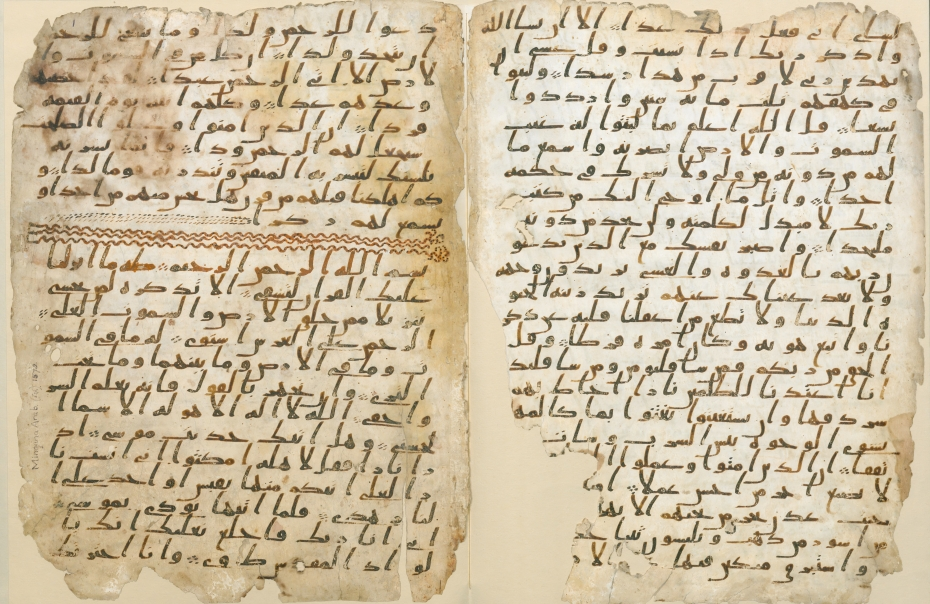
The Integrated Synthesis of Revelation and the Perfection of Human Civilisation
In conclusion, the stylistic, thematic, and contextual variations between Makki and Madani Surahs reflect no internal contradiction; rather, they demonstrate the organic maturity and perfection of a singular divine message. The Makki and Madani chapters are not disparate fragments, but complementary phases of a unified divine design.
If the Makki Qur’an constitutes the unshakeable foundation of faith, the Madani Qur’an represents the magnificent, well-fortified structure erected upon it. The former awakens the human soul, while the latter organizes that awakened humanity into a noble, equitable, and harmonious society. This gradual, wise revelation proves that the Glorious Qur’an is no human literary effort, but the eternal Word of an All-Wise Creator who intimately comprehends every nuance of human nature. Masterful comprehension of these two paradigms remains essential for unlocking the true spirit of the Qur’an and applying its timeless guidance toward building a peaceful and just world.