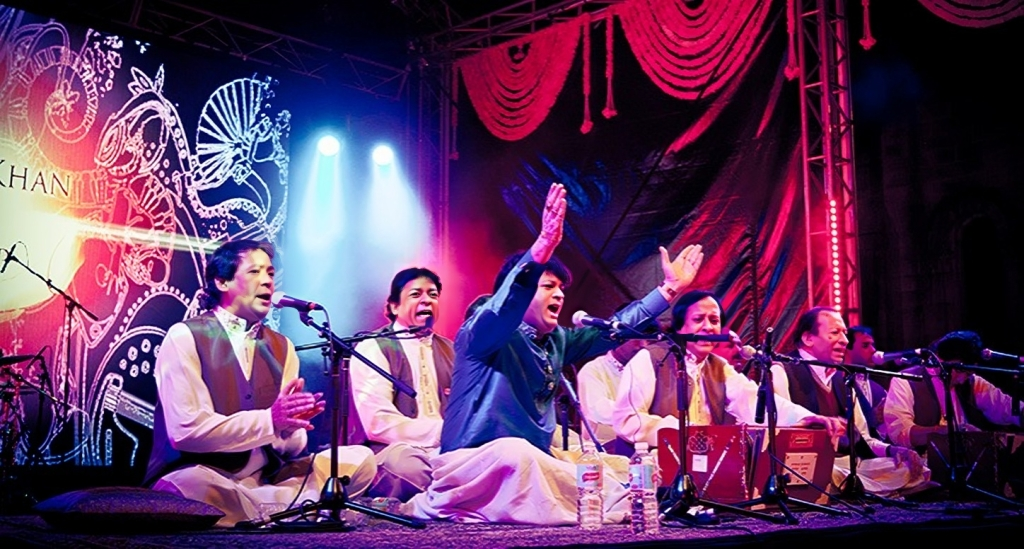
Qawwali is not merely a genre of music—it is a calling of the soul, a profound cry from the innermost spirit expressed through melody. The word ‘Qawwali’ originates from the Arabic word ‘Qaul’, which means ‘word’ or ‘utterance’. In Islamic tradition, ‘Qaul’ specifically refers to the sayings of the Prophet Muhammad (PBUH) or utterances in remembrance of Allah. When that holy word reaches human hearts through the medium of melody, rhythm and cadence, it transforms into Qawwali.
Qawwali is primarily a unique musical tradition nurtured by the Sufi saints of South Asia. It is not an entertainment song; rather, it is a spiritual practice. In Sufi parlance, it is called ‘Sama’—a process of listening through which humans gradually untie themselves from worldly bonds and attempt to attain closeness to the Creator.
When the melody slowly unfolds in a Qawwali gathering, followed by the rhythmic clapping of hands, and culminates in the rapid tempo of the tabla and dholak, a transcendental atmosphere is created. Sufis call this ecstatic state ‘Wajad’—a moment of spiritual frenzy or supreme bliss. In this state, a listener ceases to be just a listener; they dissolve into the melody itself.
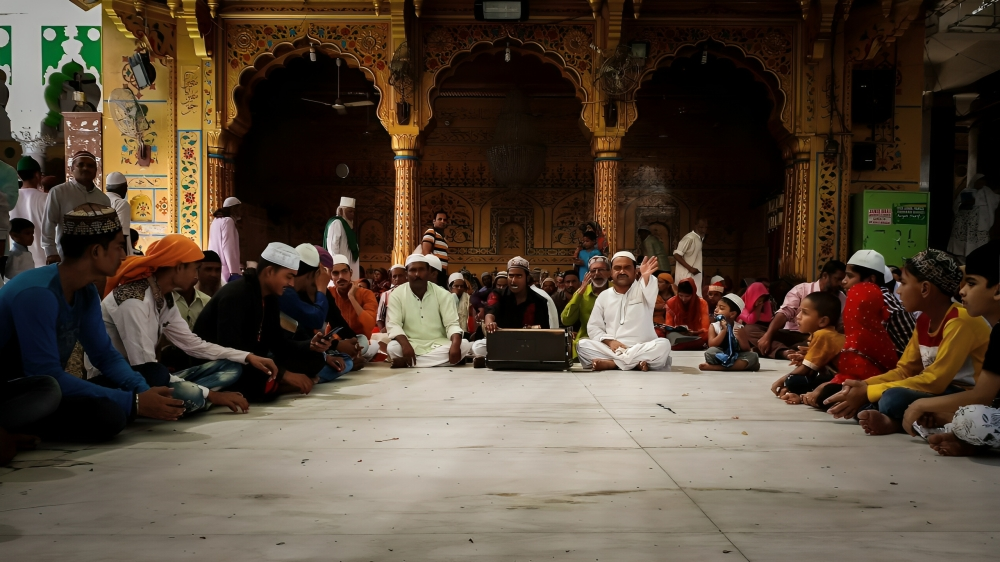
Table of Contents
Origin and History: The Magic of Amir Khusrau’s Creation
The history of Qawwali spans over seven centuries. Although the practice of ‘Sama’ or spiritual singing existed earlier in the Islamic world, the form of Qawwali we witness today in the Indian subcontinent is the result of a long cultural synthesis.
This tradition was given a structured form in the thirteenth century by the great poet, musician and Sufi saint, Hazrat Amir Khusrau (RA). He was the beloved disciple of Hazrat Nizamuddin Auliya (RA), the great saint of Delhi’s Chishti order. Khusrau realised that religious messages strictly in Arabic or Persian would not easily reach the common folk. Therefore, he sought to create a musical style that would simultaneously be classical, folk-oriented and easy to comprehend.
Driven by this thought, he merged the Persian Maqam system with the traditions of Indian Raga music. To this, he added folk rhythms, simple language and repetitive melodic structures. The result was a brand new musical genre, which later came to be known as Qawwali.
Khusrau did not just construct the framework of Qawwali; he established the ‘Qawwal Bachhon Ka Gharana’ (the lineage of Qawwal children), which continues to represent the oldest and purest stream of Qawwali to this day. Generation after generation, artists of this lineage have kept this music alive through the traditional master-disciple (Guru-Shishya) relationship.
Philosophy and Spirituality: The Path of Ishq, Fana and Self-Dissolution
Qawwali is a profound spiritual discipline, a form of Zikr (remembrance) where the Creator is invoked through melody. In Sufi philosophy, music is never viewed as mere amusement; it is seen as a powerful medium to purify the soul. Melody, words and rhythm work in tandem to penetrate the deepest recesses of the human heart, awakening dormant emotions. Through this process, the listener gradually detaches from the external world and steps into their inner realm.
One of the central concepts of Sufism is love—not worldly love, but a supreme and eternal love. Here, the Creator is envisioned as the ‘Mashuq’ (Beloved), while the human sees themselves as the ‘Ashiq’ (Lover). In this relationship, there is no distance, no conditions—it is a bond of absolute surrender. This unconditional, invisible yet deep love is called Ishq-e-Ilahi (Divine Love). Every word, every note of Qawwali is an expression of this love—sometimes a plea, sometimes a cry, sometimes an exhilaration, but the ultimate goal remains the same: proximity to the Creator.
A crucial stage of this spiritual journey is Wajad—when the soul shivers at the sound of melody. The incrementally rising tempo of Qawwali, the repetitive words, the rhythm of the tabla and the collective impact of clapping transport the listener into a distinct psychological state. In this state, humans lose awareness of the material world and enter a kind of trance. The music no longer remains external; it becomes an intensely personal, internal experience. At this moment, the listener does not just hear the song—they become a part of the melody itself.
The ultimate culmination of this experience is Fana—the annihilation of the self. In Sufi philosophy, Fana means erasing one’s ego or ‘I’ and merging completely into the Divine. At the deepest point of Qawwali, when a listener or seeker forgets their own existence, they no longer perceive themselves as a separate entity. They become part of a grander existence. This experience cannot be articulated in words; it can only be felt.
Another visible manifestation of this state is Haal. In a Qawwali gathering, it is common to see someone suddenly stand up, weep uncontrollably or sway with closed eyes. These reactions are not performative; they are spontaneous expressions rising from the depths of the soul. After being immersed in the melody for a long duration, when the inner walls shatter, the accumulated emotions, pain and longing find liberation through song. It is a form of spiritual catharsis, leaving a person feeling light and purified.
In the Sufi Chishti order, listening to Sama—that is, Qawwali—is considered a form of worship. However, this worship requires more than just ears; it requires a prepared mind and a pure heart. If the listener’s intent is holy and their mind is receptive, the same melody can guide them towards the Creator. But if the mind is unprepared, those identical notes remain nothing more than noise. Thus, Qawwali is not merely about singing; it is about receiving.
Finally, the most wondrous aspect of Qawwali is how it transcends linguistic boundaries. Words used here, such as ‘Maikhana’ (tavern), ‘Sharab’ (wine), ‘Saqi’ (cupbearer), and ‘Mehfil’ (gathering), are not meant literally, but rather as profound metaphors. ‘Wine’ becomes the symbol of divine knowledge, the ‘cupbearer’ becomes the spiritual guide, and the ‘gathering’ becomes the meeting ground of souls. Through this symbolic language, Qawwali constructs a poetic universe where emotion carries far greater weight than literal meaning.
The Musical Structure: The Magic of Raga, Tala and Clapping
To a first-time listener, Qawwali might appear simple, spontaneous and purely driven by emotion. Yet beneath this apparent simplicity lies a highly structured and sophisticated musical system. The flawless synchronization of raga, tala, tempo and repetition establishes Qawwali as a mature and profound art form, not just spiritually but also musically. Here, textbook grammar and raw emotion travel hand-in-hand, never overshadowing one another, but acting as complements.
The melodic foundation of Qawwali is built primarily upon Hindustani classical ragas, although it does not adhere to the rigid rules of Khayal or Dhrupad. Instead, the raga here is a tool for atmospheric design—a gateway to an emotion. Qawwali selects its emotional hues through the tranquility of Raga Yaman, the depth of Bhairavi, the rustic simplicity of Kafi, the grace of Khamaj, or the mixed flavors of Peelu. Often, shades of multiple ragas appear within a single performance—which is not a violation of rules, but a natural flow of emotion. This tonal wandering grants Qawwali a sense of liberation; the scriptures point the way, but the heart makes the final decision.
In terms of Tala (rhythm), Qawwali is a unique world. Its rhythms are never overly complex, but their impact is deep. Simple time cycles like Kaharva, Dadra, or the specific Qawwali Tala are deployed in a manner that gradually acts upon the listener’s mind and body. The rhythm of Qawwali is not merely heard—it is felt, entering deep inside the body. This cadence creates the internal momentum of Qawwali, which begins peacefully, turns lively, and ends in sheer ecstasy.
The evolution of tempo (Laya) is one of Qawwali’s greatest strengths. It begins with a slow, profound introductory phase—where the listener focuses and prepares themselves. Then comes a gradual transition into the medium tempo (Madhya Laya)—where emotion begins to build. Finally, it explodes into a fast tempo (Drut Laya)—where everything blends together. This step-by-step acceleration of tempo is actually a psychological journey—moving from thought to emotion, and from emotion to self-forgetfulness.
The most visible and impactful element of Qawwali is hand-clapping. This is not merely for keeping time; it is a form of collective energy that drives the entire performance. On one hand, clapping establishes unity among the troupe; on the other, it co-opts the audience into the rhythm. When hands are clapped repeatedly to the same beat, it does not just strike the ears—it echoes inside the mind. This repetition slowly creates a meditative state, where the listener loses themselves in the cadence.
The use of instruments in Qawwali is restrained yet highly effective. The harmonium anchors the main melody and supports the vocals, the tabla subtly structures the tempo, and the dholak infuses life into the performance with its robust beats. Combined with the continuous rhythm of clapping, it binds the entire piece together. With just a few acoustic tools, a massive soundscape is created that strikes the heart directly.
Another critical aspect of Qawwali is repetition. A line or a phrase is sung repeatedly—not just to enhance the musical beauty, but to function as a meditative process. When the same phrase returns over and over, it first catches the ear, then builds meaning, then evokes emotion, and eventually, the listener becomes a part of the phrase itself. Through this repetition, Qawwali slowly transforms from external music into an internal experience.
The Qawwali Troupe (The Party) and Humsava: Birth of Melody in Collectivity
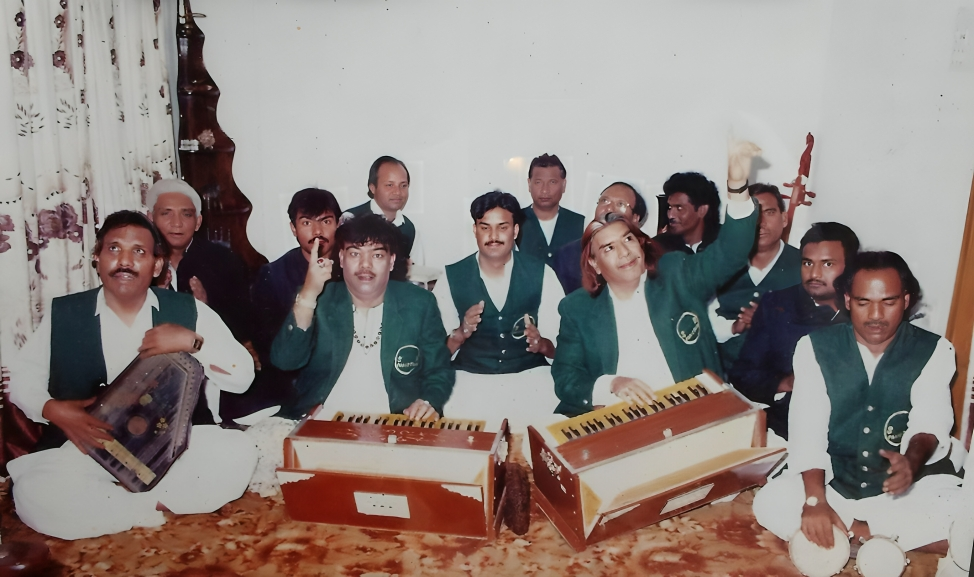
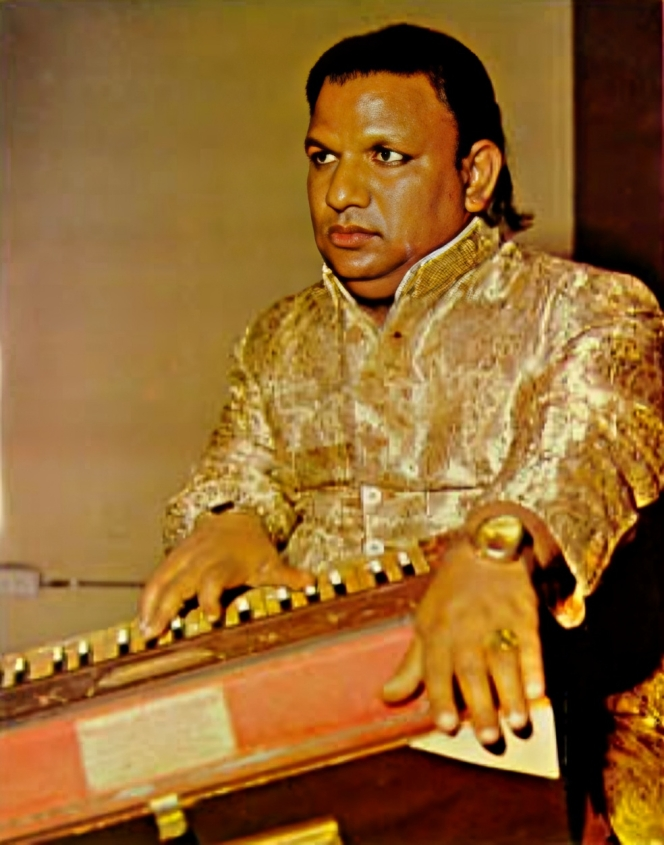
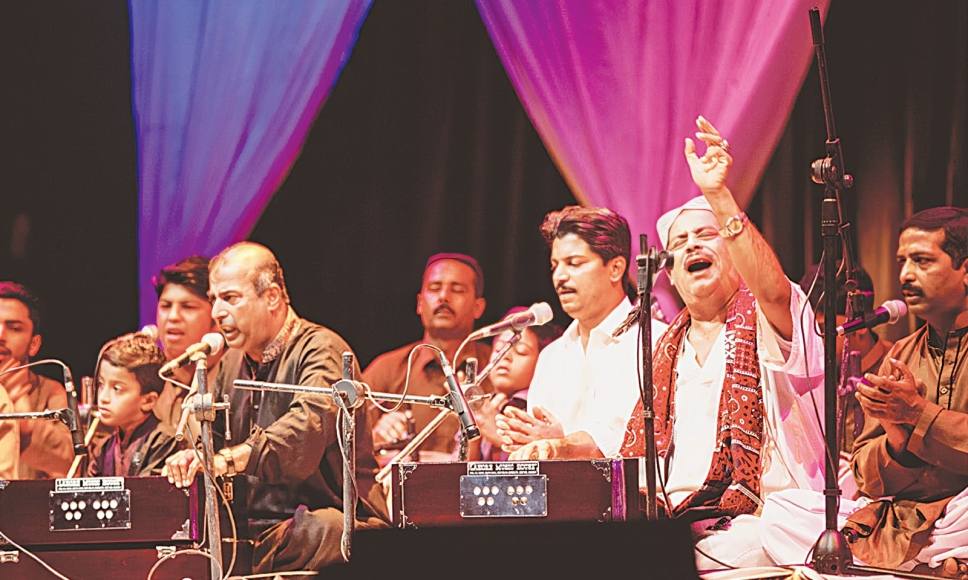
Qawwali is not a solo art—it is essentially a deeply collective experience where multiple voices and essences blend to create a singular musical universe. Although there is a lead singer, the entire group effectively transforms into a single living organism. This group is called a ‘Qawwal Party’, and its members are known as ‘Humsava’ (or Hamanwa)—meaning those who share the same melody, the same emotion and the same spiritual journey. A Qawwali party typically consists of 8 to 10 members, but its true strength lies not in numbers—but in their mutual understanding, spontaneous dialogue and their ability to move together within the melody.
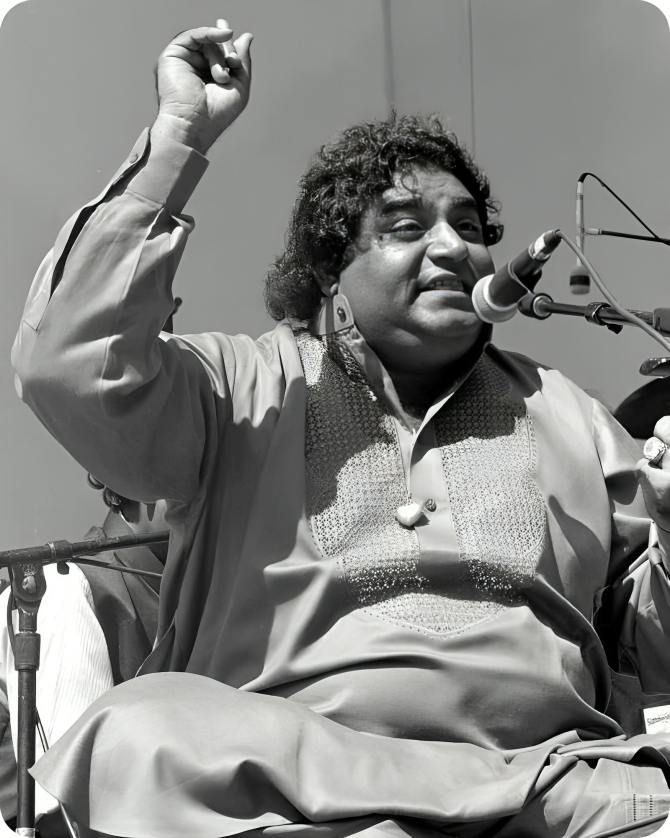
At the center of this group sits the lead Qawwal, who does not merely start the song—he directs the entire performance. The first note rises from his throat, the atmosphere of the raga takes shape under his guidance, and he gradually steers the entire troupe towards a specific emotion. He is never just a singer—he is a storyteller, a poet, a devotee or a lover; his persona shifts according to the emotion of the moment. Often, he improvises new poetry or couplets on the spot, which can steer the performance in an entirely new direction. This spontaneous creativity and adaptability to mood is a hallmark of Qawwali.
The co-singers sitting on either side of the lead Qawwal are the echoes of this musical universe. They do not just follow; they provide power and expanse to the core melody. They repeat the same lines, create musical dialogues with the lead voice, and multiply the emotional intensity. Through this call-and-response method, Qawwali steps out of being a one-way performance and becomes a living dialogue—where every voice completes the other.
The structure of this melody is firmly anchored by the harmonium. Placed in front of the lead singer, this instrument functions as the backbone of Qawwali’s melody. It stabilises the notes of the raga, assists the vocals, and occasionally creates its own melodic phrases to enrich the presentation. The continuous drone of the harmonium keeps the emotion of Qawwali in a constant flow, ensuring that the melody never drops.
In terms of rhythm, the tabla and dholak work in unison to create the heartbeat of Qawwali. The tabla brings precision, control and a flawless sense of tempo, while the dholak brings power, speed and a raw, earthy passion. Particularly, the open, thumping beats of the dholak create such an intensity in the final stages of Qawwali that it shakes the entire environment—as if the heartbeat is racing faster and faster.
This entire framework is kept alive by the clapping chorus—who keep the rhythm moving by clapping in unison. The clapping in Qawwali is not a mere cue; it is a collective force that binds the troupe and the audience into a single thread. This uninterrupted clapping gradually creates an atmosphere where the listeners unknowingly become participants. Before they realize it, they find themselves clapping along.
A Qawwali Mehfil (gathering) is a living experience. Imagine the open courtyard of a shrine (Dargah), a white sheet spread in the center, people sitting in rapt silence all around, and the Qawwals seated in a semi-circle upfront. First, a line is uttered in a slow melody—calm, restrained, like an invocation. Then, gradually, the voices of the co-singers join in, the clapping begins, the subtle touch of the tabla arrives. Slowly, the notes ascend, the rhythm quickens, and the repetition of words increases. Eventually, the vocals, tabla, clapping and raw emotion fuse together to create an extraordinary wave of melody.
Right at that moment, someone closes their eyes, someone sways their head, and someone might fail to hold back their tears. For then, Qawwali ceases to be merely music—it becomes a torrent of feeling, where a song is not just heard, but deeply experienced.
Performance Tradition: The Phases of a Spiritual Journey
Qawwali is not a random performance; it is a well-structured, step-by-step spiritual journey—a Ruhani Safar (spiritual voyage), where each level guides the listener slightly deeper into emotion. A full-fledged Qawwali gathering has its own sequence, which is essential not just for musical discipline, but for the continuity of the spiritual experience. This sequence is rarely broken, because each stage is a doorway through which one must pass to arrive at the final moment of union.
This journey commences with the Hamd—the praise and glorification of Allah. It is performed in a highly slow, restrained and deeply emotional manner. There is no excess of ornamentation, no showmanship—only unconditional surrender. It is as if the voice says, “We are nothing, You are everything.” This section lays the foundation of the entire gathering. The listener’s mind gradually settles, moving away from external noise to focus inward. It is a preparation—opening oneself up for what is to be felt next.
Next comes the Naat—a song dedicated to the praise of the Prophet Muhammad (PBUH). Here, a softness and sweetness enter the melody, creating a subtle atmosphere of devotion and love. Humility resonates in the voice, and reverence fills the words. In this part, the singer’s emotion often becomes so tender that it silently enters the listener’s heart. Here, Qawwali behaves like an offering—loving, respectful and deeply personal.
Following this, the performance enters the Manqabat phase—where praises of Sufi saints, dervishes or the Ahle Bait (the Prophet’s family) are sung. Qawwalis sung in honor of Hazrat Ali (RA) are particularly popular in this section. Here, the melody picks up speed, and deep loyalty and a sense of spiritual connection join the emotion. The listener begins to feel that they are not alone—they are part of a lineage, part of a grand tradition. A collective consciousness forms in this phase, where the individual self slowly links with a larger collective soul.
Then, Qawwali arrives at its most poetic tier—the Ghazal. Here, love is spoken of, but never directly; instead, it is hidden behind metaphors. Words like ‘Sharab’ (wine), ‘Saqi’ (cupbearer), and ‘Mehfil’ (gathering) are used here not in their literal sense, but as profound spiritual symbols. Song transforms into poetry, and poetry becomes philosophy. In this segment, the Qawwal often improvises couplets (Shayeri) on the spot, altering the speed and direction of the song based on the audience’s reaction. Consequently, it ceases to be a one-way performance—it becomes a living dialogue between the artist and the listener.
Finally comes the Rang—the ultimate and supreme moment of a Qawwali gathering. Traditionally, it concludes with Amir Khusrau’s famous couplet, “Aaj Rang Hai Re Maa…” (Today there is a vibrant hue, O mother…). This is a song of joy, of union, of self-annihilation. At this stage, the tempo reaches its absolute fastest, the intensity of the tabla and clapping peaks, and ecstasy and frenzy erupt in the vocals. The listener and the artist are both swept away in the same current, where ‘I’ or ‘You’ no longer exist as separate entities.
At this exact moment, Qawwali is no longer just music—it becomes a festival, a union, a supreme experience where melody, emotion and soul become one.
The Gharanas and Lineage of Qawwali: The Inheritance of Melody
Qawwali is an invaluable trust, a living heritage passed carefully from master to disciple over centuries. Education in this tradition means more than learning a tune or a beat; it means imbibing an entire worldview—where music, etiquette, devotion and spirituality are intertwined. Thus, the lineage of Qawwali is not confined to technical training; it is a profound human and spiritual inheritance, transmitted from generation to generation through feeling.
This continuous educational system is known as the Guru-Shishya Parampara (master-disciple tradition). Here, the disciple does not merely learn notes or ragas; he learns the modulation of the voice, the dignity of words, how to build a rapport with the audience, and above all—how to elevate music to the level of worship. Through this prolonged dedication and practice, various Gharanas (schools of music) or singing styles evolved over time, each possessing its own vocal movements, sense of tempo and mode of interpretation.
The oldest and purest lineage recognized in Qawwali history is the ‘Qawwal Bachhon Ka Gharana’, which primarily flourished around Delhi. This school was initiated by the great Sufi musician, Hazrat Amir Khusrau (RA). According to popular lore, he trained twelve chosen disciples in this specific style of singing, and the seeds of this tradition were sown through them. A strong foundation in classical music, intricate Tans (rapid melodic vocal patterns), flawless pitch modulation, clarity of diction, and deep loyalty to the raga are highly prominent in this Gharana. Here, Qawwali is not just an emotional outburst, but a flawless and disciplined musical practice. One of the brightest icons of this stream was Ustad Tanras Khan, who blended the gravity of classical music with the emotion of Qawwali to reach unparalleled heights.
As Qawwali began expanding into different regions over time, it absorbed the influences of local musical traditions and took on new forms. This gave birth to the Gwalior and Khurja Gharanas, where a beautiful synthesis of Qawwali and Khayal singing is observed. In these schools, immense emphasis is laid upon Tan, Layakari (rhythmic virtuosity), and note expansion. Consequently, Qawwali becomes somewhat more technical and classical here, where artists showcase their musical knowledge and mastery. Alongside emotion, technique holds equal weight here.
On the other hand, in the Punjab and Kasur regions, Qawwali assumed a different character—more powerful, more direct and intensely emotional. The influence of folk music is obvious here, coupled with high-pitched vocal projections and the intensity of a fast tempo. In this stream, Qawwali resembles an explosion of energy—every note strikes the heart directly. Among the greatest representatives of this school, the names of Ustad Nusrat Fateh Ali Khan and Fateh Ali Khan are particularly notable. In their style, Qawwali became a colossal, untamed and deeply felt experience.
Another crucial stream is the Sabri Gharana, renowned particularly for its solemnity and spiritual depth. Under the vocals of Ghulam Farid Sabri and Maqbool Ahmed Sabri, this school attained unique dignity. Their singing carried a heavy, deep tone, a slow and controlled presentation, and an extraordinary mastery over the rendition of Qaul and Manqabat. Their performance of “Tajdar-e-Haram” echoes in the minds of listeners to this day, not merely as a song, but as a genuine spiritual experience.
Across all these Gharanas, one aspect remains uniform—the significance of lineage. Learning Qawwali does not mean merely mastering a melody or rhythm; it means adopting a way of life. A disciple learns when and how to sing, which words to deploy where, how to read the audience’s mind, and most importantly—how to elevate music to a tool for spiritual realization. For this reason, Qawwali is not just a musical education; it is a long spiritual journey, where a history of centuries of dedication and feeling is hidden inside every note.
Qawwali in the Modern Era: From Shrines to the Global Stage
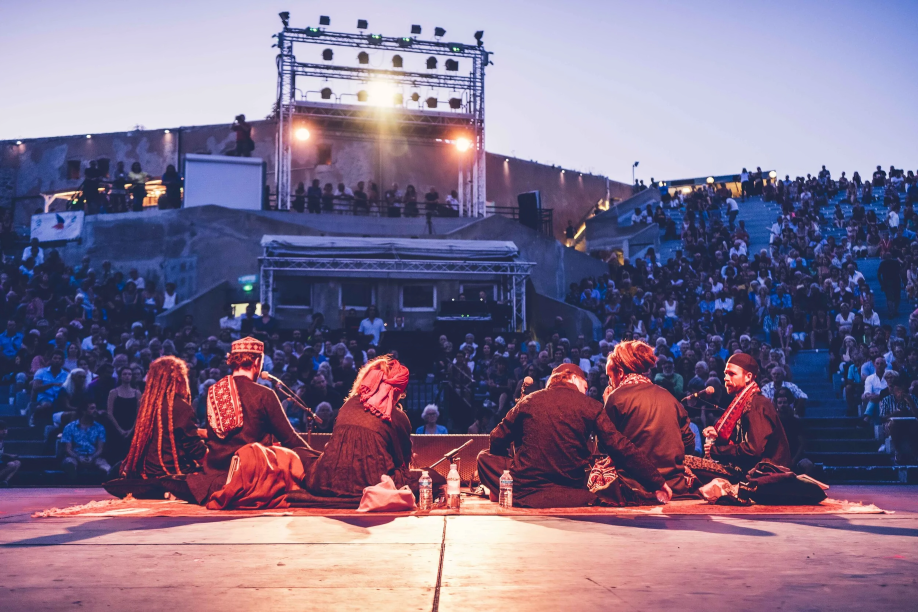
Once, Qawwali was primarily confined within the boundaries of Dargahs, Khanqahs (Sufi hospices), or spiritual gatherings—a music of a specific arena and intent. There, it served as a spiritual discipline, worship and internal purification. However, arriving in the twentieth century, this melody slowly crossed those boundaries to step into the wider world. The evolution of technology, the spread of recording mediums and international cultural exchanges brought Qawwali to the global stage. Along this journey, some extraordinary artists presented it in a new form and language while keeping the core essence of tradition intact.
At the forefront of this transformation stands the name of Ustad Nusrat Fateh Ali Khan. He was not merely a Qawwal—he was a revolutionary artist who firmly placed Qawwali on the map of world music. His voice possessed extraordinary power and range; he could perform continuous Tans, Sargams (solfège), and Boltans for long durations, immersing listeners in a deep trance. In his singing, the firm foundation of classical music, the depth of Sufi emotion and an explosion of sheer power met simultaneously. He liberated Qawwali from the geographical confines of South Asia and brought it into dialogue with Western musicians. His work with Peter Gabriel, in particular, established Qawwali within the realm of ‘World Music’. Tracks like “Allah Hoo”, “Dum Mast Qalandar”, and “Tu Kuja Man Kuja” continue to resonate across the globe, transcending barriers of language and culture.
Alongside Nusrat, the Sabri Brothers championed another vital stream of Qawwali. In the voices of Ghulam Farid Sabri and Maqbool Ahmed Sabri, Qawwali acquired a profound gravity and meditativeness. Their singing embodied restraint, balance and spiritual depth, taking Qawwali to an entirely different dimension. They demonstrated that Qawwali is not solely an explosion of energy; it is simultaneously an inward-looking and deeply reflective medium. Their rendition of “Tajdar-e-Haram” remains an immortal creation, sung and heard freshly across generations.
Over time, Qawwali became a part of popular culture, especially through cinema. Bollywood played an instrumental role in taking this genre to fresh audiences. By using the framework of Qawwali in film songs, a bridge was built where tradition met modernity. Later, artists like A.R. Rahman, Rahat Fateh Ali Khan, and Kailash Kher reinterpreted Qawwali. In compositions like “Kun Faya Kun” or “Arziyan”, Sufi philosophy, modern soundscapes and the tradition of Qawwali fused together to create a fresh, melodious listening experience.
Coke Studio has played a major role in the revival of Qawwali in the contemporary era. Here, traditional Qawwali has been reimagined with the help of modern instruments and technology. Blending electric guitars, drums, bass and advanced sound design with the melodies of Qawwali, a new genre was born—Sufi Fusion. Yet despite these alterations, what remains noteworthy is that the core soul of Qawwali remains untouched. Though adorned in a modern outfit, its spiritual depth and emotional power have stayed unaltered.
Another significant shift in Qawwali during this era is the active participation of women. While Qawwali was traditionally male-dominated, this landscape has begun to change in modern times. Artists like Abida Parveen have taken Sufi music to unique heights. Her voice blends depth, power and spiritual fire, touching listeners deeply. She has proven that Sufi music is not bound by gender; it is the language of the soul, applicable equally to all human beings.
In summary, it can be said that while the exterior of Qawwali has evolved with the touch of modernity, its intrinsic essence remains unchanged. Today, Qawwali still speaks of love, speaks of the Creator, and attempts to fill the void within the human spirit. It is simultaneously a fusion of tradition and modernity—carrying the depth of the earth on one hand, and the expanse of the sky on the other. Within this duality lies the true beauty of Qawwali.
The Return of the Soul into Melody
Ultimately, Qawwali is not restricted to a specific musical genre; it is a deep feeling, a long internal pilgrimage, a silent yet intense dialogue—between a human and themselves, and through that self, with the Creator. Here, the melody is not just heard; it gradually seeps into a person, touching and awakening their unseen, unexpressed and quietest emotions.
Along this path, Qawwali guides us through a unique experience—beginning with humility, moving to reverence, from reverence to love, from love to self-dissolution, and finally delivering us to an extraordinary sense of union. These phases are not mere musical structures; they are layers of the human heart, unfolded one by one. For this reason, listening to Qawwali does not mean merely hearing a song, but discovering oneself anew.
Qawwali teaches us a vital truth—the true power of music lies not in its technical virtuosity, but in its intent. When a melody is holy, when it contains genuine feeling within, it breaks through religion, language, culture or geographical boundaries to reach human hearts directly. Sitting in a Qawwali gathering, you might not even realize when you transformed from a silent listener into an active participant. When your hands began clapping on their own, or when your eyes grew moist without warning—this invisible transformation is the true success of Qawwali.
An inquiry always operates within humans—a deep thirst to gain something, to understand something, to reach someone. Qawwali becomes a companion to that eternal search. It reminds us that we are not alone; our emotions, our love, our longings—are all part of a grander existence. And connecting with that grander essence is possible—not through words, not through logic, but through melody.
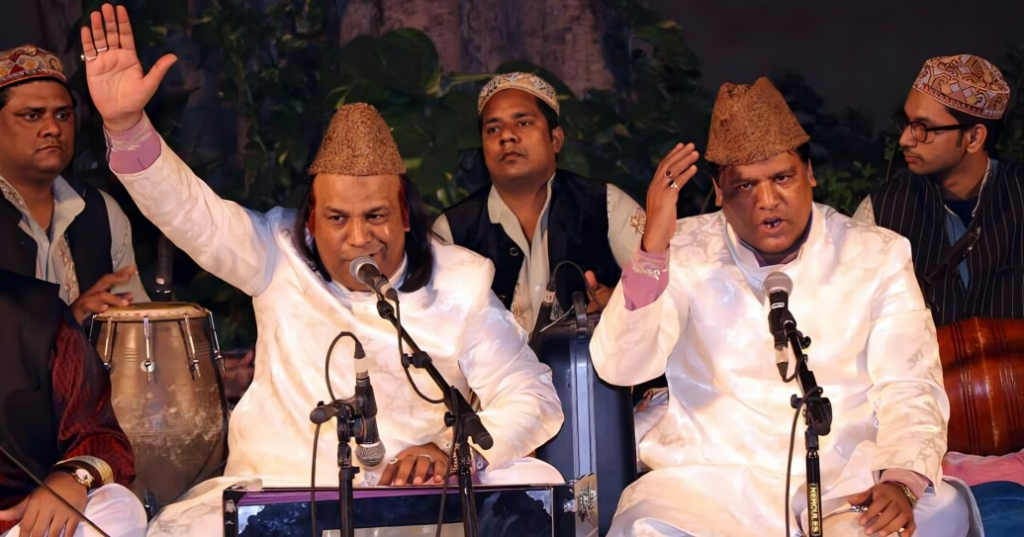
A great deal has changed with the passage of time—shifting from royal courts to modern stages, from ancient communes to digital studios. Yet the clapping of Qawwali, the rhythm of the tabla, and that intrinsic cry of the voice remain unaltered to this day. Even today, when Qawwali begins in the courtyard of a shrine, on a concert stage, or in a recording studio, people pause—not just to listen, but to feel. Because Qawwali speaks to humans in that language which belongs not to words—but to the soul.
Arriving at this stage of ‘Oshurer Suralok Jatra Series’, we can reach the conclusion that music achieves fulfillment only when it reaches not just the ears, but the soul. And as long as love resides in the human heart, and as long as humans seek their Creator, this melody of Qawwali, this clapping, this eternal resonance—will continue to echo uninterrupted.
See Also: