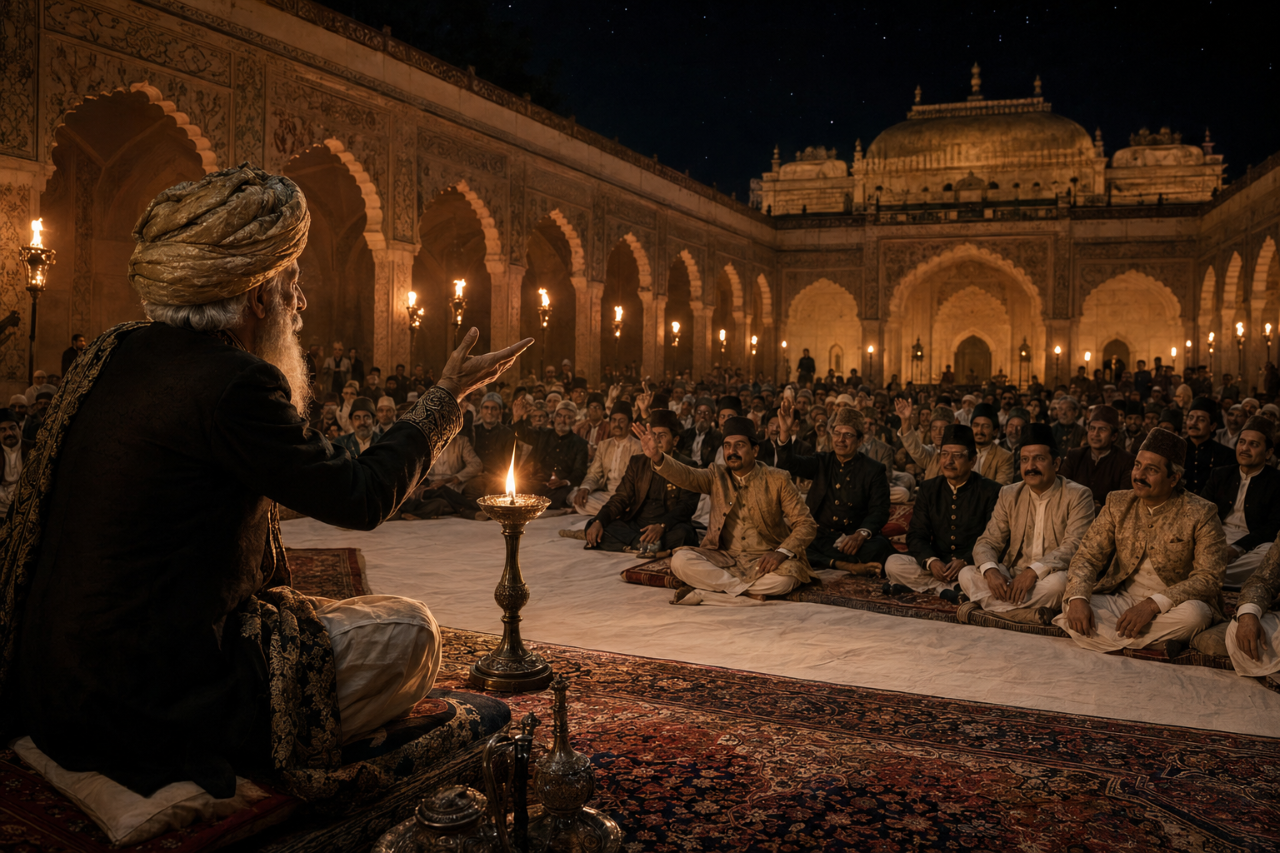
Today, Oshurer Suralok Jatra Series series turns its attention to the Ghazal. Let us begin by addressing a fundamental question: what exactly is a Ghazal?
From our childhood, we have conventionally been led to believe that religious songs, such as the Hamd or Na’at, are Ghazals. But is that truly the case?
Table of Contents
The Ghazal
In its purest sense, a Ghazal is a form of poetry. More precisely, it is a collection of rhyming couplets. When these poems were infused with melody and performed, the musical rendition itself came to be known as a Ghazal.

The Birth of the Ghazal
The Ghazal did not originate in its current form. In ancient Arabia, poets used to compose long panegyric poems called Qasida, which were written to praise a king or a clan. As an introduction to these lengthy poems, poets would reminisce about their beloved or lament their lost youth. This introductory segment was called Tashbib.
Over time, this romantic prelude detached itself from the main poem. It evolved into an independent literary form. In Arabic, this new form was called ‘Ghazal’, a word that literally translates to ‘conversing with women’ or ‘the talk of love’.
When the Arabic Ghazal traveled to Persia (modern-day Iran), Persian poets elevated it to an extraordinary height. To worldly romance, they seamlessly introduced Sufism and divine love. Within this realm, sharab (wine) became a symbol for divine wisdom, and the saqi (the wine-bearer) represented the Creator or the spiritual guide. The legendary Persian poets of this era included Hafez Shirazi, Sheikh Saadi, Rumi, and Omar Khayyam.
During the Sultanate and Mughal eras, the Persian Ghazal arrived in the Indian subcontinent. Amir Khusrau, who lived in the 13th century, is widely regarded as the Father of the Indian Ghazal. He began writing and singing Ghazals by blending Persian with the local Braj Bhasha dialect. Later, Wali Dakkani became the first to bring Urdu Ghazals from South India to the courts of Delhi. Subsequently, Delhi and Lucknow became the primary epicentres of the craft. It was through the mastery of legendary figures like Mir Taqi Mir and Mirza Ghalib that the Urdu Ghazal attained its ultimate literary perfection.
The Fundamental Mechanics of a Ghazal
Misra
An Urdu Ghazal is generally composed of two-line verses. Each line is called a Misra. Fascinatingly, each Sher (a couplet made of two lines) stands as an independent poem. It may or may not share any thematic connection with the couplet preceding it. The rhythm, meter, and overall technicalities differ somewhat from conventional Bengali poetry. Let us examine two lines by Mirza Ghalib to understand this better:
“Dil-e-naadan tujhe hua kya hai, > Aakhir is dard ki dawa kya hai”
Radif and Qafiya
At the end of these lines, the repetition of “kya hai, kya hai” helps establish the rhythm. These repeating words at the very end are known as the Radif. Conversely, the primary rhyming words that change with each couplet—such as “hua” and “dawa”—are called the Qafiya.
Matla
The very first couplet of a Ghazal is meticulously rhymed in both lines. This opening verse is called the Matla. It serves as the foundation of the entire Ghazal. The subsequent verses follow the same meter and Radif established here.
Maqta
The final couplet of a Ghazal is called the Maqta. In this verse, the poet traditionally introduces his name or pen name (takhallis).
Diwan
A complete volume or anthology of Ghazals by a single poet is known as a Diwan. For a general appreciation of the art, understanding these basic technical terms is quite sufficient.
Advanced Technical Elements
The following four elements bring structural completeness to a Ghazal:
1. Bahr (Meter)
The most challenging aspect of Ghazal grammar is the Bahr or meter. Every single Sher within a Ghazal must strictly adhere to the same Bahr (the exact same rhythmic structure and syllable count). If the syllable weight of any line varies, it is deemed Kharij-az-Bahr (out of meter) in Urdu, and the composition is disqualified as a valid Ghazal.
2. Husn-e-Matla
Occasionally, a poet uses the rhyming pattern of the Qafiya and Radif in both lines of the second couplet, immediately following the opening Matla. This second, beautifully crafted couplet is known as the Husn-e-Matla or Zeb-e-Matla. For example:
“Hum hain mushtaaq aur woh bezaar,
Ya ilaahi yeh maajra kya hai?”
(Note how the rhyme scheme is maintained in both lines of this second verse. Because it follows the first verse immediately and mirrors its exact structure, it is crowned the Husn-e-Matla.)
3. Classifications Based on Rhyming Structure
- Muraddaf Ghazal: A Ghazal that features both a Qafiya and a Radif (such as the previously mentioned verse by Ghalib).
- Ghair-Muraddaf Ghazal: A Ghazal that dispenses with the Radif entirely. Here, each Sher concludes solely with the Qafiya (the rhyming word). For example:
“Hazaaron khwaahishen aisi ke har khwaahish pe dam nikle,
Bahut nikle mere armaan lekin phir bhi kam nikle.”
Notice that no fixed word or phrase (like hai, tha, or kya hai) repeats strictly at the very end of every couplet. Instead, both lines conclude with the word “nikle”. Is “nikle” a Radif here? No. This is because the core rhyme or Qafiya (seen in dam and kam) is embedded right within the word, or the word itself functions as the primary rhyming element.
4. Stanza-Based Classifications (Band)
In Urdu shayeri, every stanza is referred to as a Band. These structural formats are named based on the number of lines contained within each stanza. While a pure Ghazal is invariably composed of two-line couplets (Sher), variations like the Musallas or Murabba are predominantly found in Nazms or other poetic genres.
-
Sher: A stanza consisting of exactly two lines. This is the format we most commonly encounter.
-
Musallas: Derived from the Arabic word Salasa (meaning three). When each stanza of a poem is composed of a three-line structure, it is called a Musallas. This format is quite rare in Urdu literature. The famous poet Nazeer Akbarabadi, who wrote about the lives of ordinary people, composed a few Musallas stanzas. For instance:
Aa gayi maut jawani mein to rona kya hai? (Line 1)
So rahe din ko to raat ko sona kya hai? (Line 2)
Khaali haath aaye to duniya se lena kya hai? (Line 3)
-
Murabba: Derived from the Arabic word Arba (meaning four). This is a poetic structure where each stanza contains four lines. Let us observe the composition of a Murabba stanza by Mirza Ghalib:
Line 1: Mujhse kyahoote hain ki tera dard hai dast-e-khizan,
Line 2: Teri furqat mein gaye kya kya tufan-e-ziyan,
Line 3: Aaye mere lakht-e-jigar tu hai kahan ab tu kahan,
Line 4: Yeh to kyah de ki yeh kis kis ke hain naam o nishan.
Here, the Qafiya (khizan, ziyan, kahan, nishan) rhymes across the end of all four lines. When a poem progresses through such four-line stanzas, each functioning as a self-contained unit, it is known as a Murabba poem.
-
Mukhammas: A poetic structure where each stanza comprises five lines. It is highly popular in Urdu literature and is traditionally used for composing Nazms or elegies (Marsiya). A prime example is Nazeer Akbarabadi’s Aadmi Nama (The Tale of Man). A stanza from it reads:
1. Duniya mein padishah hai so hai woh bhi aadmi
2. Aur muflis-o-gada hai so hai woh bhi aadmi
3. Zardar-o-benawa hai so hai woh bhi aadmi
4. Ne’mat jo kha raha hai so hai woh bhi aadmi
5. Tukde jo chaba raha hai so hai woh bhi aadmi
According to the rules of Mukhammas, all five lines of the opening stanza must share the same rhyme scheme. Here, “aadmi” serves as the Radif at the end of each line, preceded by changing Qafiyas. Through this structure, the poet conveys a profound philosophical truth—the king of this world is a human, and so is the penniless beggar; the wealthy man is a human, and so is the destitute soul chewing on discarded scraps of bread.
-
Musaddas (Six Lines): In a Musaddas, each stanza consists of six lines. This is an immensely popular medium in Urdu literature for long, narrative poetry or Nazms. Let us look at a famous stanza from Maulana Altaf Hussain Hali’s masterpiece, Musaddas-e-Hali:
1. Ghatta ek pas-e-manzar se uthi
2. Fasil-e-zamin jisne sab jaanke luti
3. Kabhi Dajla par di ek usne dastak
4. Kabhi shor iska pahuncha Ganga tak
5. Utarti hai niche jahan par woh nadi
6. Ujalti hai yun fasl-e-khudrow ki badi
The first four lines rhyme with one another (here split into two rhyming pairs: uthi/luti and dastak/tak, though in standard Musaddas, the first four lines often share a singular rhyme). The final two lines (the 5th and 6th) introduce a completely different rhyme scheme, concluding the stanza with a fresh rhythmic cadence. These concluding two lines are often referred to as the Bait.
The Musaddas structure is uniquely suited for historical epics and themes of national awakening. Maulana Hali used this very format to mirror the glorious past and the contemporary decline of Muslim society. Similarly, Allama Iqbal’s iconic poems Shikwa (The Complaint) and Jawab-e-Shikwa (The Answer to the Complaint) were penned in this six-line Musaddas style.
5. Thematic Classifications of the Ghazal
Beyond its technical grammar, a Ghazal is also categorised by its inner philosophy, emotion, and aesthetic focus:
- Ghazal-e-Musalsal: Generally, every Sher in a Ghazal is a self-contained unit of meaning. The first couplet might talk of romance, whilst the second ponders social justice or spirituality. However, when a Ghazal maintains a single, continuous narrative thread or an unbroken emotional arc from start to finish, it is termed a Ghazal-e-Musalsal. The thoughts are not scattered; they are beautifully strung together.
- Taghazzul: This is the very soul or ambient essence of a Ghazal. It represents that quintessential romantic atmosphere woven from traditional themes of love, the pangs of separation, total surrender, and the ethereal beauty of the beloved. Masters of the craft assert that a Ghazal’s grammar (Qafiya, Radif, Bahr) may be flawless, but if it lacks that raw emotion which stirs the listener’s heart, it is said: “It possesses everything, save for Taghazzul!”
- Ghazal-e-Arifana: A genre where the central focus is spiritualism or divine love (Sufi focus). In these verses, the ‘beloved’ is a direct metaphor for the Creator. Much of the work by Rumi or Amir Khusrau belongs to this spiritual stream.
- Siyasi, Inqilabi, and Iztemayi Ghazal: In the modern era, the scope of the Ghazal has expanded far beyond romance and heartbreak. When the rhythm of the Ghazal is used to vocalise social critique, political dissent, or contemporary crises (as seen in the works of Faiz Ahmed Faiz or Habib Jalib), it is classified as a modern or political Ghazal.
6. Ilm-e-Arooz: The Science of Prosody
This domain governs the mathematical and metrical aspects of the Ghazal.
- Arooz (Ilm-ul-Arooz): The foundational science or grammar that regulates rhythm and meter. It is equivalent to prosody in English poetry, dictating the rhythmic pace at which a poem flows.
- Taqti: The mathematical process of scansion or rhythmic analysis. It involves breaking down a line into metrical units, such as measuring syllables against patterns like ‘Fa’oolun—Fa’oolun—Fa’oolun’, to verify perfect pronunciation alignment.
- Arkan and Zihaf: Rukn (plural Arkan) represents the fundamental metrical foot. Zihaf refers to the grammatically permissible variations or poetic licences a poet may employ when fitting words into that foot—such as shortening or lightening the pronunciation of the first letter in the ‘Fa-ilun’ foot to suit the meter.
- Kharij-az-Bahr: A metrical disruption or rhythmic lapse. This occurs when an oversized word or an extra syllable inadvertently slips into a line, breaking the natural cadence and ruining the musical flow.
7. Technical Composition and Artistry
- Misra-e-Ula and Misra-e-Sani: These are the two indispensable phases of building a complete couplet (Sher). The first line is called the Misra-e-Ula (the foundation), and the second is the Misra-e-Sani (the resolution). The opening line typically builds curiosity or sets a dramatic scene, whilst the second line brings the thought to its full, breathtaking climax, striking the listener with surprise.
- Husn-e-Talab: A sophisticated poetic device used to express a desire or request with utmost humility. Instead of making a direct demand, the poet employs highly decorative and metaphoric language to convey their inner wish to their beloved or a patron. Known as the ‘beauty of request’, it uses the very style of supplication to showcase the poet’s immense scholarship and grace.
- Radd-e-Matla: A masterful technique where an element from the opening of the Ghazal is brought back at the very end to invoke a completely different meaning. Essentially, a word or a specific phrase used in the initial couplet (Matla) is reintroduced by the poet in the final couplet (Maqta). This brings the entire Ghazal full circle like a perfect ring, lending a fresh, evocative layer of meaning to that word in the finale.
8. Uyoob-e-Sukhan: Poetic Flaws and Pitfalls
These are the technical errors that accomplished poets diligently avoid, and masters (ustads) flag as Aib (defects).
- Shutur Gurba: An inconsistency in pronouns or modes of address within a single verse. For instance, addressing someone with the formal ‘Aap’ (You) in the first line of a couplet, and abruptly switching to the informal ‘Tum’ or intimate ‘Tu’ in the very next line. This is considered a grave error, as it shatters the solemn dignity and continuity of the poem. Imagine saying: “I seek refuge at Your noble feet” in line one, and following it with “I am madly in love with thee!” in line two.
- Ita: A weak form of rhyming that relies on repeating word suffixes rather than the root words themselves. This happens when the Qafiya is formed by words where only the grammatical extension matches. For example, using ‘Daana’ (wise) and ‘Beena’ (discerning); here, the actual Persian root words are ‘Daan’ and ‘Been’, artificially rhymed by merely tacking on the ‘aa’ suffix. Masters view this as a sign of weak, unrefined craftsmanship.
- Uyoob-e-Qafiya: Subtle technical flaws in matching the core rhyming sounds (such as Sanid and Iqta). This occurs when the primary vowel sound of the Qafiya shifts slightly. If you establish a rhyme using an ‘ee’ vowel sound in one verse, switching to an ‘oo’ or ‘aa’ sound in the next is deemed a metrical lapse. For example, you cannot rhyme ‘Dil’ with ‘Kal’ or ‘Phul’, because their underlying vowel sounds are inherently discordant.
- Qafiya-e-Mamoola: A forced or highly artificial rhyme. This happens when a poet awkwardly splits a root word or patches two unrelated words together just to force a rhyme with the Qafiya. It sounds as though the poet is desperately fighting the meter, making the composition feel completely contrived. For example, one must not invent an unnatural, meaningless word fragment just to force a rhyme with a legitimate word.
Key Differences Between a Qasida and a Ghazal
| Characteristic | Qasida | Ghazal |
| Length | Immensely long (frequently exceeding 100 lines). | Compact, typically spanning 5 to 15 or 17 couplets. |
| Core Theme | Flattery, praise, epic valour, or grand descriptions. | Love, the agony of separation, and deep spiritualism. |
| Style | Decidedly solemn, formal, and majestic. | Exceptionally tender, delicate, and lyrical. |
| Unity | The entire poem centers rigidly around a single subject. | Each couplet stands completely independent in meaning (save for Musalsal). |
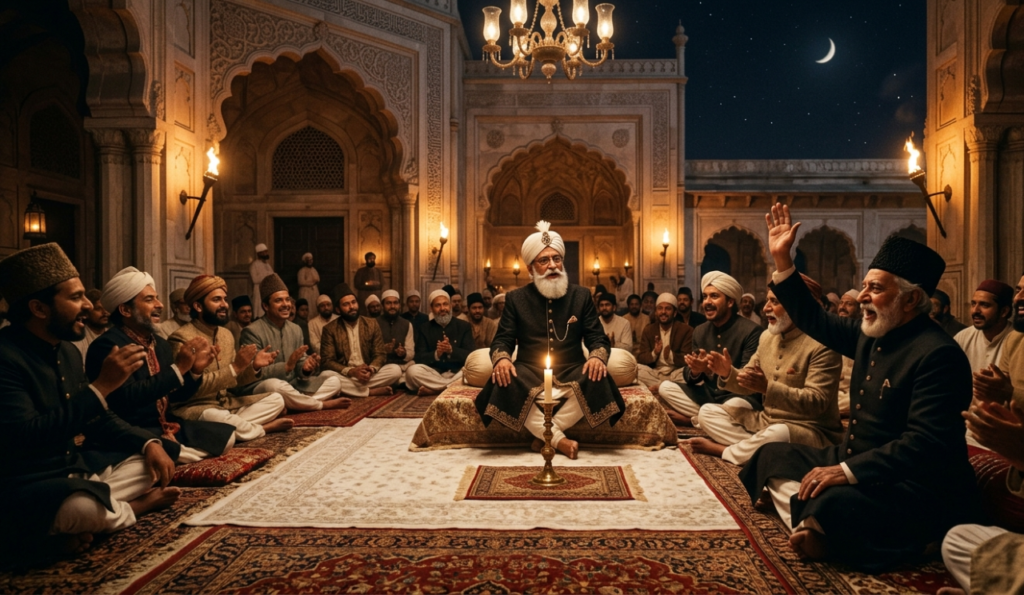
Ghazal Performance and the Etiquette of the Mushaira
The Ghazal is not merely a written medium; it is a powerful performance art. Traditionally, it is presented to an audience in three distinct vocal formats:
- Tarannum: Reciting a Ghazal without any musical accompaniment, relying solely on the inherent sweetness and melodic cadence of one’s own voice. Whilst there is a distinct melody, it does not sound like a conventional song; rather, it is a lyrical manifestation of the poem’s internal rhythm.
- Taht-ul-Lafz: Delivering a Ghazal in a rich, commanding speaking voice without any melody or musical rhythm. When a poet desires that the audience focus strictly on the philosophical depth of the words rather than the allure of a tune, they choose this method of pure recitation.
- Ghazal Gayaki: Performing the Ghazal as a full-fledged classical or semi-classical musical composition, backed by traditional instruments like the harmonium, tabla, and sarangi. Legends such as Jagjit Singh, Mehdi Hassan, and Ghulam Ali are the ultimate maestros of this celebrated tradition.
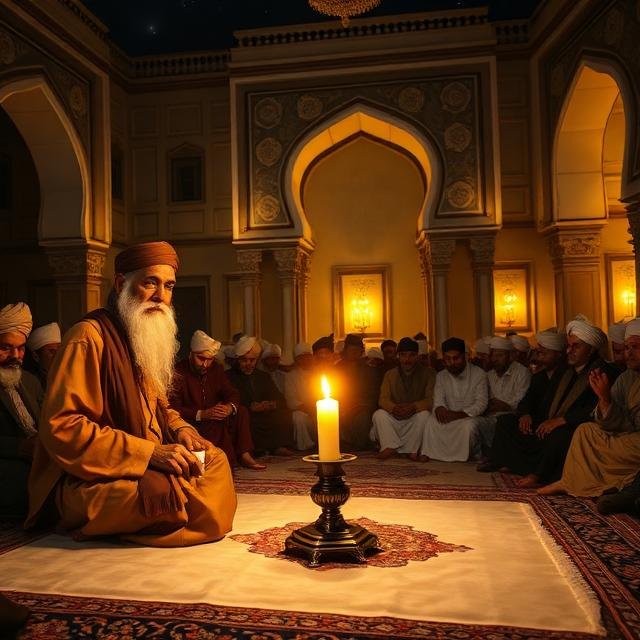
The Mushaira and Its Unique Code of Conduct (Adab)
Whilst most of us today discover Ghazals through digital recordings or musical albums, the authentic and timeless sanctuary for experiencing this art is the Mushaira (a formal gathering of poets). A Mushaira is far more than a poetry reading; it is a highly sophisticated cultural assembly governed by its own unwritten, yet fiercely protected rules of etiquette (Adab).
The Art of Offering Appreciation (Daad)
The active participation and vocal praise offered by the audience during a Mushaira is known as giving Daad. Those who fail to offer Daad correctly are often viewed by polite society as amateurish or uncultured (be-adab).
- Applause is Strictly Forbidden: The most vital rule of a Mushaira is that clapping is absolutely prohibited. In this artistic culture, clapping signals that you are asking the poet to leave the stage or wrap up their poem. It is looked upon as a profound insult to the poet.
- The Language of Praise: Upon hearing an exceptional couplet, the audience expresses its delight and encouragement by calling out phrases like “Wah! Wah!”, “Subhanallah!”, “Marhaba!”, or “Jeete Raho!” (May you live long). Deeper emotional resonance is often voiced with a heartfelt “Ah!” or “Hai Hai!”.
- Requesting a Recital: If a particular verse deeply touches the heart, members of the audience will call out “Mukarrar!” (Once more!) with conviction, politely requesting the poet to recite that specific couplet again.
- The Role of the Compère: The lifeblood of any Mushaira is the Nazim (the compère or host). It is their sole prerogative to decide when each poet takes the stage, and the responsibility of maintaining the dignity and decorum of the evening rests entirely upon their shoulders.
To attend a Mushaira is to step into an ancient, living heritage. Offering Daad at the precise moment, using the correct words, is the ultimate reflection of your own refined taste and poetic sensibility.
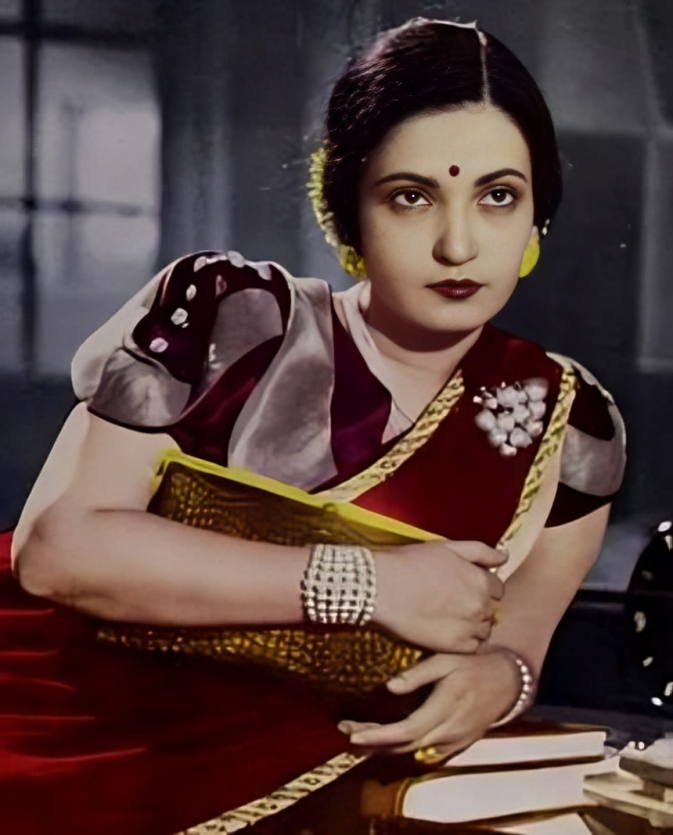
The Tradition of Singing the Ghazal
In the early days, there was no custom of singing pre-composed Ghazals. The traditional practice required the vocalist to spend significant time alone with the text, absorbing its emotional depth. When performing, the singer would select a Raga (melodic framework) and a Taal (rhythmic cycle) that perfectly mirrored the mood of the poem, letting the melody flow spontaneously from the heart in that very moment.
When the legendary Ustad Mehdi Hassan Khan first began singing for the radio, he would carefully compose his Ghazals beforehand as a safety measure. One day, his father, Ustad Azim Khan, called him in to ask how he was performing. Upon hearing that Mehdi Hassan was pre-composing the tracks, his father was thoroughly displeased. Mehdi Hassan explained that a mistake on air could cost him his job, hence his caution. The grand maestro retorted: “If you are merely going to sing pre-composed tunes, what was the point of our family learning music for so many generations?”
Eventually, father and son struck a compromise. Out of every three Ghazals, Mehdi Hassan could pre-compose one for safety, but the remaining two had to be sung entirely on impulse, drawing from whatever melody and rhythm struck his heart on the spot.
Many of Ustad Mehdi Hassan’s finest, most timeless Ghazals are those where the very first melody he struck during a live recording session became the definitive version. On several occasions, he would receive a poem a mere half-hour before going live, strike a spontaneous tune on his first attempt, and that single take would become the final, legendary master track.
Whilst a vocalist usually holds onto a melody if it resonates well during the initial performance, the true essence of singing a Ghazal lies in improvising and revealing a slightly different shade of meaning with each rendition. Singing a Ghazal the exact same way every single time causes the connoisseur audience to lose interest.
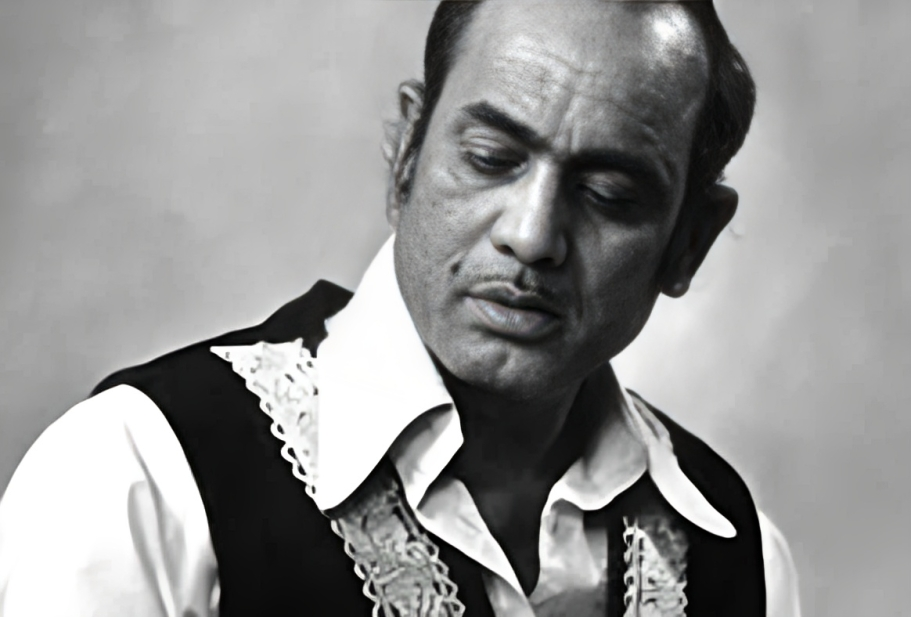
Primary Singing Styles (Gayaki)
Historically, the vocal performance of the Ghazal is divided into two major schools:
- The Classical Style: This genre embeds the Ghazal deeply within classical ragas, borrowing techniques from Thumri, Dadra, or Tappa. It prioritises the pristine purity of the Raga and features elaborate classical improvisations (tan-vistar). Key Proponents: Ustad Barkat Ali Khan, Begum Akhtar, Ustad Amanat Ali Khan.
- The Semi-Classical / Modern Style: In the mid-20th century, a musical revolution swept through the genre, spearheaded by Mehdi Hassan and Ghulam Ali. Whilst strictly respecting the grammar of the ragas, they simplified the melodies, making them sweet, smooth, and accessible to the lay listener. This became known as Sugam Sangeet or light classical Ghazal singing. Later, Jagjit Singh introduced a heavier array of Western instruments, taking the Ghazal to a whole new dimension and bringing it directly into the living rooms of modern households.
Crucial Vocal Elements and Mechanics
When performing a Ghazal, a vocalist must flawlessly command the following technical facets:
- Lafz aur Talaffuz (Articulating the Text): The golden rule of the Ghazal is that the poetry must always eclipse the melody. Unlike genres like Khayal or Tarana, where the words often dissolve beneath the sheer power of the vocals, doing so in a Ghazal is an artistic sin. The pronunciation of every Urdu or Persian syllable (such as the sharp distinction between ‘Kh’ and ‘Kha’, or ‘Z’ and ‘Za’) must be absolutely immaculate.
- Tarannum: Frequently heard at the beginning of a musical performance or during a poetry assembly, this is when a shayer or singer recites the verses in a beautifully modulated, unaccompanied chant before the instruments kick in.
- Girah Bandi (Knotting the Verses): This is considered an extraordinarily high order of vocal showmanship. While performing, the vocalist seamlessly weaves a relevant couplet or line from an entirely different poet into the middle of the song—ensuring it matches the core theme perfectly—before smoothly gliding back into the original melody.
- Meend and Murki: Grand, aggressive vocal gymnastics (tans) are discouraged in Ghazals. Instead, singers rely on delicate Murkis (swift, subtle turns of the note) and Meends (a smooth, unbroken slide from one note to another). This infuses the performance with a sense of suppressed weeping and profound emotional vulnerability.
Rhythm and Instruments
Preferred Rhythmic Cycles (Taal):
Ghazals employ slow, gentle, and melodic rhythms that never overpower the meaning of the words.
- Kaharva Taal (8 Beats): The most widely loved and popular rhythm used in Ghazals.
- Roopak Taal (7 Beats): Typically chosen for solemn, melancholy, and grief-stricken verses.
- Dadra Taal (6 Beats): Used for briskly paced, lighter, or playful Ghazals.
The Role of Instruments:
Instruments in a Ghazal function like a quiet shadow behind the vocalist; they must never drown out the human voice.
- Harmonium and Sarangi: Used to catch and sustain the lingering resonance of the vocals.
- Tabla: Played softly to provide a gentle, rhythmic heartbeat to the track.
- Santoor, Sitar, or Guitar: Deployed in modern arrangements to craft ambient textures.
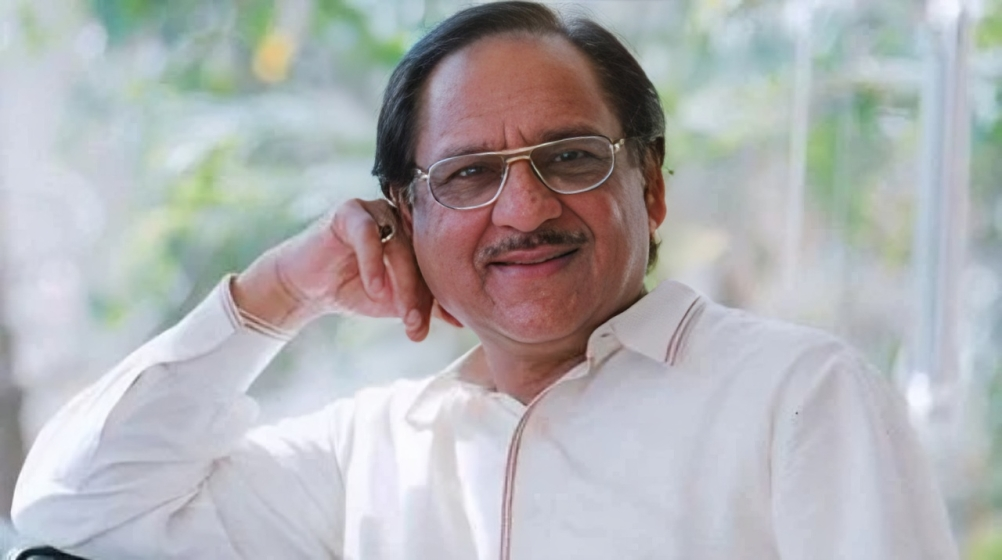
The Four Great Ghazal Singing Gharanas of the Subcontinent
In the realm of vocal performance, four legendary icons pioneered four distinct musical movements:
- Begum Akhtar (The Lucknow and Poorab Ang): Her voice carried a melancholic fusion of courtly elegance and raw Thumri pathos. She is immortalised as the ‘Mallika-e-Ghazal’ (The Queen of the Ghazal).
- Mehdi Hassan (The Rajasthani or Pure Classical School): Revered as the ‘Shahenshah-e-Ghazal’ (The Emperor of the Ghazal). His singing featured an extraordinary, velvet blend of flawless classical ragas and deep, resonant bass tones.
- Ghulam Ali (The Punjabi and Classical Playful Style): Famed for his rapid-fire Murkis and spirited Thumri inflections. His live performances are celebrated for his exhilarating impromptu duels (sawal-jawab) and rhythmic play (layakari) with the tabla player.
- Jagjit Singh (The Modern and Introspective School): He revolutionized the art by introducing Western string instruments like the acoustic guitar and violin. With his warm, rich baritone and deeply emotive, simplified melodies, he successfully brought the Ghazal out of aristocratic salons and straight to the masses.
My Preferred Poets of the Ghazal:
- Mir Taqi Mir
- Mirza Ghalib
- Miyan Momin
- Sahir Ludhianvi
- Ahmad Faraj (Syed Ahmed Shah)
- Hafeez Hoshiarpuri
- Sagar Siddiqui
- Dagh Dehlvi (Nawab Mirza Khan)
- Bahadur Shah Zafar
*Note: I have not curated this list of my favourite shayers solely on the basis of their objective literary stature, but rather because their verses sound exceptionally beautiful when performed as musical Ghazals.
My Preferred Ghazal Vocalists:
- Begum Akhtar
- Ustad Amanat Ali Khan
- Ustad Mehdi Hassan (Shahenshah-e-Ghazal)
- Ejaz Hussain Hazarvi
- Ghulam Ali
- Jagjit Singh
References:
A complete list of references containing the famous books, ancient poetry collections, and reliable websites from which the information in this article was gathered is provided below:
- Diwan-e-Ghalib: The original ghazal collection of Mirza Asadullah Khan Ghalib (the two couplets used in the article, “Dil-e-nadaan tujhe hua kiya hai” and “Hazaaron khwaashein aisi…”, are taken from here).
- Kulliyat-e-Mir: The collected ghazals and poems of Mir Taqi Mir.
- Musaddas-e-Hali: The famous long poem composed by Maulana Altaf Hussain Hali, which is quoted in the Musaddas (six-line stanza) section of the article.
- Kulliyat-e-Nazir: The complete works of Nazir Akbarabadi, from which the examples of ‘Adatnama’ (the Mukhammas stanza) and Musallas are sourced.
- Shikwa & Jawwab-e-Shikwa: A poetic work composed by Allama Iqbal following the Musaddas structure.
- “Ab-e-Hayat” – Maulana Muhammad Hussain Azad: The most reliable book on the history of Urdu literature, the eras of Wali Dakkani, Mir, and Ghalib, and the evolution of the ghazal.
- “Urdu Poetics and Christopher Shackle’s Ismaili Studies” / “Al-Arooz”: Grammar books by Dr Farman Fatehputi or Gyan Chand Jain, essential for understanding the prosody of Urdu poetry, namely ‘Ilm-ul-Arooz’, ‘Taqti’, ‘Radif-Qafiya’, and ‘Bahr’.
- “Ghazal: Urdu Ghazal Ke Pachas Saal” – Shamsur Rahman Faruqi: A modern research-based book on the taghazzul (poetic atmosphere), metaphors, and technical flaws (such as shutur gurba and ita) of the ghazal.
- “The Ghazal in Urdu: Its Origin and Development” – Ambika Charan Gupta.
- “Begum Akhtar: The Queen of Ghazal” – Sutapa Basu: The history of Begum Akhtar’s vocal style, the Lucknow school (gharana), and the performance of ghazals in the thumri style.
- “Mehdi Hasan: The Man and His Music” – Asif Noorani: A reference covering events from Ustad Mehdi Hassan’s radio career (his understanding with his father) and his experiences recording ghazals.
Websites:
- Rekhta – www.rekhta.org: The world’s largest online portal for Urdu literature. The original texts, Roman transliterations, and word meanings for all the couplets (shers) by Ghalib, Hali, and Nazir Akbarabadi in this article were verified here.
- Sufinama – www.sufinama.org: Used for interpreting the meanings of Ghazal-e-Arifana (mystical ghazals) and the works of Sufi poets (such as Amir Khusrow and Rumi).
- Music Gurukul – musicgoln.com: As noted by the author at the end of the article, parts or extended versions of this piece were written for Music Gurukul. This is an excellent source for exploring the melodic frameworks (ragas) of Indian classical music and ghazal singing.
- Kavita Kosh – www.kavitakosh.org: An open archive of poetry, nazms, and ghazal collections from the Indian subcontinent.
- EMI Pakistan Archives: Early ghazal recordings and interviews of Ustad Mehdi Hassan, Ustad Barkat Ali Khan, and Ghulam Ali (featuring discussions on live improvisation and composition).
- Doordarshan & PTV Archives: Video footage of Mushairas (poetic symposiums) from the 1980s, from which the etiquette of the Mushaira (such as refraining from clapping, offering praise [dad], and requesting repetitions [mukarrar]) was compiled.
See Also:
To delve further into this musical universe, you can read my accompanying articles on the Ghazal published over at Music Gurukul.