Have we ever calmly reflected upon this—can love for the very soil we stand on, the country that gives us our identity, truly be incompatible with our religious faith?
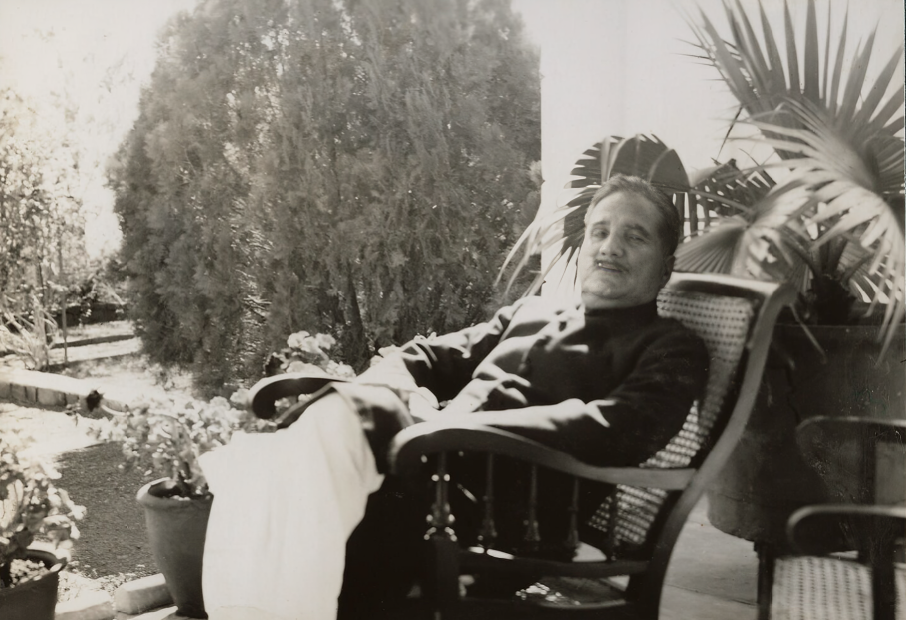
Over the last century, a specific political interpretation of Islam gained immense popularity across the Indian subcontinent and the Arab world. In this narrative, the “country” or the “nation-state” was presented as a new object of worship, a modern idol. This very sentiment was captured in the famous poetic lines of Allama Iqbal, who proclaimed that nationalism is the shroud of religion.
Urdu (Allama Iqbal):
In taza khudao mein bada sab se watan hai
Jo pairahan is ka hai, wo mazhab ka kafan hai
English Translation:
“Amongst these new gods, the ‘country’ or ‘state’ is the greatest,
The garment of this god is nothing but the shroud of religion!”
But when this ideology settles deep into a person’s psyche, it triggers a massive ideological conflict within their very identity. The way this “anti-nationalist” narrative was weaponised—from Maududi’s writings in the 1930s and ’40s right up to the Liberation War of 1971—remains a complex and dark chapter of history. If “patriotism” inherently equates to a religious deviance or shirk (idolatry), how can an ordinary Muslim ever be genuinely honest with their country? Or must they constantly maintain a social pretence against their own conscience?
This brings us to the ultimate question—is it truly possible for someone carrying such beliefs to ever be a genuine patriot?

Table of Contents
Iqbal’s Philosophy and Theoretical Exploitation
To find the true roots of this thought, we must look at Allama Iqbal’s poetry and the context surrounding his philosophy. A century ago, as the Ottoman Caliphate collapsed before everyone’s eyes and modern Turkey emerged under Mustafa Kemal Atatürk, the familiar geopolitical landscape of the Muslim world was turned upside down.
Deeply shaken by the loss of the Caliphate, many contemporary thinkers and ordinary people felt a profound sense of despair. In the midst of this crisis, Allama Iqbal began arguing through his poetry that patriotism tied to geographical borders was the greatest enemy to the unity of the Muslim Ummah.
By the mid-twentieth century, this laid the foundation for “Political Islam” or “Islamism”—an ideology that shifted religion away from personal spiritual and moral purification and transformed it entirely into a political doctrine aimed at seizing state power. To fully comprehend this, we need to examine its two core theoretical pillars:
1. Rejection of Geographical Nationalism
The core premise of this school of thought was that a Muslim’s identity cannot be confined within a specific country or geographical boundary. The borders we see on today’s maps—separating Bangladesh, India, or Pakistan—were viewed by them as artificial lines drawn by Western imperialism.
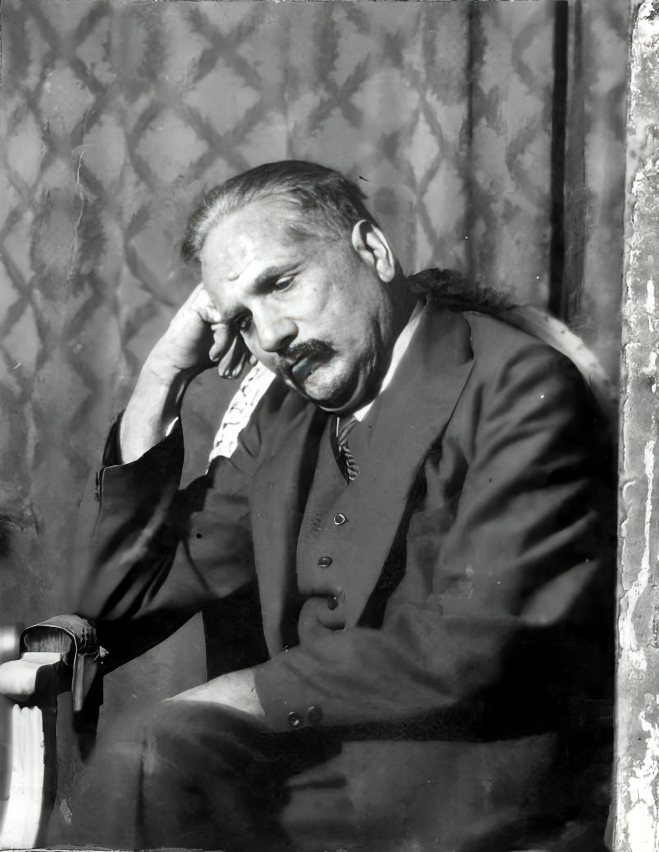
Syed Abul A’la Maududi, the founder of Jamaat-e-Islami, explicitly wrote in his book Islam and Nationalism that Islam and nationalism are polar opposites. He categorised nationalism as Jahiliyyah (ignorance) or a Taghuti (anti-God) force. In his view, loving one’s own land or giving sanctity to national borders was a form of “modern idolatry” or shirk, because ultimate allegiance belongs solely to God, not to any territory or flag.
2. The Theoretical Justification for Violence
Theologically, this was the most dangerous turning point. Maududi introduced his theory of Hakimiyyah (the absolute Sovereignty of God) in his books Political Theory of Islam and Four Basic Qur’an Terms. He argued that accepting human-made laws or secular systems (such as democracy or nationalism) amounted to denying God’s law. Therefore, standing against those who built societies outside of divine law was framed as an essential requirement of faith.
Once a theory effectively declared that loving one’s country or believing in secular nationalism was a rebellion against divine law, the next step naturally veered towards extremism. Since shirk is deemed the gravest sin in Islam, these ideologues argued that dismantling any state or movement built upon such “nationalist idolatry” was a religious duty or Jihad. In 1971, they viewed the Bengali linguistic and secular nationalist movement through this exact, distorted lens.
1971: Using Religion as a Shield
The most brutal and real-world manifestation of this extremist interpretation took place in 1971. While the people of Bangladesh were fighting for their language, rights, and freedom, this very narrative was deployed directly on the ground. Jamaat-e-Islami, its auxiliary wings (Al-Badr, Al-Shams), and the extremist clerics of Pakistan preached through various fatwas and speeches that preserving the integrity of Pakistan was an obligatory religious duty (Farz).
Because Bengalis wanted to break away from the “Muslim Ummah” (symbolised by Pakistan) to form a language-based secular state (Bangladesh), they were branded as “rebels” or “hypocrites” (Munafiq).
Based on this logic, the wealth and women of Bengalis were given psychological legitimacy on the ground, treated as “enemy spoils.” This allowed them to religiously and politically justify horrific crimes against humanity, including indiscriminate massacres and the targeted killing of intellectuals.
As ordinary human beings, it is vital for us to realise with a clear mind that the Pakistani rulers in 1971 did not just attack us with military hardware. They fed their soldiers and collaborators a form of “ideological opium” to brainwash them.
An Al-Badr member or Pakistani soldier executing civilians in a line genuinely believed, in his blinded psyche, that he was doing nothing wrong; he thought he was fighting a holy war against the “enemies of Islam” and “nationalist hypocrites.” This terrifying distortion of belief—showing how an ideology can strip a human being of all empathy—remains the largest and most painful scar of 1971.
For any ordinary Muslim, these historical truths provoke deep, unsettling questions. How could a fellow Kalma-reciting Muslim be branded a “hypocrite” or an enemy simply because of a different language, or for demanding their basic rights? How could such inhuman atrocities ever be justified in the name of religion?
The Performance of Patriotism
When we connect those historical debates to our reality today, a harsh psychological truth comes to light. Those who still blindly subscribe to that narrow, উগ্র (fanatical) political ideology can never genuinely be patriotic Bangladeshis at heart. Deep down, they view Bangladesh and its modern governance as nothing more than an un-Islamic system. Conversely, ordinary citizens who love their language, culture, and this beloved homeland can never be seen as “pure” or true Muslims in the eyes of those dogmatic thinkers.
Today, when we hear grand declarations of love for Bangladesh or speeches praising independence from the political heirs of Jamaat-e-Islami or the Muslim League, it is not difficult to see through the facade. A closer look reveals that this is not an authentic sentiment, but a calculated political strategy. The greatest tragedy is that they attempt to validate this duplicity using their own religious interpretations, making it acceptable to themselves.
The followers of these groups believe that in order to survive or achieve larger political goals within a secular or “un-Islamic” environment, practicing Al-Taqiyya or Hikmah (strategic deception/wisdom) is entirely permissible. Since they cannot truly accept the secular fabric and spirit of modern Bangladesh, they view feigning patriotism or adopting a disguise as a necessary, religiously sanctioned tactic.
This conflict is far more than a calculated game played on the political chessboard; it is a profound crisis of personal integrity. Trapped in the quicksand of Al-Taqiyya, it is mathematically impossible for the adherents of these Pakistani-Maududist ideologies to simultaneously harbour an unadulterated love for Bangladesh and a sincere commitment to their version of faith. They remain forever trapped in a double life, performing a patriotism they do not believe in.
See Also: