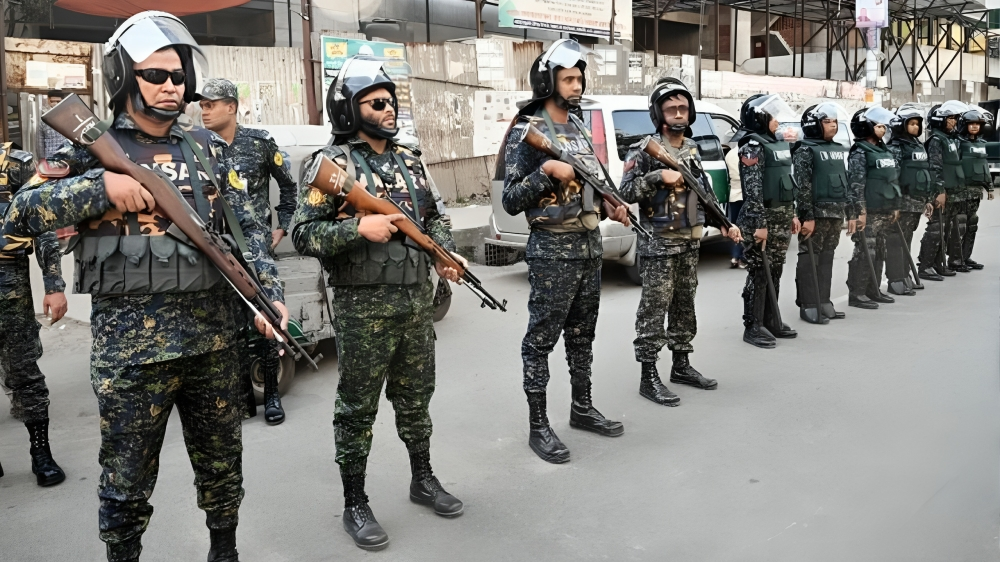
The primary objective of my “Why Government Matters” series is to simplify and explain to ordinary people how the state or the government is intertwined with every turn of our daily lives. Following our discussion on the Village Police (Gram Police), today we focus on a force that we regularly see on duty everywhere—from national elections to major religious festivals, railway stations, and government Key Point Installation (KPI) areas. Yet, the urban educated class has a very limited understanding of how this massive force operates or what its legal foundation is. Today, we are talking about the Ansar and VDP (Village Defence Party).
From the remote villages to the urban centres of Bangladesh, the Ansar and VDP is an indispensable name in maintaining internal security and law and order. Controlled by the government, this massive, community-backed force is engaged not only in strengthening the country’s internal security framework but also in disaster management, community development, and upholding social stability.
Table of Contents
Ansar and VDP: A Brief Overview
Historically, the Ansar force was established in 1948 through a legal ordinance. Later, in 1976, the ‘Village Defence Party’ or VDP was formed with the aim of ensuring rural security and socio-economic development. In present-day Bangladesh, these two forces operate jointly as the country’s largest voluntary and community-backed disciplined force. The true beauty of this force lies in the fact that the vast majority of its members are volunteers drawn from ordinary citizens. When required, they take up arms to serve on the ground as the primary auxiliary force to the country’s internal security and law enforcement agencies—especially the police.
Legal Foundation
Many people assume that the Ansar and VDP is merely a nominal group of volunteers lacking a solid legal footing. This perception is entirely incorrect. The operation and legal powers of this force are protected by specific legislation. In 2008, the government enacted the “Ansar and Village Defence Party Act, 2008”. It is through this Act that the Ansar and VDP force is granted full recognition as an entirely legitimate, community-backed force that is armed or, depending on the context, baton-wielding.
The core aspects of this Act include:
- Clarifying the specific recruitment processes, duties, and responsibilities of Ansar and VDP members.
- Ensuring their safety, legal protection, and other benefits while performing duties on the ground.
- Granting them the necessary authority and power to maintain the general law and order of the country and protect the public.
- Providing specific guidelines for regular military and social training, governance, and administrative management to improve the professional standards of its members.
Primary Responsibilities of the Ansar and VDP
1. Maintaining Internal Law and Order:
Ansar and VDP members primarily act as the main ‘supporting force’ or auxiliary strength for the police, RAB, or other law enforcement agencies. They play a major role at the frontline in suppressing crime and preventing social unrest during large national festivals, elections, security operations in the Chittagong Hill Tracts, or any emergency legal situations.
2. Ensuring Grassroots and Rural Security:
One of their main responsibilities is to ensure public safety in towns and, more notably, in remote village areas, whilst keeping an eye on local criminal activities and protecting the lives and property of ordinary citizens.
3. Disaster Management and Humanitarian Assistance:
Bangladesh is a country prone to natural disasters. In any major crisis—be it floods, tidal surges, cyclones, or fires—Ansar and VDP members are among the first to throw themselves into rescue and relief operations. Because they possess a vast network at the local level, it is easiest for them to reach affected people during disasters.
4. Protecting KPIs and Vital State Installations:
The core responsibility for the security of the country’s airports, seaports, railway stations, power plants, and various important government and autonomous institutions rests upon the members of the General Ansar or Battalion Ansar.
5. Social and Healthcare Development Activities:
Beyond maintaining law and order, this force works towards raising social awareness. They contribute directly to nation-building by participating in rural child health initiatives, sanitation drives, tree plantation campaigns, literacy drives, and various public-centric development projects of the government.
Powers and Duties of the Members
According to the law, Ansar and VDP members have specific legal duties and powers that preserve stability in both rural and urban life:
- Providing direct assistance to the police and administration during any serious law and order situation.
- Protecting state and public moveable and immoveable property as assigned by the government.
- Swiftly identifying any suspicious individuals or signs of criminal activity in the local area and immediately reporting the information to the police station authorities or the Union Parishad.
- Preventing minor local disputes or unrest to maintain rural peace.
- Implementing any special and urgent legal directives issued on the ground by Judicial or Executive Magistrates and the police administration.
To the naked eye, the Ansar and VDP may often seem very ordinary, but reflecting deeply reveals that this massive manpower is the government’s greatest source of reliance during any national crisis or major event. Whether it is internal security, conducting elections, or the night of a natural disaster—this disciplined force quietly contributes everywhere.
Ensuring proper military and technical training, regular supervision, modern facilities, and appropriate valuation for the members of this vast force is absolutely vital. If the state can develop this massive human resource into an even more skilled force, it is possible to bring about an unprecedented transformation in both the overall law and order and the economic development of the country. As citizens, it is also our duty to show proper respect to the selfless contributions of this force and to extend our full cooperation in the execution of their official duties.
See Also: