
Sahir Ludhianvi once wrote about his mother:
“Tu mere sath rahega munne
Main tujhe rahem ke saaye mein palne na doongi
Zindagi ki kadi dhoop mein jalne doongi
Taaki tap tap ke tu faulaad bane
Maa ki aulaad bane”
(Faulaad = Steel)
Table of Contents
Sahir Ludhianvi
When I first came across these lines, it felt as though he was speaking of my own mother. Following my father’s assassination, my mother sent all my siblings away from our locality. I was the only one who stayed back with her. Those days of our struggle flash before my eyes; my mother’s words float back into my memory.
Sahir was a stellar lyricist in the Indian film fraternity. Much of the significance and respect that lyricists enjoy today is owed to his fierce bargaining. He was the first to assert that a lyricist plays a monumental role behind a song becoming a hit. Therefore, he demanded that a lyricist must be paid at least one rupee more than the music director or the playback singer. No matter what the overall remuneration was, it had to be higher by that single rupee.
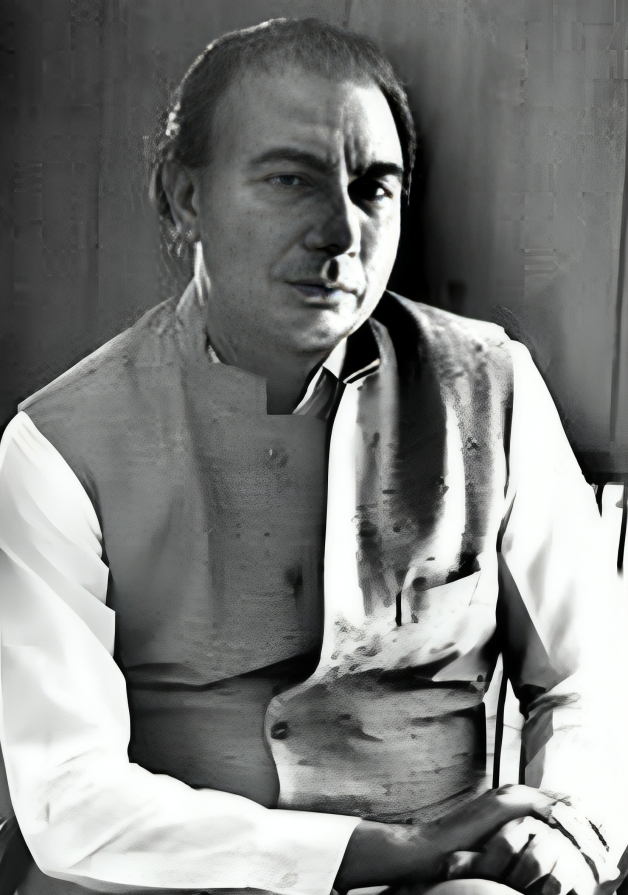
He penned some of the most magnificent romantic songs, yet irony dictates that he reportedly despised writing love songs the most. His love was primarily directed towards nature; alongside that, humanity and politics held his deepest interest. Quite naturally, even when he did write a romantic song, its canvas was immensely grand. He would deconstruct and rebuild romantic melodies using various elements of nature.
Here are two more of my favorite lines from Sahir, which replayed constantly in my mind during the political upheavals of 1/11 (One-Eleven):
“Sitam ki daur mein hum ahl-e-dil hi kaam aaye
Zuban pe naaz tha jinko wo bezuban nikle.”
(In times of tyranny, only we, the people of heart, came of use; those who prided themselves on their eloquence turned out to be utterly speechless.)
Sahir was always a man of alternative thought. When the partition of India and Pakistan was announced, Sahir happened to be in the region assigned to Pakistan. Following the declaration, while Muslims were migrating to Pakistan and Hindus were heading to India, he—despite being a Muslim—left Pakistan and moved to India.
Sahir’s childhood was exceedingly difficult and eventful, which arguably left a profound imprint on his later poetry and philosophy. He was born on 8 March 1921 in Ludhiana, Punjab (then British India), into a wealthy Muslim family. His birth name was Abdul Hayee. “Sahir” was his pen name, meaning “the magician” or “the enchanter”.
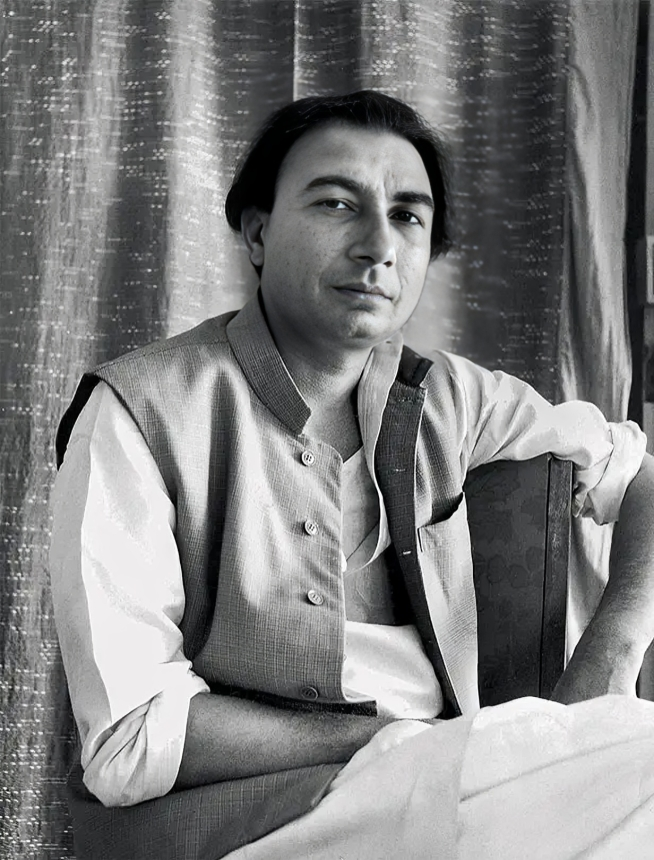
A pivotal and agonizing event in Sahir’s life was the divorce of his father, Chaudhari Fazal Muhammad, and his mother, Sardar Begum. When Sahir was just eleven years old, their marriage dissolved. This separation inflicted a deep emotional wound on young Sahir, an anguish that reflected repeatedly in his poetry.
Following the divorce, Sahir stayed with his mother in Ludhiana. Although his father was wealthy and influential, he provided negligible maintenance for Sahir and his mother. Consequently, the duo had to endure immense financial hardships. Sahir’s profound love for his mother and his deep empathy for her suffering emerged as a recurring motif in his verses.
Sahir’s formal education began at a local school in Ludhiana. However, owing to domestic turbulence and financial strains, his studies were frequently disrupted. Nevertheless, from an early age, Sahir harboured a passionate interest in literature and music. He read the classical Urdu poets with rapt attention and possessed a distinct affinity for music.
A rebellious streak was evident in Sahir since his boyhood. Likely due to his domestic hardships, he grew acutely sensitive to the injustices and inequalities of society. This rebellious spirit inspired him to join the Progressive Writers’ Movement in his youth and write revolutionary poetry. Later, Sahir moved to Lahore for higher education. He enrolled at the Government College there but was expelled due to his revolutionary activities. It was in Lahore that he immersed himself deeply in the Progressive Writers’ Movement and began gaining recognition as a formidable poet.
These harsh childhood experiences—particularly his parents’ estrangement and a life of penury with his mother—breathed deep empathy, social consciousness, and a remarkably sensitive worldview towards women into his poetry. His childhood grief and struggles taught him to empathize with the vulnerable and oppressed sections of society, making it a cornerstone of his literary legacy.
In 1945, while residing in Lahore, his debut anthology of poems, “Talkhiyan” (Bitterness), was published. The publication instantly carved out a distinct niche for Sahir in the realm of Urdu literature. The robust vocabulary, social commentary, and poignant delivery of his verses captivated readers. “Talkhiyan” established him as a promising and unconventional poet. As an active member of the Progressive Writers’ Association, he weaponized his pen against societal inconsistencies and exploitation. His poems vividly mirrored the lives and struggles of laborers, peasants, and the marginalized.
During his Lahore days, Sahir edited several prestigious Urdu literary journals, such as “Adab-e-Latif”, “Shahkaar”, and “Savera”. These publications expanded his literary footprint further. When the Pakistani government issued an arrest warrant against him for his inflammatory writings in “Savera”, he left Lahore for Delhi in 1949.
After a brief stint in Delhi, Sahir moved to Bombay (now Mumbai). Here, an old friend working in the film industry advised him to try his hand at lyric writing. In 1949, Sahir debuted as a lyricist with the film “Azadi Ki Raah Par”. Although the film bombed at the box office, Sahir’s work caught the industry’s eye.
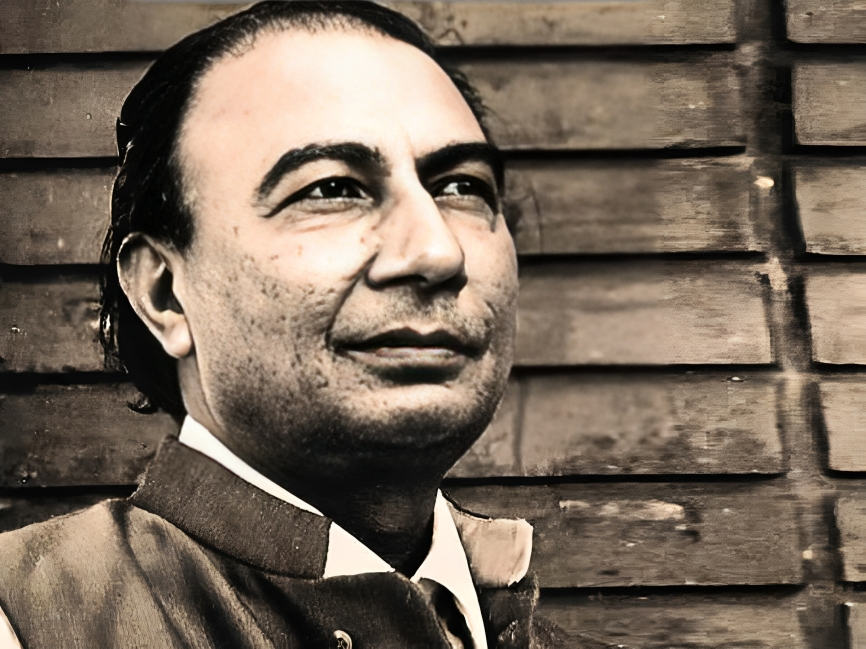
His collaboration with music director S.D. Burman in the 1951 release “Naujawan” received exceptional acclaim. The song “Thandi Hawayein” from this film became a rage, firmly establishing Sahir as a gifted lyricist. Subsequently, Sahir became an indispensable member of director Guru Dutt’s creative team. The songs of Guru Dutt’s “Baazi” (1951) achieved massive popularity, and the Sahir–S.D. Burman duo went on to deliver numerous timeless classics, most notably the soundtrack of “Pyaasa” (1957). Sahir Ludhianvi rapidly secured his position as an influential lyricist in the Hindi film industry. The depth of his poetry, linguistic elegance, and social messages added a whole new dimension to film songs. Breaking traditional cinematic norms, he was the first lyricist who dared to write the lyrics first and ask composers to set them to music.
As a poet, Sahir remains unparalleled. His poetry boasts several distinct characteristics that set him apart from his contemporary Urdu poets, earning him a legendary status in Urdu literature:
- Progressive Ideology: Sahir was a fierce proponent of the Progressive Writers’ Movement. His poetry resounds with profound empathy for the oppressed, the destitute, and the working class, championing their rights. He spoke out vehemently against imperialism, capitalism, and social disparity. His famous poem “Parchaiyan” (Shadows) is a shining testament to this, depicting the horrors of war and the misery of its ordinary casualties.
- Sensitive Perspective Towards Women: A unique sensitivity towards women is observable in Sahir’s poetry. He did not objectify women merely as muses of romance or beauty; instead, he portrayed them as active, vital members of society. He articulated women’s grief, struggles, and aspirations with immense tenderness. Poems like “Aao Ke Koi Khwab Bunen” (Come, Let Us Weave a Dream) advocate for the dignity and rights of women.
- Social and Political Awareness: Sahir’s poetry was acutely conscious of contemporary social and political realities. He staged fierce protests against societal superstitions, religious bigotry, and political instability. The trauma of Partition and the resulting grief and division were deeply reflected in his work.
- Simple and Lucid Language: Sahir never resorted to convoluted or esoteric language to convey the depth of his thoughts. The language of his poetry was simple, fluid, and accessible to the common man. Consequently, his poetry achieved rapid popularity and permeated the masses.
- Lyricality and Melodiousness: An inherent musicality and rhythm thrive in Sahir’s verses. His choice of words and sentence structures were such that they could effortlessly be adapted into musical compositions. It is precisely why many of his poems were extensively used as Hindi film songs and remain popular to this day.
- Expression of Personal Emotions: While social and political themes dominated his oeuvre, personal emotions of love, longing, separation, and existential despair were expressed with utmost sincerity. A unique melancholy and depth characterize his romantic poems.
- New Style and Presentation: Sahir broke away from the conventional styles of Urdu poetry prevalent in his time, experimenting with new structures and presentations. His poetry exhibits a penchant for clarity of statement and direct expression.
My Favourite Songs Written by Sahir Ludhianvi:
-
Jo Wada Kiya Wo Nibhana Padega (Film: Taj Mahal)
Parchaiyan (Shadows):
Sahir wrote “Parchaiyan” against the backdrop of war—reflecting on a world war, the conscription of Indian soldiers into someone else’s war, the control of foreign powers over warfare, and the pursuit of peace. This poem was composed around 1944 or 1945 when Sahir resided in Lahore. It is said that this poem was first published in an Urdu magazine named “Chataan”, edited by one of Sahir’s closest friends, Shorish Kashmiri.
The poem comprehensively highlights the destructive impact of war on society. It begins by describing a romantic relationship between two individuals, and against the canvas of this relationship, it examines war. It captures how war brutally disrupts the lives surrounding them.
Jawaan raat ke seene pe doodhiya aanchal
Machal raha hai kisi khwab-e-marmarin ki tarah
Haseen phool haseen patiyan haseen shaakhein
Lachak rahi hain kisi jism-e-nazneen ki tarah
Faza mein ghul se gaye hain ufuq ke narm hutoat
Zameen haseen hai khwabon ki sarzameen ki tarah
Tasavvuraat ki parchaiyan ubharti hain
Kabhi gumaan ki surat kabhi yaqueen ki tarah
Wo ped jin ke tale hum panah lete the
Khade hain aaj bhi saakit kisi ameen ki tarah
Unhi ke saaye mein phir aaj do dhadakte dil
Khamosh honton se kuch kehne sunne aaye hain
Na jaane kitni kashakash se kitni kavish se
Ye sote jaagte lamhe chura ke laaye hain
Yahi faza thi yahi rut yahi zamana tha
Yahin se hum ne mahabbat ki ibtida ki thi
Dhadakte dil se larazti hui nigahon se
Huzur-e-ghaib mein nanni si iltija ki thi
Ki aarzu ke kanwal khil ke phool ho jaaye
Dil-o-nazar ki duayein qubool ho jaaye
Tasavvuraat ki parchaiyan ubharti hain
Tum aa rahi ho zamane ki aankh se bach kar
Nazar jhuke huye aur badan churaye huye
Khud apne kadmo ki aahat se jhempti darti
Khud apne saaye ki jumbish se khauf khaaye huye
Tasavvuraat ki parchaiyan ubharti hain
Rawaan hai chhoti si kashti hawayo ke rukh par
Nadi ke saaz pe mallah geet gata hai
Tumhara jism har ik lahar ke jhakore se
Meri khuli hui baahon mein jhool jata hai
Tasavvuraat ki parchaiyan ubharti hain
Main phool taank raha hoon tumhare joode mein
Tumhari aankh masarrat se jhukti jaati hai
Na jaane aaj mian ki baat kehne wala hoon
Zabaan khushk hai aawaz rukti jaati hai
Tasavvuraat ki parchaiyan ubharti hain
[Some lines are omitted here, to be added later]
Tasavvuraat ki parchaiyan ubharti hain
Tumhare ghar mein qayamat ka shor barpa hai
Mahaz-e-jang se harkara taar laya hai
Ki jis ka zikr tumhein zindagi se pyara tha
Wo bhai narga-e-dushman mein kaam aaya hai
Tasavvuraat ki parchaiyan ubharti hain
Har ek gaam pe badnamion ka jamghat hai
Har ek mod pe ruswaiyo ke mele hain
Na dosti na takalluf na dilbari na khuloos
Kisi ka koi nahi aaj sab akele hain
Tasavvuraat ki parchaiyan ubharti hain
Wo rahguzar jo mere dil ki tarah sooni hai
Na jaane tum ko kaha le ke jaanewali hai
Tumhein khareed rahe hain zameer ke qatil
Ufuq pe khoon-e-tamanna-e-dil ki laali hai
Tasavvuraat ki parchaiyan ubharti hain
Tum aaj hazaron meel yahan se door kahin tanha mein
Ya bazm-e-tarab-aari mein
Mere sapne bunti hogi, baithi aaghosh parayi mein
Aur main seene mein gham le kar din-raat mashaqqat karta hoon
Jeene ki khaatir marta hoon
Apne fan ko ruswa kar ke agiyar ka daaman bharta hoon
Majboor hoon main majboor ho tum majboor ye duniya saari hai
Tan ka dukh man par bhaari hai
Glossary of Terms:
- Mahaz-e-jang = Battlefield
- Narga-e-dushman = Enemy encirclement / Enemy host
- Jamghat = Throng / Crowd
- Ruswaiyon = Ignominy / Disgrace
- Takalluf = Formal acquaintance / Social courtesy
- Dilbari = Comfort / Consolation
- Khuloos = Sincerity / Purity
- Zameer = Conscience / Soul
- Ufuq = Horizon
- Khoon-e-tamanna-e-dil = The blood of the heart’s murdered desires
- Bazm-e-tarab-aari = A celebratory gathering of music and dance
- Aaghosh = Embrace / Lap
- Mashaqqat = Backbreaking toil / Arduous labor
- Ruswa = Humiliated / Disgraced
- Agiyar = Strangers / Outsiders
See Also: