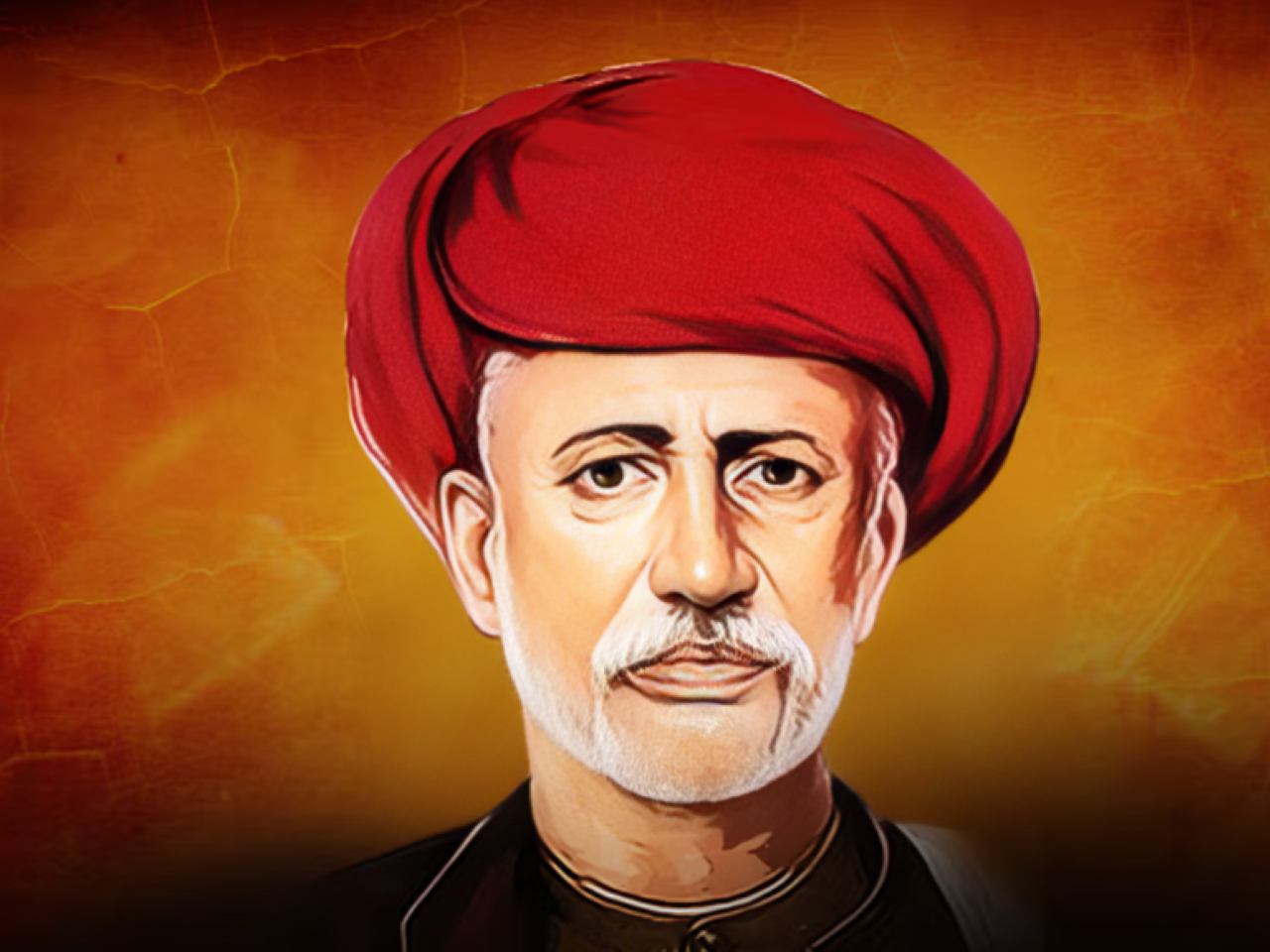
Welcome to another edition of our series, ‘Asun Alap Koriye Dei’. Today, on his birth anniversary, we turn the pages of history to meet a man whose courage changed the destiny of millions. He was not a king or a soldier, but a gardener’s son who fought his battles with a pen and a book. His name was Jyotirao Phule, affectionately known as Jyotiba (11 April 1827 – 28 November 1890).
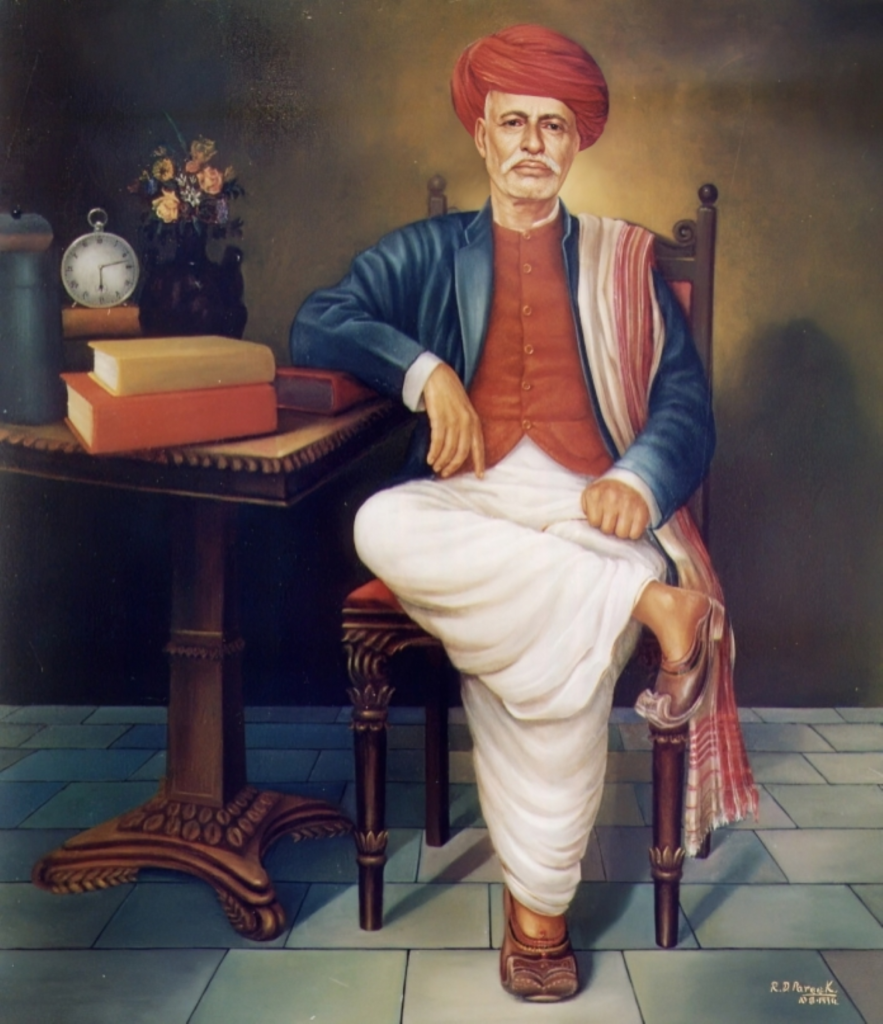
Table of Contents
A humiliating moment that changed history:
Born in 1827 in Maharashtra, Jyotiba belonged to the Mali caste, a community of gardeners and vegetable growers. He was a bright student, attending the Scottish Mission High School, where he completed his education in 1847.
However, the turning point in his life occurred in 1848, at the age of 21. Jyotiba attended the wedding of a Brahmin friend. During the procession, he was rudely insulted and rebuked by his friend’s parents simply because he belonged to a ‘Shudra’ (lower) caste. They told him he had no place walking alongside them.
This injustice did not break him; it woke him up. He realised that the caste system was a tool to suppress people and that education was the only weapon that could set them free.
The Pioneer of Education:
Inspired by Thomas Paine’s book Rights of Man, Jyotiba believed that for a society to progress, its women and lower castes must be educated. But who would teach the women when society forbade it? He started at home. He taught his wife, Savitribai Phule, to read and write.
Together, facing stones and abuse from conservative society, they made history:
- The First Step: In 1848, they opened India’s first indigenously run school for girls at Bhidewada in Pune.
- Expansion: By 1852, they were running three schools, educating over 270 girls.
- Inclusivity: They opened their doors to children from the Mahar and Mang communities, who were treated as ‘untouchables’ at the time.
A Heart for the Voiceless:
Jyotiba’s compassion knew no bounds. He was deeply moved by the plight of widows in orthodox society.
- Stopping Infanticide: In 1863, after a tragic incident involving a widow named Kashibai, Phule established a secret care centre. Here, pregnant widows could deliver their babies safely, saving both the mothers and the children from infanticide.
- Breaking Barriers: In a bold move to challenge untouchability, he opened his own house’s water tank to people of all castes, declaring that water, like air, belongs to everyone.
The Society of Truth Seekers:
On 24 September 1873, Jyotirao formed the Satyashodhak Samaj (Society of Truth Seekers). It was a revolutionary organisation. It did not matter if you were Muslim, Brahmin, or a government official; anyone could join as long as they believed in equality and rational thinking. The society fought for human rights and rejected the need for middlemen (priests) between man and God.
Why we call him ‘Mahatma’:
Jyotiba was also a successful businessman and a municipal commissioner who fought for compulsory primary education in villages. In 1888, in recognition of his lifelong battle for the oppressed, he was bestowed with the title ‘Mahatma’, which means “Great Soul”.
Mahatma Jyotirao Phule passed away in 1890, but his legacy is immortal. He taught us that true heroism lies in lifting others up. As we celebrate his birthday today, let us remember his lesson: “Truth is the only religion, and education is the only path to freedom.”