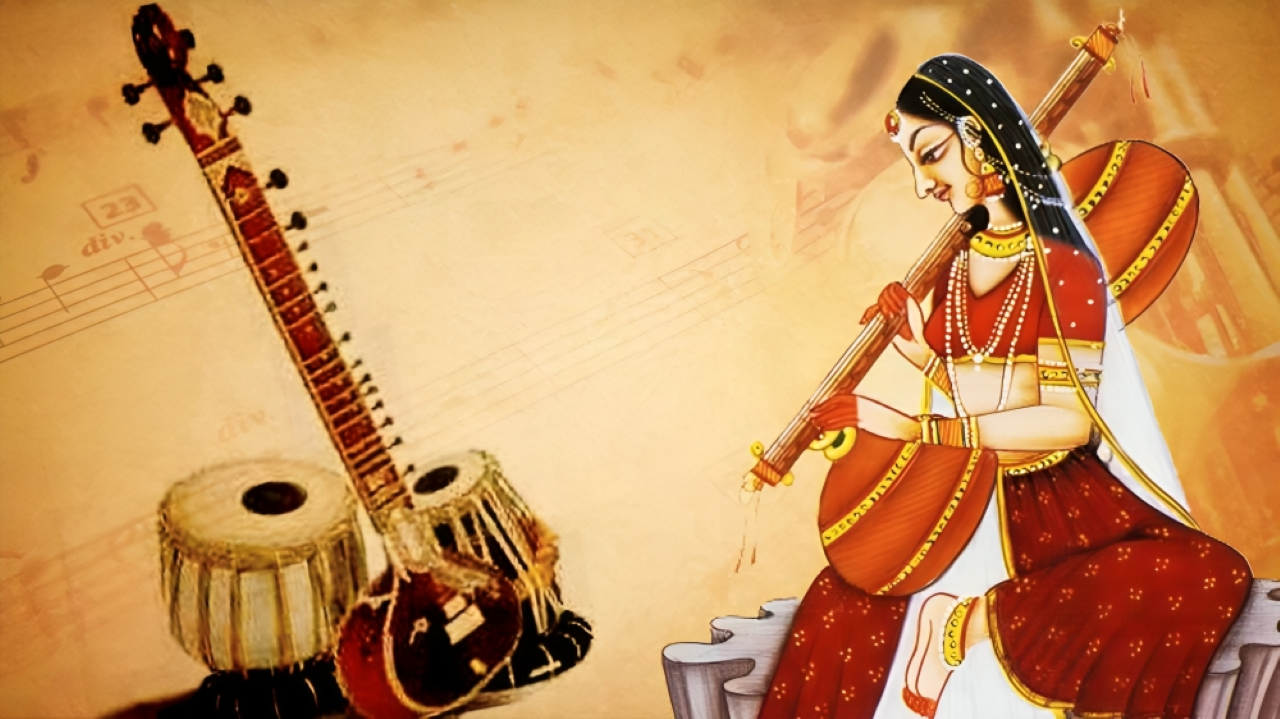
I consider myself a happy person. In the balance sheet of life—in the accounting of fulfilment—the small two-syllable word happiness carries the greatest value for me. Not even the smallest transaction escapes my notice. The gentle caress that the morning dew leaves between the cells of my feet—I carefully record even that fleeting joy in the ledger of my life. Science may debate whether the tenderness of that dew truly reaches the heart, but I know it does; drop by drop, it gathers there.
Once I began to feel this way, I made it my mission to secure happiness from every possible direction in life—three hundred and sixty degrees of it, if you will. Even though I worked in the rather dry profession of information technology, within thirty years I had managed to arrange my life so that I could live doing only the work I truly enjoyed. Those were days filled with colour, rhythm, and abundance—like a garden in full bloom.
Then one day came a blow. A heavy blow.
The kind of blow after which the world suddenly feels meaningless and disordered. It feels as though the world has turned its face away from you. As though all the windows of the mind have slammed shut at once, noisily and without warning. Overnight, the hinges of those windows seem to rust. Every solid support you once trusted begins to crumble, worm-eaten and fragile, as though it would disintegrate into dust at the slightest touch. In such moments it feels as if there is no refuge of peace left in this noisy world—stripped of love, stripped of trust, stripped of shelter.
Practical and resilient people often recover from such blows quite easily. They shrug their shoulders, say “never mind,” and move forward along a new path. The real trouble lies with people like me—those who are a little weaker at heart. Some fall into destructive addictions: drugs, alcohol, violence. Others withdraw entirely, turning away from human warmth and social engagement, seeking refuge in rigid forms of faith or belief, becoming completely self-absorbed.
That path beckoned to me as well. Yet anything that could be obtained with a small amount of money, or that offered only fleeting physical relief, somehow failed to attract me. Such indulgences tend to demand more and more over time; the body begins to rebel, social life becomes tainted, and professional life soon collapses into disarray. Worse still, their appeal fades quickly—so quickly that one no longer feels inclined to return the following night. I realised that these things might offer momentary relief, but they do not provide shelter. They offer excitement, perhaps, but not joy.
During that bewildering period I wandered like a madman, like a beggar searching for alms—looking desperately for something to hold onto. I longed for a refuge that would offer both temporary comfort and an enduring sanctuary. A place where one could sit and continually seek closeness to that refuge, unfolding its many layers again and again—yet finding it forever new. I wished for a path that would contain moments of excitement, moments of pure delight, and moments of serene happiness.
But of course, life does not grant everything simply because one desires it. And even if it does, who knows what price must be paid for it?
Music has given me comfort many times in life. In moments of love, emotion, and sorrow, I have often collapsed into the lap of song. I have found refuge in countless pieces from the genres of modern, pop, rock, and folk—songs in Bengali, English, Hindi, and Urdu. Most of them belonged, at best, to the semi-classical tradition. But I had never really had the opportunity to listen seriously to pure classical music (and to be honest, the dreadful memories of BTV’s late-night classical programme Surlahari did little to encourage me).
With those lyric-driven songs, I would merge my immediate emotions with the words and find a temporary refuge. Yet as the years passed, my feelings matured. Without even realising it, they had gradually moved beyond the limits of language into something more abstract. Those beloved songs still call to me occasionally, but they no longer feel like shelter. Instead, they stand quietly beside the road ahead, pointing towards an unknown path.
While wandering in this cycle, music suddenly appeared before me one day. Yes—music in the sense of classical music. Quite unexpectedly.
The first time I attended the Bengal Classical Festival, I went there almost in a picnic mood. Later, one night while browsing through YouTube, I came across the Patiala gharana maestro Ustad Bade Fateh Ali Khan, singing the bandish “Nain Se Nain Milaye.” I became completely entranced. I began listening around midnight. Before dawn arrived, I had searched out and listened to every available version of that bandish sung by him.
At some point in the middle of the night, while listening to the full half-hour khayal built around that bandish, I suddenly realised something extraordinary. It was no longer just the lyrics that were affecting me. The wordless colours of melody were weaving an almost magical web around me. Even those syllables—those seemingly meaningless aa-aa-ee-oh sounds that I had once found irritating—began to appear before the windows of my mind in countless shapes and shades. Sometimes they felt heavy, sometimes light, sometimes simply beautiful. A spiral of emotion rose from my chest and turned into tears—and within those tears there was an unexpected happiness.
That morning, as I sat in prayer, I felt a profound sense of fulfilment in life. It seemed to me that perhaps I had finally discovered a new refuge. Immediately I placed a “hibernating” notice on my social networks and disconnected myself from the world for a week. All phone calls and emails were redirected to my assistant. I began searching, digging, exploring.
That bandish became my starting point.
I soon discovered that what had drawn me in at that moment was a melodic form known in classical music as a raga. The rhythmic cycle in which that bandish was composed is called a tala. I learned that the raga was Darbari, and the tala was Ektal. From there I began listening to many other compositions based on Darbari. I encountered it in Hindi film songs, in modern Bengali music, in dhrupad, dhamar, and khayal. I heard it sung by vocalists and played on instruments such as the surbahar, sitar, sarod, sarangi, flute, and shehnai. Three entire days passed simply listening to Ustad Vilayat Khan’s sitar renditions of Darbari and the majestic alap of the Dagar brothers.
When love deepens, one begins to desire knowing the beloved in many different ways. In the same manner, once the flavour of this music settled in my mind, I felt compelled to unfold its many layers. I wanted to understand the form, temperament, time, and emotional character of that beloved melody. Naturally, this curiosity led to its history—its birth, its evolution, its relatives, and its stories of joy and sorrow.
In this way I learned that Darbari is essentially a midnight raga, known for its deep and sombre expression of grief, melancholy, and tragic emotion. It is traditionally attributed to Miyan Tansen, the legendary musician in the court of Emperor Akbar. The raga is believed to carry influences from the southern Kanada family of ragas. Because of its majestic gravity, its ability to draw listeners into profound emotional depths, and its grand structure—reminiscent of Akbar’s royal court—it came to be known as Darbari. Some even say that Akbar himself bestowed the name.
Among musicians and listeners alike, one of the greatest masterpieces of this raga is considered to be Ustad Vilayat Khan’s forty-eight-minute sitar recording of Darbari. Interestingly, Vilayat Khan himself once remarked that when he heard Ustad Faiyaz Khan sing Darbari, he felt as though he was hearing an emperor weep.
In any case, after about ten days of hibernation I returned to my regular routine and decided to dedicate four hours of each day entirely to music. I made an official announcement among friends that I wanted to learn how to listen to pure classical music, and invited anyone who could help to do so. I have been blessed—both with remarkable friends and formidable rivals. Before long, my room was filled with rare books on music, assorted musical documents, and even instruments. My iTunes library began to overflow with Hindustani classical tracks—most of them gifts. Some friends patiently explained the basics of swar (notes), while others showed me how to begin understanding a raga. I remain deeply grateful to those people who, despite their busy lives, found the time and kindness to guide me into the world of music.
Yet the truth is that understanding melody does not come instantly simply because one desires it. Nor can it be bought quickly with money. Falling in love with music taught me that the finest pleasures in the world cannot be enjoyed merely by spending money. One must work patiently, preparing one’s body, mind, and intellect for the experience.
Pure classical music contains a vast array of technical elements. Different ragas are suited to different moments and moods. Each has its own aroha–avaroha (ascending and descending patterns), chalan (movement), pakad (signature phrase), thaat (parent scale), jati (note structure), and raganga (family identity). Naturally, these technical aspects can seem somewhat dry. But alongside them lies something far more fascinating—the rich and colourful histories wrapped around the different gharanas, or stylistic lineages of performance. There are also stories about the mysterious effects that these melodies can have on the body, the mind, and even the surrounding atmosphere.
And then come the endless questions. Which raga belongs to which raganga? Why do Bhupali and Deshkar, though built on the same notes, not fall under the same thaat? How does the Gandhar feel in Miyan ki Malhar, and how does it feel in Darbari? What kind of Rishabh appears in Bhairav, and what kind in Marwa? Why does Darbari from one gharana evoke melancholy, while another version fills the listener with a sense of solemn determination? Which came first—Dhanashree ang or Bhimpalasi? How can the same set of notes produce both Bhairavi and Bilaskhani Todi? Why is Gaud Sarang, despite its name, so distant from the Sarang family? Why do ragas like Darbari, Jaunpuri, and Asavari, though belonging to different times and moods, resemble one another in certain ways—and where exactly do they differ? Why do instrumentalists rarely perform vocal pieces formally, even though they may understand singing deeply? If gharanas possess such unique beauty, why are many of them fading away? Why did gurus of one gharana often discourage their disciples from listening to another? How did these gharanas arise and spread in the first place? Why do some legendary maestros, towering like great trees, leave behind few equally renowned disciples? Why is the ancient style of dhrupad gradually disappearing? Does the khayal we hear today resemble what existed a hundred years ago—and will it change again in the future? And why did Ustad Amir Khan, though capable of singing exquisite thumri at home, rarely perform it publicly?
I know that readers who have little connection with music may already feel exhausted simply reading these questions. Believe me, however—these are not merely dull examination questions that one fails to memorise. The real adventure lies in searching for their answers. That search itself is the true musical journey, filled with indescribable joy. Only those who have experienced it can understand its charm. For those who have not, it may seem meaningless. Some might call this aesthetic awareness; others might dismiss it as a mere itch of curiosity. In truth, the two are remarkably similar. Unless you have felt the itch yourself, you cannot understand the pleasure of scratching it.
Two months after falling under the spell of music, I made a vow: I would become a good listener—one worthy of loving this beloved art. That effort has now continued for nearly two years. I do not know when this journey—rich in colour, fragrance, rhythm, and notation—will end. In truth, I do not wish it to end. Such a flowing journey cannot be completed within a single lifetime. Knowing this, I often feel as though my whole being overflows with excitement.
Before I conclude, let me say something important. In our country there are very few opportunities to learn or listen to pure classical music. Religious prejudice and social misconceptions have prevented the beneficial aspects of music from fully establishing themselves within society. Moreover, there are not enough artists, organisers, or sponsors. Whatever small events do take place become our only hope.
For me, however, the month of November always brings a special smile. That is when the five-day Bengal Classical Music Festival approaches. I count the days eagerly, waiting for that long-anticipated rendezvous. It is not only the joy of attending the event; it is also a matter of pride that the largest classical music conference in the world takes place in Bangladesh.
May everyone’s life become filled with melody.
Now, let us return to the Asurer Surlokjatra (Index).