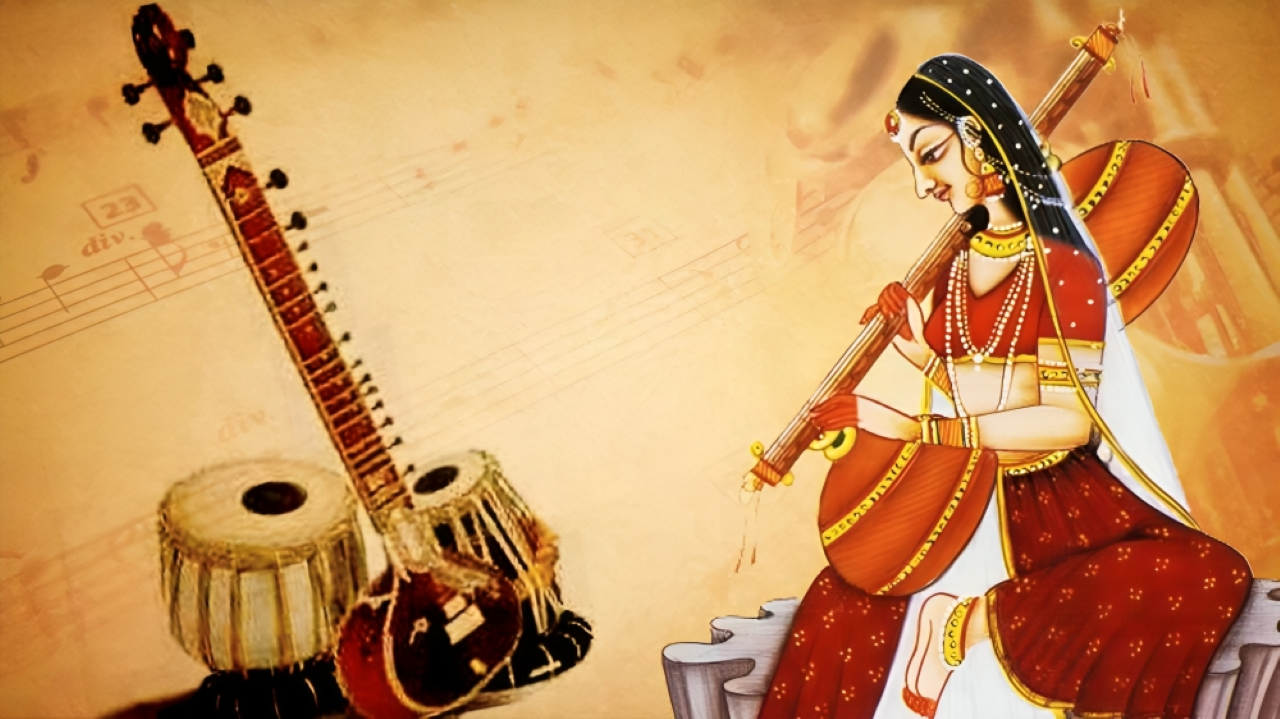
Indian Classical Music is an unfathomable ocean, where every wave conceals a unique Raga. These Ragas are not merely a collection of notes; rather, each possesses a distinct personality, a specific emotion, and is a custodian of a particular time. In this instalment of the “Asurer Surlokjatra” series, I have begun the task of archiving these Ragas. I am unsure how far this journey will take me, but let us make a beginning. If you notice any Raga I have overlooked, please remind me in the comments, and I shall incorporate them.
Table of Contents
Comprehensive List of Common and Rare Ragas
(Note: Notations use S=Sa, r=Re komal, R=Re, g=Ga komal, G=Ga, m=Ma, M=Ma teevra, P=Pa, d=Dha komal, D=Dha, n=Ni komal, N=Ni)
A
| Raga Name | Arohana (Ascent) | Avarohana (Descent) |
| Agni-Lalit | S r G M m G r S | S r G M m G r S (Vakra) |
| Aghori | S r G M P d S’ | S’ d P M G r S |
| Anga-Bhairav | S r G m P D N S’ | S’ N D P m G r S |
| Achob | S R G P D N S’ | S’ N D P m G R S |
| Achyut-Bilaval | S R G m P D S’ | S’ D P m G R S |
| Ajad | S R G m P D S’ | S’ D P m G R S |
| Ajay | S R G m P D S’ | S’ D P m G R S |
| Ajay Dhanyashri | S g m P n S’ | S’ n P m g S |
| Ajay Ranjani | S R G m P n S’ | S’ n P m G R S |
| Ajay Lalit | S r G m M m G r S | S r G m M m G r S (Vakra) |
| Ajay-Kauns | S g m P n S’ | S’ n P m g S |
| Anjani | S R G m P D N S’ | S’ N D P m G R S |
| Anjani Kalyan | S R G M P D N S’ | S’ N D P M G R S |
| Anjani Todi | S r g m P D N S’ | S’ N D P m g r S |
| Anjani-Bilaval | S R G m P D N S’ | S’ N D P m G R S |
| Atal | S R G m P D S’ | S’ D P m G R S |
| Atul | S G m P D S’ | S’ D P m G S |
| Atul Ranjani | S G m P N S’ | S’ N P m G S |
| Atul-Todi | S r g m P d S’ | S’ d P m g r S |
| Aditi | S R G P D S’ | S’ D P G R S |
| Adbhut Kalyan | S R G P D S’ | S’ D P G R S |
| Adbhut Ranjani | S r g m P n S’ | S’ n P m g r S |
| Apurva Kalyan | S R G P D S’ | S’ D P G R S |
| Amar Kalyan | S R G M P D S’ | S’ D P M G R S |
| Amar Kanada | S R g m P D n S’ | S’ n D P m g R S |
| Amal Kanti | S R G m P D N S’ | S’ N D P m G R S |
| Amrit Kalyan | S R G M P D S’ | S’ D P M G R S |
| Amrit Dhanyashri | S g m P n S’ | S’ n P m g S |
| Amrit Ranjani | S r G M P N S’ | S’ N P M G r S |
| Amrit Sarang | S R m P N S’ | S’ N P m R S |
| Amritavarshini | S G M P N S’ | S’ N P M G S |
| Ambari | S G m P D S’ | S’ D P m G S |
| Ambari-Bilaval | S R G m P D N S’ | S’ N D P m G R S |
| Ambika | S G m P D N S’ | S’ N D P m G S |
| Ambika Bhairav | S G m P D N S’ | S’ N D P m G r S |
| Ambika-Todi | S r g M P d N S’ | S’ N d P M g r S |
| Ari | S R G m P D N S’ | S’ N D P m G R S |
| Arun Kaiso | S R G m P D N S’ | S’ N D P m G R S |
| Arun Kanti | S R G M P D S’ | S’ D P M G R S |
| Arun Bhairav | S r G m P D n S’ | S’ n D P m G r S |
| Arun Malhar | S R m P d n S’ | S’ n d P m P G m R S |
| Arun Malkauns | S g m d n S’ | S’ n d m g S |
| Arun Ranjani | S r G m P D S’ | S’ D P m G r S |
| Arun-Kalyan | S R G M P D N S’ | S’ N D P M G R S |
| Alhaiya | S R G m P D N S’ | S’ N D P m G R S |
| Alhaiya Bilawal | S R G m G P D N S’ | S’ N D P D n D P m G m R S |
| Ahi Bhairav | S r G m P D S’ | S’ D P m G r S |
| Ahi-Lalit | S r G m M m G r S | S r G m M m G r S |
| Ahir Lalit | S r G m M m G r S | S r G m M m G r S |
| Ahiri Todi | S r g M P d n S’ | S’ n d P M g r S |
| Akashi | S G m P N S’ | S’ N P m G S |
| Adana | S R m P d n S’ | S’ n d P m P g R S |
| Adana Bahar | S R m P d n S’, m P n D N S’ | S’ n d P m P g R S |
| Adana Malkauns | S g m d n S’ | S’ n d m g S |
| Adana Malhar | S R m P n D N S’ | S’ n d P, m P g R S |
| Adana-Kanada | S R m P d n S’ | S’ n d P m P g R S |
| Adambari Kanada | S R g m P D n S’ | S’ n D P m g R S |
| Adambari Kedar | S m, m P D N S’ | S’ N D P, m P G m R S |
| Aditya | S R G P D N S’ | S’ N D P G R S |
| Anand Kauns | S g m P n S’ | S’ n P m g S |
| Ananda Bhairav | S G m P N D N S’ | S’ N D P m G r S |
| Anand Malkauns | S g m P d n S’ | S’ n d P m g S |
| Anand Ranjani | S G m P N S’ | S’ N P m G S |
| Anand Leela | S G m P D N S’ | S’ N D P m G S |
| Anandi (Nand) | S G m P D N S’ | S’ N D P m G R S |
| Andolika | S R m P n S’ | S’ n D m R S |
| Abheri | S g m P n S’ | S’ n d P m g S |
| Abheri Kanada | S g m P n S’ | S’ n d P m g R S |
| Abhogi | S R g m D S’ | S’ D m g R S |
| Abhogi Kanada | S R g m D n S’ | S’ n D m g R S |
| Abhogi Dagar | S R g m D S’ | S’ D m g R S (Dhrupad Chalan) |
| Abhogi Malkauns | S g m d n S’ | S’ n d m g S |
| Arabi | S R m P D S’ | S’ N D P m G R S |
| Asa Bhairav | S R m P D S’ | S’ n D P m G r S |
| Asa | S R m P D S’ | S’ N D P m G R S |
| Asa-Asavari | S R m P d S’ | S’ n d P m g R S |
| Asa-Asavari-Todi | S r g m P d S’ | S’ n d P m g r S |
| Asa-Kafi | S R m P D S’ | S’ n D P m g R S |
| Asa-Gandhari | S R m P d S’ | S’ n d P m g r S |
| Asa-Desh | S R m P D S’ | S’ N D P m G R S |
| Asa-Deshkar | S R G P D S’ | S’ D P G R S |
| Asavari | S R m P d S’ | S’ n d P m g R S |
| Asavari Thaat | S R m P d S’ | S’ n d P m g R S |
| Asavari Todi | S r g m P d S’ | S’ n d P m g r S |
| Asavari Mand | S R m P d S’ | S’ d P m g R S (Vakra) |
| Asavari Sarang | S R m P d n S’ | S’ n P m g R S |
| Asavari-Bahar | S R m P d S’, m P n D N S’ | S’ n d P m P g R S |
| Asa-Bilaval | S R G m P D N S’ | S’ N D P m G R S |
| Asa-Bhairav-Bahar | S R m P D n S’ | S’ n D P m G r S |
| Asa-Bhairavi | S R m P d n S’ | S’ n d P m g r S |
| Ahir Kanada | S R m P D n S’ | S’ n D P m P g R S |
| Ahir Todi | S r g m P d n S’ | S’ n d P m g r S |
| Ahir Bhairav | S r G m P D n S’ | S’ n D P m G r S |
| Ahir Lalit | S r G m M m G r S | S r G m M m G r S (Vakra) |
| Ahiri | S r g m P d n S’ | S’ n d P m g r S |
| Ahiri Kafi | S r g m P d n S’ | S’ n d P m g r S |
| Ahiri Bhairav | S r G m P D n S’ | S’ n D P m G r S |
| Ahiri Bhairavi | S r g m P d n S’ | S’ n d P m g r S |
B
| Badhan | A rare and traditional raga, often mentioned in medieval scriptures. |
| Barmasa Sarang | (Also known as Badhans Sarang) A seasonal variation of the Sarang family. |
| Bagkauns | A contemporary blend of Raga Bageshree and Raga Malkauns. |
| Bageshree | A deeply romantic and melancholic late-night raga of the Kafi Thaat. |
| Bageshree Bahar | A seasonal compound raga merging the spring joy of Bahar with Bageshree. |
| Bageshree Kanada | A sophisticated blend of Bageshree and the Kanada melodic structure. |
| Bageshree Kauns | A hybrid raga merging the scales of Bageshree and Malkauns. |
| Bahaduri Todi | A complex and majestic morning raga belonging to the Todi family. |
| Bahar | The quintessential raga of the spring season (Basant), known for its playful nature. |
| Bahari Kedar | A variation of Raga Kedar that incorporates the characteristic phrases of Bahar. |
| Bairagi | A serene, morning raga of the Bhairav Thaat, often used for meditation. |
| Bairagi Bhairav | A specific interpretation of Bairagi focusing heavily on the Bhairav ‘ang’. |
| Bairagi Todi | A rare blend of the ascetic mood of Bairagi with the Todi scale. |
| Bakul Bhairav | A floral-named variation of Bhairav, often sung in the early morning. |
| Bakulabharanam | A raga borrowed from the Carnatic system (7th Melakarta). |
| Ban | Historically classified as a Putra (son) raga in ancient classification systems. |
| Bangal | An ancient raga, often linked to the Bhairav family in the Ragamala tradition. |
| Bangal Bhairav | A powerful morning raga reflecting the regional Bangal (Bengal) style. |
| Bangal Bilawal | A Bilawal-ang raga with characteristic phrases of the Bangal tradition. |
| Bangali | An ancient ragini, historically associated with the Bengal region. |
| Barari (Marwa ang) | A variety of Barari that uses the Marwa Thaat structure. |
| Barari (Poorvi ang) | A variety of Barari that uses the Poorvi Thaat structure. |
| Barathi Todi | A rare melodic variation of the Todi family. |
| Barhams Sarang | A variation of the midday Sarang family, noted for its distinct tonal phrasing. |
| Barahansika | A rare and ancient ragini mentioned in traditional manuscripts. |
| Barwa | A popular raga of the Kafi Thaat, often used for semi-classical compositions. |
| Basant | A celebratory raga performed during the spring festival of Holi. |
| Basant Bahar | A highly popular compound raga merging Basant and Bahar. |
| Basant Pancham | A specific rendition of Basant performed during the spring festival (Panchami). |
| Basant Hindol | A regal blend of two powerful ragas: Basant and Hindol. |
| Basant Kedar | A sophisticated late-night compound raga. |
| Basant Mukhari | A beautiful raga that uses the Bhairav scale but maintains a unique melodic flow. |
| Basanti | A light, spring-themed ragini. |
| Basanti Kanada | A blend of the Basanti melody with the Kanada structure. |
| Basanti Kauns | A hybrid raga merging Basanti with the Malkauns scale. |
| Bayati | A rare raga, occasionally linked to Middle Eastern melodic influences. |
| Bhairav | The primordial morning raga; the “Lord” of the Bhairav Thaat. It is solemn, majestic, and deeply devotional. |
| Bihad | A rare and ancient raga, often preserved in the older traditions of the Gwalior Gharana. |
| Bihad Bhairav | A majestic blend of the Bihad structure with the foundational Bhairav melody. |
| Bhairav Bahar | A seasonal compound raga merging the morning gravity of Bhairav with the spring joy of Bahar. |
| Bhairav Bhatiyar | A complex dawn raga blending the scales of Bhairav and Bhatiyar. |
| Bhairavi | Perhaps the most versatile raga; technically a morning raga, but traditionally performed to conclude any concert. |
| Bhankhar | A rare and intricate dawn raga belonging to the Marwa Thaat. |
| Bhankhari | A feminine or melodic variation of the Bhankhar structure. |
| Bhaskali | An ancient and rare raga, occasionally mentioned in the Ragamala paintings. |
| Bhaskar | Historically classified as a Putra (son) raga, symbolizing the sun. |
| Bhatiyar (Marwa ang) | A variation of Bhatiyar that draws its structure from the Marwa Thaat. |
| Bhatiyar (Poorvi ang) | A variation of Bhatiyar that draws its structure from the Poorvi Thaat. |
| Bhatiyari | A folk-influenced morning ragini, often associated with the songs of boatmen. |
| Bhatiyari Bhairav | A hybrid morning raga merging Bhatiyari with the Bhairav scale. |
| Bhatiyari Gauri | A rare combination of Bhatiyari with the meditative Raga Gauri. |
| Bhavmat | A rare raga known for its emotional depth (Bhav). |
| Bhavmat Bhairav | A specific interpretation of Bhairav that emphasises a particular emotional “opinion” or mood. |
| Bhav Kauns | A modern variation of the Kauns family, focusing on intense emotional expression. |
| Bhavsakh | An ancient and rare raga, often found in traditional Dhrupad repertoires. |
| Bhavsakh Kanada | A blend of the Bhavsakh melody with the characteristic Kanada structure. |
| Bhavna Pancham | A rare auxiliary raga (Upraraga) focusing on the fifth note (Pancham). |
| Bhavani | A bright and heroic raga dedicated to the Goddess Bhavani. |
| Bhavani Bahar | A compound raga merging Bhavani with the seasonal Bahar. |
| Bhilalu | A rare and obscure raga, likely of regional or folk origin. |
| Bhim | A raga of the Kafi Thaat, sometimes considered a precursor to Bhimpalasi. |
| Bhimsen | A contemporary raga, often associated with or dedicated to Pandit Bhimsen Joshi. |
| Bhimpalasi | A magnificent late-afternoon raga; it is poignant, deep, and highly popular. |
| Bhinna Bhairav | A “distinct” or “separated” variation of Bhairav that uses a unique note set. |
| Bhinna Kauns | A pentatonic raga of the Kauns family, distinct from Malkauns. |
| Bhinna Lalat | A rare dawn raga merging the Bhinna and Lalat melodic structures. |
| Bhinna Rageshree | A sophisticated variation of Raga Rageshree. |
| Bhinna Shadja | (Also known as Kaushik Dhwani) A beautiful, pentatonic raga that omits Re and Pa. |
| Bhukosh | A rare raga that blends the characteristics of Raga Bhupali and Raga Malkauns. |
| Bhora | Historically classified as a Putra (son) raga in ancient musical systems. |
| Bhup / Bhupali | A majestic, pentatonic evening raga of the Kalyan Thaat. It is serene, meditative, and one of the most fundamental ragas. |
| Bhupal (Bhairav Thaat) | A morning raga with the same scale as Bhupali but using the flat Re ($r$) and flat Dha ($d$). |
| Bhupal Todi | A hauntingly beautiful morning raga of the Todi family, performed in a pentatonic scale. |
| Bhupeshwari | A modern and deeply emotive raga that adds a flat Dha ($d$) to the Bhupali scale. |
| Bhup Bilawal | A morning raga merging the pentatonic structure of Bhup with the Bilawal Thaat. |
| Bhup Kalyan | Often used as another name for Shuddha Kalyan, blending Bhup and Yaman. |
| Bhup Nat | A compound raga merging the structures of Bhupali and Raga Nat. |
| Bhupawali | A rare melodic variation of the Bhupali family. |
| Bhupkali | A hybrid raga combining the essence of Bhupali and Raga Ramkali. |
| Bhup-Lai | An obscure variation of Bhupali found in specific gharana traditions. |
| Bibhas (Marwa ang) | A powerful morning raga of the Marwa Thaat, evokeing a sense of starkness and solitude. |
| Bibhas (Poorvi ang) | A morning raga of the Poorvi Thaat, noted for its devotional depth. |
| Bibhas (Bhairav ang) | A variation of Bibhas that aligns more closely with the Bhairav family. |
| Bibhas (Deshkar ang) | A bright, morning variation related to Raga Deshkar. |
| Bibhas Parvati | A rare and spiritual raga dedicated to the Goddess Parvati. |
| Bihag | A celebrated late-night raga of the Bilawal Thaat. It is romantic, playful, and deeply expressive. |
| Bihag Malva | A compound raga blending Bihag with the Malva regional style. |
| Bihag Nat | A combination of the Bihag scale with the melodic phrasing of Raga Nat. |
| Bihag Pat | A rare hybrid raga merging Bihag and Raga Patdeep. |
| Bihag Sabani | An archaic and rare variation of the Bihag family. |
| Bihagda | A sophisticated version of Bihag that incorporates both varieties of Nishad ($n$ and $N$). |
| Bihagora | A rare and ancient raga, often preserved in the Haveli Sangeet tradition. |
| Bihagoda Malav | A complex regional variation of the Bihagoda structure. |
| Bihari | A sweet, light-classical raga often used for Thumri and Dadra compositions. |
| Bilaskhani Todi | A masterpiece created by Bilas Khan (son of Tansen); a deeply melancholic morning raga. |
| Bilawal | The “Shuddha” (natural) scale of Hindustani music, similar to the Western Major scale. |
| Bilawal Dakhani | A variation of Bilawal incorporating South Indian (Deccani) influences. |
| Bilawal Gond | A rare blend of Bilawal with the folk-influenced Raga Gond. |
| Bilawal Kukubh | A complex variation merging Bilawal with Raga Kukubh. |
| Bilawal Malhar | A monsoon hybrid combining Gaur Malhar and Alhaiya Bilawal. |
| Bilawal Nat | A bright morning raga merging Bilawal and Raga Nat. |
| Bilawal Shukla | A pure and “white” (Shukla) version of Bilawal, avoiding accidental notes. |
| Bilawali | An ancient ragini, historically viewed as the feminine counterpart to Bilawal. |
| Bilahari | A raga borrowed from the Carnatic tradition, often performed in a bright, festive mood. |
| Binod | Historically classified as a Putra (son) raga, meaning “pleasure” or “joy”. |
| Virdhar | An ancient and heroic Putra raga found in the Ragamala texts. |
| Birju Ki Malhar | A variation of Malhar attributed to or named after a legendary musician. |
| Vrindavani Sarang | A very popular midday raga of the Kafi Thaat, evoking the atmosphere of Vrindavan. |
The “C” (Ch) Family
| Raga Name | Key Characteristics / Context |
| Chaiti | A seasonal raga associated with the month of Chait (Spring), often used in semi-classical Thumri. |
| Chaiti Barwa | A variation of Raga Barwa infused with the seasonal melodies of Chaiti. |
| Chaiti Bhup | A rare hybrid merging the structure of Bhupali with the Chaiti folk-ang. |
| Chakradhar | A rare and complex raga, named after the “discus-bearer” (Lord Vishnu). |
| Chakravakam | A raga borrowed from the Carnatic system (16th Melakarta), equivalent to Ahir Bhairav. |
| Chalanat | An ancient and rare raga, often found in the Dhrupad tradition. |
| Champak Bilawal | A bright morning raga belonging to the Bilawal family. |
| Champakali | A delicate evening raga, noted for its floral and sweet melodic character. |
| Chanchalsas Malhar | A rare monsoon raga with “restless” or “fickle” (Chanchal) movements. |
| Chandni Bihag | A beautiful late-night raga depicting “moonlight” (Chandni) through the Bihag scale. |
| Chandni Kalyan | A serene variation of the Kalyan family, performed in the late evening. |
| Chandni Kedar | A majestic blend of Raga Kedar with moonlight-themed melodic phrases. |
| Chandra Bhairav | A moonlit morning raga blending the scales of Chandrakauns and Bhairav. |
| Chandra Bhankar | A rare and intricate dawn raga merging Chandrakauns and Bhankar. |
| Chandra Kalyan | A hybrid raga merging the evening gravity of Kalyan with Chandrakauns. |
| Chandradhwani | A modern raga known for its “lunar resonance,” created for instrumental music. |
| Chandrakauns | A profound, late-night pentatonic raga. There are two main versions: the Agra Gharana style and the Bageshree-ang style. |
| Chandramouli | A rare raga dedicated to Lord Shiva, the “moon-crested” deity. |
| Chandranandan | A legendary contemporary raga created by Ustad Ali Akbar Khan, merging four night ragas. |
| Chandraprabha | A bright and luminous raga named after “moonbeams.” |
| Charju Ki Malhar | A historical monsoon raga attributed to a legendary musician named Charju. |
| Charukauns | A modern blend of Raga Charukeshi and Raga Malkauns. |
| Charukeshi | A highly popular raga borrowed from the Carnatic system; it is deeply emotive and versatile. |
| Chhaya | A rare and ancient raga that uses “shadowy” (Chhaya) notes from other ragas. |
| Chhaya Bihag | A sophisticated blend of Raga Chhaya and Raga Bihag. |
| Chhayanat | A magnificent and heroic evening raga of the Kalyan Thaat. |
The “D” Family
| Raga Name | Key Characteristics / Context |
| Dagori | An archaic and rare raga, likely of regional or folk origin. |
| Dakshin Gurjari | A variation of Raga Gurjari Todi with Southern (Dakshin) influences. |
| Darbari Kanada | One of the most majestic ragas in the world; created by Tansen for Emperor Akbar’s court. It is grave, deep, and regal. |
| Darbari Todi | A rare morning variation merging the Darbari structure with the Todi scale. |
| Dayavati | A modern raga designed to evoke a sense of “compassion” (Daya). |
| Deepak | A legendary raga associated with fire. It is rarely performed today due to the myths surrounding its power. |
| Deepavali | A festive raga created to celebrate the “festival of lights.” |
| Desh | A highly popular and patriotic raga of the Khamaj Thaat. It is romantic and evokes the spirit of the Indian landscape. |
| Desh Malhar | A magnificent monsoon raga merging Desh and Malhar. |
| Deshkar | A bright morning raga of the Bilawal Thaat, often confused with Bhupali but with a different emphasis. |
| Dev Gandhar | A complex morning raga with multiple variations (Jaunpuri-ang, Jogiya-ang, and Asavari-ang). |
| Devagiri Bilawal | A majestic morning raga belonging to the Bilawal family. |
| Dhanashree | A very old and auspicious raga family with variations in Kafi, Bhairavi, and Multani scales. |
| Dhani | A sweet, pentatonic raga of the Kafi Thaat, often used for light-classical songs. |
| Durga | A powerful and pure pentatonic raga of the Bilawal Thaat, named after the Goddess Durga. |
| Dwijavanti | A complex and regal raga of the Khamaj Thaat, often associated with the Jaijaiwanti family. |
The “E” Family
| Raga Name | Key Characteristics / Context |
| Enayetkhani Kanada | A majestic raga created by the legendary Sitar maestro Ustad Vilayat Khan, named after his father, Ustad Enayet Khan. |
| Erukala Kambhoji | A rare raga borrowed from the Carnatic system, possessing a folk-like, rustic charm. |
The “G” Family
| Raga Name | Key Characteristics / Context |
| Gagan Vihang | A modern, “ethereal” raga named after the bird of the sky (Gagan). |
| Gajadhar | Historically classified as a Putra (son) raga, associated with the elephant-headed deity Ganesha. |
| Gandhari | A deeply devotional raga family with three distinct variations (Gandhari 1, 2, and 3), primarily of the Asavari Thaat. |
| Gandhari Bahar | A seasonal compound raga merging Gandhari with the spring joy of Bahar. |
| Gandhi Malhar | A contemporary monsoon raga created by Pandit Kumar Gandharva as a tribute to Mahatma Gandhi. |
| Gara | A highly popular, light-classical raga of the Kafi Thaat, perfect for Thumri and Dadra. |
| Gara Bageshree | A sophisticated blend of Raga Gara and Raga Bageshree. |
| Gara Kanada | A hybrid raga merging the playful Gara with the profound Kanada structure. |
| Gaud Malhar | One of the most famous monsoon ragas; it is bright, rhythmic, and evokes the scent of rain-soaked earth. |
| Gaud Sarang | A complex and zig-zag (Vakra) midday raga of the Kalyan Thaat, known for its intellectual depth. |
| Gauri | A meditative and ancient raga family with variations in Bhairav, Marwa, and Poorvi Thaats. |
| Girija | A rare set of pentatonic (Audav) ragas (Girija Bhairav, Girija Kauns) dedicated to the Goddess Parvati. |
| Gopika Basant | A rare, playful variation of the spring Raga Basant. |
| Gorakh Kalyan | A hauntingly beautiful, modern raga of the Khamaj Thaat, often used for flute and vocal music. |
| Gujari Todi | A queen of the morning ragas; it is a variation of Todi that omits the fifth note (Pancham), creating a mood of intense longing. |
| Gunakali | A serene, pentatonic morning raga of the Bhairav Thaat, deeply spiritual and calm. |
| Gurjari | An ancient and celebrated ragini, the precursor to modern Gujari Todi. |
The “H” Family
| Raga Name | Key Characteristics / Context |
| Hamir | A bright, heroic, and vigorous evening raga of the Kalyan Thaat. |
| Hamir Bahar | A compound raga merging the strength of Hamir with the sweetness of Bahar. |
| Hamsadhwani | A brilliant, pentatonic raga borrowed from the Carnatic system. It is auspicious, bright, and often used to open concerts. |
| Hansa Kalyan | A majestic blend of Raga Hamsadhwani and Raga Yaman Kalyan. |
| Hansanarayani | A modern raga of the Poorvi Thaat, evoking a sunset mood. |
| Hari Bhairav | A contemporary raga created by Pandit Milind Date as a tribute to his guru, Pandit Hariprasad Chaurasia. |
| Hemant | A popular late-night raga created by Baba Allauddin Khan, known for its winter-evening serenity. |
| Hemavati | A powerful raga borrowed from the South Indian system, increasingly popular in North Indian classical music. |
| Hindol | One of the oldest and most regal ragas; a pentatonic raga of the Kalyan Thaat, performed at dawn during the spring. |
| Hindol Bahar | A festive compound raga merging the dawn mood of Hindol with the spring-themed Bahar. |
| Hussaini Kanada | A heroic and ancient raga of the Kanada family, often associated with historical Islamic traditions. |
| Hussaini Bhairavi | A rare variation of Bhairavi with the distinctive “Hussaini” melodic touch. |
The “I / Y” Family
(Note: In English, “Iman” and “Yaman” are used interchangeably; I have listed them under the standard “Y” for alphabetical clarity in the British version.)
| Raga Name | Key Characteristics / Context |
| Imrat Kauns | A contemporary raga created by the Sitar and Surbahar maestro Ustad Imrat Khan. |
| Inayatkhani Kanada | (Re-listed) A majestic raga of the Kanada family associated with the Etawah Gharana. |
| Indumati | A rare and delicate raga, often found in traditional songbooks (Bandish collections). |
| Indrasan | An ancient and regal raga, named after the “Throne of Indra.” |
| Yaman (Iman) | The “King” of evening ragas. It is the first raga taught in the Kalyan Thaat and is synonymous with peace and evening light. |
| Yaman Kalyan | A variation of Yaman that subtly incorporates the natural Madhyam ($m$) alongside the sharp Madhyam ($M$). |
The “J” Family
| Raga Name | Key Characteristics / Context |
| Jaijaiwanti | A magnificent and complex raga of the Khamaj Thaat. It is romantic, majestic, and often associated with the late-night hours. |
| Jaijaiwanti Kanada | A sophisticated compound raga merging Jaijaiwanti with the Kanada melodic structure. |
| Jait (Jayant) | A morning raga of the Marwa Thaat, known for its austere and meditative quality. |
| Jaitashree | A deeply devotional evening raga of the Poorvi Thaat, often used in Haveli Sangeet. |
| Jait Kalyan | A rare blend of the Jait structure with the scales of Kalyan. |
| Jalal | A rare raga, occasionally linked to Sufi musical traditions. |
| Jaladhar Desh | A monsoon-themed variation of Raga Desh, evoking the “bearer of water” (clouds). |
| Jaladhar Kedar | A rare variation of Raga Kedar with a focus on monsoon-like melodic phrases. |
| Janasammohini | A popular, pentatonic raga of the Kalyan Thaat, borrowed from the Carnatic tradition. |
| Jaunpuri | A brilliant morning raga of the Asavari Thaat, known for its bold and celebratory character. |
| Jaunpuri Bahar | A seasonal compound raga merging the structure of Jaunpuri with the spring joy of Bahar. |
| Jayant Malhar | A hybrid monsoon raga combining the melodies of Jaijaiwanti and Malhar. |
| Jhinjhoti | A highly popular, melodic raga of the Khamaj Thaat, often used for light-classical Thumri and instrumental solos. |
| Jilla / Zila | A light, melodic raga (Kafi Thaat) often used in the concluding parts of a concert. |
| Jog | A hauntingly beautiful late-night raga that uses both varieties of Gandhar ($g$ and $G$). |
| Jog Kauns | A modern masterpiece created by Jagannathbuwa Purohit, merging Raga Jog and Raga Chandrakauns. |
| Jogiya | A poignant, devotional morning raga of the Bhairav Thaat, often associated with the mood of renunciation. |
The “K” Family
| Raga Name | Key Characteristics / Context |
| Kafi | The foundational raga of the Kafi Thaat. It is a late-night raga, synonymous with the Holi festival and romantic folk traditions. |
| Kafi Bahar | A seasonal blend of Raga Kafi and Raga Bahar. |
| Kafi Kanada | A compound raga merging the Kafi scale with the characteristic Kanada ang. |
| Kalashree | A modern raga created by Pandit Bhimsen Joshi, blending Raga Kalavati and Raga Rageshree. |
| Kalavati | A popular evening raga of the Khamaj Thaat, known for its bright and enchanting pentatonic scale. |
| Kalingada | A morning raga of the Bhairav Thaat, often used in devotional and folk music. |
| Kalyan | The parent scale (Thaat) of many evening ragas, characterized by the sharp Madhyam ($M$). |
| Kamod | A traditional and heroic evening raga of the Kalyan Thaat, known for its intricate and graceful movements. |
| Kanada | A massive family of deep, late-night ragas characterized by the signature phrase $g\ M\ R\ S$ (with a heavy oscillate on $g$). |
| Karnati | A raga reflecting the “Karnatak” (South Indian) style of melodic phrasing. |
| Kaushi Kanada | A profound compound raga merging Raga Malkauns with the Kanada structure. |
| Kedar | A majestic and auspicious late-night raga of the Kalyan Thaat, named after Lord Shiva. |
| Khamaj | A fundamental raga of the Khamaj Thaat, widely used for romantic Thumri and Dadra compositions. |
| Kirwani | A hauntingly beautiful raga borrowed from the Carnatic system, equivalent to the Harmonic Minor scale in Western music. |
The “K” Family (Continued)
| Raga Name | Key Characteristics / Context |
| Khat | A complex and archaic raga believed to be a mixture of six (Shat) different ragas. |
| Khem Kalyan | A celebratory evening raga of the Kalyan Thaat, combining Raga Khem and Raga Yaman. |
| Khokar | Historically classified as a Putra (son) raga in medieval musical treatises. |
| Kirwani | (Re-listed) A hauntingly beautiful raga borrowed from the South Indian system, equivalent to the Harmonic Minor scale. |
| Kohari Kalyan | A rare and traditional variation of the Kalyan family. |
| Komal Rishabh Asavari | The version of Asavari that uses the flat second (r), synonymous with Raga Asavari Todi. |
| Kukubh | An ancient morning raga of the Bilawal Thaat, often depicted in Ragamala paintings as a heroine. |
| Kuntal | Historically classified as a Putra (son) raga, symbolizing “locks of hair.” |
| Kush | An ancient raga named after one of the sons of Lord Rama. |
| Kusum | A delicate, “floral” raga historically categorized as a Putra raga. |
The “L” Family
| Raga Name | Key Characteristics / Context |
| Lachari Kanada | A rare and sophisticated variation of the Kanada family, noted for its “helpless” or pleading melodic curves. |
| Lajvanti | A modern, melodic raga named after the “touch-me-not” plant, reflecting a shy or delicate mood. |
| Lalit | A monumental and unique dawn raga. It uses both the natural (m) and sharp (M) varieties of the fourth note, creating a mood of profound spiritual longing. |
| Lalit Bhatiyar | A complex dawn raga merging the structures of Lalit and Bhatiyar. |
| Lalit Pancham | A variation of Lalit that places significant emphasis on the fifth note (Pancham). |
| Lalita Gauri | A meditative morning raga blending the Lalit structure with the Gauri scale. |
| Lanka Dahan Sarang | A powerful midday raga from the Sarang family, historically linked to the “burning of Lanka” epic. |
| Lankeshree | A majestic and rare late-night raga, sometimes associated with the Khamaj or Bilawal Thaat. |
The “M” Family
| Raga Name | Key Characteristics / Context |
| Madhumad Sarang | A bright and popular midday raga. It is pentatonic and avoids the notes Ga and Dha, creating a clear, sunny atmosphere. |
| Madhuvanti | A highly popular and romantic afternoon raga of the Todi Thaat, known for its sweet and poignant character. |
| Madhu Kauns | A modern hybrid merging the sweetness of Madhuvanti with the scale of Malkauns. |
| Madhyamavati | A raga borrowed from the Carnatic system, similar to Madhumad Sarang. |
| Malgunji | A sophisticated and romantic night raga that blends the characteristics of Bageshree and Rageshree. |
| Malhar | The legendary family of monsoon ragas. It is believed that a true performance of Malhar can summon the rains. |
| Mali Gaura | A rare and complex evening raga of the Marwa Thaat. |
| Malkauns | One of the oldest and most profound ragas. It is pentatonic, grave, and performed in the dead of night. |
| Maluha Bihag | A majestic and rare variation of Bihag, often found in the Agra Gharana repertoire. |
| Mand | A delightful, folk-based raga from Rajasthan, widely used for light-classical songs and Gazals. |
| Manj Khamaj | A beautiful variation of Khamaj created by Baba Allauddin Khan. |
| Marwa | A stark and haunting evening raga that defines the Marwa Thaat. It omits the Pancham and uses a flat Re ($r$) and sharp Ma ($M$), evoking a sense of deep anxiety or transition. |
| Megh / Megh Malhar | A powerful, thunderous monsoon raga, traditionally sung to represent the arrival of heavy clouds. |
| Mian Ki Malhar | The most celebrated monsoon raga, created by Mian Tansen. It is deep, majestic, and uses a characteristic oscillation on the flat Ga ($g$). |
| Multani | A monumental afternoon raga of the Todi Thaat. It is heat-heavy, intense, and deeply devotional. |
The “N” Family
| Raga Name | Key Characteristics / Context |
| Nadnamakriya | A rare raga borrowed from the Carnatic system, often used for devotional chants. |
| Nagadhwani Kanada | A majestic variation of the Kanada family, noted for its “serpentine” (Naga) melodic resonance. |
| Nand | (Also known as Anandi) A sophisticated and beautiful evening raga of the Kalyan Thaat, known for its complex, zig-zag (Vakra) movements. |
| Nanak Malhar | A monsoon raga traditionally associated with the hymns (Shabads) of Guru Nanak Dev Ji. |
| Narayani | A bright and auspicious raga of the Khamaj Thaat, often used for celebratory compositions. |
| Nat | A heroic and ancient raga family. The “Nat-ang” (Nat limb) is often used to create compound ragas. |
| Nat Bhairav | A very popular morning raga merging the scales of Nat and Bhairav; it is scholarly yet deeply melodic. |
| Nat Bihag | A compound raga blending the structure of Bihag with the Nat melodic phrasing. |
| Nat Bilawal | A bright morning raga of the Bilawal family, emphasizing the Nat-ang. |
| Nat Kedar | A sophisticated late-night raga merging the structures of Kedar and Nat. |
| Nayana-ranjani | A modern, pleasing raga named for its “eye-delighting” melodic flow. |
| Nayaki Kanada | A profound late-night raga of the Kanada family, traditionally associated with the legendary “Nayaka” (master) musicians. |
| Nilambari | A raga borrowed from the South Indian system, often used to depict a peaceful, moonlit night. |
The “P” Family
| Raga Name | Key Characteristics / Context |
| Pahadi | A light-classical, folk-based raga from the Himalayas. It is incredibly popular for Dhuns, Gazals, and romantic songs. |
| Palas Kafi | A variation of the Kafi family with specific melodic influences from Raga Palas. |
| Patdeep | A romantic and poignant afternoon raga of the Kafi Thaat, known for its emotional “pull.” |
| Patmanjari | An ancient and rare ragini, historically viewed as one of the most sophisticated melodies. |
| Piloo / Pilu | A highly versatile, light-classical raga of the Kafi Thaat. It is often described as “Mixed Pilu” because it allows for the use of all twelve notes. |
| Prabhat Bhairav | A majestic raga specifically performed at the break of dawn (Prabhat). |
| Pratapvarali | A rare and heroic raga, occasionally mentioned in medieval musical texts. |
| Puriya | A stark and deeply meditative evening raga of the Marwa Thaat. It omits Pancham and focuses on the transition from day to night. |
| Puriya Dhanashree | A magnificent and highly popular sunset raga of the Poorvi Thaat. It is deeply devotional and serious. |
| Puriya Kalyan | A majestic compound raga merging the structures of Puriya and Yaman Kalyan. |
| Poorvi / Purvi | The foundational raga of the Poorvi Thaat. It is a sunset raga (Sandhiprakash), grave and deeply spiritual. |
The “R” Family
| Raga Name | Key Characteristics / Context |
| Rageshree | A quintessential late-night raga of the Khamaj Thaat. It is romantic, sweet, and avoids the fifth note (Pancham) in many versions. |
| Rageshree Bahar | A seasonal compound raga merging the romance of Rageshree with the spring joy of Bahar. |
| Raj Kalyan | A rare and regal variation of the Kalyan family. |
| Ramkali | A celebrated morning raga of the Bhairav Thaat, often performed just after sunrise. |
| Ramdasi Malhar | A beautiful monsoon raga attributed to the legendary saint-musician Ramdas. |
| Ranjani | A modern, melodic raga borrowed from the Carnatic system, known for its captivating charm. |
| Rasamanjari | A rare and delicate raga, often linked to the depiction of various “rasas” (emotions) in music. |
| Rewa | A rare and ancient raga of the Poorvi Thaat, performed in the late afternoon. |
| Rupa Manjari Malhar | A monsoon raga named for its “beautiful floral” (Rupa Manjari) melodic character. |
The “S” Family
| Raga Name | Key Characteristics / Context |
| Sagar | A rare and expansive raga named after the “ocean” (Sagar). |
| Sahana | A deeply emotional and romantic night raga of the Kanada family. |
| Sahana Bahar | A seasonal compound raga merging Sahana with the spring joy of Bahar. |
| Sarang | A massive family of midday ragas. They are bright, clear, and evoke the heat of the afternoon sun. |
| Saraswati | A modern and highly popular raga of the Vachaspati scale; it is scholarly and melodic. |
| Savali | A rare raga created by Ustad Vilayat Khan, known for its shadowy, twilight mood. |
| Saveri | A poignant morning raga borrowed from the Carnatic system. |
| Shahana | (Re-listed) A regal variation of the Kanada family, often used in celebratory contexts. |
| Shankara | A powerful, energetic, and heroic late-night raga of the Bilawal Thaat, dedicated to Lord Shiva. |
| Shankara Bihag | A complex hybrid merging the structures of Shankara and Bihag. |
| Shivamat Bhairav | A specific variation of Bhairav that incorporates the “Shiva” melodic signature. |
| Shivaranjani | An incredibly popular, pentatonic raga used for soulful, melancholic, and folk-based melodies. |
| Shree | One of the most ancient and powerful ragas of the Hindustani system. Performed at sunset, it is grave and deeply mystical. |
| Shuddha Kalyan | A majestic evening raga that begins with a pentatonic scale and resolves into the full Yaman scale. |
| Shuddha Sarang | A brilliant midday raga that uses both varieties of Madhyam ($m$ and $M$). |
| Shyam Kalyan | A beautiful evening raga of the Kalyan family, noted for its dark, “cloud-like” (Shyam) melodic depth. |
| Sindhu Bhairavi | A light-classical morning raga (often played at the end of concerts) that allows for extensive melodic freedom. |
| Sohani | A high-pitched, restless, and bright dawn raga of the Marwa Thaat. |
| Surdasi Malhar | A popular monsoon raga attributed to the blind saint-poet Surdas. |
The “T” Family
| Raga Name | Key Characteristics / Context |
| Tilak Kamod | A very popular and playful evening raga of the Khamaj Thaat. |
| Tilak Shyam | A contemporary raga created by Pandit Ravi Shankar, merging Tilak Kamod and Shyam Kalyan. |
| Tilang | A sweet and melodic raga of the Khamaj Thaat, often used in Thumri and semi-classical music. |
| Todi | The monarch of morning ragas. It is deeply meditative, melancholic, and technically demanding. |
The “U, V, Y, Z” Families
| Raga Name | Key Characteristics / Context |
| Uday Ravi | A bright morning raga of the Bilawal Thaat, depicting the “rising sun.” |
| Vachaspati | A majestic raga borrowed from the Carnatic system, equivalent to the Lydian Dominant scale. |
| Vardhani | A rare and ancient raga, occasionally used in traditional Bandishes. |
| Vibhas | (Re-listed) A stark and powerful morning raga of the Marwa or Bhairav families. |
| Vijayranjani | A modern, celebratory raga named after “victory.” |
| Yaman | (Re-listed) The quintessential evening raga; the foundation of the Kalyan Thaat. |
| Zilaf | A rare morning raga of the Bhairav or Asavari Thaat, often found in the Agra Gharana repertoire. |
| Zila Kafi | A light-classical variation of the Kafi family used for concluding pieces. |
U
| Raga Name | Key Characteristics / Context |
| Udan | A rare raga family with variations in Kafi (Udan Chandrika) and Khamaj (Udan Kanti) scales. |
| Udasi | A melancholic and contemplative raga of the Bhairav Thaat, reflecting “detachment” (Udas). |
| Uday Ravi | A bright morning raga of the Bilawal Thaat, symbolising the “rising sun.” |
| Uma Tilak | A modern, melodic raga of the Khamaj Thaat, often used in light-classical music. |
| Ushak | A unique compound raga blending the shades of Sarang, Asavari, and Bhairav. |
| Uttar Kalyan | A regal evening raga belonging to the Kalyan family. |
| Utari Basant | A specific variation of Raga Basant performed in the later part of the season. |
| Vachaspati | A majestic raga borrowed from the Carnatic system, equivalent to the Lydian Dominant scale. |
| Vadhanas | A rare raga of the Kafi Thaat, occasionally found in the Gwalior Gharana. |
| Vardhani | A rare and ancient raga, occasionally used in traditional Dhrupad compositions. |
| Vasant Mukhari | A beautiful raga that uses the Bhairav scale ($r, d$) but maintains the melodic flow of Kafi. |
| Vibhavari | A pentatonic morning raga of the Bhairav Thaat, synonymous with peace and dawn. |
| Vihang | An ancient and rare raga, often mentioned in medieval musical treatises. |
| Vijayranjani | A modern, celebratory raga named after “victory.” |
| Vikram Bhairav | A powerful and heroic variation of the Bhairav family. |
| Virat Bhairav | A majestic and “grand” (Virat) rendition of Raga Bhairav. |
| Viyog Varali | A deeply melancholic raga depicting “separation” (Viyog). |
| Zilaf | A rare morning raga found in Bhairav or Asavari Thaats; noted for its specific Persian-influenced phrasing. |
| Zila Kafi | A light-classical variation of the Kafi family, often used to close a performance with a melodic flourish. |
| Zim Kalyan | A contemporary raga created by Pandit Milind Date. |